When people say, “We already agreed on what belongs to each of us,” they often assume the court paperwork will be simple. Sometimes it is. But divorce paperwork for separate property still has to be handled carefully in Texas, because the judge needs clear language about what is separate, what is community property, and what exactly each spouse will keep.
That matters more than most people expect. If the paperwork is vague, incomplete, or inconsistent with the facts of the marriage, it can slow down an uncontested divorce or create confusion later when one spouse tries to refinance a house, transfer a title, or protect an account from future claims.
What separate property means in a Texas divorce
In Texas, separate property generally includes property owned before marriage, certain gifts, and inheritances received during marriage. Community property is usually property acquired during the marriage, with some exceptions. That distinction sounds simple on paper, but real life rarely stays that tidy.
For example, a car purchased before marriage may still be separate property, but if the loan was paid with marital income during the marriage, the facts may need closer review. An inheritance may be separate property, but if it was mixed into a joint bank account and used like shared money, proving its separate character may become harder. The rule is not just about what something was at the start. It is also about whether the property can still be traced and identified.
That is why divorce paperwork for separate property should do more than say, “Each party keeps their separate property.” That sentence may appear in a decree, but it usually is not enough by itself when there are specific assets that need to be identified and awarded clearly.
Why the paperwork needs to be specific
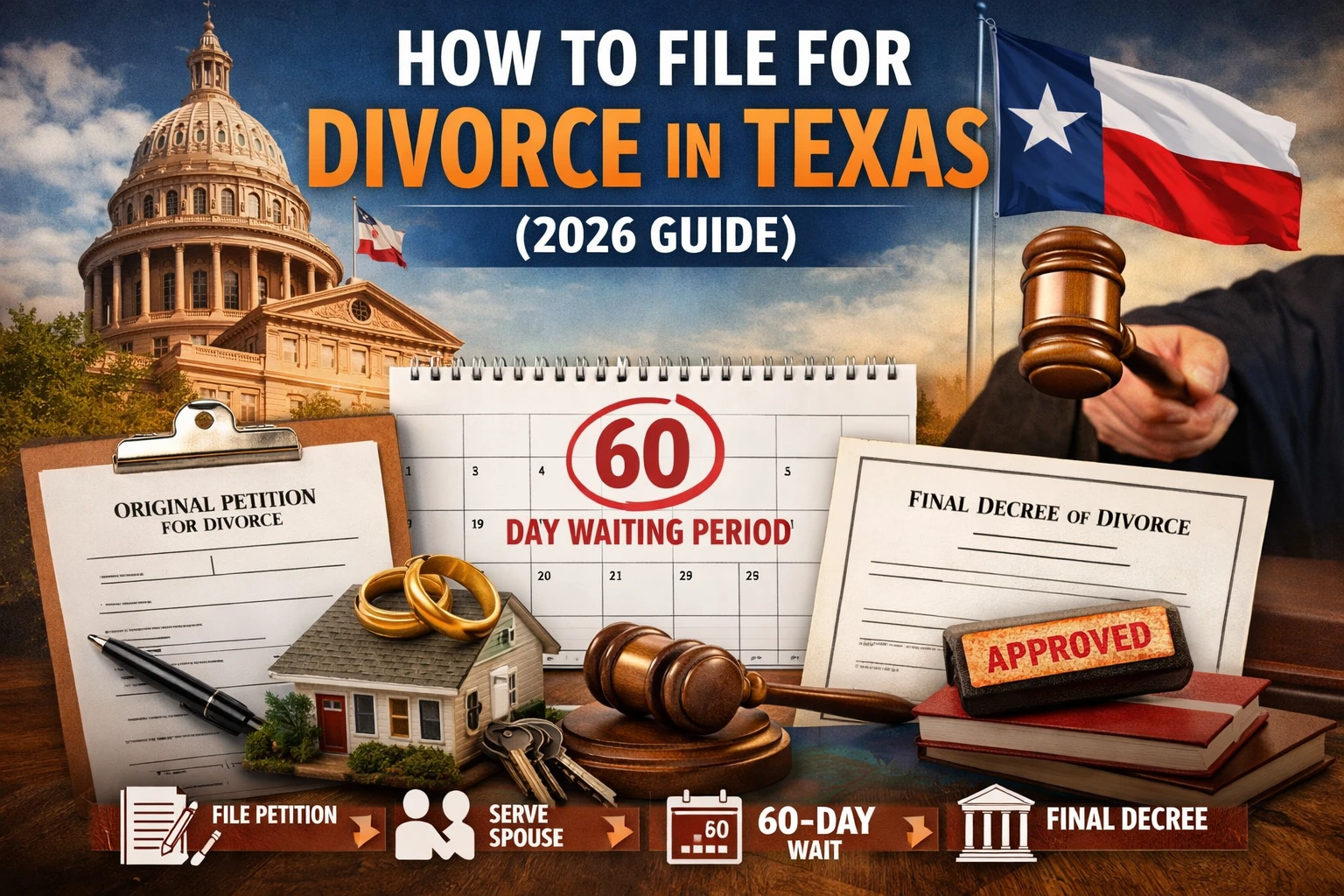
In an agreed divorce, both spouses may be on the same page. Even so, the Final Decree of Divorce is the legal document the court signs. It needs to be detailed enough to show what the agreement actually is.
If one spouse is keeping a separate-property home, the decree may need to identify the property address and state that it is awarded as that spouse’s separate property. If one spouse had a retirement account before marriage, the paperwork may need to reflect whether only the premarital portion is claimed as separate or whether the parties are agreeing to treat the full account a certain way for settlement purposes.
This is where many do-it-yourself cases run into trouble. People know what they mean, but the paperwork does not always say it clearly. Courts want precise language, especially when an order affects title, debt responsibility, or future enforcement.
What to include in divorce paperwork for separate property
The exact documents depend on the case, but in most uncontested Texas divorces, the key document is the Final Decree of Divorce. That decree should state what separate property each spouse is confirmed to own. When appropriate, it should identify assets with enough detail that there is no question later.
That may include real estate, bank accounts, vehicles, business interests, retirement funds, inherited assets, personal injury recoveries, or valuable personal property. The level of detail depends on the asset. A couch does not need the same treatment as a house or brokerage account.
The paperwork may also need to address related issues. If a spouse keeps a separate-property home but both names are on a utility account or tax record, the decree may need supporting language about responsibility and cooperation. If a vehicle is separate property but the title still needs to be updated, the decree should not create confusion about who is responsible for that next step.
In some cases, supporting schedules or exhibits can help organize the property division. In others, keeping everything directly in the decree is cleaner. It depends on the complexity of the estate and what the court in that county is used to seeing.
Proof matters, even in agreed cases
A judge does not always require a stack of evidence in an uncontested hearing, but that does not mean proof is irrelevant. Separate property claims should be grounded in facts that can be supported if needed.
Common proof includes deeds, account statements from before marriage, gift letters, probate records, inheritance documents, vehicle purchase records, and tracing documents that show where funds came from and how they were handled. If the property changed form during the marriage, tracing may be especially important. A savings account inherited from a parent may later become part of a down payment on a house. That does not automatically destroy the separate claim, but it can make the documentation more complicated.
The practical point is this: if you are asking the decree to identify something as separate property, make sure the paperwork matches the history of that asset. If the facts are messy, a simple agreed statement may not be enough.
When separate property gets mixed with community property
This is where many Texas divorces become less straightforward than expected. Separate property can be mixed, or commingled, with community funds. Once that happens, the issue is not always whether the property started as separate. The issue becomes whether it can still be traced with reasonable clarity.
Take a bank account opened before marriage. If that account later received both paycheck deposits and inherited funds for years, it may be difficult to separate one source from another without detailed records. The same problem can happen with investment accounts, home equity, and business income.
Sometimes spouses agree to a practical settlement instead of trying to untangle every dollar. That can be the right move in an uncontested divorce when both parties want to save time and avoid conflict. But if that is the approach, the decree still needs to reflect the agreement accurately. It should not label property as separate if the issue is actually being resolved by compromise.
Separate property and the marital home
The home is often the most emotionally charged asset in the case. It is also one of the easiest places for paperwork mistakes to cause future problems.
A house purchased before marriage may be separate property, but mortgage payments made during the marriage can create reimbursement issues or at least questions about the community estate’s contribution. If both spouses are on the mortgage or deed, the decree needs to address that directly. Awarding the house to one spouse is not the same as removing the other spouse from a loan. Those are separate issues.
For Texas couples in counties such as Tarrant, Dallas, Denton, Collin, Harris, Bexar, or Ellis, local filing practices may differ slightly, but the underlying need is the same: the divorce paperwork should be clear enough that title companies, lenders, and county records do not have to guess what the court intended.
When an uncontested divorce may not be the right fit
Not every dispute about separate property belongs in a simple agreed case. If one spouse strongly disagrees about whether an asset is separate, if records are missing, or if a large estate needs formal tracing analysis, the matter may require more than document preparation.
That does not mean the case has to turn into a courtroom battle. Some couples work through these issues with negotiated revisions and better documentation. But there is a point where speed should not come at the expense of accuracy. A decree that looks finished but leaves major property questions unresolved can cost far more later.
Practical ways to avoid delays and mistakes
The best starting point is to gather documents early. Before drafting the decree, identify which assets are clearly separate, which are clearly community, and which ones sit in the gray area. That alone can prevent a lot of last-minute revisions.
Use plain, specific descriptions. If an asset matters, name it clearly. Include account identifiers when appropriate, legal property descriptions when needed, and enough detail to avoid future disputes. Broad language has its place, but major assets usually deserve more than a one-line reference.
It also helps to stay consistent across all divorce forms. If the petition, waiver, prove-up testimony, and final decree describe the property in different ways, that inconsistency can create unnecessary questions. A clean uncontested case is usually a consistent one.
For couples who want a lower-cost path, guided document preparation can make a real difference. A service such as Ready Divorce Service can help organize the paperwork, reduce filing mistakes, and keep an agreed Texas divorce moving without adding the expense of full litigation.
A calmer way to handle a sensitive issue
Separate property can carry a lot of emotion. Sometimes it is family land, an inheritance, or something owned long before the marriage began. Even when both spouses are trying to stay respectful, those assets often need extra care in the paperwork.
If your divorce is agreed, that is a strong starting point. The next step is making sure the written documents match that agreement clearly and correctly. Good paperwork does not just help you get divorced. It helps you move on without unfinished property questions following you into the next chapter.
📲 Call us now at (800) 432-0018