The hardest part for many people is not signing the final decree. It is staring at a blank set of court forms and wondering where to even begin. If you are trying to figure out how to start Texas divorce paperwork, the good news is that the process is usually more manageable once you understand the order of the steps.
In Texas, divorce paperwork is not just one form. It is a sequence of documents, filing requirements, deadlines, and county procedures. When spouses agree on the major terms, the process is often much simpler. But even in an uncontested case, small paperwork mistakes can slow things down, create extra filing costs, or force you to redo documents.
How to Start Texas Divorce Paperwork the Right Way
The first question is whether your divorce is actually a fit for a straightforward filing process. Texas divorces tend to move more smoothly when both spouses agree on issues like property division, debts, and if applicable, child-related terms such as conservatorship, visitation, and support. If one spouse plans to fight over major issues, the paperwork becomes more involved very quickly.
Before you prepare anything, make sure you meet the basic Texas requirements. In most cases, one spouse must have lived in Texas for at least six months and in the county where the case will be filed for at least 90 days. If those residency rules are not met yet, filing too early can create a problem from the start.
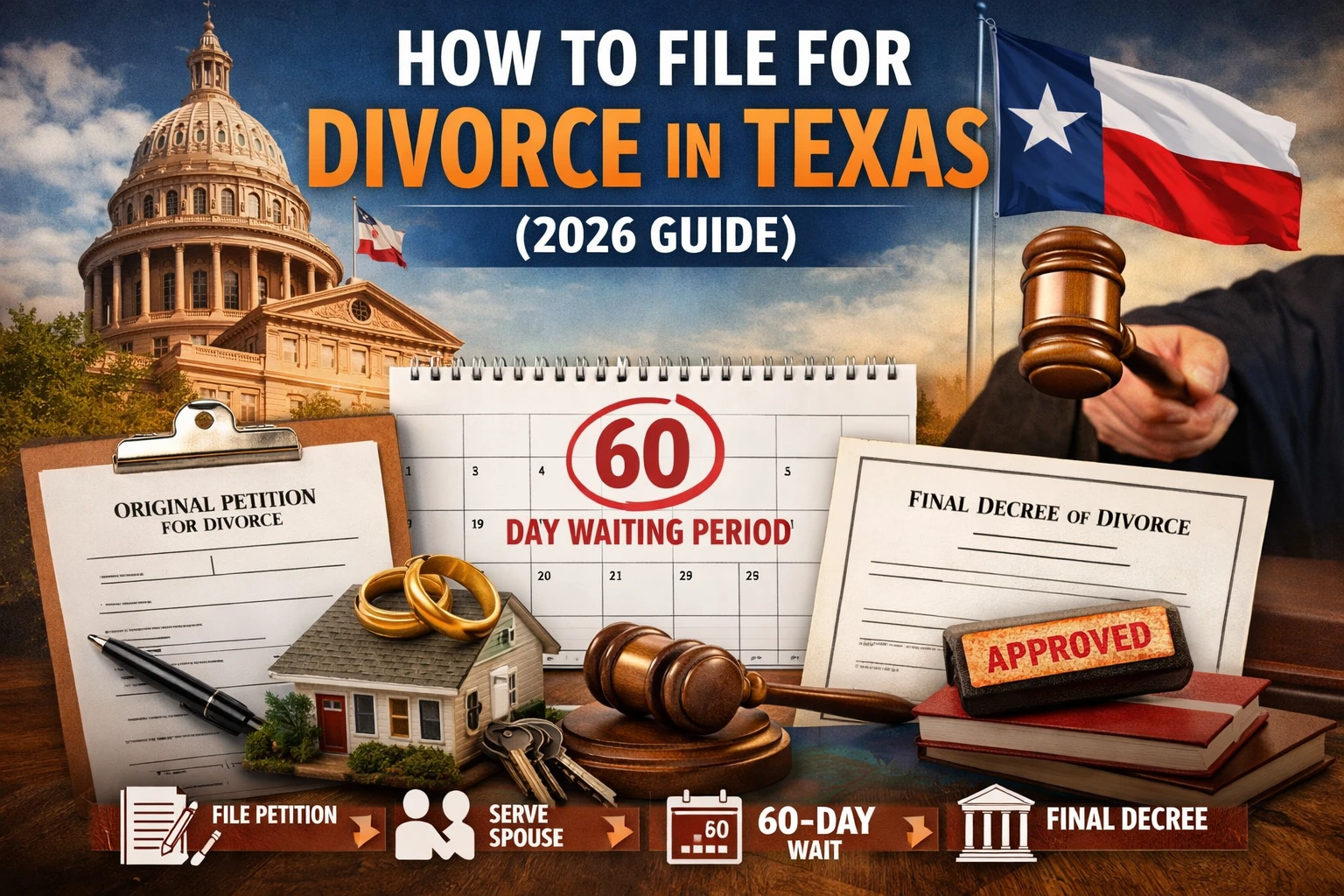
Once residency is confirmed, the starting document is usually the Original Petition for Divorce. This is the form that opens the case. It tells the court that you are asking for a divorce and provides core information about the marriage, the parties, and whether children are involved. It does not need to include every detail of your settlement, but it must be completed carefully and filed in the correct county.
Start with the facts you will need
People often think the first step is filling in blanks on a form. In reality, the first useful step is gathering your basic case information. That includes full legal names, addresses, the date of marriage, the date of separation if relevant, information about children under 18, and a general understanding of what property and debts need to be addressed.
If your case is uncontested, it also helps to talk through the agreement before filing. You do not need every sentence finalized on day one, but you should know whether both spouses are aligned. If one person believes the house will be sold and the other expects to keep it, you do not have an agreed case yet.
What paperwork is usually involved in a Texas divorce
The exact set of forms depends on your situation, your county, and whether children are involved. Still, most uncontested Texas divorces include a few common documents.
The Original Petition for Divorce starts the case. If the other spouse is willing to cooperate, a Waiver of Service may be used instead of formal service by a constable, sheriff, or private process server. Later in the case, the Final Decree of Divorce becomes the document that spells out the terms of the divorce and what each party is required to do.
Some cases also require additional forms, such as a civil case information sheet or county-specific cover documents. If children are involved, there may be forms related to child support, medical support, possession schedules, or parenting classes depending on the county and circumstances.
This is where people run into trouble. They download a generic form packet, assume it applies to their situation, and file documents that are incomplete or outdated. Texas procedure is not impossible, but it is specific. What works in one case may not fit another.
If your divorce is uncontested, keep the paperwork aligned with that
An uncontested divorce should look uncontested on paper. That means the petition, waiver if used, and final decree should all tell the same basic story. If your documents conflict with each other, the clerk may accept the filing, but the court can still reject the final paperwork later.
That is one reason procedural guidance matters. Filing is not only about turning in forms. It is about making sure the forms work together.
Where to file and what happens after filing
Texas divorce cases are generally filed in the district court of the county where residency requirements are met. If you live in places like Tarrant County, Dallas County, Denton County, Collin County, Ellis County, Bexar County, or Harris County, local filing procedures can vary in small but important ways. The core Texas rules stay the same, but county clerks may have different administrative requirements.
After the petition is filed, the court assigns a cause number and the case officially begins. Filing fees usually apply unless a party qualifies for a fee waiver based on financial hardship.
Then comes the issue of notice to the other spouse. In a cooperative uncontested case, a waiver may simplify this step. If not, formal service is usually required. This is not a minor technicality. The court must be satisfied that the responding spouse was properly notified or properly waived service before the case can move to finalization.
The 60-day waiting period and why timing matters
One detail that surprises many people is that Texas generally has a mandatory 60-day waiting period. That period starts on the day the divorce is filed, and in most cases the court cannot finalize the divorce until at least 60 days have passed.
This does not mean you should wait 60 days to work on the rest of the paperwork. It means the filing opens the clock. During that waiting period, parties can finalize the decree, complete any required child-related paperwork, correct filing issues, and prepare for the prove-up or final submission process required by the court.
For people asking how to start Texas divorce paperwork, this matters because the filing date affects your timeline. If your goal is to finish as efficiently as possible, getting the initial paperwork done correctly can save weeks of delay.
Common mistakes when starting Texas divorce paperwork
The most common mistake is filing before the case is truly ready. People rush to open the case without checking residency, without understanding whether they have an agreed divorce, or without knowing what property and debt need to be divided.
Another frequent issue is using the wrong forms or leaving required sections blank. Courts may not catch every problem immediately. Sometimes the issue appears later, when you try to finalize the decree and the documents do not match the case facts.
Parents often run into extra complications by underestimating the child-related portions of the paperwork. Texas courts take child support, parenting time, and medical support seriously. Even when parents agree, the paperwork must still reflect legally acceptable terms.
There is also the practical problem of county procedure. Filing in the wrong county, misunderstanding local submission rules, or failing to provide required supporting documents can turn a simple case into a frustrating one.
When help makes sense
Some people can prepare and file everything on their own. Others start that way and realize midway through that the process is costing them more time and stress than expected. That is especially common in uncontested cases where the legal issues are not highly disputed, but the paperwork still needs to be accurate.
Document preparation support can be a practical middle ground. It is often a better fit for people who do not want full litigation or high attorney fees but still want guidance through the filing steps, procedural requirements, and final paperwork. For many Texas families, that balance of affordability and structure is exactly what makes the process feel manageable.
If your case is agreed and you want a simpler path, this is where a Texas-focused service can add real value. Ready Divorce Service, for example, is built around helping people move through uncontested divorce paperwork with more clarity and less confusion.
A simple way to think about your first step
If you feel stuck, do not start by trying to complete every divorce form at once. Start by confirming three things: that you meet Texas residency rules, that the divorce is actually uncontested, and that you know which county should receive the filing. From there, the paperwork becomes a process instead of a guessing game.
Divorce is personal, but the filing process is procedural. When you treat it that way, it becomes easier to move forward calmly, make better decisions, and avoid the kind of errors that create more stress than necessary.
A good beginning is not about moving fast for the sake of speed. It is about starting with the right paperwork, in the right county, with a clear plan for what comes next.
📲 Call us now at (800) 432-0018