Table of Contents
- What Is an Uncontested Divorce?
- Pros and Cons of Uncontested Divorce When Children Are Involved
- How to File for Uncontested Divorce in Texas
- Texas Parenting Plan Requirements
- Cost of Uncontested Divorce vs. Contested
- How Uncontested Divorce Affects Children
- Red Flags That an Uncontested Divorce May Not Work for Your Family
- Frequently Asked Questions
Last Updated: August 31, 2026
What Is an Uncontested Divorce?
An uncontested divorce is a legal dissolution of marriage where both spouses agree on all major terms without court intervention. When you file an uncontested divorce, you’re presenting the court with a completed settlement agreement that both parties have already negotiated and signed. Texas courts review these agreements to ensure they comply with state law, but they don’t need to resolve disputes because none exist.
For couples with children, an uncontested divorce requires a parenting plan that addresses custody arrangements, visitation schedules, and child support obligations. Ready Divorce Service specializes in helping Texas residents navigate this process by preparing accurate documentation that meets state requirements, ensuring your filing stays compliant while minimizing stress during an already difficult transition.
The most common mistake is assuming “uncontested” means the divorce is simple. Even when both parents agree on the broad strokes, Texas requires [detailed parenting](/texas-divorce-forms-for-parents/) plans that specify everything from holiday schedules to decision-making authority on medical and educational matters. Vague agreements often get sent back by the court for clarification.
Pros and Cons of Uncontested Divorce When Children Are Involved
Advantages for families
An uncontested divorce offers distinct benefits when children are in the picture. The most significant advantage is reduced conflict exposure. Children experience less emotional turbulence when their parents manage the separation cooperatively rather than through adversarial litigation. Research consistently shows that the quality of the co-parenting relationship after divorce matters more to child outcomes than the divorce itself.
Speed is another substantial benefit. Uncontested divorces in Texas typically move through the system in 60 to 90 days after the mandatory waiting period expires, compared to contested divorces that can stretch across months or years. Financial savings represent a practical reality that affects family stability. Without litigation costs and extended court proceedings, more family resources remain available for the children’s needs, education, and healthcare.
The collaborative process itself models healthy conflict resolution for children. When parents work together to create a parenting plan, they demonstrate that disagreement doesn’t require destruction.
Disadvantages to consider
An uncontested divorce requires genuine agreement on sensitive issues, which isn’t realistic for every family situation. If one parent has hidden assets, abuses substances, or has engaged in infidelity, the uncontested path may mask serious problems that should be addressed through discovery and testimony.
Pressure to agree can disadvantage one spouse. The desire to keep the process simple sometimes leads one parent to accept unfavorable terms rather than negotiate further. Without legal representation, you might not recognize when an agreement undervalues your rights.
Parenting plans created too quickly can fail in practice. A plan that looks reasonable on paper might prove unworkable when implemented. An uncontested divorce also offers less protection if circumstances change dramatically. While modifications are possible, they require returning to court.
Red flag: If one parent is pressuring the other to “just agree” to keep things simple, that pressure itself signals an imbalance. Uncontested divorces work only when both parties genuinely feel heard and supported in the agreement they’re making.
How to File for Uncontested Divorce in Texas
Key filing requirements and documentation
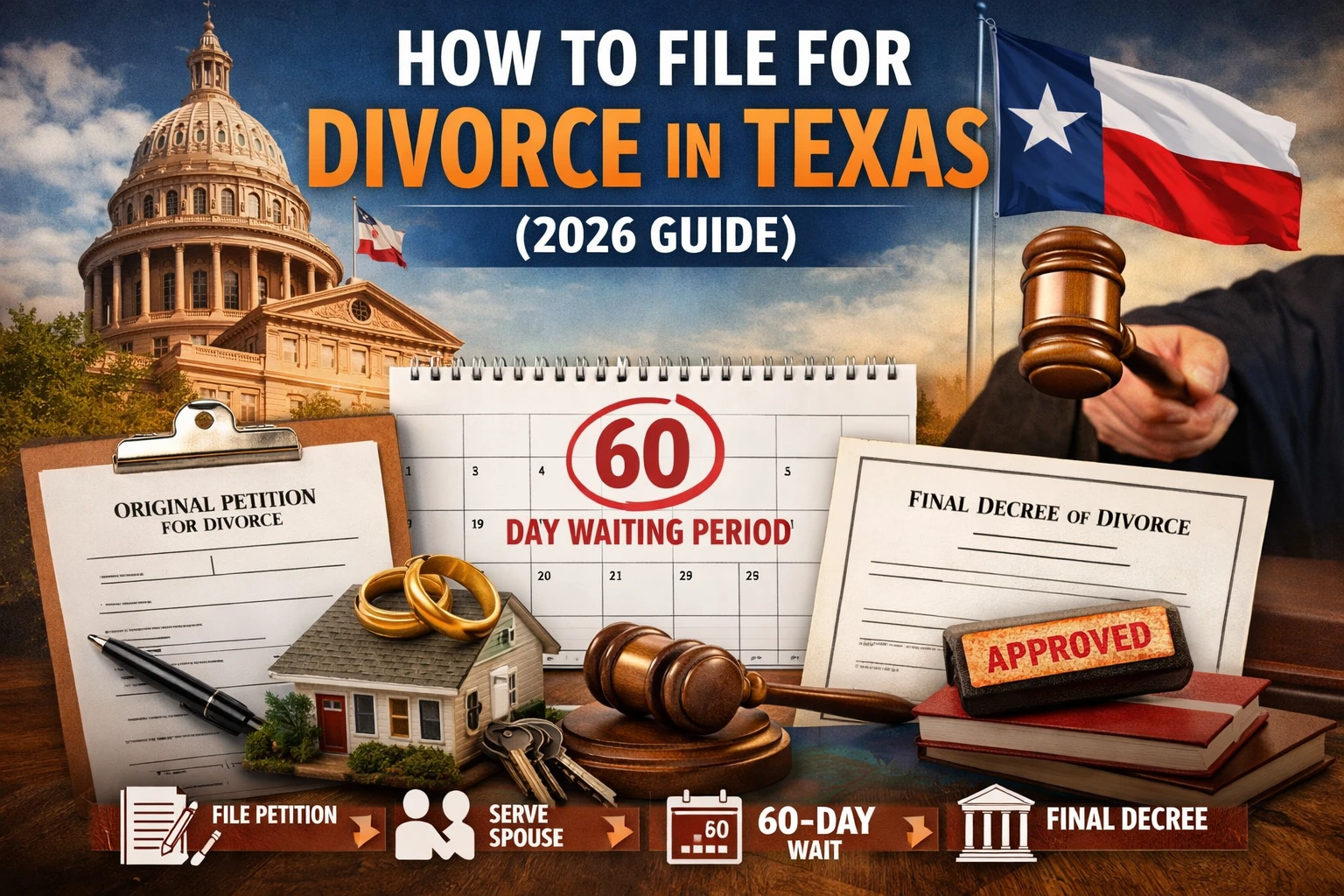
Texas requires specific documentation before you can file an uncontested divorce. The core documents include the Original Petition for Divorce, a Decree of Divorce, and a Settlement Agreement that details how you’ve divided property and addressed custody. If children are involved, you must also file a Parenting Plan that meets Texas Family Code requirements.
Financial disclosure is mandatory. Both spouses must complete an Inventory of Community Property and a list of liabilities, even in uncontested cases. Incomplete or inaccurate financial disclosures can cause the court to reject your entire filing.
Residency requirements matter. To file in Texas, at least one spouse must have been a resident for the preceding six months, and the filing must occur in the county where you’ve lived for at least 90 days. You’ll need your marriage certificate, Social Security numbers, driver’s license information, and details about any minor children, including their birth certificates.
The mandatory waiting period and timeline
Texas imposes a mandatory 60-day waiting period from the date you file until the divorce can be finalized. This period exists by statute and cannot be waived, even in uncontested cases. During this 60-day window, both spouses must sign the final decree and all settlement documents. The court doesn’t hold hearings in uncontested divorces; the judge simply reviews your paperwork to confirm it complies with Texas law.
The entire process typically takes 60 to 90 days from filing to final decree, assuming you’ve prepared your documents correctly and both parties remain cooperative. Ready Divorce Service helps you prepare accurate documentation from the start, reducing the risk of delays caused by incomplete or incorrectly formatted filings.

Texas Parenting Plan Requirements
What must be included in your parenting agreement
Texas law requires a detailed parenting plan that addresses custody, visitation, and decision-making authority. The plan must specify which parent has the right to make decisions about the child’s education, healthcare, and religious upbringing. In most cases, parents share decision-making authority, but the plan must clarify the process for resolving disagreements.
Visitation schedules must be explicit. Vague arrangements like “reasonable visitation” create conflict. Your parenting plan should specify which parent has custody on which days, including school nights, weekends, holidays, and summer vacation. The plan must address communication about the child, including how parents will share information about school performance and medical appointments.
The plan must also include provisions for relocation. Texas law requires that if a parent wants to move more than 100 miles away, they must either get the other parent’s written consent or return to court for modification.
Child support and financial obligations
Child support in Texas follows statutory guidelines based on the paying parent’s net income. The guideline amount is 20% of net income for one child, 25% for two children, and up to 40% for four or more children. However, the court can deviate from these guidelines if it finds them unjust or inappropriate given the family’s circumstances.
Both parents must disclose their complete financial information. The parent with lower income typically receives child support from the higher-earning parent. However, if both parents have similar incomes and custody is split relatively equally, child support obligations may be minimal or waived entirely if both parties agree.
Child support continues until the child reaches age 18 or graduates from high school, whichever is later. Beyond child support, your agreement should address extraordinary expenses like private school tuition, medical expenses not covered by insurance, and extracurricular activities.
The most overlooked element in parenting plans is the mechanism for handling changes. What happens when a child’s needs change, when a parent’s income shifts, or when circumstances make the current arrangement unworkable? A good plan includes a process for modification that doesn’t require returning to court for every adjustment.
Cost of Uncontested Divorce vs. Contested
The financial difference between uncontested and contested divorce is substantial. An uncontested divorce eliminates attorney fees for litigation, expert witnesses, depositions, and court appearances. When you and your spouse have already agreed on the terms, you’re paying only for document preparation and filing fees.
A contested divorce requires extensive attorney involvement including discovery, depositions, motions, hearings, and trial preparation. A contested divorce with significant assets or custody disputes can easily extend across 18 to 24 months or longer, with legal bills accumulating throughout.
Court filing fees in Texas vary by county but typically range from $300 to $500 for the initial filing. These court costs are minimal compared to attorney fees, which in contested cases can reach thousands of dollars per month. The hidden costs of contested divorce extend beyond legal fees. Prolonged conflict increases stress-related health expenses, impacts work productivity, and often requires family counseling.
An uncontested divorce positions your family to allocate resources toward rebuilding rather than fighting. Ready Divorce Service helps you prepare the necessary documentation accurately, reducing the risk of court rejections that would delay your timeline and increase costs.
How Uncontested Divorce Affects Children
Psychological impact by age group
Young children under age 6 experience divorce primarily through changes in routine and caregiver consistency. An uncontested divorce that minimizes parental conflict helps younger children adjust because they experience less tension and anger between their parents.
School-age children between 6 and 12 understand the permanence of divorce more clearly and often experience sadness and anger about the family separation. A cooperative parenting arrangement where both parents remain actively involved helps this age group adjust more successfully. Children who see their parents communicating respectfully about custody and support are more likely to maintain healthy relationships with both parents.
Teenagers aged 13 to 18 often experience divorce as a loss of family identity and stability. Adolescents benefit significantly from uncontested divorces because they can focus on their own development rather than managing parental conflict. Additionally, teenagers are more likely to recognize and appreciate parents who handle divorce maturely.
The quality of the co-parenting relationship after divorce matters more than the divorce itself for all age groups. Children whose parents maintain respectful communication and consistent parenting rules across both homes show better emotional adjustment, academic performance, and social relationships.

Co-parenting after divorce
Successful co-parenting begins with clear agreements. Your parenting plan should establish communication protocols, how and when parents will discuss the child’s needs, and what information gets shared immediately versus at scheduled check-ins.
Consistency across both homes reduces children’s confusion and anxiety. When both parents enforce similar rules and maintain comparable discipline approaches, children experience stability. Many co-parenting relationships benefit from structured communication tools like shared calendar apps or co-parenting communication apps that create a record of exchanges and prevent miscommunication.
Flexibility matters more than rigidity. While the parenting plan provides the legal framework, successful co-parents recognize that life happens. A child gets sick during the other parent’s weekend, or a school event conflicts with custody time. Co-parents who approach these situations with flexibility model problem-solving for their children.
Protecting children from parental conflict requires intentional effort. Avoid speaking negatively about the other parent to your child, don’t use your child as a messenger between households, and never ask your child to choose sides.
Red Flags That an Uncontested Divorce May Not Work for Your Family
An uncontested divorce assumes both parents are acting in good faith and with full transparency. If either parent is hiding assets, the uncontested path won’t protect you. Signs of hidden assets include sudden transfers of money, unexplained business transactions, or a spouse’s refusal to disclose financial information.
Substance abuse or mental health crises in either parent signal that an uncontested approach may be unrealistic. A parent struggling with addiction or untreated mental illness may not be capable of maintaining consistent co-parenting or honoring financial obligations.
Domestic violence or abuse, whether physical, emotional, or financial, is incompatible with an uncontested divorce. If you or your children have experienced abuse, you need protective orders and court-supervised arrangements.
Significant income disparity combined with reluctance to disclose finances should concern you. Pressure from the other parent to “just agree” on major issues is a red flag. Legitimate uncontested divorces involve both parties feeling heard and supported in the agreement.
Custody arrangements that don’t match the child’s actual needs or either parent’s realistic capacity should be reconsidered. If you’re agreeing to custody time you can’t actually manage, the plan will fail in practice.
| Factor | Uncontested Works | Uncontested Risky | Contested Necessary |
|---|---|---|---|
| Asset Disclosure | Both parties fully transparent | One parent evasive | Clear evidence of concealment |
| Substance Abuse | Neither parent affected | One parent in recovery | Active addiction affecting parenting |
| Domestic Violence | No history of abuse | Emotional control present | Physical violence or threats |
| Custody Arrangement | Matches both parents’ capacity | Tight but manageable | Requires court oversight for safety |
| Financial Transparency | Both incomes similar or disclosed | Income disparity, some reluctance | Major disparity with resistance to disclosure |
| Pressure Dynamics | Both parties willing participants | One parent pushing timeline | Coercion or manipulation present |
An uncontested divorce with kids is worth it when both parents genuinely agree on custody, support, and asset division, and when the arrangement prioritizes the children’s stability. The simplified timeline and reduced cost free up family resources for healing and rebuilding. However, this path requires honest communication, financial transparency, and a commitment to cooperative co-parenting.
If your situation fits the uncontested model, Ready Divorce Service can guide you through the document preparation process. We specialize in ensuring your Texas filing meets all state requirements, so your divorce proceeds smoothly without court rejections or delays. Starting the Divorce Process provides details on how we assist with Texas uncontested divorce documentation and compliance.
Frequently Asked Questions
What are the main disadvantages of an uncontested divorce when children are involved?
The primary disadvantage is that both parents must agree on all terms, including custody, visitation, child support, and asset division. If disagreement arises during the process, the divorce may shift to contested status, adding time and cost. Additionally, one parent may feel pressured to accept unfavorable terms to avoid litigation, potentially compromising their financial security or parenting rights. An uncontested divorce also requires full financial transparency and accurate calculations for child support, which can be complex without professional guidance.
How do I know if uncontested divorce with kids is the right choice for my situation?
Uncontested divorce works best when both parents can communicate respectfully and agree on major issues: custody arrangements, child support, visitation schedules, and how to divide marital assets. If you and your spouse have reached a settlement agreement and prioritize minimizing stress on your children, it’s likely a good fit. However, if there’s significant conflict, hidden assets, or concerns about your child’s safety or financial support, consult a family law professional before proceeding. Red flags include one parent refusing to disclose finances or unwillingness to negotiate fairly.
What happens if we cannot agree on a parenting plan during an uncontested divorce?
If you cannot reach agreement on a parenting plan, your uncontested divorce will likely convert to a contested proceeding, where a judge decides custody, visitation, and child support. This significantly increases legal fees, court costs, and timeline. To avoid this, consider mediation or collaborative law before filing, which helps parents reach binding agreements in a structured, less adversarial setting. Many families find that working with a neutral third party helps identify compromises both parents can accept.
Are there financial benefits to choosing uncontested divorce over contested divorce?
Yes. Uncontested divorce typically costs substantially less because it avoids lengthy court battles, discovery disputes, and multiple attorney appearances. You also resolve the process faster, reducing the total time you’re paying for legal services. Additionally, uncontested divorce allows you to retain more control over how marital assets are divided rather than leaving that decision to a judge. Faster resolution also means lower emotional and financial stress for the entire family, and children experience less disruption to their routines and stability.
This article was written using GrandRanker