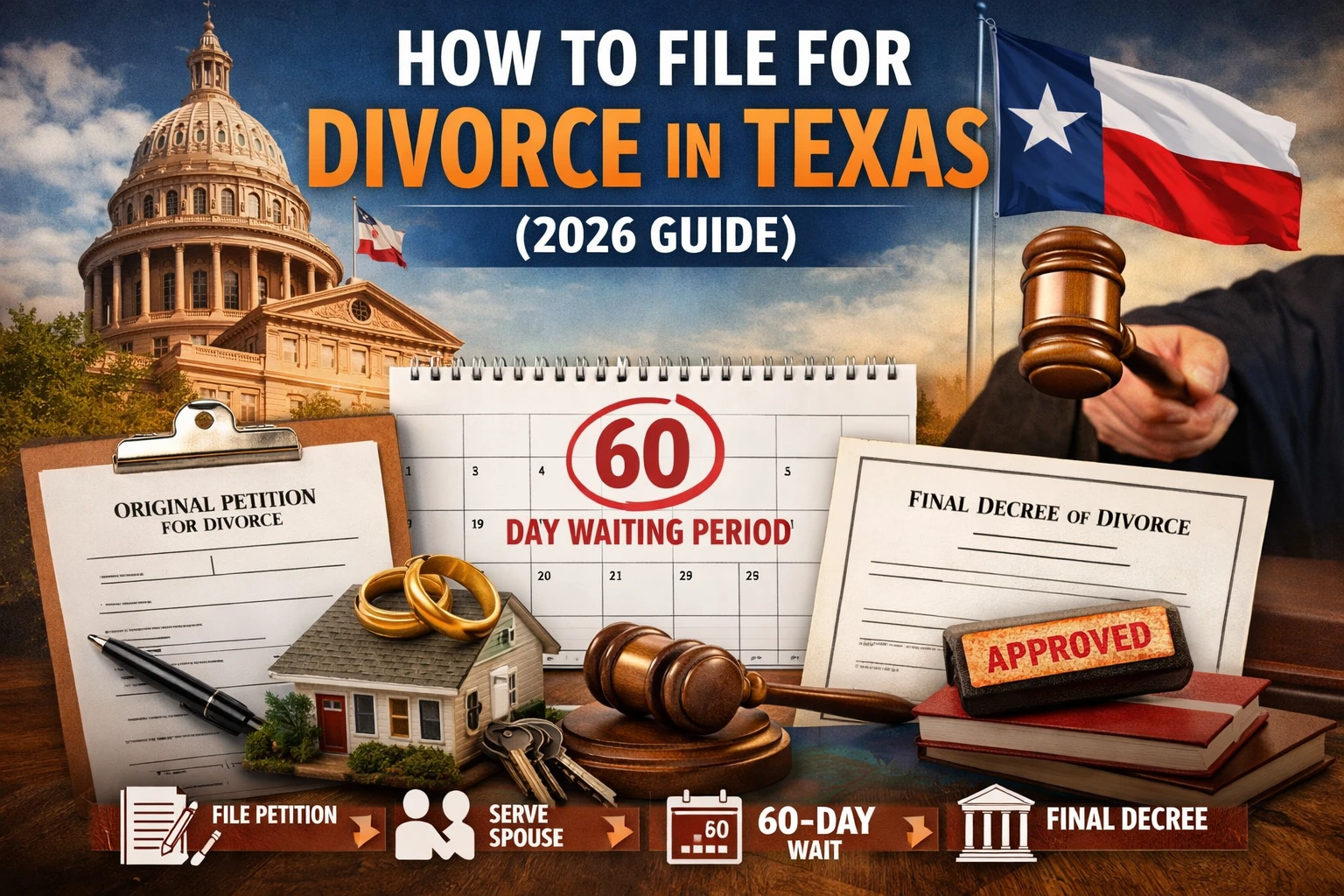
A lot of people assume their divorce is final the day they file. In Texas, that is almost never true. If you are asking when is divorce final in Texas, the short answer is this: your divorce is usually final when the judge signs the Final Decree of Divorce, and not before the required waiting period has passed.
That sounds simple, but timing can still be confusing. Filing starts the case. Serving papers or getting a waiver moves it forward. Reaching agreement helps. But the divorce does not legally end until the court signs the final order. If you are trying to plan a move, update benefits, refinance a home, or simply get closure, that distinction matters.
When is divorce final in Texas under the law?
Texas law generally requires a 60-day waiting period before a divorce can be finalized. The clock starts on the day the Original Petition for Divorce is filed with the court. In most cases, the earliest a judge can finalize the divorce is the 61st day.
That means even if both spouses agree on everything, even if the paperwork is prepared quickly, and even if nobody is fighting, the case usually cannot be finished before that waiting period ends. There are limited exceptions, such as certain family violence situations, but most uncontested divorces still follow the standard rule.
Just as important, the 60 days is a minimum, not a guarantee. A divorce can take longer if documents are incomplete, if the court requires corrections, if one spouse delays signing, or if the final hearing cannot be scheduled right away.
What actually makes a Texas divorce final?
The key event is the judge’s signature on the Final Decree of Divorce. That decree is the court order that officially ends the marriage and states the terms of the divorce. It can cover property division, debt allocation, name change, and if children are involved, conservatorship, possession, support, and medical support.
Until that decree is signed, you are still legally married.
This is where many people get tripped up. They may have filed weeks ago. They may have already separated finances. They may even have signed an agreement between themselves. But without a signed Final Decree of Divorce, the case is not complete.
The usual timeline for an uncontested divorce
For an agreed divorce, the process is often straightforward, but it still moves in stages. One spouse files the petition. The other spouse is formally served or signs a waiver, depending on the situation. Both sides complete and sign the required paperwork. After the waiting period ends, the final documents are presented to the court, and a judge signs the decree if everything is in order.
In a smooth uncontested case, many people finalize shortly after the 60-day waiting period. But “shortly after” can mean different things depending on the county and the court’s process. Some courts move faster than others. Some require a prove-up hearing, while others may allow submission by paperwork in qualifying cases.
In counties such as Dallas, Tarrant, Collin, Denton, Harris, Bexar, and Ellis, local procedures can affect how quickly you get from signed documents to signed decree. The legal rule is statewide, but the practical timing can vary from court to court.
What can delay a divorce after the 60 days?
The biggest mistake people make is treating day 61 like an automatic finish line. It is only the earliest possible date in many cases.
A divorce may take longer if the paperwork is missing required language, if the decree does not match the petition, or if property and debt terms are still unclear. Cases with children often need extra care because child support terms, possession schedules, and required notices must be drafted correctly. If retirement accounts, real estate, or unusual financial issues are involved, reviewing the final terms can also take more time.
Another common delay is simple lack of follow-through. One spouse may agree in principle but wait days or weeks to sign. A hearing may need to be reset. The court clerk may reject a filing because a form is incomplete. These are not dramatic problems, but they can stretch out a case.
That is one reason many Texans choose structured help with uncontested divorce paperwork. The process is often manageable, but small errors can cost time when what you really want is closure.
If both spouses agree, can the divorce be final faster?
Agreement helps a lot, but it does not erase the waiting period. In most cases, no matter how cooperative both spouses are, the court still cannot finalize the divorce before the legal minimum has passed.
What agreement does change is everything around that waiting period. It can reduce conflict, avoid contested hearings, limit revisions, and make it much easier to prepare the final decree correctly the first time. In practical terms, that often means an uncontested divorce is finalized as soon as the court is allowed to finish it or soon after.
If your case is truly agreed, the best way to move faster is not to rush the law. It is to prepare accurate paperwork early, make sure both spouses sign when needed, and be ready to finalize as soon as the waiting period ends.
When is divorce final in Texas if children are involved?
The basic rule is the same. The divorce is final when the judge signs the Final Decree of Divorce after the waiting period has passed. But cases involving children usually require more detailed documents, and that can affect timing.
Parents need orders covering conservatorship, possession and access, child support, and medical support. Those terms need to be clear and legally acceptable. If the paperwork leaves out required provisions or creates inconsistencies, the court may not approve it right away.
That does not mean divorces with children have to become contested or drawn out. Many agreed divorces with children are completed successfully. It just means accuracy matters even more.
How do you know your divorce is officially final?
You will typically know the divorce is final when the judge signs the Final Decree of Divorce and the signed decree is filed with the court. At that point, you should keep a file-stamped copy for your records.
That signed decree is the document you may need to show when changing your name, updating tax or employment records, dealing with title transfers, refinancing, or proving your marital status. If you do not have a signed copy, do not assume the case is done.
It is also smart to check whether there are any additional steps required after the decree, especially if your divorce involves transferring property, dividing retirement accounts, or changing deeds and titles. The divorce may be final, but some follow-up tasks still need to happen.
Can you remarry right away after a Texas divorce is final?
Usually, no. In Texas, there is generally a 30-day waiting period after the judge signs the divorce decree before either former spouse can marry someone else. There can be exceptions if the court waives that waiting period, but many people are surprised to learn there is a separate rule for remarriage.
So if your main concern is wedding planning, do not just ask when the divorce is final. Also ask whether the remarriage waiting period applies to you.
A practical way to think about the timing
If you want the cleanest answer, here it is: filing starts the case, the 60-day waiting period sets the earliest possible finish line, and the judge’s signature on the Final Decree of Divorce is what makes it final.
For many uncontested cases, the path is efficient when both spouses are cooperative and the paperwork is prepared correctly. For other cases, the law is not the problem – preventable delays are. Missing signatures, inconsistent terms, and rejected forms can turn a simple case into a frustrating one.
That is why a process-focused approach matters. If your divorce is agreed, getting organized early can make a real difference in how quickly and smoothly you reach the final step. Ready Divorce Service helps Texans complete uncontested divorce paperwork with clarity and confidence, so they can move toward a legally compliant final decree without unnecessary delays.
If you are waiting for this chapter to end, focus on the milestone that counts: not the day you filed, but the day the judge signs your decree.
📲 Call us now at (800) 432-0018