Table of Contents
- What Is an Uncontested Divorce in Texas
- Required Forms for an Uncontested Divorce
- Texas Divorce Filing Fee Cost by County
- How to File for Divorce Without a Lawyer in Texas
- Texas Uncontested Divorce Waiting Period and Timeline
- Service of Process and Waiver of Service
- Common Filing Mistakes to Avoid
- Affidavit of Indigency and Fee Waivers
- Frequently Asked Questions
Last Updated: September 23, 2026
What Is an Uncontested Divorce in Texas
An uncontested divorce is a divorce where both spouses agree on all major issues without court intervention, and understanding the texas uncontested divorce forms and filing fees involved is essential to the process. In Texas, this means you and your spouse have already decided how to split assets, handle custody, and manage other key matters. You’re not fighting in court, you’re simply filing paperwork to formalize an agreement you’ve already made.
This is the fastest and least expensive path to divorce. Both parties sign off on the same documents. The court reviews them and grants the divorce if everything is in order. No trials. No lengthy disputes. Just clear paperwork that reflects what you both want.
Ready Divorce Service helps couples navigate this process by ensuring all your documents comply with Texas law.
Required Forms for an Uncontested Divorce
To file an uncontested divorce in Texas, you need specific court-approved forms. The main document is the Original Petition for Divorce. This form tells the court you want a divorce and outlines the basic facts of your marriage.
You’ll also need:
- Waiver of Service, A document where your spouse agrees they’ve been notified and won’t contest the divorce
- Divorce Decree, The final court order that ends your marriage
- Marital Property Division Agreement, Details how you’re splitting assets and debts
- Parenting Plan, If you have minor children, this outlines custody and visitation
- Child Support Agreement, If applicable, this sets support amounts
All forms must match Texas requirements. A missing signature or incorrect language can cause the court to reject your filing. Many people make mistakes on these forms, which delays everything.
The district clerk in your county has forms available. You can also find them online through the Texas court system. Ready Divorce Service provides expert guidance and document preparation tailored to your specific situation.
Texas Divorce Filing Fee Cost by County
Filing fees vary significantly by county in Texas. Rather than a one-size-fits-all number, you need to know your specific county’s schedule. The filing fee covers the cost to process your petition, while the issuance fee covers the cost for the court to issue your final divorce decree. Both are typically paid upfront to the district clerk.
Fee Structure Overview
Filing fees vary significantly by county in Texas. Contact your district clerk’s office directly for the exact amounts. Additional costs may include e-filing fees, certified copy fees, service of process fees, or court registry fees.
How to Find Your County’s Exact Fees
Contact your district clerk’s office directly, they maintain the official fee schedule. Most clerks now post fee schedules on their county website under “District Clerk” or “Court Costs.” You can also call the clerk’s office; they can tell you the exact amount due and accepted payment methods (check, money order, credit card, or online payment through the court registry system).
If you’re unsure which county to file in, remember: you must file in the county where you live or where your spouse lives. Filing in the wrong county means your petition will be rejected and you’ll have to refile, costing you additional fees and time.
Fee Waiver Option
If cost is a barrier, do not skip filing. Texas allows you to request a fee waiver by filing an Affidavit of Indigency. This document proves financial hardship to the court. If approved, you are not required to pay filing or issuance fees. However, the waiver request itself adds 1-2 weeks to your timeline, as the judge must review and approve it before your case can proceed. See the Affidavit of Indigency section below for details on eligibility and the process.
How to File for Divorce Without a Lawyer in Texas
Filing for divorce yourself as a pro se litigant (self-represented) is legal in Texas. You don’t need a lawyer to file an uncontested divorce if you and your spouse agree on everything.
Here’s the basic process:
Step 1: Prepare All Documents
Gather your marriage certificate, list of assets and debts, and any custody agreements. Complete all required forms accurately. One mistake can force you to refile.
Step 2: File With the District Clerk
Take your completed forms to the district clerk’s office in the county where you live. Pay the filing fee. The clerk will stamp your documents and keep copies.
Step 3: Serve Your Spouse
Your spouse must be formally notified. You can use a waiver of service if they agree to sign it, or you can arrange formal service through a process server.
Step 4: Wait for Court Review
The judge reviews your paperwork.
Step 5: Receive Your Final Decree
Once signed, you can request certified copies from the clerk. You’ll need these for updating your name, insurance, or other records.

The timeline depends on your county and how quickly you complete each step. Ready Divorce Service handles document preparation to help you avoid errors.
Texas Uncontested Divorce Waiting Period and Timeline
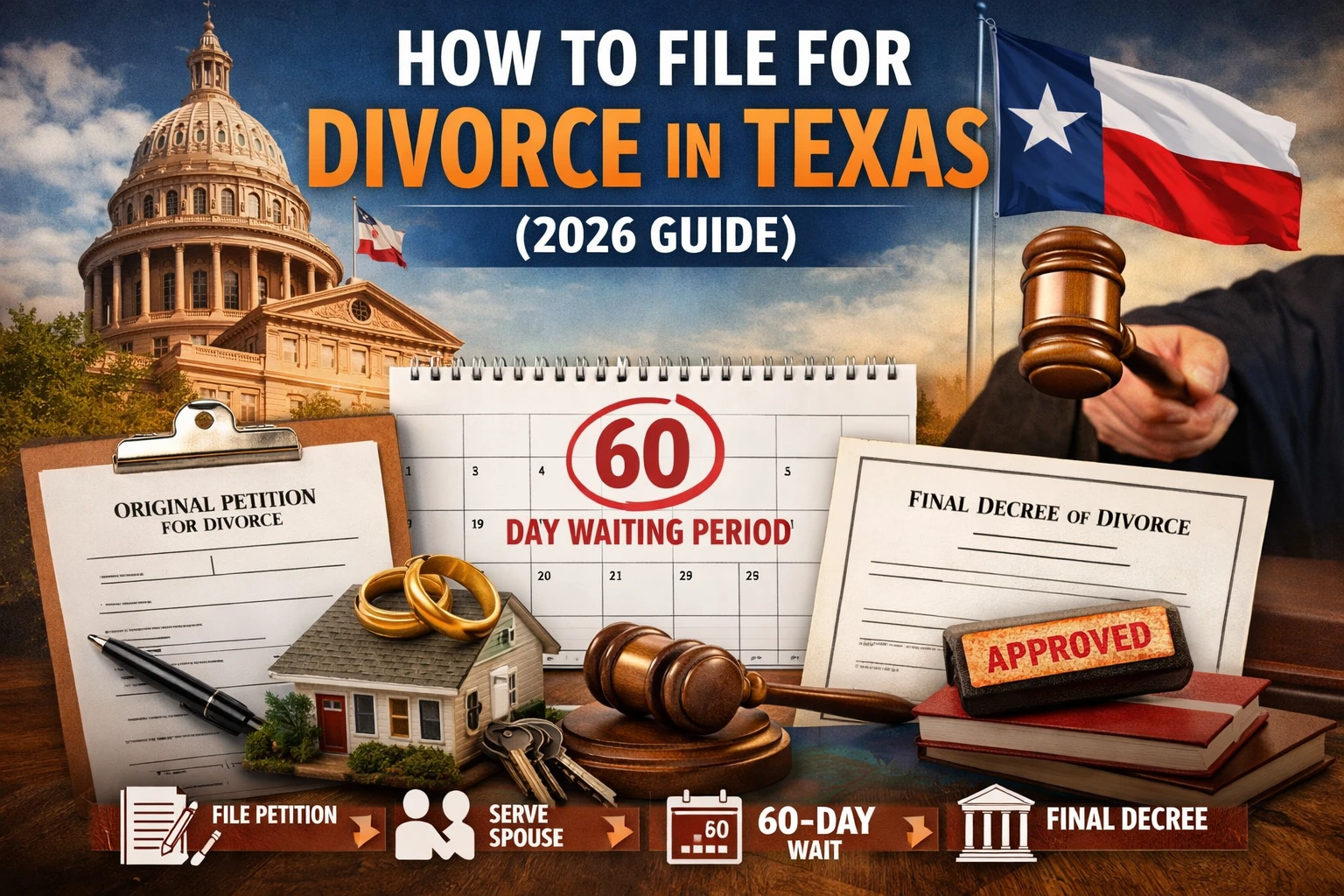
Texas law imposes a mandatory 60-day waiting period from the date you file your petition until the court can finalize your divorce. This period cannot be waived, even if both spouses agree to it. The waiting period exists to give both parties time to reconsider and to ensure the decision is final.
The 60-Day Waiting Period: What Happens
The clock starts the moment the district clerk stamps your Original Petition for Divorce as filed. During these 60 days:
- Your spouse must sign and return all required documents (waiver of service, marital property agreement, parenting plan if applicable)
- You must ensure all forms are complete and accurate
- The court does not review or act on your case yet
- You cannot request a final decree before day 60, even if all paperwork is ready
This is a hard deadline. Courts will not grant your divorce on day 59. Plan accordingly.
After Day 60: The Final Decree Process
Once the 60-day period has passed and all documents are signed and filed, the judge reviews your case. The judge checks that:
- Both spouses signed all required documents
- The marital property division is fair and legal
- Any child support or custody arrangements comply with Texas law
- All forms are filled out correctly
If everything is in order, the judge signs the Final Decree of Divorce. You do not attend a hearing in most uncontested cases, the judge reviews the paperwork and signs it without you present.
Obtaining Your Certified Copies
Once the judge signs the decree, you must request certified copies from the district clerk. These are official, stamped copies that prove your divorce is final. You’ll need certified copies to:
- Update your name with the Social Security Administration
- Change your name on your driver’s license or state ID
- Update your marital status with your employer or insurance company
- Refinance or transfer property
- Update bank accounts and investment accounts
Order at least 2-3 certified copies. You can request them in person at the clerk’s office, by mail, or (in many counties) online through the clerk’s website.
Total Timeline: Filing to Final Decree
For an uncontested divorce with no complications, the total timeline from filing to receiving certified copies will include the mandatory 60-day waiting period, followed by judge review and certified copy processing.
If you use e-filing (available in most urban counties), the judge review phase may be slightly faster because documents are processed digitally. However, e-filing does not shorten the 60-day waiting period.
Common Delays During the Waiting Period
While the 60 days pass, delays often occur if:
- Your spouse does not sign the waiver of service promptly
- The marital property agreement is incomplete or vague
- You forget to include required documents (child support order, parenting plan)
- The court requests clarification on asset division or custody terms
- You file in the wrong county and must refile
To avoid delays, ensure all documents are signed, notarized (if required), and filed before day 60 ends. Do not wait until day 59 to submit missing paperwork.
Service of Process and Waiver of Service
Service of process means officially notifying your spouse that you’ve filed for divorce. This is a legal requirement, your spouse must know about the case.
You have two main options:
Option 1: Waiver of Service
If your spouse cooperates, they can sign a waiver of service. This document states they’ve been notified and agree not to contest the divorce. It’s faster and cheaper than formal service.
Option 2: Formal Service
A process server or sheriff delivers the divorce papers to your spouse.
Common Filing Mistakes to Avoid
Incomplete Information
Missing your spouse’s middle name, incorrect address, or wrong marriage date, all cause rejection. The court needs accurate details.
Affidavit of Indigency and Fee Waivers
Here’s how it works:
Who Qualifies
You qualify if your income is at or below a certain level. The exact threshold depends on family size and your county’s guidelines. Contact your district clerk for specific eligibility requirements.
Frequently Asked Questions
Can I file for an uncontested divorce in Texas without a lawyer?
Yes. You can file pro se (as a self-represented litigant) by completing the required forms, paying court filing fees, and following the district clerk’s filing instructions. The key is accuracy: all documents must comply with state requirements, and service of process must be completed properly. Many individuals use document preparation services to ensure forms are correct before filing with the court.
What is the Texas uncontested divorce waiting period?
Texas law requires a statutory waiting period before your divorce decree can be finalized. The exact timeline depends on your circumstances and whether all required steps are completed correctly. Understanding this period helps you plan your post-filing roadmap and know when to expect your final decree of divorce from the court.
How much does it cost to file for an uncontested divorce in Texas?
Filing fees vary by county and may include both the original petition filing fee and an issuance fee charged by the district clerk. If you cannot afford the court costs, you can file an affidavit of indigency to request a fee waiver. Contact your county’s district clerk office for the exact Texas divorce filing fee cost in your jurisdiction.
What forms do I need to file for an uncontested divorce in Texas?
The essential documents include the original petition for divorce, a waiver of service (if your spouse agrees), and the final decree of divorce. If minor children are involved, you’ll need additional forms addressing custody and support. Court-approved forms are available through your district clerk or online. Ensure all documents are properly completed and notarized where required.