Table of Contents
- Can You Finalize an Uncontested Divorce Without a Court Hearing in Texas?
- Understanding the Texas Divorce 60-Day Waiting Period
- Filing Your Original Petition for Divorce
- Uncontested Divorce Forms Texas: What You Need to File
- Proving Up a Divorce in Texas: The Affidavit Process
- Post-Filing Steps and Communication Etiquette
- Document Organization Checklist and Common Clerical Errors
- When Your Uncontested Divorce Finalizes Without Court
- Frequently Asked Questions
Last Updated: September 21, 2026
Can You Finalize an Uncontested Divorce Without a Court Hearing in Texas?
Yes, you can finalize an uncontested divorce without a court hearing in Texas. When both spouses agree on all terms, property division, custody, support, and other issues, the court can approve your divorce based on paperwork alone. This process is faster, less expensive, and far less stressful than a contested divorce that requires a judge to decide disputes.
At Ready Divorce Service, we help couples navigate this simplified path by ensuring every document meets Texas requirements. The key is filing the right forms correctly and following the state’s procedural rules. Most uncontested divorces finalize within a few months once the mandatory waiting period ends.
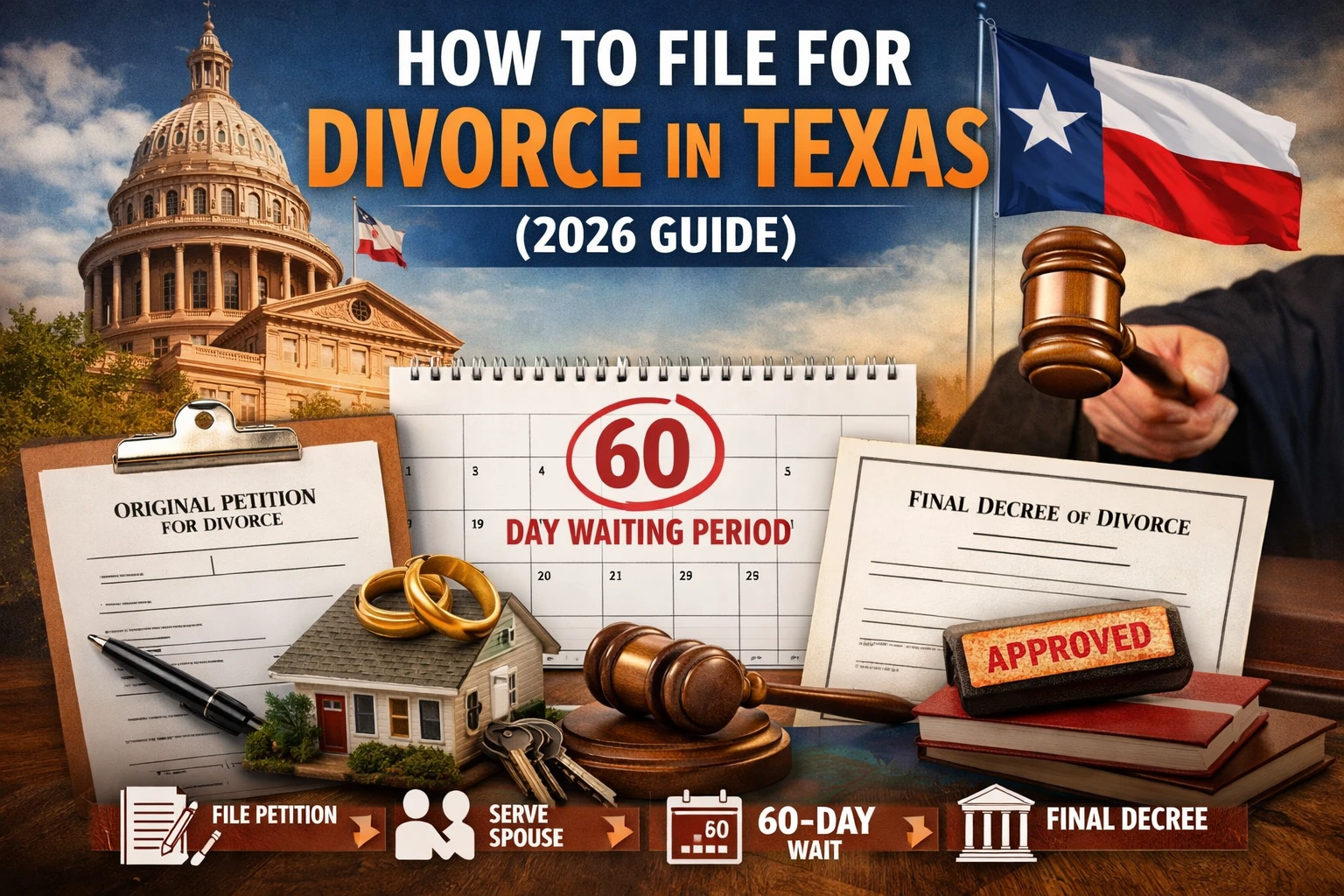
The process works like this: you file your original petition, wait 60 days, submit your proof-up documents (including an affidavit), and the clerk processes your final decree. No courtroom appearance necessary.
The biggest mistake couples make is rushing to file before they’ve reached a complete agreement on all issues. An incomplete agreement turns your uncontested divorce into a contested one, and that means court hearings, delays, and higher costs. Spend the time upfront to resolve everything in writing.
Understanding the Texas Divorce 60-Day Waiting Period
Texas law requires a mandatory 60-day waiting period between filing your original petition for divorce and when the court can finalize your divorce decree. This period exists whether your divorce is contested or uncontested.
The 60 days starts the day you file. You cannot skip it, shorten it, or waive it under any circumstances. Even if both spouses agree to everything on day one, you must wait the full 60 days before your final decree can be signed.
Here’s what happens during this waiting period:
- You and your spouse finalize all settlement agreements
- You prepare your proof-up documents and affidavit
- You organize all required paperwork
- The other spouse receives notice (waiver of service or formal service)
- You file your final paperwork with the district court clerk
Many couples use this 60-day window productively. Rather than sitting idle, you’re gathering documents, ensuring accuracy, and preparing everything for the final filing. This reduces errors and speeds up approval once the waiting period ends.
The 60-day waiting period is mandatory and non-negotiable. Plan your timeline around it, don’t expect your divorce to finalize faster, even in an uncontested case.
Filing Your Original Petition for Divorce
Your original petition for divorce is the first document you file with the district court clerk. It officially starts your case and informs the court and your spouse that you’re seeking a divorce.
The petition must include:
- Your name, address, and contact information
- Your spouse’s name and address
- The county where you’re filing (jurisdiction and venue)
- Whether you have minor children
- Whether you own real property
- A statement that your marriage is insupportable (no-fault grounds)
- Your request for the divorce and any temporary orders
You file this document at your local district court. Filing fees vary by county. Some courts accept digital filing; others require in-person or mail submission.
Filing an incomplete or inaccurate petition delays everything. The clerk will reject forms with missing information, wrong case numbers, or improper formatting. This is one of the most common clerical errors that derail uncontested divorces. Double-check every field before submitting.
Uncontested Divorce Forms Texas: What You Need to File
Essential Documents for Uncontested Divorce
An uncontested divorce in Texas requires specific forms and documents. Missing even one can stall your case or force you to refile.

The core documents are:
- Original Petition for Divorce: Starts your case
- Waiver of Service: Signed by your spouse, confirming they received notice and agree not to contest
- Agreed Divorce Decree: The final order listing all settlement terms
- Affidavit for Prove-Up: Your sworn statement confirming the facts in your petition and decree
- Residency Affidavit: Confirming you meet Texas residency requirements
- Vital Statistics Form: If you have minor children
For divorces involving minor children, you’ll also need:
- Suit Affecting Family Relationship (SAAFR) documents: Court-specific forms for child custody and support
- Child Support Worksheet: Calculating support obligations
- Parenting Plan or Custody Agreement: Detailing visitation and decision-making
For divorces with real property, you may need:
- Property Division Schedule: Listing all assets and debts
- Deed transfers (if applicable)
- Mortgage or lien documentation
Digital Filing and E-Filing Considerations
Many Texas courts now accept electronic filing through their e-filing portals. Digital filing is faster, creates an automatic timestamp, and reduces clerical errors from handwritten documents.
Before filing digitally, check your district court’s website for:
- Whether e-filing is available for divorce cases
- Required file formats (usually PDF)
- Login credentials or registration requirements
- Filing fee payment method
- Deadline for submission
Digital filing is faster and leaves less room for error, but it requires careful attention to file format and size limits. Most courts reject PDFs over 10 MB or files with incorrect naming conventions. Test your document before final submission to avoid rejection and restart delays.
Proving Up a Divorce in Texas: The Affidavit Process
After the 60-day waiting period ends, you must file an affidavit for prove-up. This sworn statement tells the court that the facts in your petition and agreed decree are true and accurate.
The affidavit confirms:
- You meet residency requirements (lived in Texas for at least 6 months)
- Your marriage is insupportable (irretrievable breakdown)
- All property division terms are fair and accurate
- All child support and custody terms are in the children’s best interest
- Both spouses signed the agreed decree voluntarily
Common mistakes in the affidavit include:
- Unsigned or unnotarized document
- Incorrect case number or court name
- Conflicting information (different addresses or dates in different documents)
- Missing notary seal or signature
- Affidavit dated before the 60-day period ends
Post-Filing Steps and Communication Etiquette
Once you file your original petition, communication between spouses becomes more formal. Here’s the right approach:
Before finalizing the agreed decree:
- Communicate directly with your spouse to finalize all settlement terms
- Put agreements in writing, never rely on verbal promises
- Exchange documents through email (create a paper trail)
- Use neutral language; avoid accusatory or emotional language
After filing but before prove-up:
- Limit communication to settlement details and document preparation
- Avoid discussing the divorce on social media or with mutual friends
- Do not make major financial or property decisions without your spouse’s written consent
- Keep all communications professional and documented
After filing the affidavit:
- Minimal communication is necessary
- If the court requests clarification, respond promptly through your attorney or Ready Divorce Service
- Do not contact the judge directly, all communication goes through the clerk’s office
Post-filing communication mistakes can derail an uncontested divorce faster than almost anything else. One angry text or a social media rant can give your spouse grounds to contest. Stay professional, stay documented, and keep emotions out of every interaction.
Document Organization Checklist and Common Clerical Errors
| Document | Filed? | Date | Notes |
|---|---|---|---|
| Original Petition for Divorce | ☐ | _____ | _____ |
| Waiver of Service (signed) | ☐ | _____ | _____ |
| Agreed Divorce Decree | ☐ | _____ | _____ |
| Affidavit for Prove-Up (notarized) | ☐ | _____ | _____ |
| Residency Affidavit | ☐ | _____ | _____ |
| Child Support Worksheet (if applicable) | ☐ | _____ | _____ |
| Property Division Schedule (if applicable) | ☐ | _____ | _____ |
| Filing Fee Receipt | ☐ | _____ | _____ |
Common clerical errors that delay finalization:
Case number mismatches, The case number appears on your filing receipt. Use this exact number on every subsequent document. A typo here causes the court to file your paperwork under the wrong case.
When Your Uncontested Divorce Finalizes Without Court
Once the judge signs your final decree of divorce, your uncontested divorce is complete. The clerk issues an official copy, and you’re legally divorced.
The final decree includes:
- The date your marriage is dissolved
- Property division terms
- Custody and support arrangements (if applicable)
- Any other court orders
The entire timeline typically looks like this:
- Day 1: File original petition (60-day waiting period begins)
- Day 60+: File affidavit for prove-up
- Day 61-90: Judge reviews and signs decree
- Day 90+: Certified copy issued
Frequently Asked Questions
Do you have to go to court to finalize an uncontested divorce in Texas?
No. If both spouses agree on all divorce terms and file the proper uncontested divorce forms Texas correctly, a judge can sign the final decree of divorce without requiring a court hearing. This process is called ‘prove-up’ and happens on paper. You avoid the time, cost, and stress of appearing in court, making it one of the biggest advantages of an uncontested divorce.
What is the Texas divorce 60-day waiting period, and when does it start?
Texas law requires a mandatory 60-day waiting period between filing your original petition for divorce and when the final decree can be signed. The waiting period begins on the date the petition is filed with the district court. During this time, you and your spouse finalize your agreement, serve documents properly, and prepare the affidavit for prove-up. This waiting period applies to all divorces, contested or uncontested, with limited exceptions.
What documents do I need to file for an uncontested divorce in Texas?
You need the original petition for divorce, a proposed final decree of divorce, and an affidavit for prove-up. If you have minor children, you must also file a child support worksheet and a suit affecting family relationship (SARL) form. If community property is involved, include a property division agreement. All documents must comply with Texas court rules and the clerk of the court’s local requirements. Errors can delay finalization, so accuracy is critical.
How long does it actually take to finalize an uncontested divorce in Texas?
The minimum time is 60 days from the filing date, due to the mandatory waiting period. After that, if all documents are correct and properly filed, the judge typically signs the final decree within 1-4 weeks. Total time is usually 2-3 months, though it can vary depending on court processing speed and whether you need to correct any clerical errors. Proper document organization and accuracy speed up the process significantly.