Table of Contents
- What Is the Texas Divorce 60-Day Waiting Period?
- When Does the 60-Day Clock Start in Your Divorce?
- Exceptions to the Texas Divorce 60-Day Waiting Period
- How to Waive the 60-Day Waiting Period in Texas Divorce
- Understanding the Texas Divorce Process and Timeline
- What Happens During the 60-Day Waiting Period
- Complete Texas Divorce Timeline: From Filing to Final Decree
- Common Mistakes to Avoid During the Waiting Period
Texas Divorce 60-Day Waiting Period: A Complete Guide
Last Updated: August 2, 2026
Understanding the texas divorce 60 day waiting period is essential if you’re filing for divorce in Texas. The 60-day waiting period is a statutory requirement that affects every divorce filed in Texas, and knowing how to navigate it properly can mean the difference between a smooth process and unnecessary complications.
This guide covers everything you need to know about the waiting period: when it starts, what exceptions exist, what you can accomplish during those 60 days, and how to prepare for the final decree.
What Is the Texas Divorce 60-Day Waiting Period?
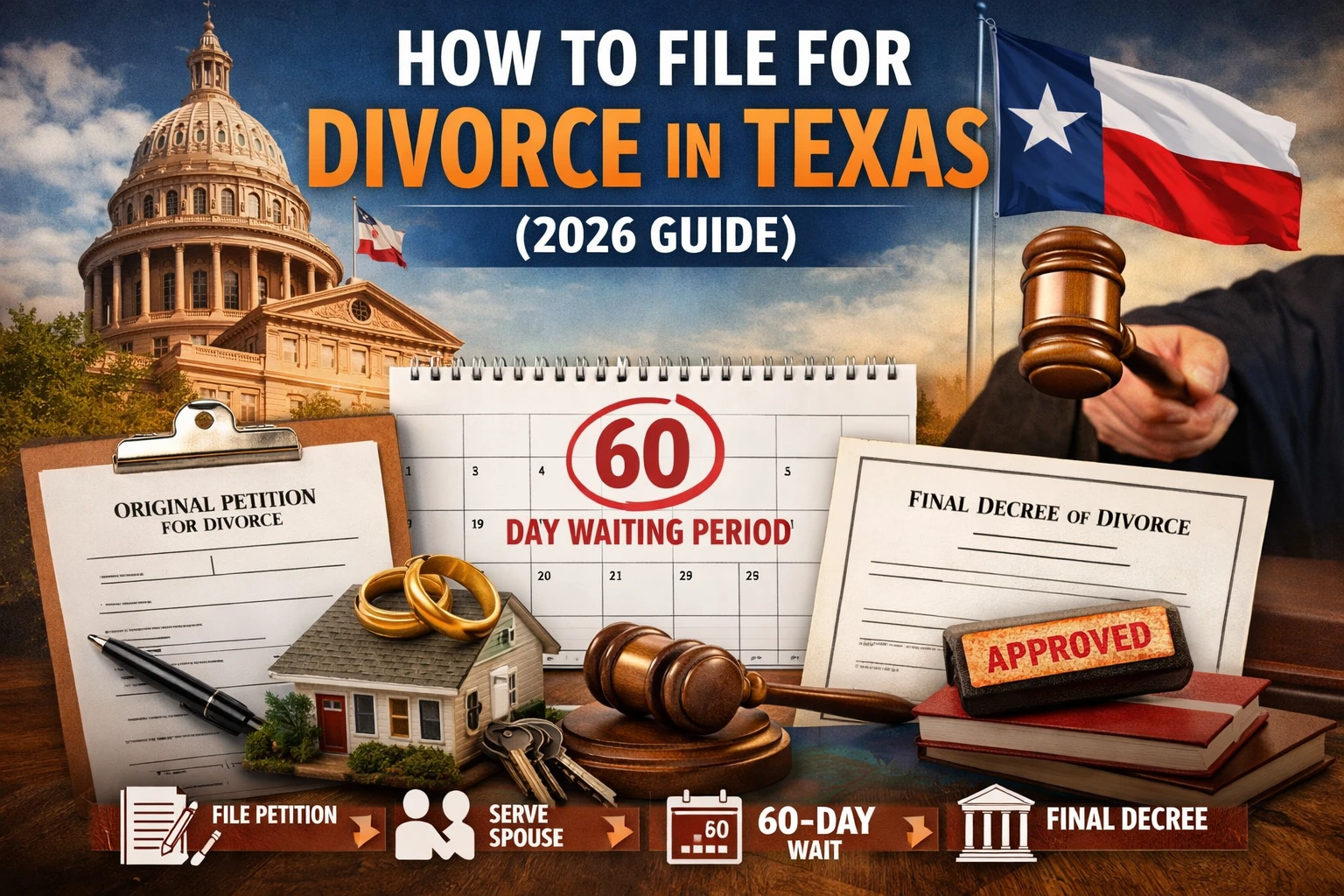
The 60-day waiting period is a mandatory statutory requirement under the Texas Family Code that prevents a divorce decree from being finalized until at least 60 days have passed from the file-stamped date of your Original Petition for Divorce. This period applies to every Texas divorce, uncontested or contested, unless a court grants an exception.
The waiting period gives both spouses time to reconsider, negotiate settlement terms, and ensure they understand the finality of divorce before a judge signs the decree. According to Texas Family Code Section 6.702, this waiting period applies to all divorces filed in Texas unless a court finds that the waiting period should be waived.
The 60-day waiting period is mandatory in Texas divorce proceedings and prevents finalization of your divorce decree until this time has passed from the filing date, regardless of whether you and your spouse agree on all terms.
When Does the 60-Day Clock Start in Your Divorce?
The clock starts ticking on the file-stamped date, the exact date the district clerk stamps your Original Petition for Divorce when it’s officially filed. This is not the date you prepare the paperwork or sign it, it’s the date the district clerk receives and time-stamps your petition.
The file-stamped date appears on the first page of your petition. Calculating your exact end date requires precision: if your petition is file-stamped on January 15, 2026, your 60-day period ends on March 16, 2026. The 60 days include weekends and holidays, Texas courts count calendar days, not business days.
The file-stamped date starts the clock regardless of when your spouse is served with the divorce petition.
Mark your calendar 60 days from the file-stamped date. Ready Divorce Service helps clients identify this exact date upfront so there are no surprises when it’s time to finalize the decree.
Exceptions to the Texas Divorce 60-Day Waiting Period
Not every divorce must wait the full 60 days. Texas Family Code provides limited exceptions where a court can waive or shorten the waiting period.
Family Violence and Protective Orders
The most common exception applies when family violence is involved. If you have obtained a protective order against your spouse, or if you can demonstrate that you or your children have been victims of family violence, a judge may waive the 60-day waiting period entirely. You’ll need documentation: police reports, medical records, witness statements, or testimony about the abuse.
Court-Ordered Waiver for Other Circumstances
Beyond family violence, a judge can waive the 60-day period “for good cause shown.” Courts have granted waivers in situations involving terminal illness, military deployment requiring immediate legal clarity on marital status, or severe financial hardship directly caused by the pending divorce status. However, courts rarely grant these waivers. Simply wanting to move faster, even if both spouses agree, is not “good cause.”
How to Waive the 60-Day Waiting Period in Texas Divorce
To request a waiver, file a Motion to Waive the Waiting Period with the district clerk. This motion must include a detailed explanation of the circumstances justifying the waiver and supporting documentation.
Your motion should include:
- A clear statement of the facts supporting your request
- References to the specific Family Code provisions allowing the waiver
- Supporting documentation (protective order, medical records, military orders, etc.)
- A request for the judge to sign an order granting the waiver
The judge reviews your motion and may grant it without a hearing, or may schedule a hearing where both spouses can present evidence.
Waiver of Service Impact on Timeline
A different concept, waiver of service, can affect your overall timeline but doesn’t directly waive the 60-day waiting period. When your spouse signs a waiver of service, they acknowledge receipt of the divorce petition without requiring formal service by a sheriff or process server. This saves time and money but doesn’t shorten the mandatory 60-day clock.
Do not assume that both spouses agreeing to the divorce means you can skip the 60-day waiting period. Agreement speeds up the process during those 60 days, but the waiting period itself remains mandatory unless a judge grants an exception.
Understanding the Texas Divorce Process and Timeline
The 60-day waiting period is one component of a larger divorce timeline.
Uncontested Divorce Texas: A Faster Path
An uncontested divorce is one where both spouses agree on all major issues: property division, child custody, child support, spousal support, and debt allocation. The 60-day waiting period still applies, but the process moves efficiently during those 60 days because there’s no litigation. You and your spouse can prepare your settlement agreement, financial disclosures, and parenting plan during the waiting period. From file date to final decree in an uncontested divorce typically takes 70-90 days total.
Contested Divorce and Extended Timelines
A contested divorce involves disputes over property, custody, support, or other issues. The 60-day waiting period is just the beginning. These cases routinely take 6 months to 2 years or longer, involving discovery, depositions, motions, and potentially a trial.
What Happens During the 60-Day Waiting Period
The waiting period is not a passive time. This is when critical work happens that determines whether your divorce is efficient or complicated.
Temporary Orders and Immediate Court Relief
Even though your divorce decree won’t be finalized for 60 days, you don’t have to wait that long for court orders addressing immediate needs. You can file a Motion for Temporary Orders requesting the court to issue orders on child custody, child support, spousal support, use of the family home, and attorney’s fees. Temporary orders take effect immediately and remain in place until the final decree is signed.
This is particularly important in situations involving children who need immediate financial support, one spouse threatening to leave the state with children, assets at risk of being hidden or spent down, or domestic violence requiring protective measures.
Preparing Financial Disclosures and Settlement Agreements
Texas law requires both spouses to exchange detailed financial disclosures. During the 60-day waiting period, you should gather financial documents (tax returns, bank statements, retirement account statements, property deeds), prepare your financial disclosure forms with complete accuracy, and exchange disclosures with your spouse. If you’re pursuing an uncontested divorce, this is also the time to negotiate a settlement agreement.
Mediation and Negotiation During the Waiting Period
Many divorces settle through mediation, a process where a neutral third party helps spouses negotiate. Scheduling mediation during the 60-day window is smart planning because it gives you time to reach agreement before the final decree is needed. Mediation is less expensive than litigation and gives both spouses more control over the outcome.

Complete Texas Divorce Timeline: From Filing to Final Decree
A clear understanding of the entire timeline helps you manage expectations and stay organized.
The Role of the District Clerk in Your Filing
The district clerk’s office is your starting point. When you file your Original Petition for Divorce, the clerk assigns a case number, stamps your petition with the file date and time, and opens your case file. The file-stamped date from the clerk’s office is the date that starts your 60-day waiting period.
Court Hearing and Judge’s Signature on Divorce Decree
In an uncontested divorce, there may be no hearing at all. You submit your agreed-upon documents to the judge, the judge reviews them, and if they comply with Texas law and appear fair, the judge signs the decree. In a contested divorce, the judge may hold a hearing on temporary orders, then later hold a trial where both spouses present evidence and arguments.
The judge’s signature on the final decree is the moment your divorce is official. Once signed, the decree is filed with the district clerk, and you receive a certified copy. This certified copy is your proof of divorce for all legal purposes: changing your name, updating beneficiaries, remarrying, and updating insurance or employment records.
Common Mistakes to Avoid During the Waiting Period
Understanding what not to do is as important as knowing what to do.
Mistake 1: Miscalculating the End Date
Many people count the 60 days incorrectly, thinking the waiting period ends on a business day. The 60-day period is exactly 60 calendar days from the file-stamped date.
Mistake 2: Assuming Agreement Eliminates the Waiting Period
Even if both spouses fully agree on everything, the 60-day waiting period applies. You cannot finalize the divorce before 60 days have passed unless a judge grants an exception.
Mistake 3: Failing to Exchange Financial Disclosures
Texas law requires both spouses to exchange financial disclosures. If you skip this step or delay it, the judge may refuse to sign your final decree until the disclosures are complete and verified.
Mistake 4: Not Filing for Temporary Orders When Needed
If your situation requires immediate financial support, custody arrangements, or asset protection, file for temporary orders. Don’t wait for the final decree.
Mistake 5: Making Major Decisions About Assets or Children Without Legal Guidance
During the waiting period, avoid making unilateral decisions about selling property, relocating with children, or spending down assets. These actions can complicate your divorce and may be viewed negatively by the court.
Mistake 6: Ignoring Deadlines for Motions or Responses
If your spouse files a motion, you have a deadline to respond. If the court schedules a hearing, mark the date on your calendar. Missing deadlines can result in default judgments against you or other adverse consequences.
Navigating the texas divorce 60 day waiting period requires planning, accuracy, and understanding of Texas Family Code requirements. The waiting period is mandatory, but it’s also an opportunity to prepare thoroughly, negotiate fairly, and ensure your final decree reflects your true agreement. At Ready Divorce Service, we help you prepare accurate documents, calculate your timeline correctly, and move through the waiting period efficiently. Our step-by-step guidance and document preparation services ensure you stay compliant with Texas law while keeping your process affordable and stress-free. Start with our questionnaire to explore how Ready Divorce Service can support your uncontested divorce.
Frequently Asked Questions
When does the 60-day waiting period for Texas divorce start?
The 60-day clock begins on the date your Original Petition for Divorce is file-stamped by the District Clerk. This is the official filing date recorded on your documents. If the respondent waives service of process, the waiting period still starts from the file-stamped date, not the waiver date. Calculating the exact end date requires adding 60 calendar days to this filing date. Understanding this timing is critical for planning your divorce timeline and knowing when you can finalize your divorce decree.
Can you waive the 60-day waiting period in a Texas divorce?
Yes, the 60-day waiting period can be waived, but only under specific circumstances. You must obtain a court order granting the waiver, and this typically requires demonstrating good cause to the judge. Family violence situations may qualify for waiver. Both the petitioner and respondent generally must agree to the waiver, or the court must find compelling reasons to grant it without full agreement. Waiver of service by the respondent does not automatically waive the waiting period itself. Contact the District Clerk or consult a legal professional to understand your specific eligibility for waiver.
What happens if I don’t follow the Texas divorce 60-day waiting period requirement?
Attempting to finalize your divorce before the 60-day waiting period expires will result in the court rejecting your divorce decree. The judge cannot sign off on your final divorce decree until the mandatory waiting period has passed. This means any attempt to rush the process will simply delay your divorce further. The waiting period is a statutory requirement under Texas Family Code that courts strictly enforce. Proper timing ensures your divorce decree is valid and enforceable. Planning ahead and using the waiting period productively, such as preparing financial disclosures or pursuing mediation, makes better use of this mandatory timeline.
Does the 60-day waiting period apply to uncontested divorces in Texas?
Yes, the 60-day waiting period applies to all divorces in Texas, including uncontested divorces where both spouses agree on all terms. Even when you and your spouse have reached a complete settlement agreement and filed an uncontested divorce, you must still wait the full 60 days before the judge can sign your divorce decree. However, uncontested divorces often proceed more smoothly during this period because you can focus on finalizing paperwork and ensuring compliance with Texas Family Code requirements rather than engaging in litigation. The waiting period gives you time to prepare all necessary documents accurately, which is especially valuable for individuals using document preparation services to ensure full legal compliance.
📞 Get Started Today – Your Peaceful Divorce Is Just a Click Away
When you’re ready to move on, we’re ready to help.
📲 Call us now at (800) 432-0018
🖥️ Start your divorce online today