If you and your spouse agree that the marriage should end, the question becomes practical fast: how to file uncontested divorce in Texas without wasting time, money, or energy. For many Texans, the process is more manageable than they expect, but only if the paperwork is done correctly and the steps are followed in the right order.
An uncontested divorce works best when both spouses are in agreement on the major terms. That usually includes property and debt division, whether either spouse will change a name, and, if children are involved, conservatorship, possession, support, and medical coverage. When those issues are settled, Texas law gives you a path to move forward without a contested courtroom fight.
What counts as an uncontested divorce in Texas?
A Texas divorce is generally considered uncontested when one spouse files and the other spouse does not dispute the divorce or the terms. In real life, that means there is a full agreement before the case is finished. If either spouse disagrees about money, parenting, property, or the final wording of the orders, the case can stop being uncontested.
That distinction matters. Many people assume a divorce is uncontested just because both spouses want it. Wanting a divorce is only part of it. The case also needs clear agreement on the outcome. If there is confusion about retirement accounts, a house, child support, or separate property claims, those details need to be addressed before the divorce can be finalized smoothly.
Before you file uncontested divorce in Texas
Texas has basic eligibility rules. At least one spouse must have lived in Texas for the last six months, and at least one spouse must have lived in the county where the case is filed for the last 90 days. If those residency requirements are not met, the court may not be able to take the case yet.
You also need a legal ground for divorce. In most uncontested cases, the filing spouse uses insupportability, which means the marriage cannot continue because of conflict or discord that cannot reasonably be resolved. It is the standard no-fault ground and usually the simplest option when both parties are cooperating.
There are also situations where extra caution is needed. If there has been family violence, if a spouse cannot be located, if one spouse refuses to sign, or if the marital estate is unusually complex, a simple uncontested process may not fit. The same is true if there are disputes about children or hidden assets. In those cases, procedural help alone may not be enough.
The basic steps for how to file uncontested divorce in Texas
The process has a clear structure, even though the exact forms can vary depending on your family situation.
1. Prepare the right divorce forms
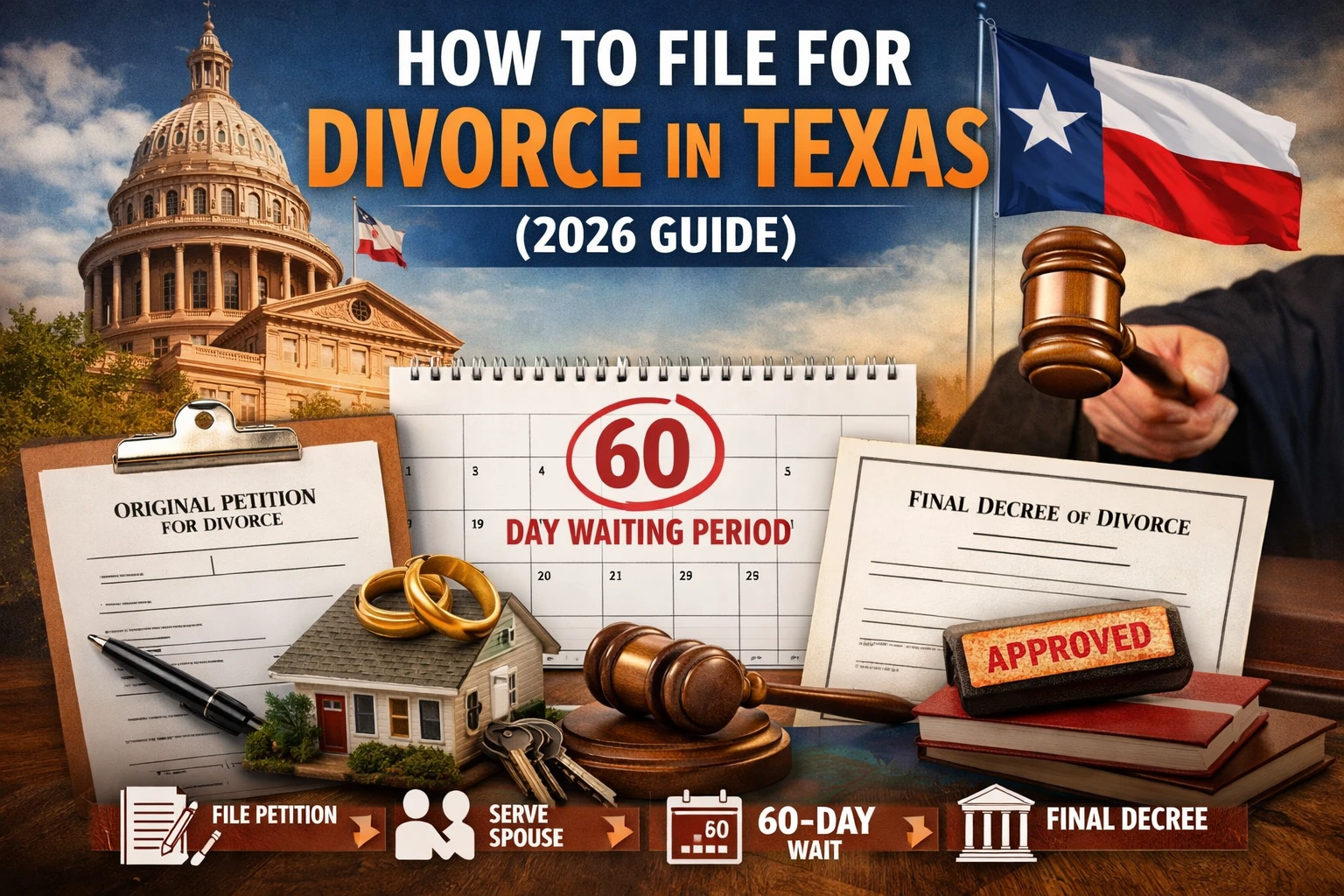
The first step is preparing the petition and related documents. The filing spouse, called the petitioner, starts the case by filing an Original Petition for Divorce in the proper Texas county. You may also need a civil case information sheet or county-specific filing documents, depending on local court procedures.
If children are involved, the paperwork becomes more detailed because the final orders must cover custody, visitation, child support, and medical support. If there is no real property, no children, and limited assets, the paperwork is usually more straightforward. That said, even simple cases can be delayed by small mistakes, especially when names, dates, legal descriptions, or required notices are missing.
2. File in the correct county
Once the forms are prepared, the petition is filed with the district clerk in the county that meets the residency rules. Filing can often be done electronically, although some counties have their own preferences and procedures. A filing fee is typically required unless you qualify for a fee waiver.
After filing, the court assigns a cause number and the case officially begins. Keep a copy of everything that was filed. You will need those records as the case moves toward finalization.
3. Give legal notice to the other spouse
Texas law requires the other spouse, called the respondent, to receive legal notice unless that notice is formally waived. In an uncontested divorce, this is often handled with a signed Waiver of Service. That document tells the court the respondent received notice of the case and does not require formal service by a process server or constable.
Timing matters here. A waiver should not be signed too early, and it must be completed correctly to be valid. If it is not, the court may reject it and require formal service instead. This is one of the more common places where people lose time.
4. Draft the Final Decree of Divorce
The Final Decree of Divorce is the document that actually tells the court what orders both spouses want. It is not just a closing form. It is the legal blueprint for what happens after the divorce is granted.
This decree should clearly state how property and debts are divided, whether either party keeps or transfers vehicles, what happens with bank accounts or retirement funds, and any child-related terms if minor children are involved. If a name change is requested, it should be included here as well. The more complete and accurate the decree is, the less likely the court is to raise issues at the prove-up hearing.
5. Wait the required 60 days
Texas has a mandatory waiting period in most divorce cases. Generally, at least 60 days must pass from the date the petition is filed before the divorce can be finalized. There are limited exceptions, such as certain family violence situations, but most uncontested divorces must wait the full period.
This does not mean nothing happens during those 60 days. It is the time to make sure all paperwork is complete, signatures are in place, and the final decree is ready. If children are involved, this is also the time to make sure support calculations and parenting terms are accurate and realistic.
6. Finish the case with the court
After the waiting period ends, the petitioner usually appears for a brief hearing, often called a prove-up. In some counties, uncontested divorces may be handled with specific local procedures, and some courts have special settings or document review requirements. The judge reviews the paperwork, asks a few questions, and, if everything is in order, signs the Final Decree of Divorce.
Once the judge signs, the divorce is final. You should get a file-stamped copy of the decree and keep it in a safe place. You may need it later for name change purposes, refinancing, retirement account division, or updating records.
What if children are involved?
An uncontested divorce can still be uncontested when children are part of the case, but it requires more care. Texas courts focus heavily on whether the proposed orders are in the best interest of the child. That means the parenting plan needs to be complete, workable, and legally compliant.
Parents usually need to address conservatorship, possession and access, child support, and medical support. If one parent is paying support, the amount should generally align with Texas guidelines unless there is a clear reason for a different arrangement. Courts tend to look closely at child-related terms, so vague agreements often create delays.
This is one area where people sometimes underestimate the detail required. Agreeing in principle is helpful, but the court needs specific language, dates, duties, and financial terms in the decree.
Common mistakes that slow down a Texas uncontested divorce
Most delays in an agreed divorce are not caused by conflict. They come from incomplete forms, incorrect county filing, invalid waivers, missing child support language, or final decrees that do not match the petition. Small procedural problems can lead to rejected filings or court settings that have to be rescheduled.
Another common issue is assuming every county works exactly the same way. Texas divorce law is statewide, but local filing practices and court preferences can differ. That is why process guidance matters. A case can be uncontested and still become frustrating if the documents are not prepared with the right level of care.
Do you need a lawyer to file?
Not every uncontested divorce requires full attorney representation, especially when both spouses agree and the issues are straightforward. Many Texans are looking for affordable help with document preparation and procedural guidance rather than a traditional litigation model.
That said, it depends on the facts. If there are disputes, safety concerns, complicated property questions, or uncertainty about legal rights, legal advice may be appropriate. A lower-conflict divorce should still be handled carefully. Saving money on the front end does not help if the final orders are incomplete or create problems later.
If you want a more guided and affordable path, Ready Divorce Service helps Texans prepare and move through the uncontested divorce process with clarity and confidence.
A divorce may be emotionally heavy, but the filing process does not have to stay confusing. When both spouses are truly in agreement, a clear plan, accurate paperwork, and the right support can make the next step feel a lot more manageable.
Get Started Today – Your Divorce Is Just a Click Away
If you’re in Texas and want your divorce handled quickly, correctly, and without unnecessary stress, we can help you from start to finish.
👉 Start here: Complete the Divorce Questionnaire
📞 Call now: (469) 913-4000