When people search for county clerk divorce filing Texas, they are usually not looking for legal theory. They want to know where the paperwork goes, what the clerk actually does, and how to avoid getting stuck over a missing form, wrong county, or rejected filing. That is the practical part of divorce in Texas, and it matters more than most people expect.
If your divorce is uncontested, the filing process can be much more manageable than people fear. But manageable does not mean automatic. County clerks handle documents, fees, and case records. They do not give legal advice, rewrite your paperwork, or decide whether your agreement protects you. Knowing that difference can save you time, money, and a lot of frustration.
What the county clerk does in a Texas divorce
In a Texas divorce, the county clerk is the office that receives and processes your filing. That includes opening the case when the Original Petition for Divorce is submitted, collecting filing fees, stamping documents, and entering the case into the court system. In many counties, the clerk also manages e-filing records and helps direct filers to the right court or procedural resource.
What the clerk does not do is just as important. The clerk cannot tell you which divorce forms to use, whether your settlement terms are fair, how to handle retirement accounts, or what to do if your spouse stops cooperating. If you ask, many clerk offices will correctly tell you they cannot provide legal advice.
That gap is where many people get confused. They assume filing with the clerk means someone at the courthouse will walk them through the whole case. In reality, the clerk processes the paperwork, but the responsibility for accurate forms, proper service or waiver, and final court-ready documents stays with you.
County clerk divorce filing Texas – where do you file?
Texas divorces are usually filed in the district clerk or county clerk system depending on the county’s structure and how local courts are organized. The key issue for most people is not the office title but whether they are filing in the correct county and following that county’s filing procedure.
In general, you file in the county where either spouse has lived for at least 90 days, as long as one spouse has also lived in Texas for at least six months before filing. If those residency rules are not met, the case may be rejected or delayed.
This is one of the first places where details matter. A person may live in one county now but not meet the county residency requirement there yet. Another person may assume they should file where they got married, which is usually irrelevant. The right county is based on residency, not where the marriage happened.
If you live in places like Tarrant County, Dallas County, Denton County, Collin County, Ellis County, Bexar County, or Harris County, local filing procedures can vary in small but important ways. Some counties are more e-filing centered. Some have local standing orders that must be reviewed early in the case. Those county-specific details can affect timing and paperwork even in a straightforward agreed divorce.
The basic documents usually involved
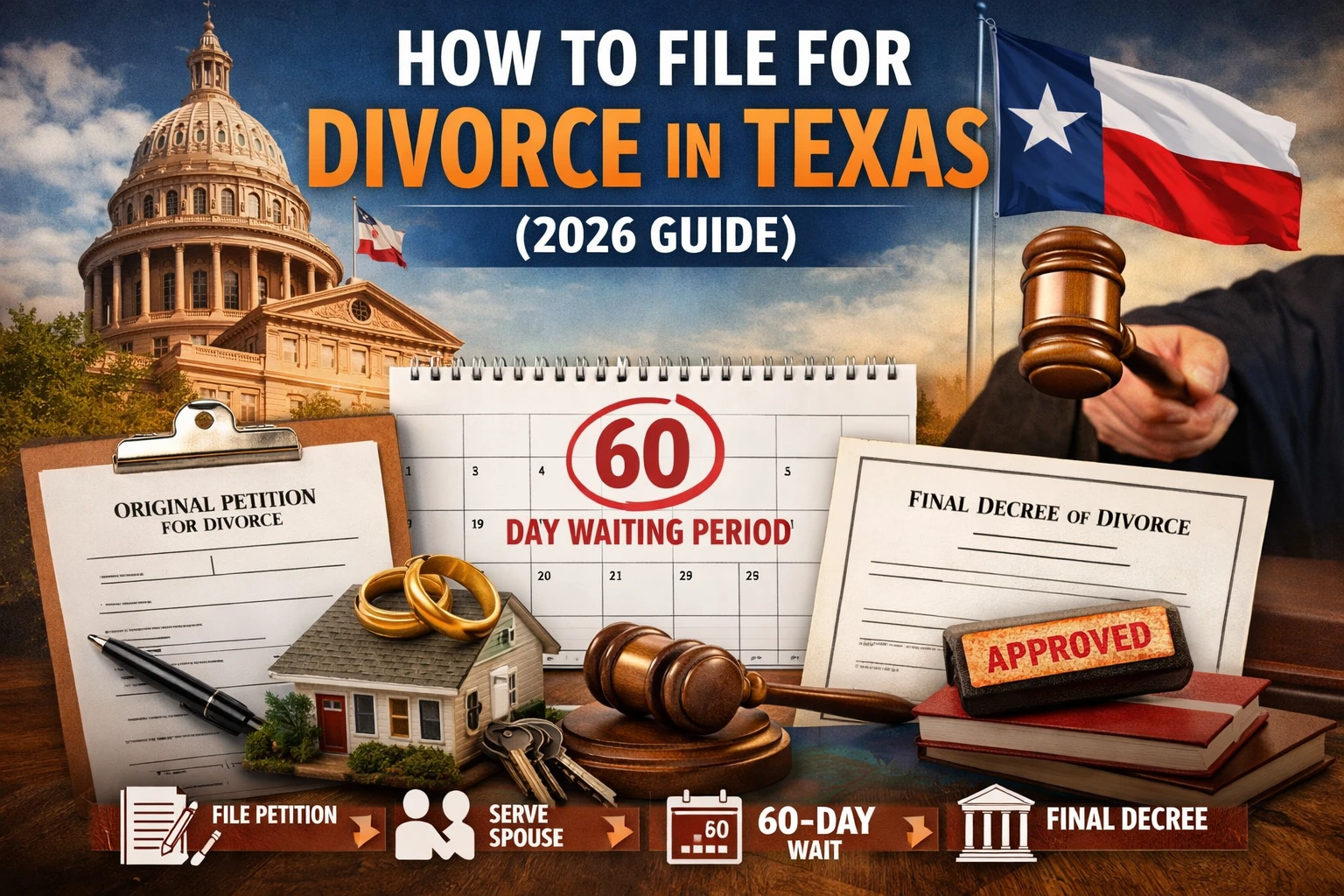
Most uncontested Texas divorces start with the Original Petition for Divorce. That document opens the case. After that, the required paperwork depends on your situation, especially whether you have children, own property together, or need your spouse to sign a waiver.
For many agreed divorces, people also deal with a Civil Case Information Sheet or county-required filing data, a Waiver of Service or Respondent’s Answer, and the Final Decree of Divorce. If children are involved, there may be additional forms related to conservatorship, possession schedules, child support, medical support, and state reporting requirements.
This is where do-it-yourself filing often becomes harder than expected. The names of forms sound simple, but each document has to match the facts of your case. If the petition says one thing and the final decree says another, the court may require corrections before finalizing the divorce.
How the filing process usually works
For an uncontested divorce, the process often begins with preparing the opening documents and filing the petition with the appropriate county clerk system. Once filed, the case receives a cause number and is assigned to a court.
Then the other spouse must be formally brought into the case. In an agreed divorce, that often happens through a filed waiver or answer rather than formal service by a constable or process server. That can save money and reduce stress, but the waiver has to be done correctly. Timing matters. Signing too early or using the wrong format can create problems.
After filing, Texas imposes a 60-day waiting period in most divorce cases. That waiting period starts when the petition is filed, not when the spouses separate or finish negotiating. Even when both parties agree, most couples cannot finalize before that period ends.
During the waiting period, the parties usually finalize their decree and any supporting documents. Once the case is ready, the final paperwork is submitted to the court for approval through the county’s process. In some counties, prove-up appearances may be brief and simple. In others, local practice may shape how the final step is handled.
Common mistakes that slow down filing
The biggest filing problems are usually procedural, not dramatic. People file in the wrong county, use forms that do not fit their case, leave required sections blank, or submit a decree that does not match the petition. Parents may overlook child-related requirements. Spouses dividing a house or retirement account may assume the divorce decree alone handles every transfer, which is not always true.
Another common issue is confusing uncontested with easy. An uncontested divorce means both spouses agree on the major terms. It does not mean the court will ignore missing language, incomplete disclosures, or county-specific filing expectations.
Names also matter more than people think. If a spouse’s legal name is inconsistent across documents, the clerk and court may require corrections. Dates, addresses, children’s information, and requested relief all need to line up from one filing to the next.
Why uncontested cases usually move better with preparation
When both spouses agree, the process can be faster and less expensive, but only if the paperwork is prepared carefully from the start. Filing first and fixing later is rarely the cheapest route. A rejected filing or delayed final hearing can create more stress than taking the time to get the documents right.
That is especially true for working families who cannot afford multiple missed workdays, repeat filing fees, or the cost of hiring a litigation attorney after a preventable paperwork problem. Good preparation reduces those risks.
For many Texans, the most practical path is getting procedural help with document preparation and filing steps while keeping the case uncontested. That gives people structure without pushing them into a full attorney-led court fight they do not need.
When county clerk filing is not the whole answer
Sometimes people focus so much on the clerk filing that they miss the bigger issue – whether the divorce terms are complete. If you have real estate, retirement accounts, debts in both names, or children, the case needs more than a filed petition. It needs a decree that clearly addresses those issues.
That does not mean every divorce requires high-conflict litigation. It does mean paperwork should reflect real life. If one spouse keeps the car, who refinances the loan? If one parent provides health insurance, how is that stated? If a retirement account is divided, is a separate order needed later? Those details affect what happens after the judge signs.
This is also where support can make a measurable difference. A service focused on Texas uncontested divorce can help keep the process organized, affordable, and aligned with court procedure without adding unnecessary complexity.
A practical way to think about the next step
If you are preparing for county clerk divorce filing Texas, think in this order: confirm residency, identify the correct county, make sure your case is truly uncontested, prepare documents that fit your exact situation, and follow through on service, waiting periods, and finalization requirements. The courthouse is part of the process, but it is not the part that plans the case for you.
For many people, relief starts when the process stops feeling mysterious. Once you understand what the clerk handles and what you still need to do, the path gets clearer. And when the case is agreed, clear paperwork and steady guidance can make moving forward feel a lot more possible.
📲 Call us now at (800) 432-0018