If you are staring at a stack of court paperwork and wondering which form actually starts a divorce, this guide to Texas divorce forms is for you. The forms matter because one missing signature, one outdated version, or one skipped step can slow down a case that should have been straightforward. When both spouses agree on the major terms, the goal is not to make the process harder than it needs to be.
What this guide to Texas divorce forms covers
Texas divorce paperwork is not just one document. It is a sequence. Some forms open the case, some give the court the facts it needs, and some finalize the divorce. Which forms apply depends on whether you have children, whether property needs to be divided, whether your spouse will sign a waiver, and whether your county has local filing requirements.
That is why people often get tripped up. They hear that an uncontested divorce is simple, and it can be. But simple does not mean casual. Courts still expect accurate, complete paperwork.
The core divorce forms most Texas cases use
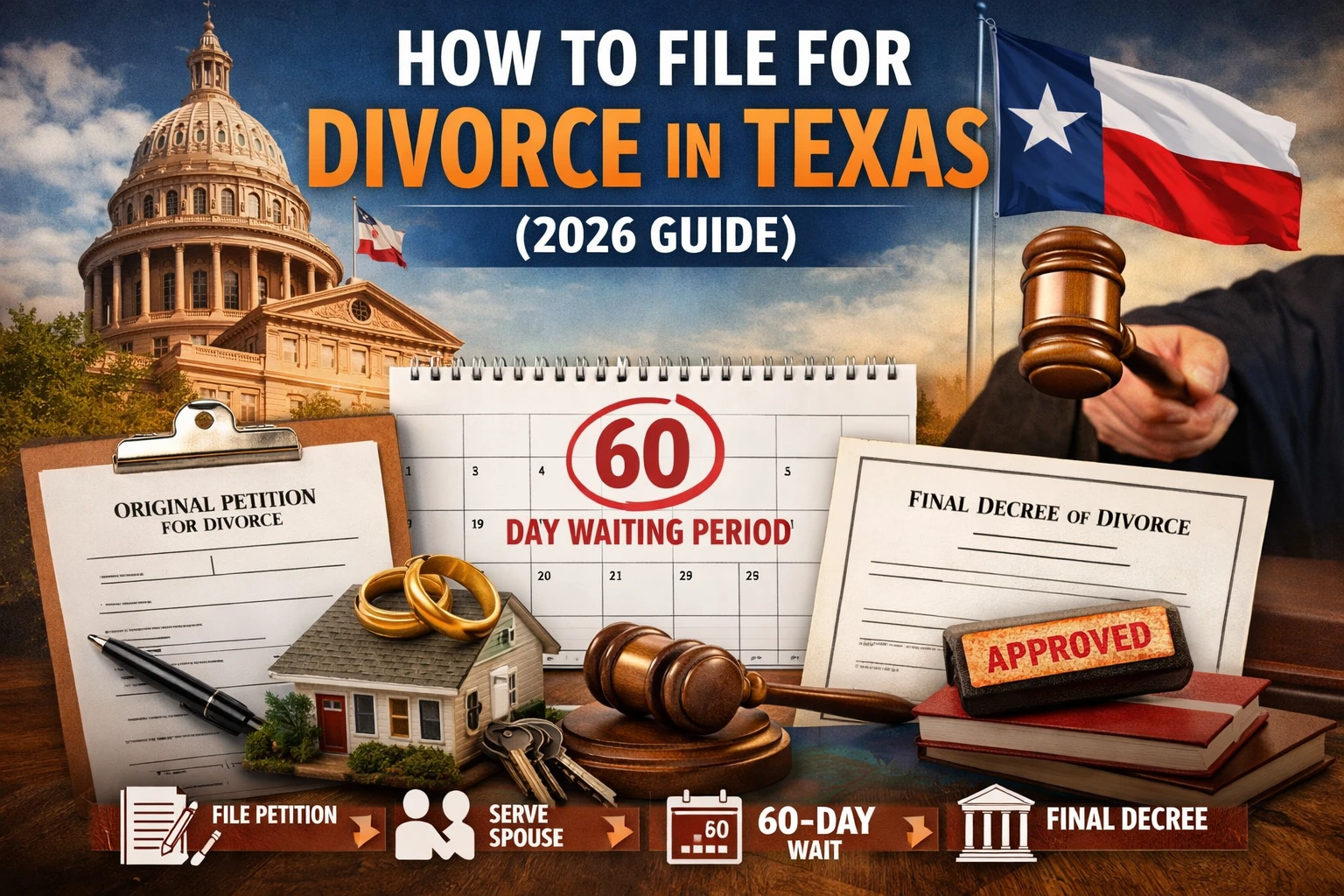
In most uncontested Texas divorces, the first key document is the Original Petition for Divorce. This is the form that opens the case and tells the court that one spouse is asking for a divorce. It includes basic information about the marriage, residency, children if any, and a general statement of the relief requested.
After that, many cases involve a Civil Case Information Sheet or other county-required filing cover documents, although local practice can vary. Some counties are stricter than others about format, attachments, and intake procedures. If you are filing in a larger county such as Dallas, Tarrant, Collin, Denton, Harris, Bexar, or Ellis, checking the county’s current filing requirements is worth the extra few minutes.
If your spouse is not going to file an answer and is fully cooperative, a Waiver of Service may be used. This document tells the court that your spouse received notice of the case and does not require formal service by constable, sheriff, or private process server. Timing matters here. A waiver generally should not be signed too early, and it must be completed correctly to be accepted.
If your spouse does want to formally participate in the case, they may file an Original Answer instead. In an agreed divorce, that does not usually mean a fight. It often just means they are appearing in the case and preserving notice rights.
The final and most important document is the Final Decree of Divorce. This is the order the judge signs to end the marriage. It must spell out the terms clearly, including property division, debt allocation, child conservatorship, possession schedules, child support, medical support, and any name change. A lot of people underestimate this form. It is not just a closing paper. It is the legal blueprint for what happens after the divorce.
Forms change based on whether children are involved
If you and your spouse have children under 18, the paperwork becomes more detailed. Texas courts need specific information about the children, where they have lived, and what parenting orders are being requested. In many cases, this includes a Suit Affecting the Parent-Child Relationship component within the divorce filing.
You may also need forms related to child support, medical support, and the required parenting provisions in the decree. In some cases, an income withholding order will also be prepared so child support can be deducted from wages. Even in amicable cases, this part needs close attention because judges review child-related terms more carefully than simple property agreements.
If there are no minor children, the form set is usually leaner. That does not mean it is risk-free. Property and debt language still needs to be precise so there is no confusion later about vehicles, retirement accounts, credit cards, or the marital home.
Temporary forms are not always required
Many people assume every divorce needs temporary orders. That is not true. In a truly uncontested case where both spouses are cooperating and living under workable arrangements, temporary orders may not be necessary.
But if you need short-term rules while the divorce is pending, there may be additional forms and hearings involved. Temporary orders can address who stays in the home, who pays which bills, temporary custody schedules, and temporary support. If your case starts out agreed but there is conflict over immediate issues, the form list can expand quickly.
This is one reason it helps to be realistic. An uncontested divorce works best when both spouses are aligned not only on the final outcome, but also on how to get there.
Common mistakes people make with Texas divorce forms
The most common mistake is using forms that do not match the facts of the case. Someone with children may use a no-children decree. Someone with retirement assets may use a basic property section that leaves too much unresolved. Someone may sign a waiver incorrectly or file documents in the wrong order.
Another frequent problem is assuming the court will fix unclear language. Usually, it will not. Judges may reject incomplete documents, require corrections, or delay the prove-up until the paperwork is cleaned up. That creates frustration and often extra filing trips.
People also run into trouble with timing. Texas has a 60-day waiting period in most divorce cases, counted from the day the petition is filed. Even when everything is agreed, the divorce usually cannot be finalized before that period ends. Forms have to be prepared with that timeline in mind.
Filing procedure matters as much as the forms themselves
A guide to Texas divorce forms would be incomplete without talking about procedure. Having the right documents is only part of the job. They also have to be filed, served or waived properly, and presented in a way the court will accept.
In a standard agreed case, the process usually looks like this: one spouse files the petition, the other spouse files an answer or signs a waiver, both sides finalize the terms, the final decree is prepared, the waiting period runs, and one spouse attends the final hearing or prove-up. Some counties allow smoother e-filing workflows than others, but the legal sequence is still important.
If your county requires additional standing orders, local cover sheets, or hearing procedures, those details can affect timing. This is where many do-it-yourself cases lose momentum. The forms may be mostly right, but the case stalls because a local requirement was missed.
When a simple case is not actually simple
Not every agreed divorce fits neatly into a standard form packet. If one spouse is self-employed, if retirement needs to be divided, if real estate is involved, or if there are unusual custody arrangements, standard language may not be enough. The case can still be uncontested, but the documents need to reflect the actual deal.
That is an important distinction. Uncontested does not mean one-size-fits-all. It means both spouses agree. You still need paperwork that is accurate for your family, your finances, and your county.
This is also where affordable document support can make a real difference. For many Texans, the problem is not disagreement. It is uncertainty about which forms apply and how to complete them without mistakes. A service focused on uncontested Texas cases can help bridge that gap without pushing people into full litigation.
How to know if you need help with divorce paperwork
If you are unsure which decree version applies, if your spouse is willing to cooperate but hesitant to sign, or if you are worried about child-related language, getting guidance is usually cheaper than fixing rejected paperwork later. The same is true if you are filing in a busy county where local procedural expectations can be strict.
Ready Divorce Service works with Texans who want a lower-conflict path and need practical help getting the paperwork right. That kind of support is especially useful when the case should be simple in theory but still feels overwhelming on paper.
A practical way to approach your forms
Start by identifying the basics of your case: whether you meet Texas residency rules, whether children are involved, whether property and debt have been fully agreed, and whether your spouse will sign a waiver or file an answer. From there, make sure the petition and final decree match those facts exactly.
Then pay attention to timing and county procedure. Do not treat the final decree like a formality. It is the document that will govern what happens after the case is over, so it deserves careful review.
Divorce paperwork can feel cold and technical at the exact moment life feels anything but that. Still, the right forms, prepared the right way, can turn a stressful process into a manageable one and help you move forward with fewer delays and fewer surprises.
📞 Get Started Today – Your Peaceful Divorce Is Just a Click Away
When you’re ready to move on, we’re ready to help.
📲 Call us now at (800) 432-0018
🖥️ Start your divorce online today