A divorce case can be agreed, paperwork can be ready, and yet one unanswered question can stop the process cold: where do you actually file? When people search for the top Texas counties for eFiling divorce, they are usually looking for a county with a clear online process, accessible clerk information, and fewer surprises after submitting documents. That is a sensible goal, but the right county is not simply the biggest or fastest one.
For an uncontested Texas divorce, the correct county is generally determined by residency rules, not convenience. Once you know where you are allowed to file, electronic filing can make the administrative side of your case more organized and efficient. The key is understanding what eFiling does, what it does not do, and what your county clerk expects before you submit anything.
What Makes a County Good for eFiling Divorce?
A county is a practical choice for eFiling when its district clerk provides clear filing instructions, accepts documents through the statewide electronic filing system, and has procedures that are understandable for self-represented people. Larger counties often have more detailed online information and established procedures because they handle a high volume of family-law cases. That can help, but it does not mean every case moves quickly or that every filing issue can be handled online.
The strongest counties for an agreed divorce typically have three things in common: a well-defined district clerk process, clear guidance on filing fees and fee waivers, and local family-court procedures that are available before finalizing the case. You still need properly prepared documents, the correct case type, and a final decree that meets Texas requirements. eFiling is the delivery method. It does not fix missing information, incorrect forms, or agreements that are not legally complete.
Texas law also controls where a divorce may be filed. Usually, one spouse must have lived in Texas for at least six months and in the county of filing for at least 90 days. If you meet the state requirement but not the county requirement, waiting until you qualify may be necessary.
Top Texas Counties for eFiling Divorce: Practical Options
The following counties are often practical options for people who qualify to file there. They are not a legal ranking, and they are not interchangeable. Your residency, your children’s home county, and the court assigned to the case all matter.
Dallas County
Dallas County is a common filing location for agreed divorces because it has a high-volume family court system and established electronic filing procedures. For residents who meet the county residency requirement, the online filing route can reduce the need to make multiple trips to the clerk’s office.
The trade-off is volume. A large court system may have detailed procedures, but review times and hearing availability can vary. If your divorce involves children, property, retirement accounts, or a name change, accuracy matters more than rushing the submission. A rejected filing or an incomplete final decree can cost more time than careful preparation at the start.
Tarrant County
Tarrant County is another strong option for eligible residents seeking an organized electronic filing process. It serves a large number of family-law cases and is often a practical county for Fort Worth-area residents who want to keep an agreed divorce moving without unnecessary conflict.
Before filing, confirm which documents are needed for your circumstances and whether local procedures require additional forms or a particular method for presenting a final order. An uncontested case may not require a contested hearing, but a judge still must sign the final decree. The court’s requirements for getting that decree in front of the judge can differ from one county to another.
Harris County
Harris County handles a significant number of Texas divorce cases, and electronic filing is a familiar part of its family-law process. For qualified Houston-area residents, eFiling is often the most practical way to open a case, submit required documents, and keep a record of what has been filed.
Because Harris County is so large, do not assume that one general instruction applies to every courtroom. Pay attention to the court number assigned to your case and any local requirements issued by that court. A case with minor children may require additional documents and parenting-related terms that do not apply to a divorce without children.
Bexar County
Bexar County is a practical choice for eligible San Antonio-area residents, particularly when both spouses are committed to a straightforward, agreed process. Its online filing procedures can help reduce administrative stress, but parties should still plan for the mandatory Texas waiting period.
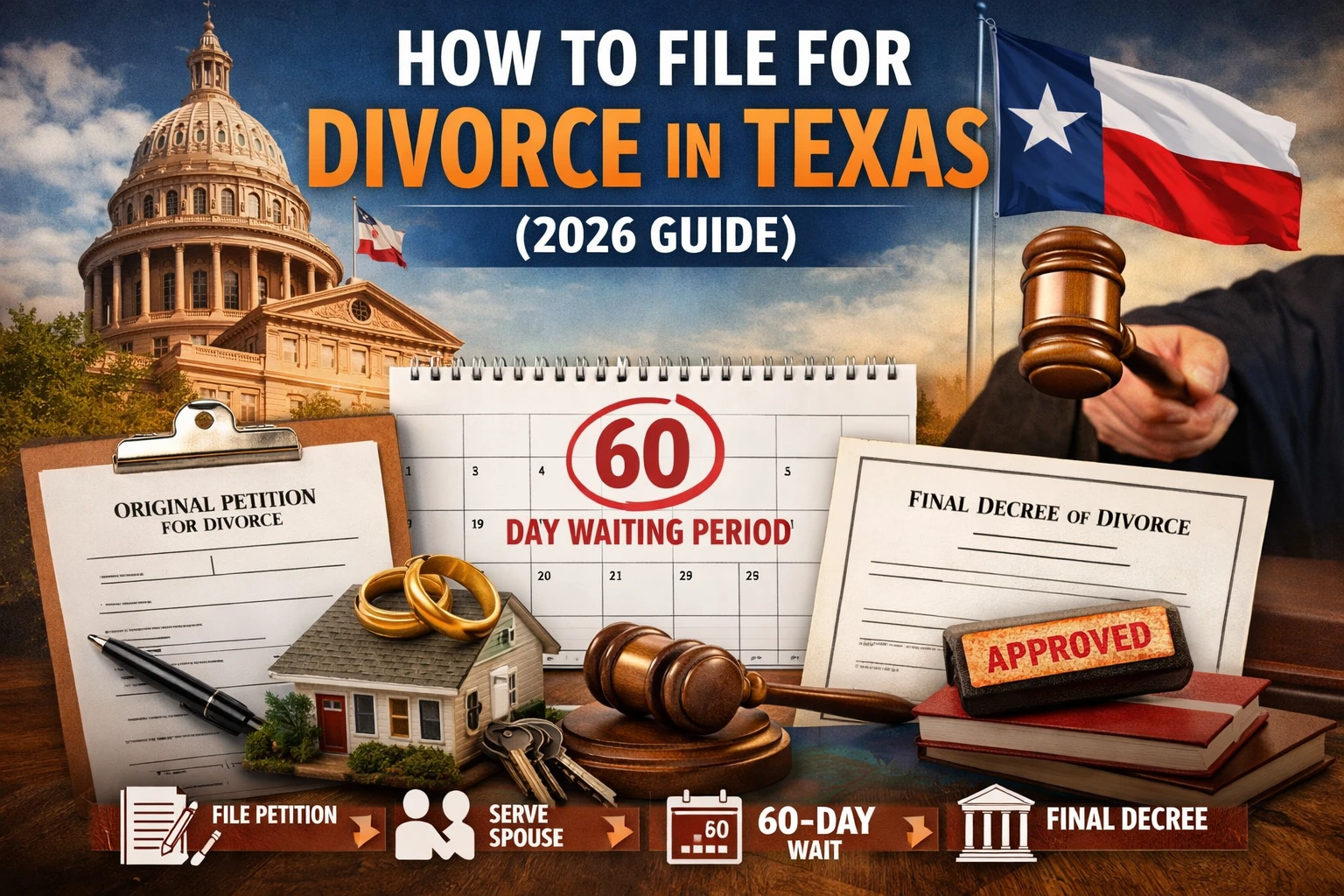
In most Texas divorces, the court cannot finalize the case until at least 60 days after the petition is filed. eFiling can establish your filing date quickly, which starts that clock, but it cannot shorten the statutory waiting period. Limited exceptions can apply in cases involving family violence, but those cases may need a different level of legal support.
Collin and Denton Counties
Collin County and Denton County are frequent choices for North Texas residents who meet local residency requirements. Both counties are part of fast-growing areas where residents often value online access, clear filing records, and a less disruptive process.
These counties can be especially workable for an agreed divorce when both spouses have already settled the major questions: division of property and debts, spousal maintenance if applicable, and child-related decisions when children are involved. Agreement does not eliminate the need for careful drafting. It gives you the opportunity to complete the process with less expense and less courtroom conflict.
Ellis County
Ellis County may be the appropriate and efficient filing county for qualifying residents south of the Dallas-Fort Worth area. It may not have the case volume of Dallas or Tarrant County, but smaller counties can still offer a workable eFiling path when the paperwork is complete and the local procedures are followed.
This is a useful reminder that the best county is often your legally correct county. Choosing a neighboring county because it seems more convenient can create filing problems if neither spouse meets the county residency requirement there.
How eFiling an Uncontested Divorce Works
Electronic filing usually begins after the Original Petition for Divorce and supporting documents have been prepared. The filing is submitted through an approved electronic filing service provider to the district clerk. The clerk reviews the submission for filing purposes, assigns a cause number if accepted, and returns file-stamped copies through the electronic system.
If your spouse agrees with the divorce, they may sign a waiver of service or an answer, depending on the circumstances. This can avoid the cost and delay of formal service by a constable or private process server. However, a waiver should not be signed before the petition is filed, and it must be completed correctly.
After the required waiting period, the final decree and any county-specific documents are submitted or presented according to the court’s procedures. The judge reviews the final paperwork and, if everything is legally sufficient, signs the decree. Your divorce is not final when you eFile the petition. It becomes final when the judge signs the final decree.
Common eFiling Mistakes That Delay Texas Divorces
The most common delay is filing documents that do not match the family’s actual circumstances. For example, a case involving minor children needs child-related provisions that a no-children decree does not. A case with a house, pension, 401(k), or significant debt may need more precise language than a simple property division.
Other avoidable problems include filing in the wrong county, submitting an unsigned document, using a decree that conflicts with the petition, or failing to review the clerk’s rejection notice. Electronic systems make it easier to submit documents, but they also make it easy to assume that “submitted” means “accepted.” Always review the filing status and any message from the clerk.
If safety concerns, domestic violence, hidden assets, major disputes, bankruptcy, immigration issues, or uncertainty about custody are part of the situation, an agreed-divorce document service may not be enough. Those circumstances can require individualized legal advice from a licensed attorney.
Choose the County You Qualify For, Then Prepare Carefully
The top Texas counties for eFiling divorce are the counties where eligible residents can use a clear electronic process while following local court rules. Dallas, Tarrant, Harris, Bexar, Collin, Denton, and Ellis County can all be practical options for the right case. Still, no county portal can replace correct paperwork and a complete agreement.
For Texans with a truly uncontested divorce, Ready Divorce Service can help make the document-preparation and filing process easier to understand. A calm, accurate start gives you a better chance to spend the waiting period moving toward closure instead of correcting preventable filing mistakes.
📞 Get Started Today – Your Peaceful Divorce Is Just a Click Away
When you’re ready to move on, we’re ready to help.
📲 Call us now at (800) 432-0018
🖥️ Start your divorce online today