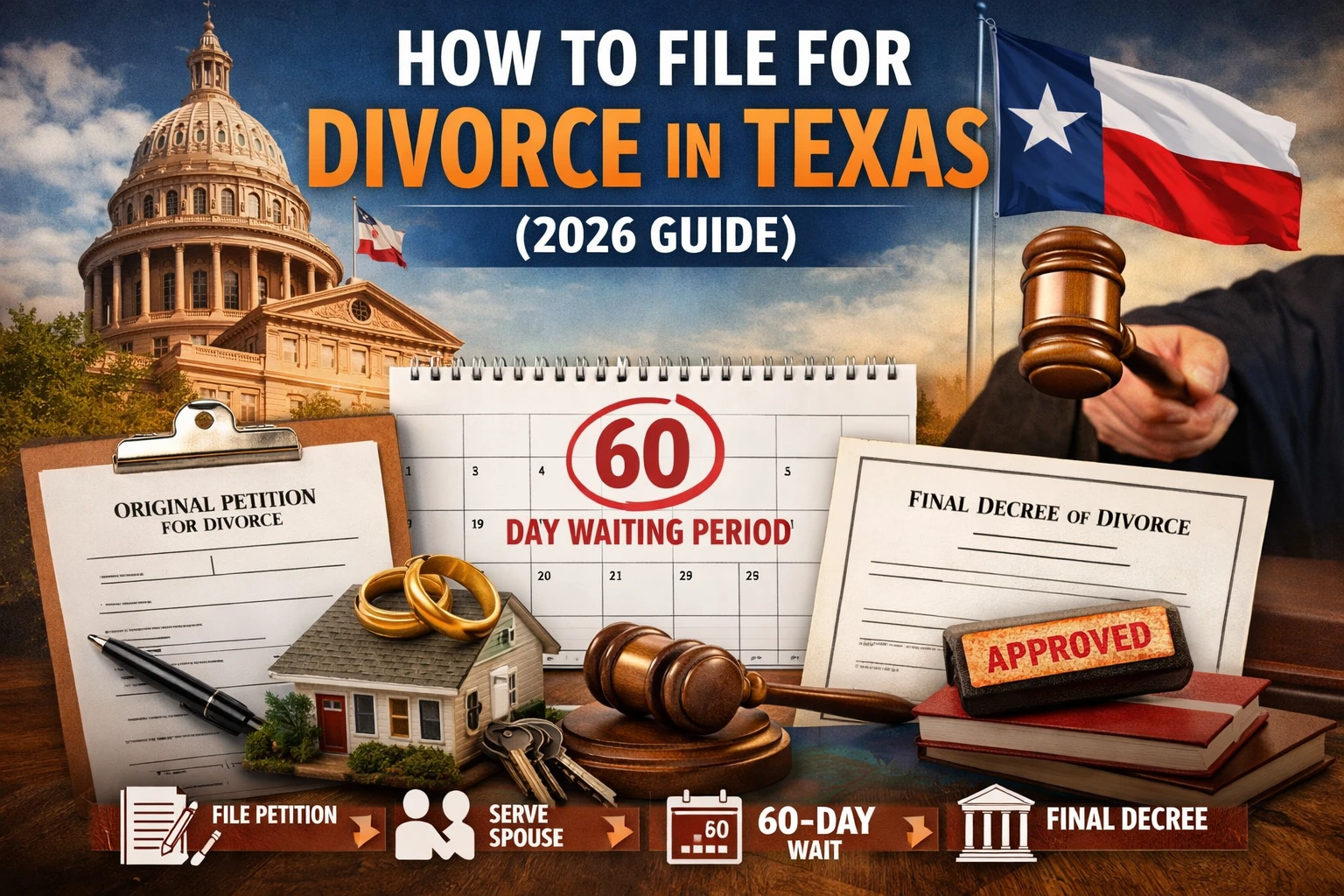
The hard part is often getting to agreement. Once both spouses have decided on property, debts, and any child-related terms, the next question is practical: how to finalize agreed divorce in Texas without delays, rejected paperwork, or a last-minute court problem. That final stretch matters because even a fully agreed case can stall if the decree is incomplete, signatures are missing, or the filing steps are done out of order.
An agreed divorce is usually the simplest path through the Texas court system, but simple does not mean automatic. The court still has to review the case, the required waiting period still applies in most situations, and the final paperwork still has to be prepared correctly. If you want the process to stay affordable and low-conflict, it helps to understand exactly what the court expects before your divorce can be finished.
How to finalize agreed divorce in Texas
In Texas, finalizing an agreed divorce generally means completing four things: meeting the waiting period, preparing the final decree and any related documents, getting the case set for finalization if required by your court, and having the judge sign the divorce decree. After that, you still need to make sure the signed paperwork is filed and any follow-up steps are handled.
For most couples, the process begins after one spouse files the Original Petition for Divorce and the other spouse files an Answer or signs a Waiver of Service, depending on the situation. If both spouses stay in agreement, the case can move forward as uncontested. That is the point where organization really matters. Courts are usually not trying to make agreed cases harder, but they do require complete and accurate forms.
Make sure your case is truly agreed
Before you focus on the final hearing or decree, confirm that there is no remaining disagreement. If one spouse still disputes retirement division, a vehicle loan, parenting time, child support, or who keeps the house, the case may no longer be a true agreed divorce.
That does not always mean a full courtroom fight is coming. Sometimes one unresolved issue can still be settled quickly. But if you try to finalize before every material term is settled, the process can break down at the last minute. Judges want to see that the final orders clearly state who gets what, who pays what, and what happens with the children if children are involved.
Wait until the Texas waiting period has passed
Texas has a 60-day waiting period in most divorce cases. In many cases, the divorce cannot be finalized until at least 60 days have passed from the date the petition was filed. Day one is usually the day after filing, and the earliest finalization date is often the first Monday after the 60-day period ends, though local practice can vary.
There are limited exceptions, such as certain family violence situations. If you believe an exception may apply, the timing needs to be reviewed carefully. For most agreed divorces, though, the waiting period is simply part of the process. It can feel frustrating when both people are ready to move on, but it gives the court a statutory timeline that must be respected.
Prepare the final documents carefully
The most important document in the final stage is the Final Decree of Divorce. This is the order the judge signs to officially end the marriage. It needs to reflect the full agreement between the spouses and comply with Texas law.
If you have children under 18 or still in high school, the decree usually needs detailed terms for conservatorship, possession and access, child support, medical support, and related rights and duties. If there is real property, retirement, or unusual debt issues, the wording becomes even more important. A vague decree creates problems later, even if the divorce gets finalized.
Other documents may also be required depending on the case and county. These can include a civil case information sheet or local equivalent, a prove-up affidavit in some courts, a wage withholding order if child support is ordered, and the Bureau of Vital Statistics form. Some counties have local procedures that are stricter than others. A process that works in one Texas county may not be accepted the same way in another.
This is where many self-filed cases run into trouble. The spouses agree in plain language, but the decree has to translate that agreement into court-ready terms. If the decree leaves out a debt, uses conflicting language, or does not match the petition, the judge may refuse to sign until it is corrected.
Get signatures the right way
In an agreed divorce, both spouses typically sign the Final Decree of Divorce before the prove-up or final submission. Signatures should be complete and consistent with the names used in the case. Some documents may need notarization, depending on the form and local court requirements.
Do not assume that because both parties verbally agree, the court will overlook missing signatures or incomplete forms. If one spouse is supposed to sign and has not done so, that can delay finalization. If a waiver was used earlier in the case, make sure it was done properly and not too early. Timing matters with some documents.
Set the case for finalization
How an agreed divorce is finalized can vary by county and court. In some courts, one spouse attends a short prove-up hearing. In others, the court may allow submission by affidavit or other streamlined procedures in limited circumstances. That is why Texas-specific and county-aware guidance is so valuable.
A prove-up is usually brief. The spouse presenting the case answers a small set of questions confirming basic facts: residency, date of marriage, that insupportability is the ground for divorce, that the waiting period has passed, and that the proposed decree is fair and should be approved. If children are involved, the court may also want confirmation that the orders are in the children’s best interest.
Even though the hearing is short, preparation still matters. Bring the correct paperwork, know what has been filed, and make sure the decree matches the case record. Courts appreciate agreed divorces that are organized and ready for review.
What happens at the final hearing
Most uncontested prove-up hearings are straightforward. The judge or associate judge reviews the paperwork, asks a few questions, and signs the Final Decree of Divorce if everything is in order. Some courts are formal; others are more relaxed. Either way, this is still a legal proceeding, so accuracy and professionalism matter.
If there is a problem, the judge may ask for revisions instead of signing that day. Common issues include missing child support documents, incorrect legal descriptions for property, inconsistent dates, or decree terms that are unclear. These are fixable problems, but they cost time.
That is one reason many Texans prefer help with document preparation and procedure rather than trying to piece everything together alone. A lower-conflict divorce should not turn into a paperwork obstacle course.
After the judge signs the decree
Once the judge signs the Final Decree of Divorce, your divorce is generally finalized. But there are still practical steps to take. You should obtain file-stamped copies of the signed decree and keep them in a safe place. If the decree orders child support, a wage withholding order may need to be entered and sent to the employer. If property is being transferred, additional documents may be needed to complete title changes or account updates.
This is also the point to update personal records. That might include your name with Social Security, your driver’s license, bank accounts, insurance, and beneficiary designations where appropriate. The divorce decree ends the marriage, but it does not automatically update every outside institution.
Common delays when trying to finalize agreed divorce
Most delays come from preventable issues. The big ones are incomplete decrees, filing before the waiting period ends, missing supporting documents, and assuming local court procedures are the same everywhere in Texas. Cases involving children, retirement accounts, or real estate usually need extra care.
Another common issue is a change in agreement. A spouse may be cooperative at first, then hesitate when it is time to sign the final decree. If that happens, the case may need a different strategy. Agreed divorces work best when both parties are ready not just to talk about settlement, but to complete it.
When extra help makes sense
If your divorce is agreed but you still feel unsure about the final steps, that is normal. Many people are not confused about whether they want the divorce. They are confused about forms, filing order, waiting periods, and what the judge expects. Those are procedural problems, and procedural problems can delay an otherwise simple case.
For Texans in counties such as Dallas, Tarrant, Denton, Collin, Ellis, Bexar, or Harris, local practice can shape how the last stage works. Having support that is focused on Texas agreed divorces can save time, reduce stress, and help you avoid expensive mistakes. Ready Divorce Service is built around that kind of practical help – getting the paperwork right, keeping the case moving, and helping people finish what they already agreed to.
If you and your spouse are on the same page, the final step should feel like closure, not confusion. A calm, well-prepared finish can make a difficult season a little easier to leave behind.
📞 Get Started Today – Your Peaceful Divorce Is Just a Click Away
When you’re ready to move on, we’re ready to help.
📲 Call us now at (800) 432-0018
🖥️ Start your divorce online today