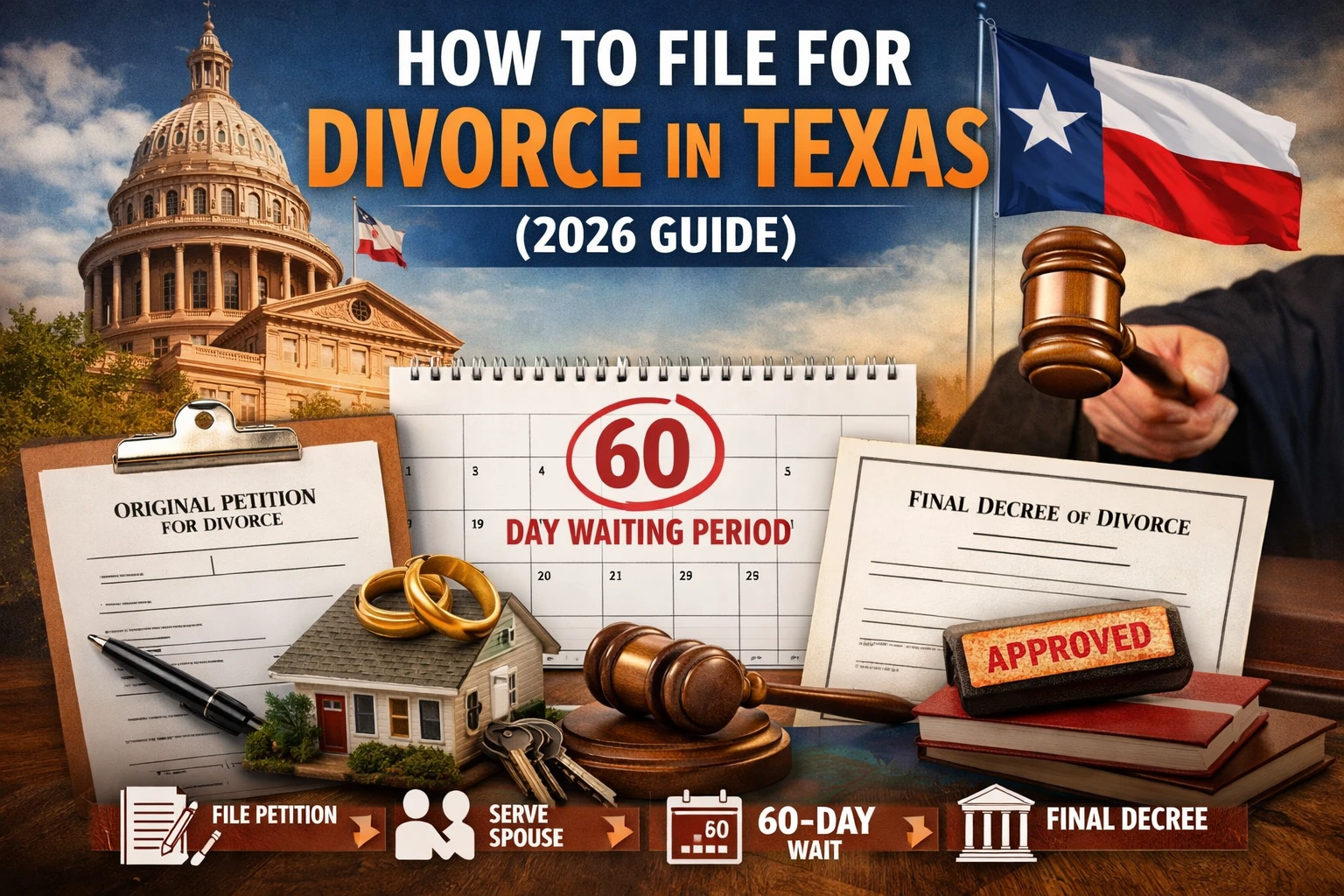
A Texas divorce cannot be finalized the day you decide the marriage is over, even when both spouses agree. The divorce filing timeline Texas residents should plan for begins with eligibility and paperwork, includes a mandatory waiting period, and ends only when a judge signs the Final Decree of Divorce.
For an uncontested case, the process can be far more straightforward than a contested divorce. Still, small paperwork errors, an unsigned waiver, missing child-related documents, or a county-specific filing requirement can add weeks to a timeline that otherwise might have moved efficiently.
The Basic Texas Divorce Filing Timeline
Most agreed Texas divorces take at least 61 days from the date the Original Petition for Divorce is filed. That is because Texas generally requires a 60-day waiting period before a judge may grant the divorce. In practical terms, many courts can consider the case on the 61st day or later, subject to that court’s schedule and filing procedures.
The 60 days are not a guarantee that your divorce will be complete in two months. They are the legal minimum in most cases. Your actual timing depends on whether your spouse cooperates, whether you have children or property to divide, whether all documents are accurate, and how quickly your county court processes final paperwork.
A simple agreed divorce with no minor children, clear property terms, and prompt signatures may be ready for finalization shortly after the waiting period ends. A case involving children, a home, retirement accounts, debt, or delayed cooperation often needs more time, even when both spouses want an agreement.
Before Filing: Residency and Agreement
Before filing, make sure Texas has jurisdiction over the divorce. Generally, at least one spouse must have lived in Texas for the previous six months and in the county where the divorce is filed for at least 90 days.
For example, someone filing in Tarrant, Dallas, Denton, Collin, Harris, Bexar, or Ellis County must usually meet the county residency requirement for that specific county. If neither spouse qualifies yet, filing too early can create a preventable delay.
This is also the stage to confirm whether your divorce is truly uncontested. An agreed divorce means both spouses can reach and maintain agreement on the terms that matter, including the division of property and debts. If you have children together who are under 18, the agreement must also address conservatorship, possession and access, child support, medical support, and health insurance.
Agreement does not mean every conversation has been easy. It means both spouses can sign documents that present the same final terms to the court. If one spouse is unsure, refuses to sign, or raises new issues after filing, the case may no longer follow the fastest uncontested path.
Day 1: Filing the Original Petition
The timeline officially starts when the Original Petition for Divorce is filed with the district clerk in the proper county. The filing date matters because it starts the 60-day waiting period.
The petition identifies the parties, states the legal grounds for divorce, and tells the court what relief is requested. In many agreed divorces, the parties use insupportability, meaning the marriage has become unworkable because of conflict or discord. Texas does not require spouses to prove fault to obtain a divorce on this ground.
After filing, the clerk assigns a case number. Some counties use electronic filing systems, while procedures for submitting final documents, requesting a prove-up, and obtaining a hearing date can vary. The court may also have local standing orders that apply as soon as the case is filed. These orders can limit changes to property, insurance, or children’s routines while the divorce is pending.
After Filing: Notice to the Other Spouse
Your spouse must receive legal notice of the case unless they voluntarily waive formal service. In an agreed divorce, a Waiver of Service is often the more efficient option. It allows the responding spouse to acknowledge the case without being formally served by a constable, sheriff, or private process server.
A waiver should be handled carefully. It is generally signed after the petition has been filed, and it must be completed in the form required by Texas law and the court. A signed waiver does not mean the spouse gives up the right to review the final decree. Both parties should understand and agree to the final terms before signing final documents.
If your spouse will not sign a waiver, formal service may be necessary. Service adds time because the citation must be issued, delivered, and returned to the court. The responding spouse then has a deadline to file an answer. A divorce can still be resolved by agreement after service, but it is usually not as quick or as simple as a cooperative waiver process.
During the 60-Day Waiting Period
The waiting period is the time to complete the documents needed to finish the divorce, not a time to leave everything until the last week. For an agreed case, this usually means preparing and reviewing the Final Decree of Divorce and any required supporting forms.
The decree is the document that controls the outcome after the judge signs it. It should clearly state who receives each asset and debt, how vehicles or real property will be handled, whether either spouse will change a name, and any other terms the couple has agreed upon. Vague language can create expensive problems later, especially when a house, retirement account, or vehicle loan is involved.
For parents, the decree and child-related orders need added attention. Texas courts must ensure that orders involving children meet legal requirements and serve the children’s best interest. The documents may need to address child support calculations, medical and dental support, possession schedules, tax issues, and geographic restrictions. Some counties may also require parent education courses or additional local forms.
This is where a well-organized uncontested case can save meaningful time. When the petition, waiver or answer, decree, and required child documents are consistent with each other, the court is less likely to reject or delay the final submission for corrections.
Finalizing After Day 60
Once the waiting period has passed and all documents are ready, the case moves to finalization. Depending on the county and the assigned court, this may involve a brief prove-up hearing, a remote appearance, a scheduled submission process, or review of an agreed final packet by the court.
At a prove-up, the filing spouse typically answers a few basic questions under oath. The judge may confirm residency, the filing date, the grounds for divorce, and whether the proposed decree reflects the parties’ agreement. In a case involving children, the court may ask questions to confirm that the proposed orders are appropriate.
The divorce is final only when the judge signs the Final Decree of Divorce. Signing documents between spouses is necessary, but it does not end the marriage by itself. Once the signed decree is entered, obtain certified copies if you need them for a name change, vehicle title work, financial accounts, or other post-divorce tasks.
When Can Texas Waive the Waiting Period?
Texas law allows a judge to waive the 60-day waiting period in limited situations. One circumstance may involve a finding of family violence during the marriage, or an active protective order or magistrate’s order protecting a spouse from the other spouse. There can also be a waiver when the respondent has been convicted of, received deferred adjudication for, or has a pending charge involving certain offenses of family violence against the petitioner or a household member.
These are safety-related exceptions, not a general shortcut for couples who simply want to finish quickly. If family violence, threats, coercion, or safety concerns are part of your situation, seek legal and safety support tailored to the facts of your case.
Common Reasons an Agreed Divorce Takes Longer
The most frequent delays are practical rather than dramatic. A spouse may take too long to return a signed waiver or decree. The parties may discover that they have not agreed on a debt, retirement account, or the sale of a home. Required forms may be missing, inconsistent, unsigned, or rejected for correction by the court.
Court availability also matters. One county may offer prompt prove-up settings, while another may take additional time to review agreed final documents. Cases with children can require more detailed review than cases without children. Military service, bankruptcy issues, a spouse who cannot be located, or a dispute that develops after filing can all change the timeline substantially.
The best way to protect your timeline is to settle the major terms before filing, gather accurate information about property and debts, and prepare the final paperwork early. Do not assume a verbal agreement will carry the case through the court process. The court needs complete, consistent documents that comply with Texas requirements.
A divorce timeline is easier to manage when you know what comes next and handle each step before it becomes urgent. If you and your spouse have reached agreement, Ready Divorce Service can help you organize the Texas paperwork and procedural steps so you can move toward a clean, affordable resolution with greater confidence.
📞 Get Started Today – Your Peaceful Divorce Is Just a Click Away
When you’re ready to move on, we’re ready to help.
📲 Call us now at (800) 432-0018
🖥️ Start your divorce online today