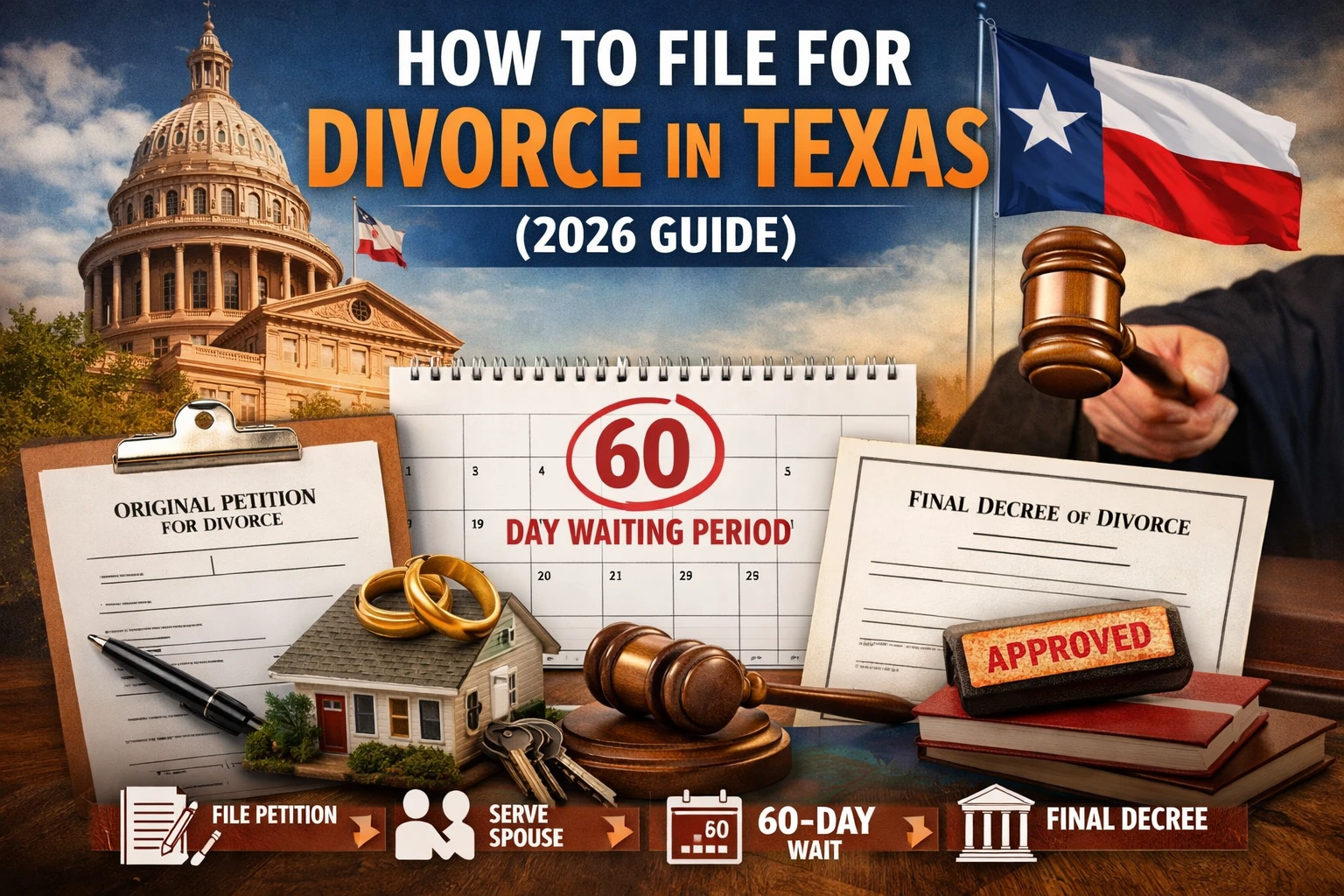
You may feel like your divorce is over the moment the judge signs the final papers. In many Texas cases, though, there is still one practical step that matters a great deal: making sure the signed decree is properly entered and processed by the court. This guide to divorce decree entry explains what that step means, why it matters, and what you should watch for so your uncontested divorce does not stall at the finish line.
For many people, this part is confusing because the language sounds more technical than it really is. “Entry” usually refers to the court clerk recording the judge’s signed Final Decree of Divorce in the case record. That recordkeeping step helps establish the decree as part of the official court file. In plain terms, the judge’s signature is critical, but the administrative follow-through matters too.
What divorce decree entry means in Texas
In a Texas divorce, the Final Decree of Divorce is the order that officially states the terms of the divorce. It covers the issues resolved in the case, such as property division, debt allocation, name change language, and, if children are involved, conservatorship, possession, support, and medical support.
When people ask about divorce decree entry, they are usually asking one of three things. They may mean when the judge signs the decree. They may mean when the clerk files or enters that signed decree into the court record. Or they may mean when the divorce becomes final for practical purposes, such as updating accounts, transferring title, or following support orders.
Those events are related, but they are not always the same moment. That is why details matter. If you leave the courthouse assuming everything is complete, only to learn later that a filing step was missed or a certified copy was never obtained, you can lose time and create extra stress.
Why decree entry matters after the hearing
A properly entered decree gives you a usable final order. That matters because most third parties do not care that you attended a prove-up hearing or that everyone agreed. They want to see the final signed decree, and in many cases they want a certified copy.
Banks, retirement plan administrators, title companies, schools, and government agencies often need proof of the final order before they will act. If your decree includes a name change, property transfer, or child support terms, delays in getting the official paperwork can hold up the next steps.
This is also where accuracy matters. If the decree submitted to the judge is missing required language, contains a typo in a legal description, or conflicts with prior filings, the court may require revisions before signing. Even in agreed cases, small procedural mistakes can slow things down.
A practical guide to divorce decree entry
In an uncontested Texas divorce, decree entry usually follows a straightforward path. First, the Original Petition for Divorce is filed and the case remains on file long enough to satisfy Texas waiting period rules. If both spouses are in agreement, the final paperwork is prepared in advance, including the Final Decree of Divorce and any related forms required by the county or the facts of the case.
Next comes the prove-up or final submission process, depending on the court. At that stage, the judge reviews the case and, if everything is in order, signs the decree. After signing, the decree should be filed with the clerk and become part of the official case record. Then the parties can obtain file-stamped or certified copies for their records and for any post-divorce tasks.
That sounds simple, and often it is. But “often” is not the same as “always.” Different counties and courts may handle the final step with slightly different procedures. Some require additional forms at the time of entry. Some may have local rules about how final documents are presented. In busy counties such as Dallas, Tarrant, Collin, Denton, or Harris, even a minor paperwork issue can lead to a reset or delay.
What to check before the decree is entered
The best way to avoid delays is to treat the final decree as a technical legal document, not just a summary of your agreement. Before entry, make sure names are spelled correctly and consistently throughout the paperwork. Dates of birth, addresses, and children’s information should match prior filings where required. Property descriptions should be specific enough to enforce, especially for real estate, vehicles, retirement accounts, or debts.
If your divorce involves children, the decree should line up with any required child support documents, withholding orders, and parenting terms. If a wage withholding order is needed, that usually cannot be treated as an afterthought. It is part of making the final orders workable in real life.
If a spouse is restoring a prior name, the exact name to be restored should appear clearly in the decree. If real property is awarded, additional transfer documents may still be needed after entry. The decree finalizes the divorce, but it does not magically retitle every asset by itself.
Common reasons divorce decree entry gets delayed
In agreed divorces, delays are usually preventable. One common problem is submitting a decree that does not match the petition or the agreement between the spouses. Another is failing to include county-specific forms, case information sheets, or support-related documents.
A delay can also happen if one spouse has not properly signed where needed, or if the waiver, answer, or service documents are defective. Timing matters too. Texas has a waiting period in most divorce cases, and presenting a decree too early can create a problem even if both spouses are ready.
Judges may also reject or hold a decree if the language is unclear. Vague property division can create enforcement issues later, so courts often want final orders to be specific. What feels cooperative to the couple can still look incomplete from the court’s perspective.
What happens after divorce decree entry
Once the decree is signed and entered, your divorce is generally final unless there is a limited legal reason for further court action. That does not mean every loose end is automatically tied up. It means you now have the court order you need to carry out the next steps.
Those next steps may include changing your name with Social Security and the DMV, closing or separating joint accounts, updating insurance policies, refinancing debt, transferring vehicle titles, or addressing retirement division paperwork. If children are involved, you may also need to make sure wage withholding is active and that both parents understand the schedule and support obligations.
This is one of the biggest practical misunderstandings in divorce. Entry of the decree finishes the court case, but it often starts the implementation phase. The more clearly your decree is written, the easier that phase tends to be.
Do you need certified copies?
Usually, yes. It is wise to get certified copies of your Final Decree of Divorce soon after entry. A regular copy may be enough for your own records, but many institutions want a certified copy because it shows the document is an official court record.
How many certified copies you need depends on your situation. If your divorce includes a name change, property transfer, retirement issues, or child-related matters, having more than one certified copy can save time. It is easier to request them while everything is fresh than to chase them down later.
When extra help makes sense
Even in an uncontested case, the final paperwork stage is where people often get tripped up. Not because the divorce became contested, but because court procedure has little room for guesswork. A missed signature, incomplete order, or county-specific filing issue can turn a simple case into a frustrating one.
That is why many Texans use document preparation and procedural support for agreed divorces. If your goal is to finish the case correctly, affordably, and with less stress, having someone help organize the decree and final filing steps can make a real difference. Ready Divorce Service focuses on exactly that kind of practical support for uncontested Texas divorces.
If you are close to the finish line, slow down just enough to make sure your decree is not only signed, but properly entered, usable, and complete. That final bit of care can make the difference between feeling divorced on paper and actually being ready to move forward.
📞 Get Started Today – Your Peaceful Divorce Is Just a Click Away
When you’re ready to move on, we’re ready to help.
📲 Call us now at (800) 432-0018
🖥️ Start your divorce online today