If you are asking, do I need notarized divorce forms, you are probably trying to avoid a rejected filing, an extra trip to the courthouse, or one more delay in a process that already feels heavy enough. In Texas, the short answer is: sometimes. Not every divorce document has to be notarized, but some forms commonly do, especially in uncontested cases where both spouses are trying to keep things simple and move forward.
The key is knowing which documents require a notary, which can be signed without one, and whether your county has any specific filing practices. That distinction matters because one missing notarization can slow down an otherwise straightforward divorce.
Do I need notarized divorce forms in every Texas divorce?
No. Texas does not require every divorce form to be notarized. Some documents can be signed normally, while others often need to be notarized before they are filed or used in the final steps of the case.
This is where many people get tripped up. They assume either everything must be notarized or nothing does. Neither is true. Divorce paperwork is made up of different documents with different functions. A petition starts the case. Waivers may show that the other spouse is not contesting service. Final orders set out the terms of the divorce. Some of these forms may need a notary depending on the document and how the case is being handled.
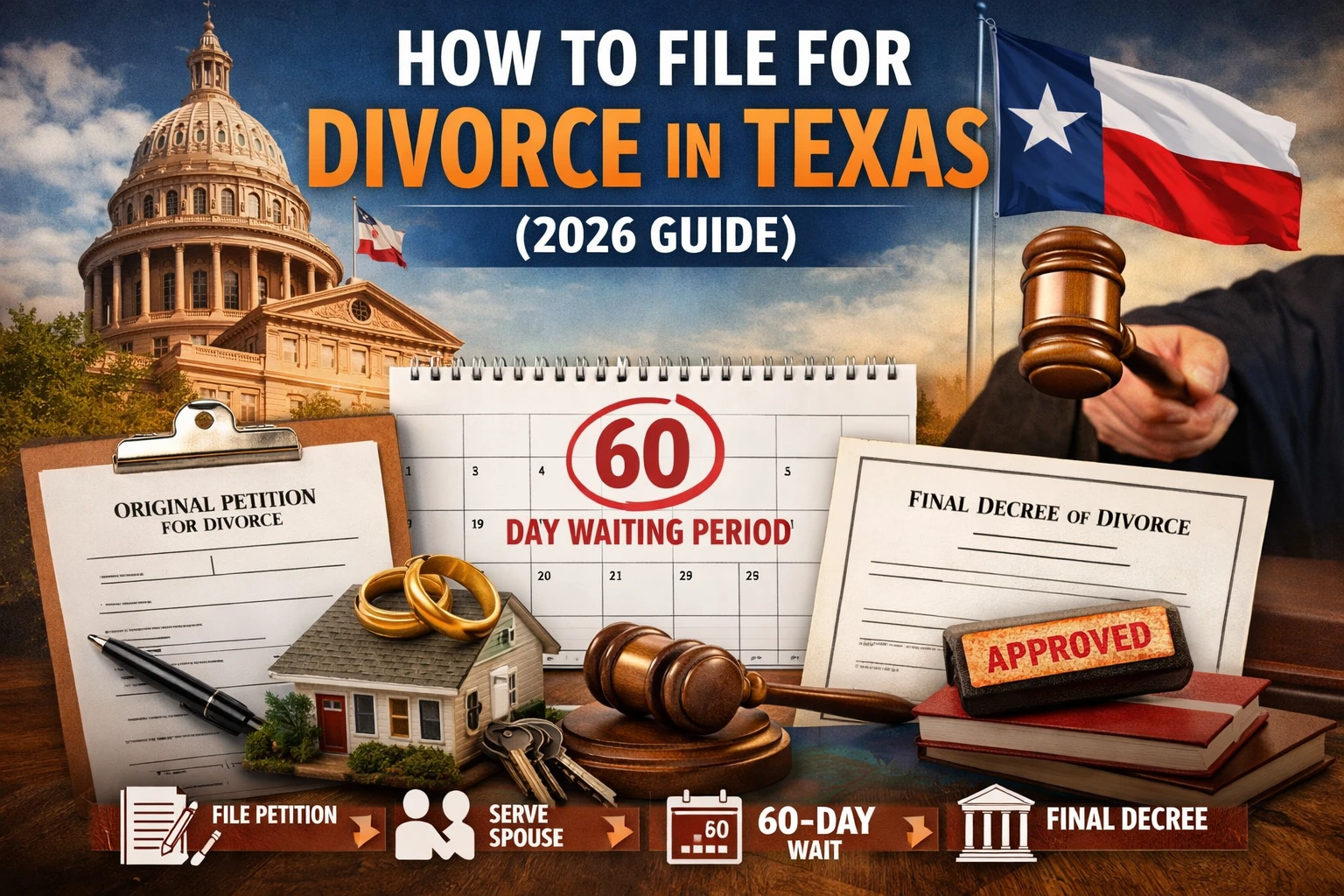
In an uncontested Texas divorce, notarization usually comes up most often with waivers, sworn statements, and certain supporting documents. The Original Petition for Divorce itself is not typically notarized. The Final Decree of Divorce generally is signed by the parties and the judge, but it is not usually notarized just because it is a decree. Still, related forms in your case may be.
Which divorce forms are commonly notarized?
The most common example is a Waiver of Service. If one spouse does not want to be formally served by a constable, sheriff, or process server, they may sign a waiver instead. In Texas, that waiver usually must be signed in front of a notary, and it cannot be signed until after the Original Petition for Divorce has been filed.
That timing matters. A waiver signed too early can be invalid. Even if both spouses fully agree on the divorce, Texas still expects the paperwork to follow the correct order.
You may also run into notarization requirements for affidavits or sworn declarations used to support certain requests. For example, if a party cannot attend a hearing in person or needs to submit a sworn statement on a specific issue, the form may require notarization unless the form allows an unsworn declaration under Texas law.
If your case involves property division details, retirement issues, child-related documents, or special county procedures, there may be additional supporting forms. Some are notarized, some are not. The answer depends on the exact document, not just the fact that it is part of a divorce.
Forms that usually do not need notarization
A lot of standard divorce paperwork is signed without a notary. The Original Petition for Divorce is one example in many Texas cases. Respondents may also file an Answer without notarization. The Final Decree itself is usually not notarized unless a local practice or attached document creates a separate requirement.
This is why broad internet advice can be risky. If you search the question do I need notarized divorce forms, you may get a blanket yes or no answer. Texas divorce procedure is more specific than that. The real question is which form, in which county, and for what purpose.
Why notarization matters in an uncontested divorce
In a contested divorce, lawyers often catch paperwork issues before they become a serious problem. In an uncontested case, people are often trying to save money and handle more of the process themselves. That can work well, but only if the forms are prepared and signed correctly.
A missing notary can create problems at several points. The clerk may reject a filing. The judge may refuse to finalize the case. A hearing may need to be reset. If you are close to finishing your divorce, that kind of delay feels bigger than it sounds.
The good news is that this is one of the easier issues to prevent. You do not need to overcomplicate the process. You just need to know, before signing, whether the document must be notarized and whether it must be signed after a certain filing step.
Texas county practices can affect the process
Texas divorce law is statewide, but filing practices can still vary by county. A form that is acceptable in one county may be reviewed more strictly in another. That does not mean the law changed. It means local clerks and courts may have different expectations for formatting, attachments, or how they want certain documents presented.
That is especially relevant in busy counties such as Dallas County, Tarrant County, Collin County, Denton County, Harris County, Bexar County, and Ellis County, where procedural details can make a practical difference. If your goal is a smooth uncontested divorce, county-specific guidance helps you avoid small errors that lead to extra time and cost.
What if a form says it must be sworn?
If a form includes language showing that the signer is swearing the contents are true before a notary, then you should expect notarization to be required. A notary is not just witnessing a signature. The notary is confirming the identity of the signer and administering the acknowledgment or oath required by that document.
That said, some Texas forms now use unsworn declarations instead of notarization. These are signed under penalty of perjury and may be legally accepted without a notary if the form and situation allow it. This is one of those areas where the wording on the document matters a great deal. If the form is written for notarization, do not assume an unsworn declaration can replace it.
Common mistakes people make
One of the biggest mistakes is notarizing the wrong form and missing the one that actually matters. Another is signing a Waiver of Service before the divorce petition has been filed. People also run into trouble when they use generic online forms that do not match Texas requirements or their county’s procedures.
There is also a practical issue many people overlook: incomplete notarization. If the notary block is missing information, if the seal is unclear, or if the names do not match the document exactly, the form may still cause problems.
These are not dramatic legal battles. They are paperwork problems. But paperwork problems are often what drag out an agreed divorce.
How to know if your divorce forms need notarization
Start with the form itself. Look for a notary block, wording about being sworn, or language that says the document must be acknowledged before a notary public. If that language is there, treat notarization as required unless you have clear Texas-specific guidance saying otherwise.
Next, consider where the form fits in the process. A Waiver of Service has special rules. Affidavits usually require closer attention than routine pleadings. Final documents should be reviewed as a full package, not one page at a time, because attachments and related forms may carry separate signing requirements.
Finally, think about accuracy over speed. Many people rush to sign everything at once. That can create expensive delays if one document needed to wait until after filing, or if one signature had to be notarized and another did not.
When extra guidance is worth it
If your divorce is agreed, you may not need full attorney representation to get through the process. But even simple cases benefit from accurate document preparation and clear procedural guidance. That is especially true when children, a house, retirement accounts, or county-specific filing expectations are involved.
A Texas-focused divorce document service can help you identify where notarization is actually needed instead of leaving you to guess. Ready Divorce Service works with uncontested Texas divorce paperwork and process questions, which can make a real difference when you want the case done correctly the first time.
The practical answer
So, do I need notarized divorce forms? In Texas, some divorce forms do need notarization, but not all of them. The most common notarized document in an uncontested case is the Waiver of Service. Other sworn forms may also require it, while standard pleadings like the petition often do not.
If you are unsure, do not guess based on a general online answer. Check the exact form, the timing of the signature, and the filing practices that apply to your county. A divorce is stressful enough without losing time over a notary issue that could have been caught early. A little clarity on the front end can make the whole process feel much more manageable.
📞 Get Started Today – Your Peaceful Divorce Is Just a Click Away
When you’re ready to move on, we’re ready to help.
📲 Call us now at (800) 432-0018
🖥️ Start your divorce online today