A divorce can stall for weeks over something as small as a missing signature, the wrong county, or a decree that does not match the original petition. That is why understanding the texas divorce paperwork mistakes avoid can save you time, money, and a great deal of stress – especially if you are trying to complete an uncontested divorce without unnecessary delays.
When both spouses agree on the major terms, the process is usually more straightforward. But straightforward does not mean automatic. Texas courts still expect complete, accurate, properly filed documents. If the paperwork is incomplete or inconsistent, the clerk may reject it, the judge may refuse to sign it, or you may end up correcting forms after you thought the case was almost done.
Why paperwork mistakes cause so many divorce delays
Most uncontested divorces run into trouble for a simple reason: people assume agreement between spouses is enough. It is not. Agreement helps, but the court still needs the right forms, the right wording, and the right procedure.
Texas divorce paperwork is technical in ways that are easy to underestimate. A form may look simple, but one unchecked box or one outdated version can create problems. Some mistakes are obvious, like forgetting to sign a document. Others are less obvious, like using terms in the Final Decree that conflict with what was stated in the Original Petition or failing to include required child-related language.
The result is often the same. Your case slows down, you make another trip to the courthouse, or you have to revise documents under pressure.
Texas divorce paperwork mistakes to avoid from the start
The best way to prevent delays is to know where most errors happen before you file anything. In Texas uncontested cases, a few problem areas come up again and again.
Filing in the wrong county
Texas has residency rules, and county filing rules matter. If you or your spouse do not meet the state and county residency requirements, or if you file in a county that is not proper for the case, you can create a serious delay before the court even looks at the substance of your divorce.
This is especially important for people who recently moved, are temporarily staying with family, or live in one county while their spouse lives in another. Counties like Dallas, Tarrant, Denton, Collin, Harris, and Bexar may each have local filing practices on top of statewide rules. The core law is statewide, but the filing experience can still vary.
Using the wrong forms for your situation
Not every Texas divorce uses the same paperwork. A divorce with children is different from one without children. A case involving property division, retirement accounts, or name restoration may require more precise language than a very basic agreed divorce.
This is one of the most common texas divorce paperwork mistakes to avoid because people often download a form packet that does not actually fit their circumstances. What works for one family may be incomplete for another. If your case includes minor children, support terms, or a house, you should be especially careful that the paperwork reflects those issues correctly.
Inconsistent information across documents
Your names, addresses, dates, and case details should match from document to document. The court notices when they do not. If the petition says one date of marriage and the decree says another, or one form lists a child differently than another, it raises questions that can delay approval.
This also happens when spouses agree informally on terms, then fill out the decree quickly at the end and leave out details that should have been included from the beginning. Consistency matters because the Final Decree is the document the judge signs and the parties rely on after the divorce is final.
Missing required signatures, notarization, or verification
Some divorce forms must be signed in specific ways. Some may require notarization. Some must be signed by both spouses if the case is agreed. If one signature is missing, or if a document was signed in the wrong place, the filing may be rejected or the prove-up may be delayed.
This sounds minor until it happens on the day you planned to finish the case. A surprising number of uncontested divorces hit a last-minute problem because someone assumed a typed name was enough or signed before reviewing the final version.
Mistakes in the Final Decree of Divorce
The Final Decree is where many paperwork problems become expensive. This document is not just a formality. It is the court order that controls what happens after the divorce.
Vague property division
If the decree says each spouse keeps property in their possession, that may sound simple. Sometimes it is. But if there are bank accounts, debts, vehicles, retirement plans, or a home, vague wording can lead to confusion later.
A decree should clearly state who gets what and who is responsible for which debts. If the wording is too general, you may have trouble transferring titles, refinancing debt, or enforcing the agreement later. Clarity now prevents future disputes.
Leaving out child-related terms
When children are involved, Texas courts expect complete and accurate language covering conservatorship, possession and access, child support, medical support, and other required provisions. Parents may agree on everything, but the decree still needs to reflect those agreements in a way the court can approve.
This is an area where small errors can carry big consequences. If terms are missing or unclear, the judge may require corrections before finalizing the divorce.
Forgetting name change language
If one spouse wants a prior name restored, that request needs to appear properly in the final paperwork. Many people assume they can fix that later, but it is much easier to address it in the divorce decree itself.
Procedure mistakes that are really paperwork mistakes
Some filing problems are not about what the forms say. They are about when and how they are submitted.
Trying to finish before the waiting period ends
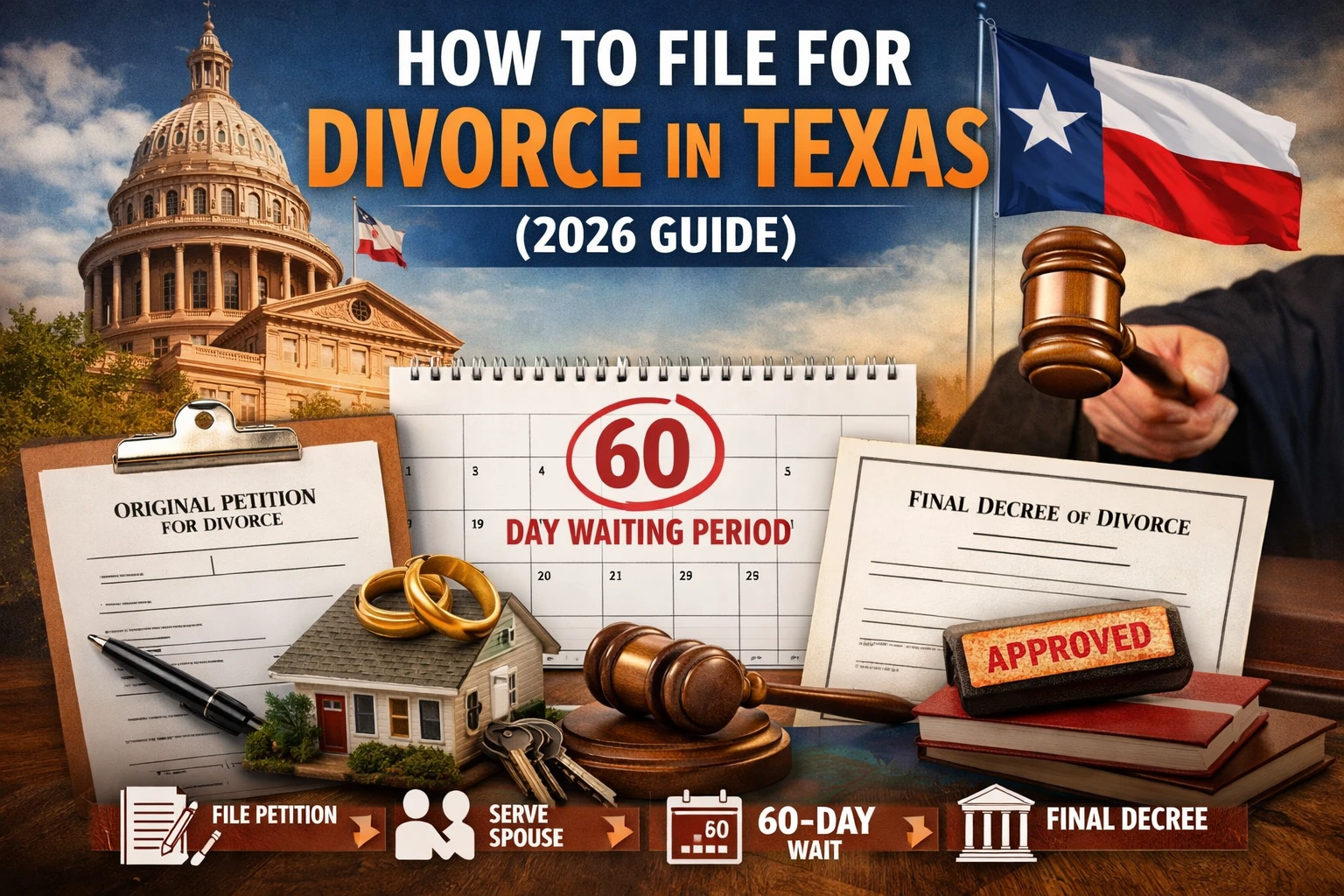
Texas generally has a 60-day waiting period from the date the divorce is filed before it can be finalized, with limited exceptions. People sometimes prepare everything correctly but schedule the final step too early. That creates frustration because the case may feel complete, but it is not yet eligible to finish.
Improper service or waiver handling
If one spouse files and the other spouse is not filing jointly, service and waiver rules matter. An improperly completed Waiver of Service can cause avoidable issues. Timing also matters. A waiver signed too early or without the right content may not work the way people expect.
Not following county filing procedures
Even when your forms are legally sound, local court procedures can still matter. Some counties are more particular about document formatting, prove-up settings, or e-filing steps than others. Ignoring those practical details can slow a case that would otherwise be ready.
How to avoid common divorce paperwork errors
The safest approach is to treat an uncontested divorce like a legal process, not just a stack of forms. Start by making sure you understand whether your case is truly uncontested and whether there are any issues – children, real estate, retirement, support, separate property claims – that call for more careful drafting.
Before filing, review every document for consistency. Names should match exactly. Dates should match exactly. Terms in the decree should line up with the petition and with what both spouses actually agreed to. It also helps to read the decree slowly, as if you were a stranger who had never heard the agreement before. If something sounds vague, it probably needs more detail.
Timing matters too. Make sure the 60-day waiting period has run, that any waiver or answer was handled correctly, and that all required signatures are complete before your final step. If children are involved, pay special attention to whether the required parenting and support language is included.
For many people, the real challenge is not willingness. It is confidence. They are trying to save money and avoid conflict, but they are also afraid of making a mistake that forces them to start over. That concern is reasonable. Divorce paperwork in Texas is manageable for many agreed cases, but it still has to be done carefully.
If you want a simpler path, getting procedural support with document preparation can make a major difference. Services built around uncontested Texas divorce cases help reduce the most common errors without pushing families into the cost of full litigation. For people who qualify for an agreed divorce, that middle ground often makes sense.
Divorce is already a stressful transition. Your paperwork should not add more chaos than necessary. A careful, accurate filing gives you a better chance of moving forward with less delay, less confusion, and more peace of mind.
📞 Get Started Today – Your Peaceful Divorce Is Just a Click Away
When you’re ready to move on, we’re ready to help.
📲 Call us now at (800) 432-0018
🖥️ Start your divorce online today