If you are trying to end your marriage without a courtroom fight, a texas uncontested divorce checklist can save you time, money, and a lot of second-guessing. In Texas, agreed divorces are usually simpler than contested cases, but they still depend on accurate paperwork, proper filing, and following the right steps in the right order. Missing one document or misunderstanding one requirement can slow everything down.
An uncontested divorce works best when both spouses agree on the major terms. That usually includes property and debt division, whether either spouse will ask for spousal support, and if children are involved, conservatorship, possession, child support, and medical support. If those issues are not settled, the case may not stay uncontested for long.
Texas uncontested divorce checklist: start with eligibility
Before gathering forms, make sure your case actually qualifies for an uncontested divorce in Texas. The biggest question is whether both spouses are willing to sign off on the same final terms. If one person plans to dispute anything significant, you are not dealing with a straightforward agreed case.
You also need to meet Texas residency rules. In most cases, one spouse must have lived in Texas for at least six months and in the county where the divorce is filed for at least 90 days. That county rule matters because filing in the wrong place can create delays and added expense.
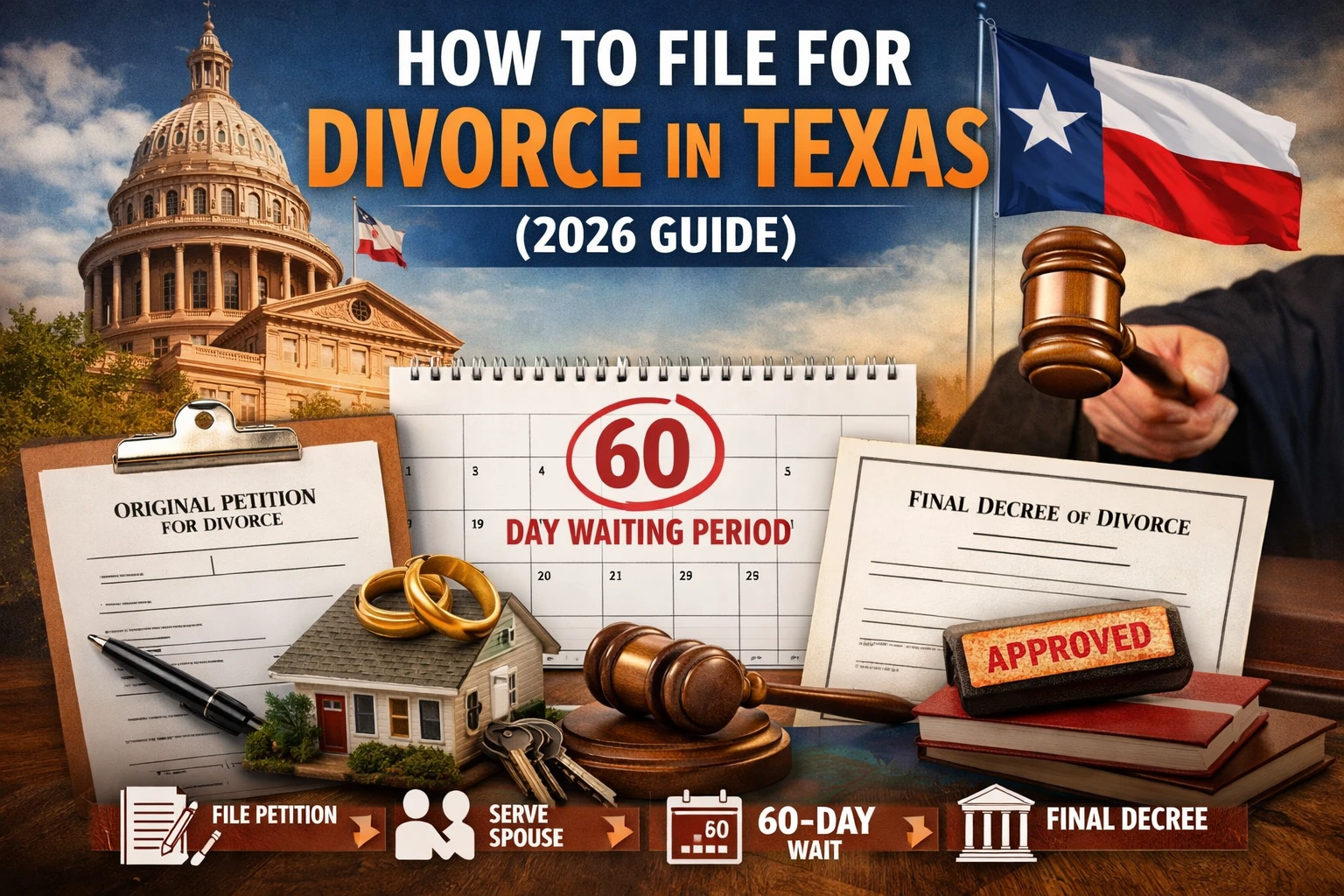
There is also the 60-day waiting period. Texas generally requires at least 60 days between the filing of the Original Petition for Divorce and the date the divorce can be finalized. The waiting period starts the day after filing. Many people think an agreed divorce can be finished immediately if both spouses cooperate, but Texas law still imposes that minimum timeline in most cases.
Gather the information you will need
A smooth divorce usually starts with organized information. Before preparing any documents, collect the practical details that will appear in your paperwork. That includes full legal names, current addresses, date of marriage, date of separation if relevant, and information about any minor children of the marriage.
You should also gather a clear picture of your finances. Even in a low-conflict case, couples often run into delays because they have not fully identified what they own or owe. Bank accounts, retirement accounts, vehicles, real estate, credit cards, personal loans, tax debts, and household property should all be discussed before final documents are drafted.
If children are involved, you will need more than basic biographical information. You should know each parent’s income, health insurance details, school information, and the parenting schedule both sides can realistically follow. Agreeing in general terms is not enough. Courts want clear, workable terms.
The core paperwork in an agreed divorce
Most uncontested Texas divorces involve a set of basic documents, although the exact forms can vary depending on the facts of the case. At minimum, many couples will need an Original Petition for Divorce, a Waiver of Service or a Respondent’s Answer, and a Final Decree of Divorce.
The Original Petition starts the case. It tells the court that one spouse, called the petitioner, is asking for a divorce. The other spouse, called the respondent, must still be handled correctly, even in an agreed case. Some people assume that because both sides agree, service does not matter. It does. The respondent must either be formally served or sign the proper waiver after the case is filed.
The Final Decree of Divorce is the document that matters most because it sets out the actual terms of the divorce. This is where property division, debt allocation, child-related provisions, name changes, and other final terms are spelled out. If the decree is vague, incomplete, or inconsistent, the court may reject it or require corrections.
Some cases also require additional forms. If children are involved, there may be child support documents, income information, medical support provisions, and parenting-related forms. If retirement benefits are being divided, a separate order may be necessary. This is one of those places where it depends on your case facts, not just a generic form packet.
Don’t skip the agreement details
A practical texas uncontested divorce checklist is not just about filing forms. It also means confirming that the terms of the divorce are complete and enforceable. Couples often say they agree, but when it is time to write the decree, the details are still unresolved.
For property, decide who gets the house, who keeps each vehicle, who takes each bank account, and who is responsible for each debt. For personal property, be specific enough to avoid future arguments. “We will split everything later” is not a solid decree term.
For children, the agreement should address conservatorship, possession and access, child support, and health insurance. Texas courts focus heavily on the child’s best interests, so any parenting arrangement needs to be realistic and legally acceptable. If parents want something unusual, the judge may ask closer questions.
Filing and county procedures
Once your documents are prepared, they must be filed with the district clerk in the correct county. Procedures can differ somewhat by county, especially when it comes to e-filing, local standing orders, or hearing requirements. A process that works in Dallas County may not look exactly the same in Tarrant, Denton, Collin, Harris, Bexar, or Ellis County.
That does not usually change the underlying Texas law, but it can affect how smoothly your case moves. Some counties may require specific cover sheets, scheduled prove-up settings, or compliance with local family law procedures. This is one reason Texas-specific support matters. A form is only useful if it matches the county process where it will be filed.
After filing, keep copies of everything. Save file-stamped versions of your petition and any later filings. A simple paperwork mistake is easier to fix when your records are organized.
What to check before finalizing
As the 60-day waiting period runs, use that time to review the case carefully. The most common delays in uncontested divorce are not dramatic legal battles. They are missing signatures, inconsistent terms, incorrect names, outdated financial details, and child support calculations that do not match what the court expects.
Before the final hearing or prove-up, confirm that all required signatures are in place and dated correctly. Make sure the Final Decree matches what both spouses agreed to. If one document says a vehicle goes to one spouse and another document says the opposite, the judge is likely to flag it.
If children are involved, double-check the support terms and parenting language. If there is real property, verify the legal description and any refinancing or sale terms. If one spouse is changing a name, make sure the decree states that clearly. Small omissions can create headaches long after the divorce is granted.
Common mistakes that slow down uncontested cases
The biggest mistake is assuming agreed means automatic. Texas courts still require legally sufficient documents and a proper process. Another common issue is using generic forms that do not fit the couple’s situation, especially when children, retirement accounts, or real estate are involved.
People also run into trouble when they settle the easy issues and avoid the uncomfortable ones. Debt division is a common example. A decree can assign responsibility for a credit card, but it does not remove a spouse’s name from the account contract with the creditor. That means the divorce agreement may solve one problem while leaving another practical risk in place. Knowing that trade-off ahead of time helps couples make better decisions.
Timing mistakes are also common. Some spouses sign documents too early, use the wrong dates, or expect the case to be finalized before the statutory waiting period has passed. Others file in the wrong county or forget local procedural requirements.
When extra help is worth it
An agreed divorce is simpler than litigation, but simpler does not mean casual. If you want the process to stay affordable, the best approach is usually to get the paperwork right the first time. That is especially true if your case involves children, a house, retirement accounts, or any concern that one unclear term could cause problems later.
For many Texans, support with document preparation and step-by-step procedure is the middle ground that makes sense. You may not want the cost and conflict of full attorney litigation, but you also may not want to guess your way through county filing rules and final decree language. Ready Divorce Service is built for that middle ground, helping people move through an agreed divorce with more clarity and fewer avoidable setbacks.
A good checklist does more than tell you what papers to sign. It helps you confirm that your case is truly uncontested, your terms are complete, your county filing is correct, and your final order is ready for the court. When the process is handled carefully, divorce can feel less like chaos and more like one clear step toward a more stable next chapter.
📞 Get Started Today – Your Peaceful Divorce Is Just a Click Away
When you’re ready to move on, we’re ready to help.
📲 Call us now at (800) 432-0018
🖥️ Start your divorce online today