When people start comparing online divorce vs traditional lawyer options, they are usually not looking for a legal theory lesson. They want to know one thing: what will get this divorce done correctly, with the least stress, delay, and cost. In Texas, the right answer depends less on preference and more on the facts of your case.
If you and your spouse agree on the major terms, an online divorce service or document-preparation model can be a practical path. If there is conflict, hidden assets, safety concerns, or a serious dispute over children, a traditional divorce lawyer may be the safer choice. The key is knowing where your case falls before you spend money in the wrong place.
Online divorce vs traditional lawyer: what is the real difference?
A traditional divorce lawyer provides legal advice, strategy, negotiation, and representation. That is valuable when a case is contested or legally complicated. An attorney can evaluate risk, argue your position, draft custom terms, and appear in court on your behalf when needed.
An online divorce service works differently. In most cases, it focuses on paperwork, procedural guidance, and filing support for uncontested divorces. That means both spouses are generally in agreement about property, debts, and, if applicable, child-related terms. The goal is not to fight through the divorce process. The goal is to complete it accurately and efficiently.
For many Texans, that difference matters more than the label. They are not choosing between “good” and “bad” options. They are choosing between full legal representation and a lower-cost process built for agreed cases.
Cost is usually the first deciding factor
For most people, attorney fees are the biggest reason they start looking at alternatives. A traditional divorce lawyer can be expensive, especially if the case becomes contested. Even a simple matter can cost far more than expected once meetings, revisions, negotiations, and court appearances start adding up.
Online divorce services are typically much more affordable because the scope is narrower. You are paying for guidance through the process and help preparing documents, not for courtroom advocacy or ongoing legal strategy. That lower cost can make a major difference for working families, single parents, and anyone trying to protect their financial stability during a difficult transition.
That said, cheaper is not always better if the case is not actually uncontested. If one spouse is likely to argue over custody, support, or property after the process begins, a low-cost option can turn into a delay rather than a solution. Saving money makes sense when the structure of the case supports it.
Speed depends on cooperation more than anything else
People often assume a lawyer automatically makes divorce faster. Sometimes that is true. Often, it is not.
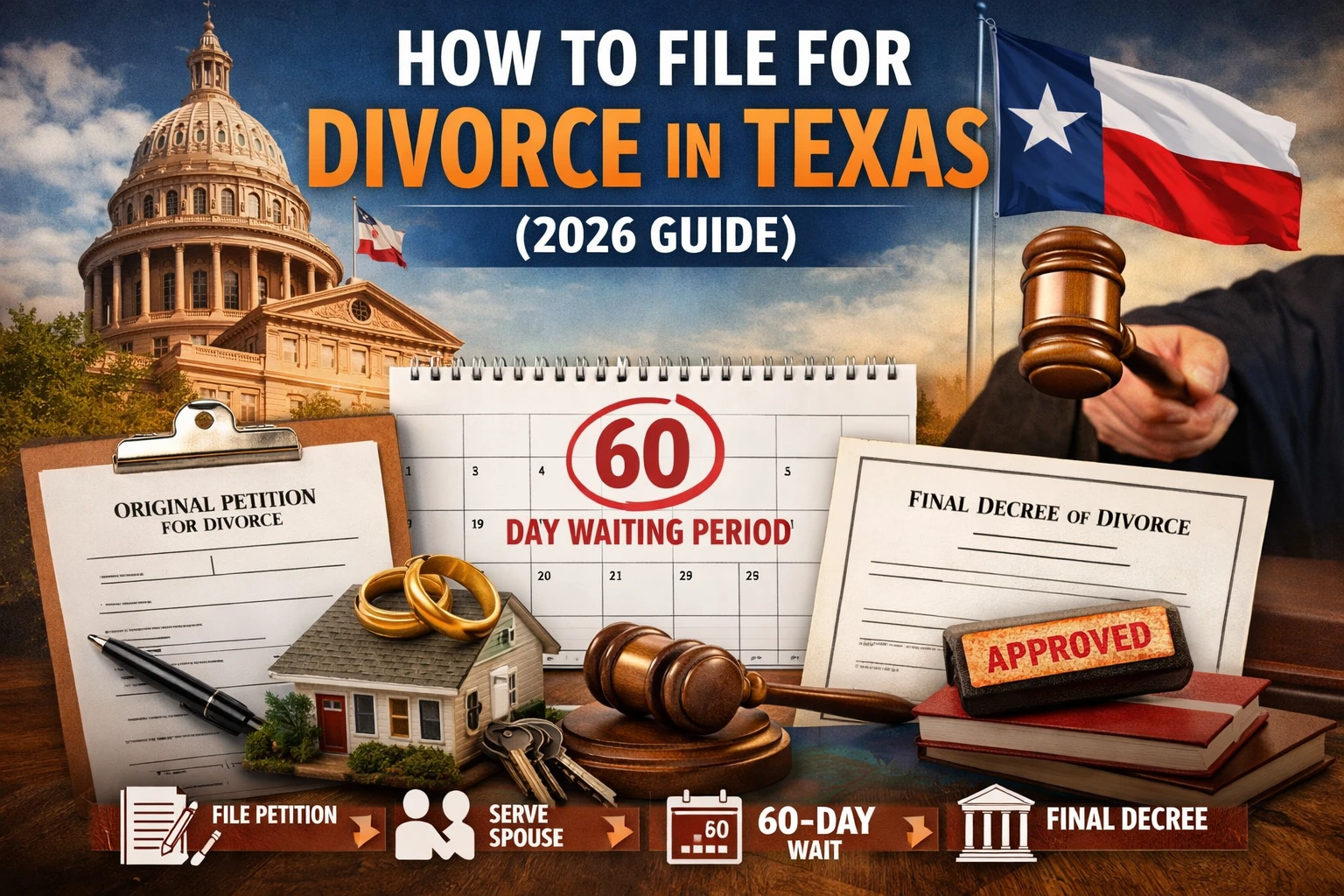
In Texas, every divorce is subject to the required waiting period, so no service can erase that timeline. Beyond that, speed usually comes down to whether both spouses are cooperating, how quickly documents are completed correctly, and whether the filing meets local court requirements.
In an uncontested case, an online divorce process can move efficiently because it is designed for straightforward completion. There is less back-and-forth, fewer billable conversations, and less incentive to stretch out simple issues. For couples who already agree, a streamlined document process can feel like a relief.
A traditional lawyer may be slower in a simple agreed case because the process includes more layers, more review, and sometimes more negotiation than the situation actually requires. On the other hand, when a case is disputed, attorney involvement may prevent bigger delays later by resolving problems early.
Where online divorce works well in Texas
Online divorce is usually the best fit when the marriage is ending by agreement, not by conflict. That means both spouses are willing to sign, disclose the necessary information, and follow through on the filing process.
This path can work well when there is no real dispute about who keeps what, how debts will be handled, or what the parenting plan should look like. It can also be a strong option for couples who want privacy, lower costs, and less emotional strain. Many people do not want a legal battle. They want a clear process and a way to move forward.
This is especially true for Texans who feel overwhelmed by the court paperwork but do not actually need litigation. In counties with busy dockets, correctly prepared documents and step-by-step guidance can reduce confusion and help avoid preventable mistakes.
When a traditional lawyer is the better choice
There are cases where hiring a lawyer is not just helpful. It is necessary.
If your spouse is uncooperative, refuses to sign, hides income or property, or threatens to contest the divorce, full legal representation becomes much more important. The same is true if there are allegations of family violence, power imbalances, business ownership issues, retirement disputes, or significant disagreements involving children.
A traditional lawyer is also a better fit if you do not know your rights and need legal advice tailored to your exact circumstances. Document support can help with process, but it does not replace case-specific legal counsel when the stakes are high.
The practical rule is simple: if your divorce requires someone to argue, negotiate aggressively, or protect you in a contested setting, that is lawyer territory.
Online divorce vs traditional lawyer for cases with children
This is where people need to be careful. Having children does not automatically mean you need a lawyer. Many Texas parents complete uncontested divorces successfully when they agree on conservatorship, possession schedules, child support, medical support, and related terms.
But children do raise the need for precision. Parenting language must be handled correctly. Support obligations must match Texas requirements. Small drafting problems can create confusion later, especially when school schedules, exchanges, or healthcare responsibilities are involved.
If both parents are on the same page, an organized, Texas-focused divorce support service can still be a good fit. If there is disagreement over custody, visitation, relocation, or support, the risk level changes quickly and a lawyer may be the better option.
The hidden issue is not technology. It is fit.
A lot of people hear “online divorce” and assume the risk is the internet. That is not really the issue. The real issue is whether the service matches the case.
A well-structured online process can be very effective for an agreed divorce. A poorly matched case will struggle no matter how polished the website looks. The problem is not that the forms are online. The problem is trying to force a contested, emotional, or legally complex case into a simplified system.
That is why Texas-specific guidance matters. Divorce procedure is not identical from state to state, and filing expectations can vary by county. A generic national platform may not give the level of clarity a Texas resident needs. Process support works best when it is built around local rules, local forms, and realistic timelines.
How to decide which option fits your case
Start with honesty. Are you and your spouse truly in agreement, or are you just hoping conflict will stay quiet long enough to finish the paperwork? Those are not the same thing.
If you both agree on the core terms, want to keep costs down, and mainly need help preparing and completing the required Texas divorce documents, an online divorce support model may be the practical answer. That is often where a service like Ready Divorce Service provides real value – not by creating conflict, but by helping agreed cases move forward with more clarity and less stress.
If you expect arguments, pressure, intimidation, or fights over money and parenting, do not choose a lower-cost route just because it sounds easier. A contested case usually becomes more expensive when it is mishandled at the start.
It also helps to think about your tolerance for process. Some people are comfortable gathering information, reviewing forms, and following filing instructions with guidance. Others want a lawyer to handle everything. Neither approach is wrong. The better choice is the one that matches both your legal situation and your ability to manage the steps involved.
For many Texans, the answer is not complicated. If the divorce is agreed, paperwork-focused, and low conflict, online support can be a smart and affordable path. If the divorce involves disputes, uncertainty, or risk, a traditional lawyer may be worth every dollar. The best next step is the one that gets you to a legally sound outcome without adding problems you did not need in the first place.
📞 Get Started Today – Your Peaceful Divorce Is Just a Click Away
When you’re ready to move on, we’re ready to help.
📲 Call us now at (800) 432-0018
🖥️ Start your divorce online today