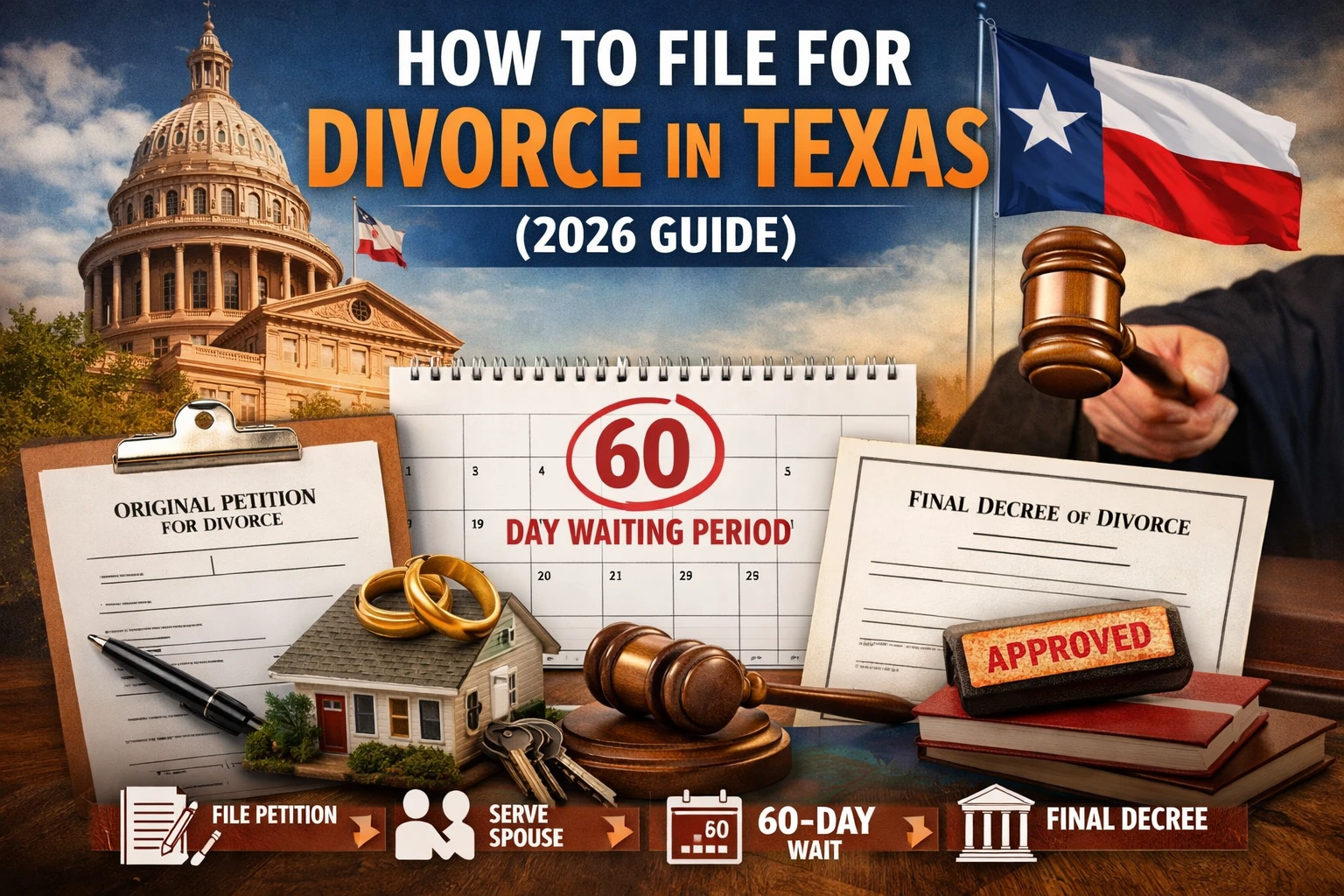
Waiting is often the hardest part of an agreed divorce. When both spouses are ready to move on, it can feel frustrating to learn that even a straightforward case still has rules, deadlines, and court procedures. If you are wondering how to finish agreed divorce faster in Texas, the short answer is this: you cannot skip the legal waiting period, but you can avoid the delays that make an uncontested divorce take longer than necessary.
That distinction matters. In Texas, speed usually comes down to preparation, accuracy, and follow-through. Couples who agree on everything can still lose time because paperwork is incomplete, filing instructions are missed, or one small issue with children, property, or service turns an easy case into a stalled one. A faster divorce is usually not about rushing. It is about doing each step correctly the first time.
How to finish agreed divorce faster without creating new delays
The first thing to understand is the difference between what can be controlled and what cannot. Texas has a mandatory 60-day waiting period in most divorce cases. That means the court generally cannot finalize the divorce until at least 60 days have passed from the date the Original Petition for Divorce is filed. If someone promises a same-week divorce in a standard agreed case, that is not realistic.
What you can control is everything around that waiting period. If your documents are prepared correctly, filed on time, signed where required, and ready for the final prove-up as soon as the waiting period ends, your case can move much more efficiently. If not, the 60 days can come and go while you are still fixing avoidable problems.
A genuinely agreed divorce moves faster when both spouses are aligned on the major terms from the beginning. That usually includes property division, debt allocation, child conservatorship, possession schedules, child support, and any name change requests. If even one of those issues is unresolved, the case may still be filed, but finishing quickly becomes much harder.
Start by confirming your divorce is truly uncontested
Many people say their divorce is agreed when they really mean mostly agreed. That difference matters more than it seems. A case is typically uncontested when both spouses are willing to sign the necessary paperwork and both agree on the final terms. If one spouse is unresponsive, keeps changing positions, or refuses to sign the Final Decree of Divorce, your timeline can stretch fast.
Before filing, it helps to settle the practical details in writing, even informally at first. If you have children, make sure you are not just agreeing in general terms like shared custody or fair support. Texas courts need specific terms. If you own a house, vehicles, retirement accounts, or have shared debts, those should be addressed clearly as well.
This step may feel basic, but it is where many delays begin. Courts cannot finalize an agreed divorce based on assumptions or vague verbal understandings.
Get the paperwork right the first time
If you want to know how to finish agreed divorce faster, this is where most of the answer lives. Document errors are one of the biggest reasons uncontested divorces slow down.
In Texas, the required forms depend on your situation. A divorce with children usually involves more documents and more detailed final orders than a divorce without children. County procedures can also vary in practical ways, including filing preferences, prove-up settings, and local requirements. A mistake that seems minor to you may cause a rejection by the clerk or a delay at finalization.
Common slowdowns include missing signatures, inconsistent names, incomplete dates, leaving out required child-related language, and drafting a decree that does not match what was requested in the petition. Even formatting or notarization issues can force revisions. When that happens, you are not just fixing a typo. You may be losing your hearing date or waiting longer for court review.
That is why process support matters in agreed cases. A service built around Texas uncontested divorce procedure can help reduce the risk of preventable mistakes and keep your case moving.
Be consistent across every form
Your petition, waiver, decree, and any child support or withholding documents should all tell the same story. Property descriptions, party names, addresses where required, and child information should line up exactly. Courts notice mismatches, and mismatches create questions.
Sign at the right time
Some forms should not be signed too early. Others may require notarization. If a spouse signs the wrong document before filing, or signs a waiver too soon, you may need to redo paperwork. Timing matters just as much as content.
File early and use the waiting period wisely
Because Texas has that 60-day waiting period in most cases, filing sooner usually helps. Once your petition is filed, the clock begins. People sometimes wait until every detail feels emotionally settled before starting. But if the terms are already agreed and the documents are ready, delaying filing only pushes back your finish date.
The smarter approach is to file as soon as your case is truly ready, then use the waiting period to complete the remaining procedural steps. That may include getting the Respondent’s Waiver of Service signed, finalizing the decree, confirming child support details, and preparing for the prove-up hearing or affidavit process if your court allows one.
This is where organization makes a real difference. The 60-day period is not dead time. It is your opportunity to get every remaining piece in place so the divorce can be finalized as soon as legally allowed.
Do not let service issues slow down an agreed case
One of the most common frustrations in uncontested divorce is turning an agreed case into a slower case because the service step was mishandled.
If your spouse is cooperative, there may be a simpler path than formal service by constable or process server. But the correct option depends on timing and proper paperwork. If the waiver is not done correctly, the court may not accept it. Then you may have to backtrack and arrange formal service, which adds time and cost.
This is a good example of why agreed divorce is not just about agreement between spouses. It is also about following court procedure carefully. A cooperative spouse helps, but proper filing and valid signatures are what keep the case moving.
Children, property, and county rules can affect speed
Not every agreed divorce moves at the same pace. A couple with no children, no house, and minimal shared debt usually has a simpler path than a couple dividing retirement accounts and setting a parenting schedule. That does not mean your case cannot be uncontested. It just means more detail may be needed.
If children are involved, the court will look closely at the final orders. Support, medical support, conservatorship, and possession terms need to meet legal standards. If the proposed decree is incomplete or unclear, the judge may require changes before signing.
Property can create delays too, especially when people try to keep the decree overly simple. General language like each keeps what they have can be risky if there are titles, loans, retirement plans, or real estate involved. Specificity now often saves time later.
County practices can also affect how quickly the last step happens. In places like Tarrant, Dallas, Denton, Collin, Ellis, Bexar, and Harris counties, filing systems and finalization procedures may differ in practical ways. The law is statewide, but the court process can still have local wrinkles. Knowing those details helps avoid unnecessary back-and-forth.
Stay responsive after filing
An agreed divorce can stall simply because one person stops checking email, delays reviewing the decree, or forgets to sign a needed document. That may sound obvious, but it happens often.
If your goal is speed, treat the case like a project with deadlines. Review drafts promptly. Confirm information carefully. Return signatures quickly. If a correction is needed, handle it immediately. A few days lost at each step can easily turn into weeks.
This is especially true near the end of the case. Once the waiting period is almost over, you want your final documents ready and your prove-up plan confirmed. If you wait until day 61 to start reviewing the decree, you are already behind.
When faster should not mean careless
There is a difference between moving efficiently and moving blindly. If you are under pressure to finish quickly, it can be tempting to sign terms just to get it over with. That is not always the right call.
A fast agreed divorce only helps if the final orders are workable. If child support is calculated incorrectly, if debt responsibility is vague, or if the parenting schedule does not reflect real life, you may end up with problems after the divorce is final. Fixing those later can cost more time and money than slowing down briefly to get the decree right.
The best approach is practical: move quickly where the process allows, and slow down where accuracy matters most. Those two ideas are not in conflict. In Texas divorce, they usually go together.
If you want a smoother path, the biggest advantage is having clear agreement, correct paperwork, and guidance that fits your county and your case. Ready Divorce Service helps Texans do exactly that with affordable, process-focused support for uncontested divorce. When the goal is to finish as soon as the law allows, steady and accurate usually beats rushed every time.
A divorce may mark the end of one chapter, but it is also the start of getting your footing back. The more organized and intentional you are now, the sooner you can put the paperwork behind you and focus on what comes next.
📞 Get Started Today – Your Peaceful Divorce Is Just a Click Away
When you’re ready to move on, we’re ready to help.
📲 Call us now at (800) 432-0018
🖥️ Start your divorce online today