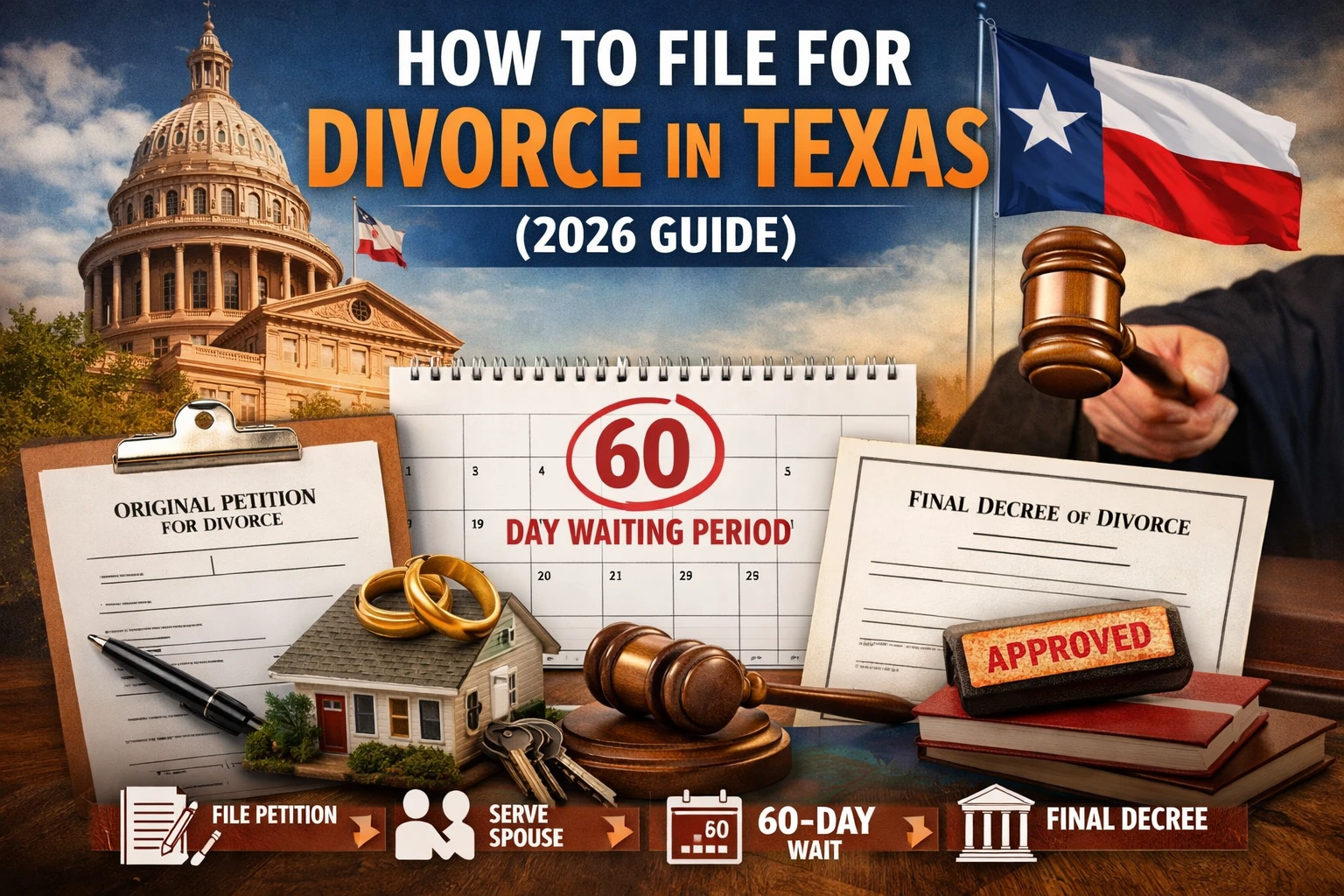
When people search for sample Texas divorce decree wording, they are usually not looking for fancy legal language. They want to know what the final paperwork is supposed to say, what details must be included, and how to avoid a decree that creates problems later. That is a smart place to focus, because the divorce decree is the document that puts your agreement into enforceable written terms.
In a Texas uncontested divorce, the decree is not just a formality. It is the final court order that spells out who gets what, who pays which debts, whether either spouse will change names, and if children are involved, how conservatorship, possession, support, and medical coverage will work. If the wording is vague, incomplete, or inconsistent with the rest of your filings, the case can stall or the final order can cause confusion long after the divorce is over.
What sample Texas divorce decree wording should actually do
Good decree wording does three things. First, it identifies the parties and confirms that the court has authority to grant the divorce. Second, it turns agreements into clear legal terms the judge can sign. Third, it gives enough detail that both spouses know what is required without having to guess.
That last point matters more than many people expect. A decree that says one spouse keeps “the car” is weaker than one that identifies the year, make, model, and who is responsible for any related loan. A decree that says the parties will “split debts fairly” is an invitation for future conflict. Judges want clear, specific language because clear orders are easier to approve and enforce.
Core sections you will usually see in a Texas divorce decree
Most Texas divorce decrees follow a familiar structure, even though the exact wording can vary by county, by judge, and by the facts of the case. In an agreed divorce, the document often starts with the case caption, the names of the spouses, and statements about jurisdiction, residency, and whether the court heard the matter by agreement or default.
After that, the decree usually states that the marriage is dissolved. It may include language such as: “The Court finds that the marriage has become insupportable because of discord or conflict of personalities that destroys the legitimate ends of the marriage relationship and prevents any reasonable expectation of reconciliation.” That wording tracks the no-fault basis commonly used in Texas.
Property and debt provisions come next in many decrees. These sections are where precision matters most. The decree should clearly assign marital assets and liabilities to one spouse or the other. If retirement accounts are involved, the decree may mention that a separate order, such as a qualified domestic relations order, may be needed. If there is a house, the wording needs to address ownership, possession, refinance terms if applicable, and deadlines.
If children are involved, the decree becomes more detailed. It will typically include conservatorship terms, possession and access schedules, child support amounts, medical support, dental support, tax issues, and geographic restrictions if any apply. Parenting language is not an area for shortcuts. Even in a fully agreed case, the court will expect language that protects the child and follows Texas requirements.
Sample Texas divorce decree wording for common provisions
The right wording depends on your facts, but seeing the style of language can help. For example, for division of a vehicle, a decree might say that one spouse is awarded “all right, title, and interest” in a specific vehicle, followed by the vehicle identification details, and that spouse is ordered to pay any debt associated with it and hold the other spouse harmless from that debt.
For a bank account, the wording may award one spouse all funds on deposit in a named institution under a specific account, whether standing in that spouse’s name alone or jointly with the other spouse. That kind of language is broad on purpose. It helps avoid disputes over whether a jointly titled account was included.
For debt allocation, the decree often states that a spouse is responsible for a named credit card account or loan and must indemnify the other spouse from any failure to pay it. That “hold harmless” language is common because it makes responsibility clearer. Still, there is a practical limit here. Even if your decree assigns a joint debt to one spouse, the creditor is not bound by your divorce order unless the account is refinanced, paid off, or otherwise changed with the lender.
For a name change, the decree may restore a spouse’s prior name if requested. This is usually straightforward, but it needs to be included in the final decree if the spouse wants the court to order it.
Why wording mistakes cause delays
A surprising number of agreed divorces hit avoidable problems because the decree does not match the petition, includes unclear terms, or leaves out a required section. The case may still be uncontested, but that does not mean the judge will sign a decree that is incomplete.
One common issue is inconsistency. If the petition says there are no children of the marriage, but the decree includes child-related sections, that mismatch raises questions. Another issue is partial agreements. If the decree says the parties agreed on all property issues but does not actually divide a major asset or debt, the order may be rejected or lead to future conflict.
There is also the problem of informal language. People often write agreements the way they would text each other, using phrases like “we will each keep our own stuff” or “he will help with bills.” That may reflect the spirit of the agreement, but it is not strong legal drafting. Court orders need specifics, especially when they deal with money, property, parenting time, and deadlines.
It depends on what your case includes
There is no one-size-fits-all sample decree that works for every Texas divorce. A short marriage with no children, no house, and few debts may need relatively simple wording. A case involving children, retirement funds, a marital home, or multiple accounts needs more detailed language.
County practices can also affect the final document. While Texas law provides the framework, some courts expect certain formatting or standard language in family orders. That does not change the core legal requirements, but it does mean that copying a random sample from the internet can create trouble if it does not fit your county or your facts.
This is one reason process support matters in uncontested cases. If both spouses agree, the legal work is often less about arguing and more about getting the paperwork accurate, complete, and ready for the judge. For many Texans, that is where a service-focused approach can save time, stress, and unnecessary expense.
How to review sample Texas divorce decree wording before signing
Before a decree is submitted, read it slowly and practically. Ask yourself whether a stranger could follow every part of it without needing extra explanation. Check names, dates, addresses if included, property descriptions, account references, and payment terms. If something is awarded, make sure it says who receives it. If a debt is assigned, make sure it says who pays it.
Look closely at deadlines. If one spouse is supposed to transfer title, vacate a home, refinance a loan, or exchange documents, the decree should say when that has to happen. Without deadlines, even agreed terms can become messy.
If children are involved, confirm that the conservatorship terms, possession schedule, holiday schedule, support amounts, and medical support language all work together. Child-related sections are often where small drafting mistakes turn into major practical problems.
Finally, make sure the decree reflects the full agreement and not just part of it. Once the judge signs the final decree, it becomes the controlling order. Fixing omissions later is usually harder than getting the wording right before entry.
A practical way to think about the decree
Your final decree should read less like a conversation and more like a set of instructions. That may feel stiff, but clarity is what protects both sides. In an uncontested divorce, good wording helps the court sign off efficiently and helps each spouse move forward with fewer loose ends.
If you are trying to complete an agreed divorce in Texas, sample language can be useful as a reference point, but it should never replace a decree that is tailored to your real situation. The goal is not to sound legal for the sake of sounding legal. The goal is to create a final order that is clear, enforceable, and ready for the next chapter of your life.
📞 Get Started Today – Your Peaceful Divorce Is Just a Click Away
When you’re ready to move on, we’re ready to help.
📲 Call us now at (800) 432-0018
🖥️ Start your divorce online today