Table of Contents
- What Is the Texas Divorce 60-Day Waiting Period?
- When Does the 60-Day Clock Start in Your Divorce?
- Exceptions to the 60-Day Waiting Period in Texas Divorce
- Texas Divorce Process Explained: What Happens During the Waiting Period
- Texas Divorce Residency Requirements and the Waiting Period
- Strategic Use of the 60-Day Waiting Period
- From Waiting Period to Final Decree: Texas Divorce Final Decree
- Conclusion
Last Updated: July 31, 2026
Understanding the Texas divorce 60 day waiting period explained is essential for anyone filing for divorce in Texas. At Ready Divorce Service, we help individuals navigate this mandatory cooling-off period with clarity and confidence. Under Texas Family Code Section 6.505, the 60-day waiting period begins on the date you file your divorce petition and applies to most divorce cases. Knowing how it works can save you time, money, and stress during an already difficult process.
Below, we’ll walk you through every aspect of the 60-day waiting period: when it begins, how it affects your timeline, what you can do during those 60 days, and how to move from the waiting period to finalization.
What Is the Texas Divorce 60-Day Waiting Period?
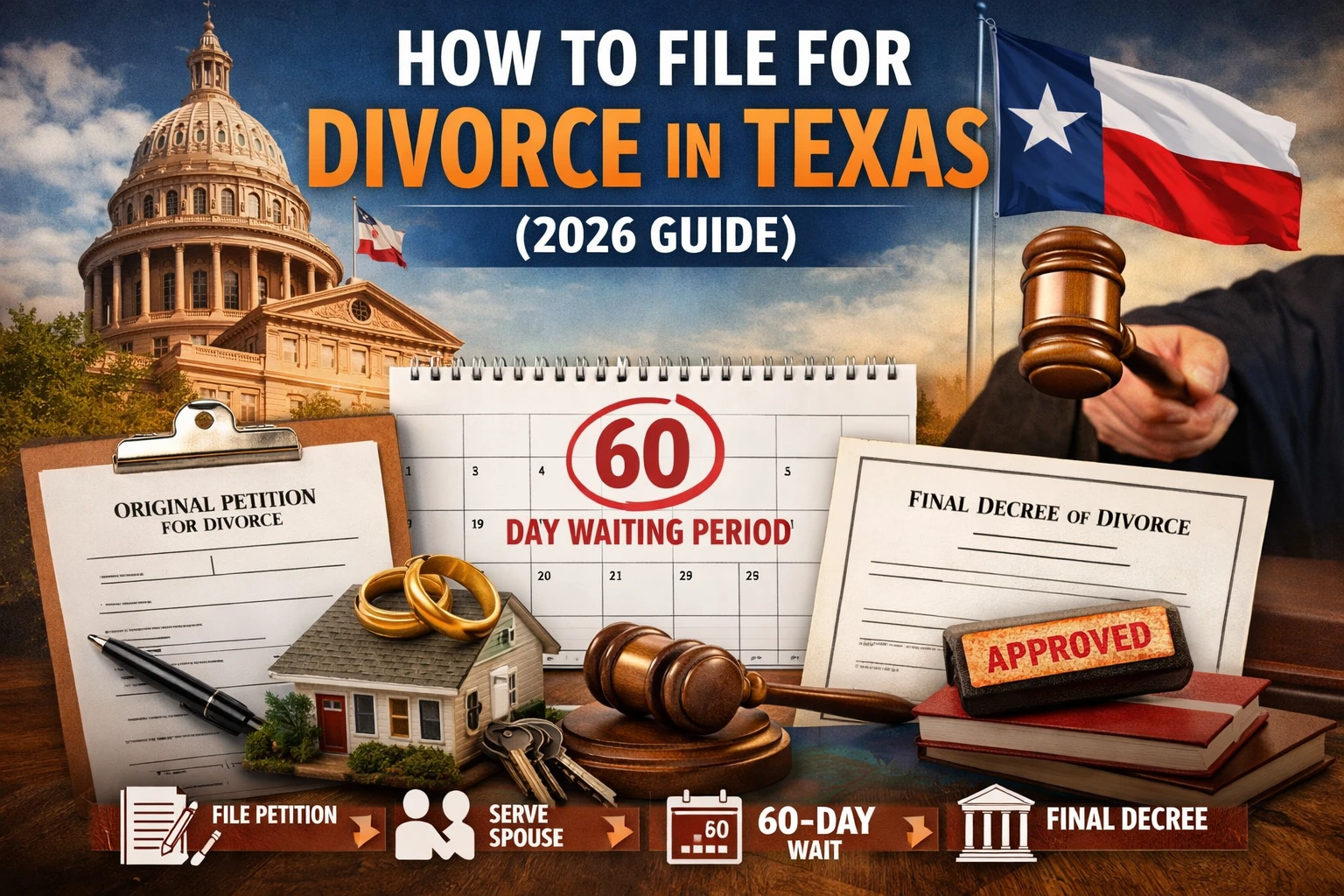
Texas imposes a mandatory 60-day waiting period between the filing of a divorce petition and the date a judge can sign a final decree of divorce. This cooling-off period applies to virtually all divorce cases, regardless of whether the divorce is uncontested or contested. The statutory requirement exists to give both spouses time to reconsider their decision, pursue mediation, and negotiate settlement terms. Even if both parties agree to all terms and have signed a settlement agreement, the judge cannot finalize your divorce before the 60 days have elapsed.
Many people don’t realize that the 60-day clock starts on the date you file, not the date your spouse receives the divorce papers. This distinction matters for planning purposes, especially if service of process takes several weeks.
When Does the 60-Day Clock Start in Your Divorce?
The 60-day clock starts on the date you file your divorce petition with the clerk of the court. This is the official filing date, the moment your suit for dissolution of marriage is entered into the court system. It doesn’t matter if your spouse hasn’t been served yet or doesn’t know about the filing. The clock begins immediately upon filing.

Service of process happens separately from the filing date. You have up to 120 days to serve your spouse after filing, but the 60-day waiting period clock starts on day one, regardless of when service occurs. The date of filing is recorded by the court clerk and appears on all official documents. If you file on January 1st, your earliest possible final decree date is March 2nd (60 days later).
Exceptions to the 60-Day Waiting Period in Texas Divorce
While the 60-day waiting period is mandatory in most cases, Texas law provides one significant exception: family violence. If the court finds that family violence has occurred, it may waive the waiting period entirely, allowing a final decree to be entered immediately.
To request a waiver based on family violence, you must file a motion with the court and provide evidence supporting your claim. This evidence might include police reports, protective orders, medical records, witness testimony, or documentation of abuse. A protective order is a court order that prohibits an abuser from contacting, threatening, or harassing the victim and significantly strengthens your waiver request.
Beyond family violence, Texas law provides no other statutory exceptions to the 60-day waiting period. Even when both spouses agree to everything, the 60 days must pass before finalization.
Attempting to misrepresent family violence to waive the waiting period is perjury and can result in criminal charges, fines, and jail time. Courts are experienced at identifying false claims, and the consequences far outweigh any time savings.
Texas Divorce Process Explained: What Happens During the Waiting Period
The 60-day waiting period isn’t a passive time. This window is when the most important work of your divorce typically occurs. You can file temporary orders, negotiate settlements, complete mediation, and prepare all final documents during these 60 days.
Temporary orders are court orders that take effect immediately and remain in place until the final decree is signed. These orders can address child custody, child support, spousal support, property possession, and other urgent matters. If you need immediate relief, such as custody of children or support payments, you can request temporary orders at any time during the waiting period.
Mediation and settlement negotiations typically happen during the 60-day window as well. Many couples use this time to work with a mediator and reach agreement on custody and support issues. If you can resolve all contested issues during mediation, you’ll have a settlement agreement ready to present to the judge when the 60 days expire. Ready Divorce Service specializes in helping couples prepare accurate settlement agreements and final documents during the waiting period, so you can finalize your divorce immediately when the waiting period ends.
Texas Divorce Residency Requirements and the Waiting Period
To file for divorce in Texas, at least one spouse must have been a resident of Texas for at least six months immediately preceding the filing of the divorce petition, and the spouse filing must have been a resident of the county where the petition is filed for at least 90 days.
These residency requirements must be satisfied before you file. If you’ve just moved to Texas, you may need to wait several months before you can file for divorce. The 60-day waiting period only begins after you’ve met these residency requirements and filed your petition. If you meet the six-month state residency requirement but not the 90-day county residency requirement, you can file in a different county if your spouse resides there.
Strategic Use of the 60-Day Waiting Period
Rather than viewing the 60-day waiting period as an obstacle, smart divorcing individuals use it strategically to their advantage. Begin collecting financial documents, property valuations, and custody information before you file. By the time you file your petition, you’ll have everything organized and ready for negotiation.
The temporary orders in place during the waiting period often influence the final orders in your divorce decree. If you establish a custody arrangement in temporary orders that works well for your family, that arrangement is likely to become the final custody order. Similarly, temporary support amounts often become the basis for final support calculations.
Uncontested divorces benefit enormously from strategic use of the waiting period. If you and your spouse can reach complete agreement during the 60 days, you’ll have all documents prepared and ready for the judge’s signature on day 61. Contested divorces also benefit from strategic planning during the waiting period. Use this time to clearly document your position, gather evidence supporting your claims, and prepare for potential court hearings.
From Waiting Period to Final Decree: Texas Divorce Final Decree
After 60 days have passed, you’re eligible for a final decree of divorce. However, the waiting period ending doesn’t automatically finalize your divorce; you must still complete the final steps and obtain the judge’s signature on your final decree.
In an uncontested divorce where both spouses have signed a settlement agreement, you can submit your final documents to the judge for signature. The judge reviews the paperwork to ensure it complies with Texas law and that the settlement is not unconscionable. If everything is in order, the judge signs the final decree, and your divorce is complete.
In a contested divorce, the case proceeds to a court hearing or trial after the 60-day waiting period ends. The judge hears evidence from both sides, makes decisions on disputed issues, and enters a final decree reflecting those decisions. This process can take additional weeks or months, depending on the court’s schedule and the complexity of the issues.
The moment the judge signs your final decree of divorce, your marriage is legally dissolved. You can remarry, update your legal name, and move forward with your new life. Keep certified copies of your final decree for future reference.
Frequently Asked Questions
When does the 60-day waiting period for a Texas divorce start?
The 60-day clock begins on the date of filing the divorce petition with the clerk of the court. This is the official filing date, not when your spouse receives service of process. The mandatory waiting period runs for 60 consecutive days from that filing date, regardless of whether your spouse has been served or responded to the petition. Understanding this timeline is critical for planning your divorce process.
Can the 60-day waiting period for divorce be waived in Texas?
Yes, the waiting period can be waived in specific circumstances under the Texas Family Code. The most common exception involves family violence, if a protective order exists or the court finds credible evidence of abuse, the judge may waive the requirement. Other limited exceptions exist, but they are narrowly defined. Most uncontested divorces must still observe the full 60-day cooling-off period, even if both spouses agree to all terms.
What can I do during the 60-day waiting period for divorce in Texas?
Use this time strategically to prepare your case. You can file for temporary orders to address immediate needs like custody, child support, or spousal support. Pursue mediation and negotiate a settlement agreement with your spouse to create an uncontested divorce. Gather financial documents, prepare your final decree language, and ensure all procedural requirements are met. For pro se divorces, this period allows time to complete and review all required documents before finalization.
What happens after the 60-day waiting period ends in a Texas divorce?
Once 60 days have passed since the filing date, you can proceed to finalize your divorce. If you have an uncontested divorce with a signed settlement agreement, you can submit your final decree of divorce to the judge for approval. The judge reviews the documents for compliance with Texas Family Code and procedural requirements. If everything is in order, the judge signs the decree, and your divorce is officially complete. Contested divorces may require a court hearing before the judge issues the final decree.
📞 Get Started Today – Your Peaceful Divorce Is Just a Click Away
When you’re ready to move on, we’re ready to help.
📲 Call us now at (800) 432-0018
🖥️ Start your divorce online today