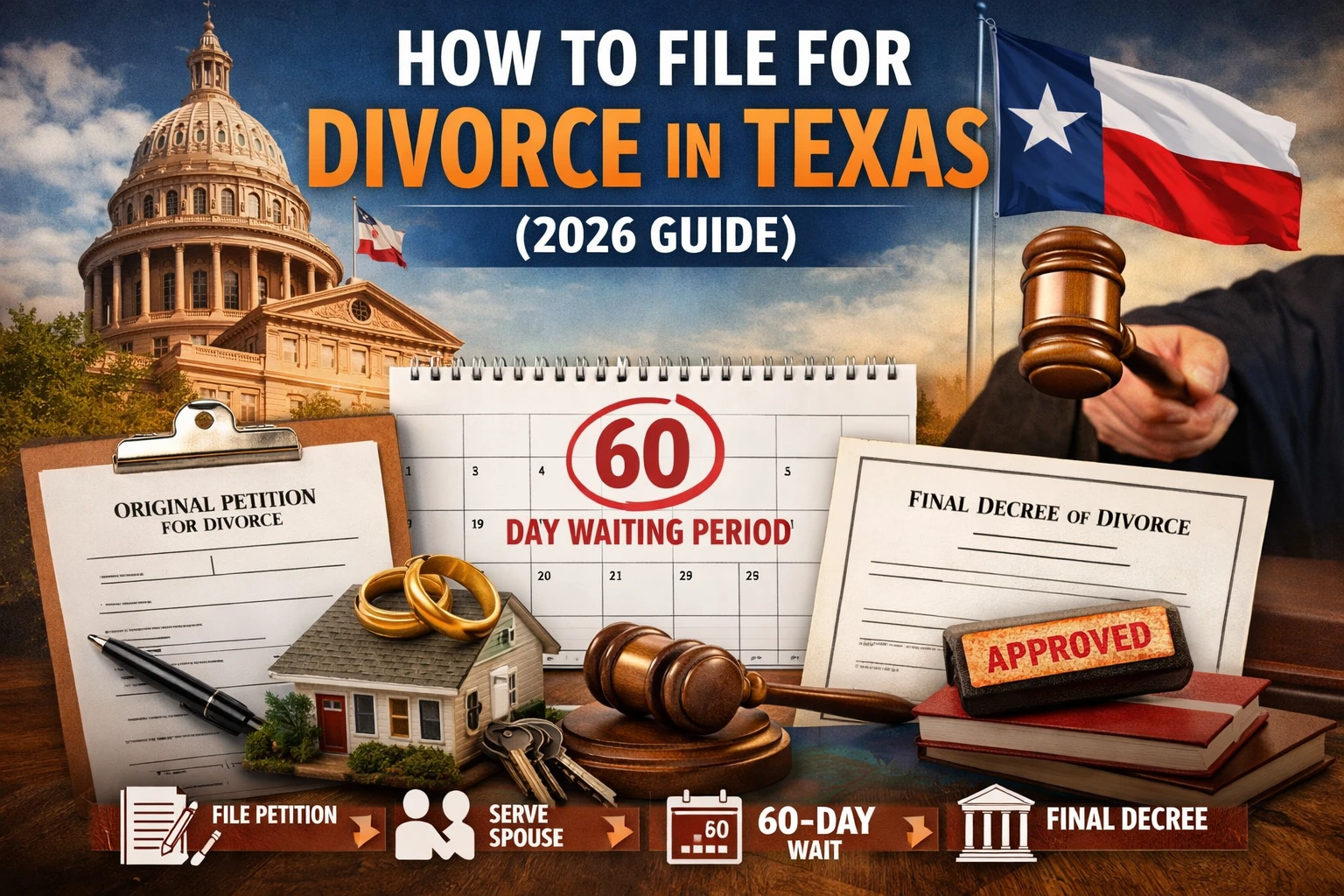
If you are trying to end a marriage in Denton County, the hardest part is often not the decision itself. It is figuring out what comes next, what forms matter, where to file, how long it takes, and whether a simple agreed case can stay simple. This Denton County divorce process explained guide is built for that exact moment – when you need clarity, not more stress.
For many people, the process is manageable when the divorce is uncontested. That means both spouses agree on the major terms, such as property division, debt allocation, and, if children are involved, conservatorship, possession, and support. When there is agreement, the path is usually faster, less expensive, and less draining than a contested court fight. Even so, Texas divorce procedure still has rules, deadlines, and county-specific filing steps that need to be handled correctly.
Denton County divorce process explained step by step
Every Texas divorce starts with the same legal foundation. One spouse files an Original Petition for Divorce. That filing opens the case and tells the court what type of orders are being requested. In Denton County, the case is generally filed with the district clerk in the county where either spouse has lived for at least 90 days, as long as one spouse has also lived in Texas for at least six months.
That residency requirement matters. If you have recently moved, or your spouse lives in a different county, the right filing location is not always obvious. Filing in the wrong county can delay everything, which is why it helps to confirm eligibility before turning in paperwork.
Once the petition is filed, the other spouse must be formally notified unless they are willing to sign a Waiver of Service. In an agreed divorce, a waiver is common because it avoids formal service by a constable or process server. But the waiver has to be completed correctly. Signing the wrong document too early or using an outdated form can create problems that are easy to avoid with good guidance.
After the case is filed, Texas imposes a 60-day waiting period in most divorces. This waiting period begins on the filing date, not the date your spouse signs anything. Even in the smoothest uncontested case, the divorce usually cannot be finalized before that period ends. There are limited exceptions, such as certain family violence situations, but most couples should plan around the standard timeline.
During that waiting period, the remaining divorce documents are prepared. These often include the Final Decree of Divorce and, when children are involved, additional forms related to custody, support, medical support, and parenting arrangements. If retirement accounts, real estate, or special property issues exist, extra paperwork may be needed. This is where many self-filed cases get stuck. The divorce may be agreed, but the decree still needs to match Texas court requirements and reflect the couple’s actual agreement.
What makes an uncontested case easier
An uncontested divorce is simpler because the court does not need to resolve a dispute for you. Instead, the paperwork presents a completed agreement for approval. That usually means less time, fewer hearings, and lower cost.
Still, easier does not mean automatic. The judge will expect complete and internally consistent documents. Names must match across forms. Dates need to be accurate. Property terms should be clear enough to enforce later. If the decree says a house, vehicle, bank account, or debt is awarded to one spouse, that language has to be specific. Vague agreements can create future conflict, even when both people are cooperative now.
If children are involved, the court pays even closer attention. Texas courts want to see parenting terms that address conservatorship, possession schedules, child support, and health insurance in a way that complies with state law. Parents may agree on many things, but the court still has to make sure the final orders are acceptable.
Filing in Denton County and moving toward finalization
After the petition is filed and the supporting documents are completed, the case moves toward finalization. In many agreed cases, one spouse will appear briefly for a prove-up hearing, unless local procedure allows an alternative method in that situation. The prove-up is usually short. The spouse who appears answers basic questions confirming residency, the marriage, the agreement, and that the proposed decree should be approved.
This part feels intimidating to many people, but in an uncontested case it is usually straightforward. The real work is often done before the hearing ever happens. If the documents are prepared accurately and the waiting period has passed, finalization is often the last formal step.
The signed Final Decree of Divorce is what legally ends the marriage. Until the judge signs it, the divorce is not final. That distinction is important. People sometimes assume that filing the petition or signing an agreement means they are divorced. It does not. The case ends only when the court signs the final order.
Common delays in the Denton County divorce process explained clearly
Most delays are not caused by complicated legal issues. They are caused by paperwork mistakes, missing signatures, incomplete disclosures, or confusion about procedure. A spouse may forget to sign in the right place. A decree may leave out a required term. A party may assume the court will fix unclear language, when courts generally expect the parties to present clean final documents.
Another common issue is timing. Some people try to finalize before the 60-day waiting period ends. Others wait too long between steps and lose momentum. In agreed cases, speed usually comes from organization. When the petition, waiver, decree, and child-related forms are prepared in the right order, the process tends to move more smoothly.
There is also a practical trade-off to keep in mind. Doing everything alone may seem cheaper at first, but errors can lead to rejected documents, repeat filings, missed work, or added stress. On the other hand, hiring full litigation counsel is often unnecessary for couples who already agree. For many Texans, procedural support and document preparation provide a middle path – more guidance than going it alone, without the cost of a courtroom battle.
What to expect if children or property are involved
If your divorce includes children, the process is still possible to complete uncontested, but the paperwork becomes more detailed. Parents need orders that address decision-making rights, possession schedules, child support, and medical support. Even when both parents are cooperative, these terms should be carefully drafted so expectations are clear after the divorce is final.
Property also changes the level of detail required. A marriage with no house, no retirement account, and few shared debts is naturally easier to document than one involving a mortgage, multiple vehicles, credit cards, or a pension. That does not mean the case must become contested. It just means the final decree has to do more work.
Texas is a community property state, but that does not mean every asset is split 50-50 in every agreed case. Spouses can often reach their own division, as long as the agreement is put into proper legal form. The key is precision. If one spouse keeps a vehicle, the decree should identify it clearly. If a debt is assigned to one spouse, that should also be spelled out.
When extra help makes sense
Some divorces are simple in spirit but still hard in practice. You may both agree, yet feel overwhelmed by forms, filing rules, courthouse procedure, or questions about what the judge expects. That is where a Texas-focused divorce document service can be useful.
For an agreed case, the right kind of support can help you stay organized, avoid common filing mistakes, and move from petition to final decree with more confidence. Ready Divorce Service works with Texans who want an affordable uncontested divorce path and need practical guidance through the paperwork and process. That kind of support is especially helpful for people who want to keep costs low without guessing their way through court forms.
If your case has serious conflict, hidden assets, abuse, or a spouse who will not cooperate, a simple uncontested approach may not fit. But if both sides are willing to sign and settle the main issues, the process is often more manageable than people expect once the steps are explained clearly.
The best next step is usually not to overthink the whole case at once. Start with the basics – residency, agreement, filing, waiting period, and final documents. Once those pieces are in order, the path forward often feels a lot less heavy.
👉 Contact us today for a free consultation and learn how clarity, communication, and cooperation can make all the difference in your divorce journey.
✅ Easy step-by-step guidance
✅ Flat-fee pricing — no surprises
📲 Call us now at (800) 432-0018