Table of Contents
- How Texas Divorce with Children Laws Shape Your Case
- Uncontested Divorce with Children: Is It Right for You?
- Texas Child Support Guidelines: What Parents Need to Know
- Standard Possession Order Texas: Visitation Schedules Explained
- Conservatorship and the Best Interest of the Child Standard
- Relocation and Geographic Restrictions in Custody Orders
- Co-Parenting Tools and Financial Planning After Divorce
- Frequently Asked Questions
Last Updated: September 26, 2026
How Texas Divorce with Children Laws Shape Your Case
A Texas divorce involving minor children is not simply a divorce. It is two legal actions decided together: the dissolution of the marriage and a Suit Affecting the Parent-Child Relationship, commonly called a SAPCR. That distinction drives everything that follows, because the court must approve a parenting plan covering conservatorship, possession, and support before it will grant the divorce.
This guide from Ready Divorce Service walks through how texas divorce with children laws actually work in practice, from the Original Petition for Divorce to the Final Decree of Divorce. Below, we break down each stage so you know what the court expects, what you can agree on yourselves, and where cases typically stall.
The Texas Attorney General’s child support information publishes the state’s support tables, and the Texas State Law Library divorce guides maintains plain-language explanations of filing requirements. Both are worth reading before you sign anything.
The fastest uncontested cases are the ones where both parents agree on conservatorship, possession, and support before filing. Every disputed issue adds hearings, delay, and cost.
Uncontested Divorce with Children: Is It Right for You?
An uncontested divorce with children is one where both parents agree on every issue the court must decide: conservatorship, the visitation schedule, child support, and the division of property and debts. If you agree on all of it, the court can finalize the case on paperwork alone.
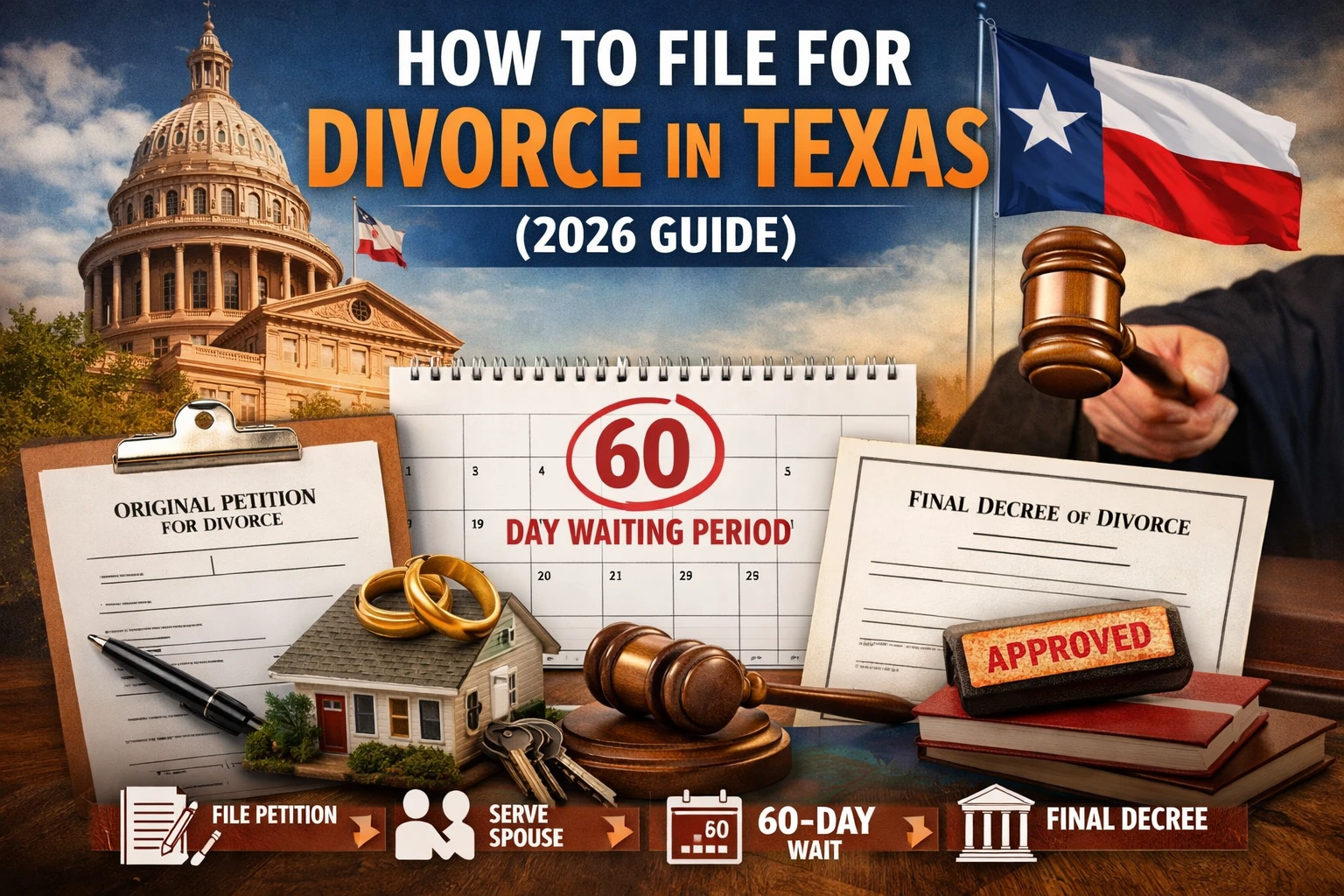
Texas also requires a 60-day waiting period after the divorce is filed before a court can grant it. That period is set by statute and cannot be waived. Use it to finish your parenting plan, gather income documents, and prepare the Final Decree of Divorce.
Contested cases look different. If you cannot agree on custody or support, your case moves into hearings, court-ordered mediation, and possibly a trial. That is slower and more expensive by a wide margin.
A common mistake is assuming that because you have a child, your case automatically counts as contested. It does not. Parents with minor children file uncontested cases every day. The deciding factor is agreement, not the presence of children. If you are unsure which path fits your situation, Which Plan is Right for You? walks through the uncontested divorce package options.
Texas Child Support Guidelines: What Parents Need to Know
Child support in Texas is calculated using the state’s guideline formula, which is based primarily on the paying parent’s net monthly resources and the number of children being supported. The court presumes the guideline amount is correct unless a parent presents evidence for a deviation.
Several details matter here:
- Net resources, not gross pay, drive the calculation. Taxes, certain deductions, and other obligations reduce the figure.
- Medical support is separate from monthly cash support. The order must assign who carries health insurance coverage for the child and how uncovered medical costs are split.
- Income withholding orders are routine. Support is typically withheld from the paying parent’s paycheck rather than paid by hand.
- Multiple children from different relationships can change the math, and the guidelines handle that situation differently.
Because the support tables are updated periodically, check the current figures on the Texas Attorney General child support page rather than relying on an old worksheet. For parents handling their own paperwork, Ready Divorce Service prepares and reviews divorce documents for full compliance with state law, which matters most on the financial schedules attached to the decree.
Standard Possession Order Texas: Visitation Schedules Explained
The Standard Possession Order is the default visitation schedule courts use when parents cannot agree on one. It is not a suggestion, it is a statutory fallback written into the Texas Family Code, and if your decree says “Standard Possession Order,” the calendar it describes is what you are legally bound to follow.
For a possessory conservator who lives 100 miles or less from the child’s primary residence, the default pattern is:
- Weekends: the 1st, 3rd, and 5th weekends of each month, from Friday at 6:00 p.m. until Sunday at 6:00 p.m.
- Weeknights: every Thursday during the regular school term, from 6:00 p.m. until 8:00 p.m.
- Extended summer: 30 days of possession, taken in no more than two separate periods, with at least 30 days’ written notice to the other parent before the period begins.
- Holidays: alternating Thanksgiving, Christmas, spring break, and the child’s birthday, with specific start and end times set by statute rather than left to the parents’ discretion.
For a parent who lives more than 100 miles away, the weekend pattern shifts to the 1st, 3rd, and 5th weekends but extends from Friday at 6:00 p.m. until Sunday at 6:00 p.m. with an added Sunday overnight, and the summer possession period grows to 42 days. These distance-based rules are why the geographic restriction in the next section matters so much, moving changes the schedule by operation of law.
The expanded Standard Possession Order. A parent can elect the expanded version of the Standard Possession Order, which adds a Thursday overnight during the school term and a Sunday evening period on non-weekend weekends. The election is made by written notice to the other parent and, once made, is binding for that year. Many parents never realize this option exists and simply accept the narrower default.
You can write your own order. Parents are free to agree on a different schedule, and courts generally approve agreements that serve the child’s interests. What you cannot do is leave the schedule vague. “Reasonable visitation” sounds flexible and turns into arguments within months.
A practical parenting plan names:
- Which parent has the child on which weekends and weeknights, using specific clock times
- How holidays rotate, including which parent gets which holiday in even and odd years
- Where exchanges happen and at what time, and who provides transportation
- How summer possession is divided and how much written notice each parent must give
- How the schedule changes once a child reaches high school enrollment age and gains a say in the arrangement
A vague possession order is the single most common reason parents return to court after an otherwise clean divorce. Write specific times, places, and dates into the decree, and if you want the expanded schedule, make the election in writing before the decree is signed.
Conservatorship and the Best Interest of the Child Standard
Texas does not use the terms “custody” and “visitation” in its statutes. It uses conservatorship and possession.
A Managing Conservator is a parent with the right to make major decisions for the child, such as education, medical care, and residence. A Possessory Conservator has the right to time with the child and access to records but not the primary decision-making authority. Joint managing conservatorship, where both parents share decision-making rights, is the most common arrangement courts order.
Every conservatorship decision is measured against the best interest of the child standard. Courts weigh factors like the child’s stability, each parent’s ability to care for the child, the child’s needs, and any history of family violence. The Texas Family Code lays out these factors in statute, and they are worth reading before you draft your proposed orders.
The rights and duties of parents are also spelled out in the decree. These include the right to receive information about the child, the duty to support the child, and the duty to inform the other parent of significant changes. Skipping these provisions creates gaps that surface later.
Relocation and Geographic Restrictions in Custody Orders
Most custody orders include a geographic restriction that limits where the parent with the exclusive right to designate the child’s primary residence may move. This is the clause that quietly shapes the next decade of a parent’s life, and it is the single most under-explained provision in most divorce guides.
What the default restriction looks like. If the parents cannot agree, the court typically restricts the child’s primary residence to a specific county or to a defined area, often the county where the child lived before the divorce, or a list of contiguous counties.
If a move is even possible in the next few years, negotiate the geographic restriction now. It is far easier to write a flexible clause into the original decree than to convince a judge to change one later.
Co-Parenting Tools and Financial Planning After Divorce
The decree ends the marriage. It does not end the need to communicate with the other parent, and that is where legal-only guides stop short.

- Update your budget to reflect one income plus support received or paid
- Confirm which parent carries health insurance coverage and how premiums are split
- Set up a dedicated account for child-related expenses and reimbursements
- Review beneficiary designations on retirement accounts and life insurance
- Check whether the decree requires a life insurance policy to secure support
Frequently Asked Questions
What is the 10 year rule in divorce in Texas?
Texas does not have a specific 10-year rule that changes property division or spousal support automatically. However, marriages lasting 10 years or longer may be considered long-term, which can influence a court’s decision on spousal maintenance if requested. For uncontested divorces with children, the length of marriage does not change the standard possession order or child support guidelines. The focus remains on the best interest of the child and the parents’ income.
How is child support calculated under the Texas Family Code?
Texas child support guidelines use a percentage of the noncustodial parent’s net monthly income, based on the number of children. The court may adjust based on factors like health insurance costs, childcare, and the child’s needs. Ready Divorce Service helps you prepare accurate income withholding orders and medical support documents.
What is the difference between conservatorship and possession in a divorce?
Conservatorship refers to the legal rights and duties of a parent, such as making medical and educational decisions. Possession refers to the schedule of when a parent has physical time with the child. In Texas, joint managing conservatorship is common, meaning both parents share legal rights. The standard possession order sets the visitation schedule. Understanding this distinction helps you complete your parenting plan correctly.
How does the 60-day waiting period affect cases with children?
Texas law requires a 60-day waiting period after filing before a divorce can be finalized. For cases with children, this period gives parents time to complete the parenting plan, attend court-ordered mediation if needed, and finalize child support and custody arrangements. It does not delay the process if you file correctly. Ready Divorce Service guides you through each step during this time so you can meet all requirements without confusion.