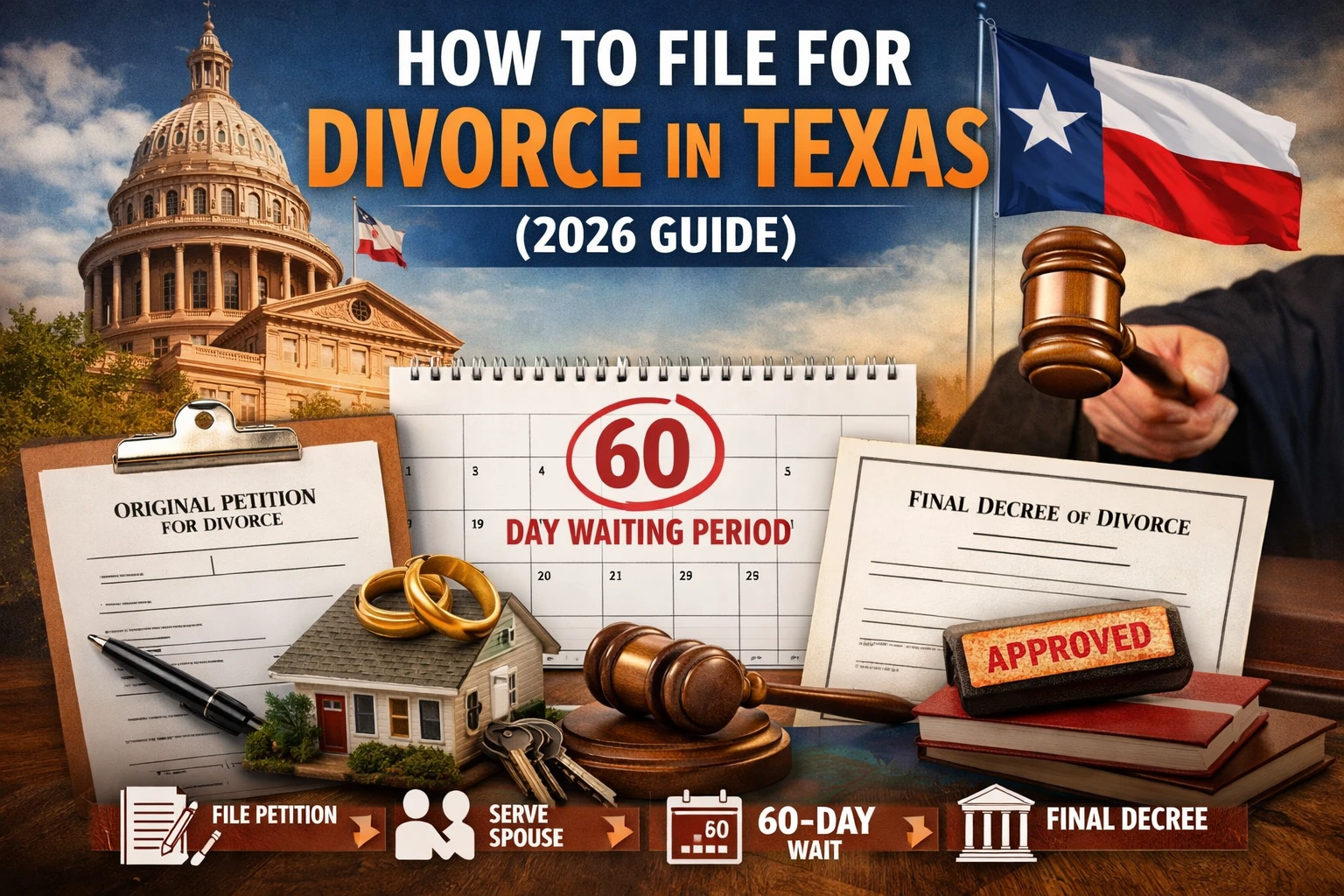
When both spouses agree that the marriage should end and can also agree on the terms, the process usually feels less like a courtroom fight and more like a paperwork project with deadlines. That is the basic idea behind Collin County uncontested divorce steps. The goal is still a legally valid Texas divorce, but without the conflict, delay, and expense that often come with a contested case.
For many people, the hard part is not deciding to move forward. It is knowing what comes next, what forms matter, and what can slow the case down. If you are filing in Collin County, a clear sequence matters. Small mistakes can lead to rejected paperwork, delays in setting a prove-up, or a decree that needs revisions before a judge will sign it.
What qualifies as an uncontested divorce in Collin County
An uncontested divorce means both spouses agree on the major issues before the divorce is finalized. That usually includes division of property and debts, whether either spouse will keep or refinance a house or vehicle, and if children are involved, conservatorship, possession schedules, child support, and medical support.
Agreement matters more than the county. Collin County follows Texas law, so the same statewide rules apply here, including residency requirements and the mandatory waiting period. The county-level differences usually show up in filing procedures, local preferences, and how hearings are scheduled.
A case can stop being uncontested if one spouse changes positions, refuses to sign documents, or disputes important terms after filing. So before preparing forms, it helps to make sure the agreement is real, complete, and specific enough to put into a final decree.
Step 1: Confirm that you meet Texas filing requirements
Before filing anything, make sure at least one spouse has lived in Texas for the last six months and in Collin County for at least 90 days. If those residency rules are not met, the court may not be able to move forward.
You also need a valid legal ground for divorce. In most uncontested cases, spouses use insupportability, which is the Texas no-fault ground. That means the marriage can no longer continue because of conflict or discord, without accusing either spouse of wrongdoing.
This is also the stage to check whether your case is simple enough for an agreed filing. If there is a lot of disagreement, hidden assets, family violence, or uncertainty about children’s issues, the case may need more than document preparation and procedural help.
Step 2: Prepare the right divorce forms
This is where many uncontested cases either stay efficient or start getting messy. The Petition for Divorce starts the case. Beyond that, the forms depend on your circumstances, especially whether you have minor children, whether both spouses will sign, and how property and debt are divided.
Typical paperwork may include the original petition, a civil case information form if required by the filing system, a waiver of service or respondent’s answer, the final decree of divorce, and child-related forms if children are involved. Some cases also need a standard possession order, wage withholding paperwork for support, or additional county-required settings documents.
The decree is especially important. It should reflect the actual agreement in clear, enforceable terms. Vague language causes problems later. If one spouse is keeping a car, the decree should identify the vehicle and responsibility for the loan. If debt is being divided, it should say who pays what. If there are children, the terms should line up with Texas requirements for support and conservatorship.
Step 3: File the petition in Collin County
Once the petition is ready, it is filed with the district clerk in Collin County. Filing officially opens the divorce case and starts the mandatory waiting period. The filing spouse is the petitioner, and the other spouse is the respondent.
At filing, the court assigns a cause number and court. Keep that information consistent on every document after that. Errors in cause numbers or party names can create avoidable delays.
There will also be a filing fee unless you qualify for a fee waiver. Cost is one reason people choose agreed divorces, but even uncontested cases still involve court filing expenses and document preparation needs.
Step 4: Give the other spouse legal notice
One of the key Collin County uncontested divorce steps is making sure the respondent is properly brought into the case. In an agreed divorce, this is often done with a signed waiver of service rather than formal service by constable or process server.
Timing matters here. A waiver of service generally should not be signed until after the petition has been filed. It must also be completed correctly, because judges and clerks look closely at waiver language and notarization requirements.
If the respondent does not want to sign a waiver, they can usually file an answer instead. That still allows the case to remain uncontested if both sides agree on all terms. The point is not which route you use. The point is making sure the court has proper proof that the respondent had notice of the case.
Step 5: Wait out the Texas 60-day period
Texas requires a waiting period in most divorce cases. In general, at least 60 days must pass between the date the petition is filed and the date the divorce can be finalized. Day one is the day after filing.
Many people assume an uncontested divorce can be finished immediately once forms are signed. It cannot, except in limited situations such as certain family violence cases. Even if everything is agreed and ready, the court usually cannot finalize the divorce before the waiting period ends.
This waiting period is not wasted time if you use it well. It is the right time to review the decree carefully, confirm support calculations if children are involved, gather any needed signatures, and make sure names, dates, addresses, and property descriptions are accurate.
Step 6: Finish the final decree and related documents
Before the prove-up hearing, your final decree should be complete and signed where required. In many uncontested cases, both spouses sign the decree before the hearing. That tends to make the final step smoother.
If the case involves children, there may be extra documents required before finalization. Depending on the facts, that can include income information for support, medical support terms, and withholding-related paperwork. Courts tend to review child-related decrees more closely because the agreement must meet legal standards, not just personal preference.
This is also where precision matters more than speed. A decree that leaves out a retirement account, uses unclear parenting language, or conflicts with Texas child support rules may need corrections before the judge signs.
Step 7: Set and attend the final hearing
The last formal step is the prove-up hearing. In an uncontested divorce, this is usually short. The petitioner appears before the judge and answers brief questions confirming residency, the date of marriage, the existence of an agreement, and the request for divorce.
Procedures can vary by court, so hearing scheduling and document submission should follow the assigned court’s expectations. Some courts are stricter than others about form, wording, or whether all final documents must be turned in before a hearing is set. That is one reason county-specific guidance can save time.
If the judge approves the paperwork and testimony, the judge signs the final decree of divorce. The divorce becomes final when the decree is signed.
Common issues that slow down uncontested cases
Most delays in agreed divorces come from preventable problems. The agreement may be incomplete. The waiver may be signed too early or notarized incorrectly. The decree may not match the petition. Child support language may be missing. A property description may be too vague to enforce.
Another common problem is assuming uncontested means informal. It does not. The court still expects legally sufficient documents. Judges are not there to rewrite the decree for the parties.
If your case involves children, a house, retirement benefits, unusual debt, or one spouse who is hard to coordinate with, it is smart to slow down and get the paperwork right the first time. Fast is helpful. Accurate is what gets the case finished.
When procedural help can make the process easier
A lot of people filing for divorce in Collin County are not looking for a legal battle. They want a clear path, affordable help, and confidence that the forms are prepared correctly. That is exactly where procedural support can make a difference.
If you already agree on the outcome but do not want to guess your way through petitions, waivers, decrees, and hearing steps, guided document preparation can reduce stress and keep the process moving. Ready Divorce Service works with Texans who want that simpler path without paying for full litigation they do not need.
An uncontested divorce is still a major life event, but it does not have to become a drawn-out legal ordeal. If you take the Collin County steps in the right order and treat the paperwork seriously, the process can feel much more manageable and a lot less overwhelming.
📞 Get Started Today – Your Peaceful Divorce Is Just a Click Away
When you’re ready to move on, we’re ready to help.
📲 Call us now at (800) 432-0018
🖥️ Start your divorce online today