If you are trying to end a marriage without a courtroom fight, the Harris County divorce process usually feels harder on paper than it should. Most people are not confused about whether they want the divorce. They are confused about what gets filed first, how long it takes, where Harris County procedures fit in, and what can delay a case that should have been straightforward.
For agreed divorces, the good news is that the path is often more predictable than people expect. The challenge is not usually the law itself. It is making sure the paperwork is correct, the filing sequence is right, and the final documents match what the court requires.
How the Harris County divorce process works
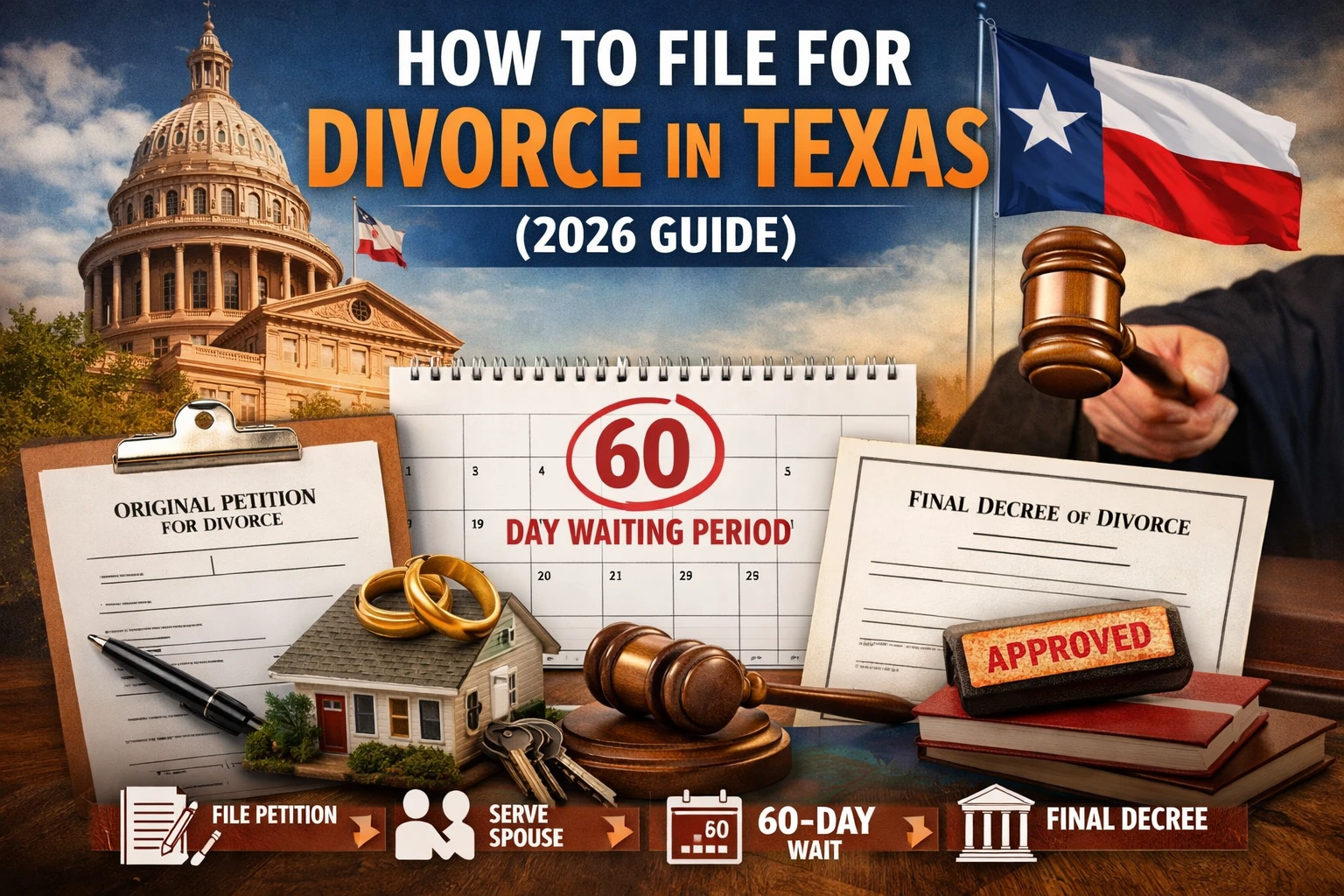
At the broadest level, a Texas divorce starts when one spouse files an Original Petition for Divorce. In an uncontested case, that filing opens the case with the district clerk and starts the legal timeline. If both spouses agree on the major terms, the case can move through the system with far less conflict, cost, and delay than a contested divorce.
Texas also has a mandatory waiting period. In most cases, you cannot finalize a divorce until at least 60 days have passed from the date the petition was filed. That does not mean every divorce is done on day 61. It means the court generally cannot grant the divorce before then. If documents are incomplete, signatures are missing, or the final order is not prepared correctly, the case can take longer.
For many Harris County residents, that waiting period is the first surprise. The second is that agreement between spouses does not remove the need for accurate court documents. Even in a peaceful divorce, the court still expects proper filing, proper notice or waiver, and a final decree that addresses the necessary issues.
Is your case likely uncontested?
An uncontested divorce usually works best when both spouses agree on the core terms before the case is finalized. That typically includes whether either spouse will pay support, how property and debts will be divided, and, if children are involved, conservatorship, possession, support, and medical coverage.
If there is major disagreement on any of those issues, the case may not stay uncontested. That does not always mean a full courtroom battle is coming. Sometimes couples resolve those disagreements through discussion and then return to an agreed path. But if one spouse will not sign, will not participate, or disputes key terms, the process changes.
That is why one of the most useful first steps is being honest about the level of agreement. People often say they have an uncontested divorce when they actually have a partially agreed divorce with one or two unresolved issues. Those unresolved issues matter because they can affect the documents you need and the timeline you should expect.
Step 1: File the divorce petition
The case begins when the petition is filed in the proper court. In Harris County, that means filing with the district clerk in a district court that handles family law matters. The petition identifies the parties, states that a divorce is requested, and gives the court the basic legal grounds and jurisdictional information.
You also need to make sure you meet Texas residency requirements. Generally, one spouse must have lived in Texas for at least six months and in the county of filing for at least 90 days before the case is filed. If those requirements are not met, filing too early can create unnecessary problems.
Once the petition is filed, the court assigns a cause number and court. Filing fees usually apply unless a party qualifies for a fee waiver. For people trying to keep costs low, that filing step is where planning matters. A simple agreed case is still less expensive than litigation, but mistakes can lead to refiling, delays, or extra procedural steps.
Step 2: Give the other spouse legal notice
After filing, the other spouse must be formally notified of the case unless they sign a waiver that meets legal requirements. In an agreed divorce, many couples use a waiver of service to avoid the expense and stress of formal service by a process server or constable.
This part sounds simple, but it is one of the most common places people make mistakes. A waiver must be prepared and signed correctly, and timing matters. If it is done the wrong way, the court may reject it or require additional steps.
If your spouse is cooperative, this stage can move quickly. If your spouse is hard to locate, avoids paperwork, or changes their mind about participating, the case may become more time-consuming. That is one of the practical trade-offs in an uncontested divorce. It is faster when both people stay engaged. It slows down when one person stops cooperating.
Step 3: Prepare the final divorce papers
While the 60-day waiting period is running, the next major task is preparing the final paperwork. The most important document is usually the Final Decree of Divorce. This is the court order that states exactly what each spouse must do after the divorce is granted.
For couples without children, the decree may focus mainly on property, debt, names, and any agreed support terms. For couples with children, the paperwork is more detailed. It needs to address conservatorship, visitation or possession schedules, child support, medical support, and related parenting terms.
This is where accuracy matters most. Courts do not just want a signed agreement. They want a decree that is complete, internally consistent, and legally usable. If retirement accounts, real estate, or unusual debt arrangements are involved, extra care is often needed. The more assets you have, the less room there is for vague wording.
Step 4: Wait out the Texas waiting period
The 60-day waiting period applies in most Texas divorces, including most agreed cases filed in Harris County. During this time, the case is not idle. It is the window when spouses finalize terms, complete required documents, and get ready for prove-up or final submission, depending on court procedure.
People often assume the waiting period is the only thing controlling the timeline. It is not. Court availability, document readiness, and whether your final papers are accepted all affect how quickly the divorce can be completed after day 60.
If children are involved, expect more review and more attention to detail. Not because the case must become contested, but because the final orders must protect the children and meet legal standards. A case with children can still be agreed and efficient. It just usually requires more complete drafting.
Step 5: Finalize the divorce
To finish the case, the court must sign the Final Decree of Divorce. In many agreed divorces, one spouse appears for a brief prove-up hearing, where they answer a few short questions under oath. Some courts may have specific local procedures for agreed finalizations, so following current county practice matters.
At that hearing or submission stage, the judge reviews the paperwork and decides whether to grant the divorce. If everything is in order and the waiting period has passed, the judge can sign the decree. Once signed, the divorce is final.
That final step is often brief, but only if the earlier work was done properly. Judges are not there to rewrite unclear decrees or fix incomplete forms. If the paperwork has errors, the case may be delayed until corrections are made.
Common issues that slow down the Harris County divorce process
Most delays in uncontested cases are preventable. The usual problems include filing in the wrong county, missing residency requirements, incomplete child-related terms, incorrect waivers, and final decrees that do not match what the spouses actually agreed to.
Another common issue is assuming verbal agreement is enough. It is not. The court works from written, properly signed documents. If one spouse says, “We already agreed on everything,” but will not sign the decree or waiver, the process is not as complete as it sounds.
Timing can also cause trouble. Some people wait until after filing to start discussing property or parenting terms. That can work, but it often creates stress during the waiting period. In an agreed case, it is usually better to identify the terms early so the paperwork can be prepared correctly from the start.
What if your divorce involves children or property?
These cases can still be uncontested, but they are rarely one-size-fits-all. If you have children, the final orders must be clear enough to guide both parents after the divorce. If you own a home, retirement account, or business interest, your decree needs to address those issues with care.
That does not mean you need a drawn-out court battle. It means the paperwork has to reflect real life. A simple apartment lease and two bank accounts require a different level of detail than a mortgage, 401(k), and shared credit card debt. The more there is to divide, the more important precision becomes.
For many Texas families, practical document support makes the difference between a case that moves forward and one that keeps getting delayed. Services like Ready Divorce Service are built for that middle ground – people who want an affordable agreed divorce but also want help making sure the paperwork is done correctly.
A clearer path forward
The Harris County divorce process does not have to be overwhelming, especially if your case is truly uncontested. When you understand the filing step, the notice requirement, the 60-day waiting period, and the need for a complete final decree, the process becomes much more manageable. A calm, accurate approach usually saves more time and money than trying to rush through forms and fix mistakes later.
If your goal is a lower-conflict divorce, focus on two things from the beginning: real agreement and correct paperwork. When those pieces are in place, moving forward gets a lot easier.
📲 Call us now at (800) 432-0018