Last Updated: October 28, 2026
Quick Summary
You can find free legal advice for divorce in Texas through legal aid organizations, law school clinics, and self-help centers, though each has strict eligibility rules and most prioritize low-income households and domestic violence cases. The Texas Access to Justice Commission coordinates legal aid statewide and can point you to the clinic serving your county.
- Bring your marriage date, county of filing, property and debt list, and top three questions to a clinic.
- Survivors of abuse may qualify for free legal support and safety planning that other applicants do not.
- Legal aid screening is the best first step for low-income, simple cases, but expect long waitlists.
- Contested or custody disputes usually call for a licensed attorney, as clinics may decline those cases.
Table of Contents
- Where to Find Free Legal Advice for Divorce in Texas
- Texas Divorce Legal Clinics and Self-Help Resources
- Using TexasLawHelp Divorce Forms and Preparing for Divorce in Texas
- Frequently Asked Questions
Where to Find Free Legal Advice for Divorce in Texas
Free legal advice for divorce in Texas comes through legal aid organizations, law school clinics, and self-help centers, but each has strict eligibility rules and most prioritize low-income households and domestic violence cases. If you decide to proceed on your own, learn how to file for divorce in Texas without a lawyer.

Texas Divorce Legal Clinics and Self-Help Resources
The Texas Access to Justice Commission coordinates legal aid statewide and can point you to the clinic serving your county.
Bring your marriage date, county of filing, a list of property, debts, and accounts, your top three questions, and any forms you already started. Beyond legal help, you may also want to explore Texas divorce support groups for in-person and online options.
If you are dealing with abuse, ask about confidential help first. Survivors may qualify for free legal support and safety planning that other applicants do not. Texas Health and Human Services family violence resources lists statewide hotlines and local programs.
Using TexasLawHelp Divorce Forms and Preparing for Divorce in Texas
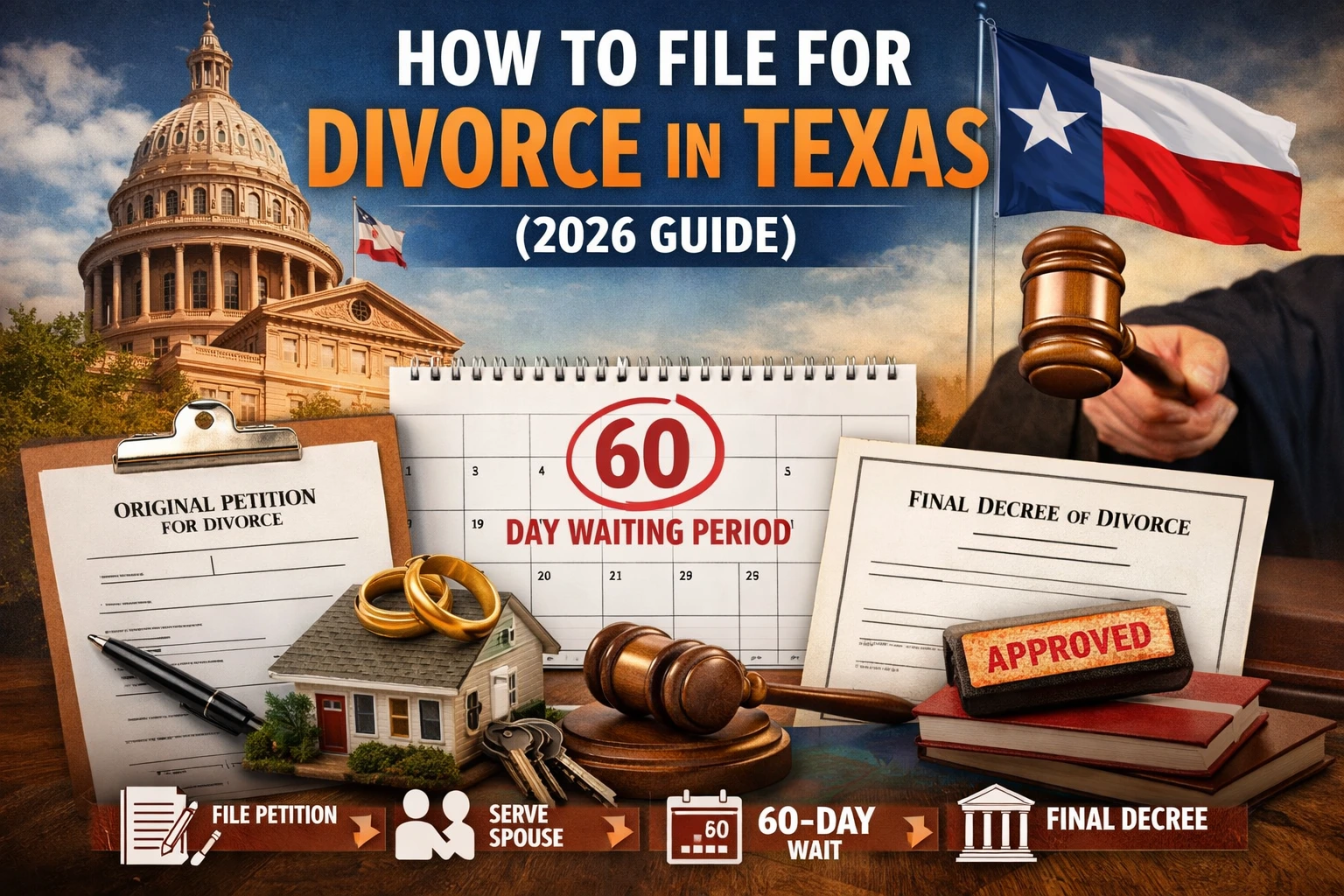
If you are unsure which level of help fits your situation, see Which Plan is Right for You? to compare options, and review Starting the Divorce Process for a clear walkthrough of the steps from petition to final decree.
| Situation | Best First Step | Watch For |
|---|---|---|
| Low income, simple case | Legal aid screening | Long waitlists |
| Agreed, no children | Self-help forms | Local rule differences |
| Contested or custody dispute | Licensed attorney | Clinics may decline |
| Domestic violence | Confidential hotline | Safety before paperwork |
Ready Divorce Service fills the gap for people who want organized, accurate document preparation and guidance through each stage, from the initial petition to the final decree, with personalized case coordination, filing assistance, and support with electronic signatures and online notarization when appropriate. We are not a law firm and do not provide legal representation. Get started with Ready Divorce Service and move through your Texas divorce with a clear plan.
Frequently Asked Questions
Can I get free help filing for divorce in Texas?
Ready Divorce Service offers divorce document preparation and procedural assistance. It is not a law firm and does not provide legal representation.
Can I represent myself in a Texas divorce?
You can represent yourself in a Texas divorce, which is called appearing pro se. This works best for uncontested divorces where both spouses agree on all terms. You’ll need to file the correct forms, serve your spouse or get a waiver, and follow court procedures. For contested issues like property disputes or child custody, consulting a licensed Texas attorney is strongly recommended because self-representation carries risks.
What is the difference between legal advice and divorce document preparation?
Ready Divorce Service provides divorce document preparation and procedural assistance, but it is not a law firm and does not provide legal representation. For legal advice, consult a licensed Texas attorney.