Quick Summary
A DIY divorce in Texas means preparing and filing your own divorce paperwork without an attorney. It works best when spouses agree on every major issue and the situation is relatively simple. Advantages include avoiding attorney fees and controlling terms, while drawbacks include paperwork errors, property mistakes, and lasting child-related consequences.
- A judge must still approve the final decree in a DIY divorce.
- Paperwork errors such as missing signatures can send your file back for correction.
- The 60-day waiting period is a floor, not a guaranteed timeline.
- Retirement accounts often need a separate qualified domestic relations order.
- Couples facing domestic violence or disputes should consult a licensed attorney.
Table of Contents
- What a DIY Divorce Means in Texas and Who It Suits
- The Pros and Cons of Handling Your Own Texas Divorce
- Texas Divorce Forms, the Filing Process, and When to Get Help
- Step 1: Confirm residency and venue
- Step 2: Gather the required forms
- Step 3: File the petition with the district clerk
- Step 4: Serve your spouse or obtain a waiver
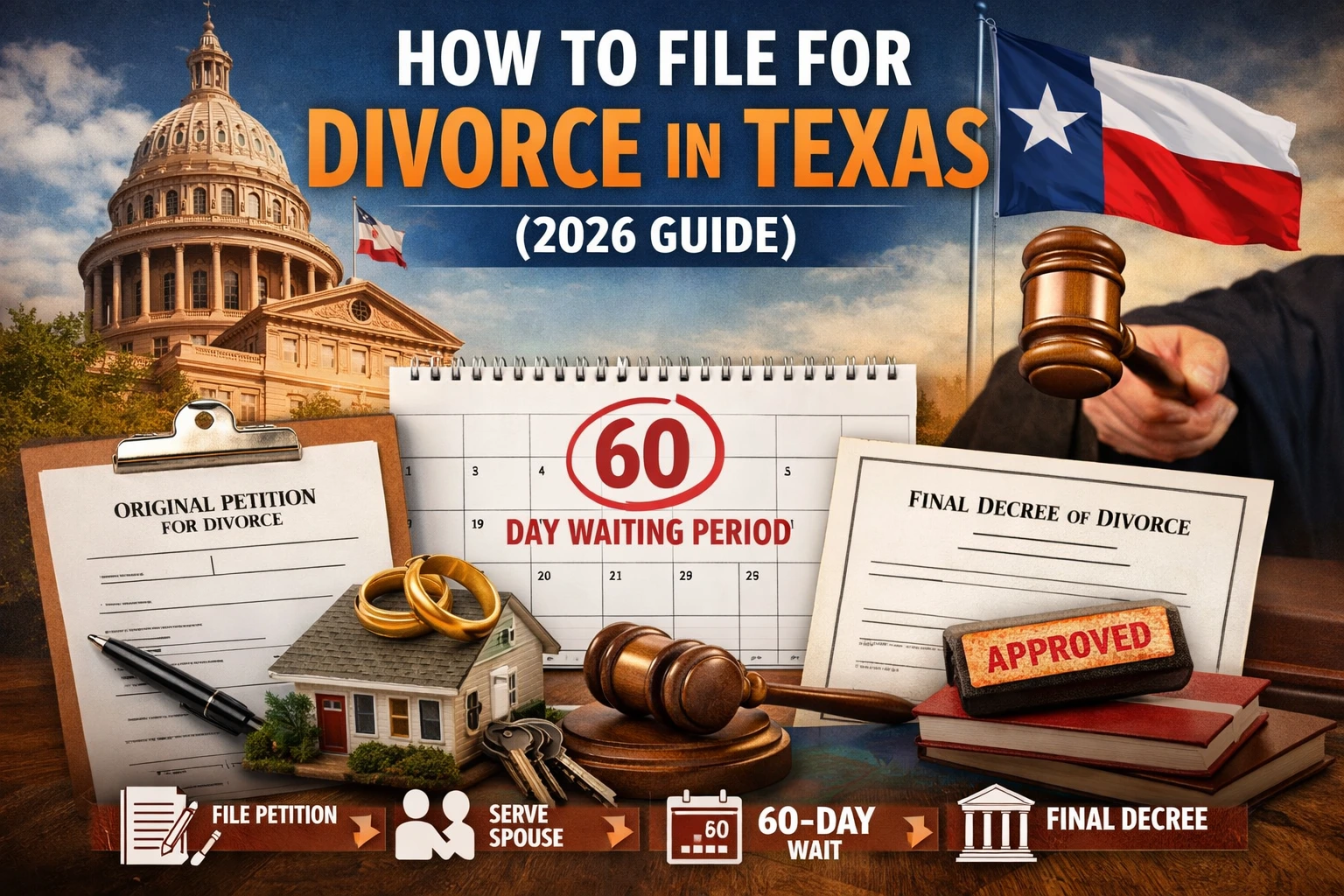
- Step 5: Wait out the 60-day waiting period
- Step 6: Prepare and sign the final decree
- Step 7: Schedule and attend the prove-up
- Step 8: File the signed decree and obtain certified copies
- When to get help
- Frequently Asked Questions
What a DIY Divorce Means in Texas and Who It Suits
A DIY divorce, also called a pro se divorce, means you prepare and file your own divorce paperwork without hiring an attorney. In Texas, a diy divorce in Texas usually works best for couples who agree on every major issue and have a relatively simple situation. Review the forms and filing steps on our Texas uncontested divorce forms and filing fees page.

The Pros and Cons of Handling Your Own Texas Divorce
The pros and cons of a diy divorce in Texas depend less on the paperwork than on the facts of your case.
Pros of a DIY divorce in Texas
- You avoid attorney fees. Court filing fees still apply, and you may pay for service, notarization, or document preparation, but you are not paying a lawyer.
- You control the pace and terms. In an agreed divorce, you and your spouse decide when to file and sign, and you can put your own agreed terms in the decree.
- The process is more transparent and can reduce conflict. You see every document, and an agreed, uncontested divorce often feels calmer than a contested case.
Cons of a DIY divorce in Texas
- Paperwork errors cause real delays. A missing signature, an incorrect case style, or a vague property description can send your file back for correction, adding weeks.
- The 60-day waiting period is a floor, not a promise. Texas law generally bars a court from granting a divorce before the 60-day waiting period after filing ends, with limited exceptions, and court availability and county practice affect the actual timeline. Confirm the current rule with the official Texas sources.
- Property and debt mistakes are hard to undo. A decree that awards a house without addressing the mortgage, or splits a retirement account without a qualified domestic relations order (QDRO), may not transfer what you thought.
A Texas-specific decision checklist by case complexity
Probably needs at least limited legal help: You have a retirement account, a home with a mortgage, a business, minor children with any disagreement, or are unsure what you are entitled to or giving up.
Usually calls for a licensed attorney: Your spouse disagrees or has hired a lawyer, there is a history of domestic violence or coercive control, hidden assets, a paternity dispute, or you feel pressured to sign quickly.
The middle ground most people miss
DIY and full-service attorney representation are not the only two options. Our page on limited scope legal representation for divorce explains how partial representation works, and our guide to what happens if a spouse contests a divorce covers what to do if the agreement falls apart after filing. If you are still deciding how much support fits your situation, Which Plan is Right for You? can help you compare your options.
Here is a quick side-by-side view of the main advantages and drawbacks of handling a Texas divorce yourself.
| Side | Point | What it means |
|---|---|---|
| Pro | Avoid attorney fees | Court filing fees still apply, but no lawyer is paid |
| Pro | Control pace and terms | You and your spouse decide when to file and sign |
| Pro | More transparency | You see every document in an agreed divorce |
| Con | Paperwork errors | Missing signatures or vague property descriptions cause delays |
| Con | 60-day waiting period | A floor, not a promise; court schedules affect timing |
| Con | Property and debt mistakes | Hard to undo, such as a house without its mortgage |
| Con | Child-related terms | Governed by detailed Texas Family Code provisions |
Texas Divorce Forms, the Filing Process, and When to Get Help
A diy divorce in Texas follows a defined sequence, and understanding the full path before you start is the best way to avoid a correction cycle. County-specific procedures and court practices vary, so confirm current requirements with the district clerk where you will file.
Step 1: Confirm residency and venue
Texas has residency requirements that generally require one spouse to be a Texas domiciliary and a resident of the county where the suit is filed for a set period before filing. Check the current requirements in the official Texas Family Code before you file.
Step 2: Gather the required forms
The Texas Supreme Court publishes official forms for uncontested divorces through the Texas Judicial Branch, including the petition, the final decree, and related documents. Using a form from another county or an outdated version is one of the most common reasons a filing is rejected, so pull the current version from the official source or confirm with the clerk.
Step 3: File the petition with the district clerk
File the original petition and any required local forms with the district clerk in the county where venue is proper. Filing fees vary by county and by whether the case involves children, and you can generally file in person, by mail, or through an electronic filing service provider.
Step 4: Serve your spouse or obtain a waiver
Texas requires notice to the other spouse. You have two common paths in an agreed case:
Step 5: Wait out the 60-day waiting period
Texas generally bars a court from granting a divorce before the waiting period after the petition is filed has passed. Confirm the current rule and its limited exceptions with the official Texas sources.
Step 6: Prepare and sign the final decree
The final decree divides property and debt, sets conservatorship and support if children are involved, and restores the parties to single status. Both spouses typically sign, signatures usually need to be notarized, and a separate QDRO is often needed if a retirement account is being divided.
Step 7: Schedule and attend the prove-up
An agreed divorce still requires a judge to grant it. In most counties, one spouse appears at a short prove-up hearing, presents the signed decree, and testifies briefly that the agreement is voluntary and residency requirements are met. Some counties allow prove-up by affidavit or submission, so confirm the local procedure with the court coordinator.
Step 8: File the signed decree and obtain certified copies
After the judge signs the decree, file the signed order with the clerk and request certified copies for name changes, retirement account divisions, real estate transfers, and insurance updates.
When to get help
Ready Divorce Service can help with document preparation and procedural guidance, including electronic signatures and online notarization when appropriate. To start preparing your paperwork, you can find Texas divorce forms online through our guided process, or compare your options with our guide to divorce paralegal versus online forms in Texas. For a clear overview of what to expect, see Starting the Divorce Process.
Frequently Asked Questions
Can you file for divorce in Texas without a lawyer?
Yes. Texas residents can represent themselves in a divorce, often called a pro se or DIY divorce. You will still need to file an Original Petition for Divorce with the district clerk in the county where you or your spouse has lived, meet the state’s residency requirements, and follow the court’s procedures. Agreed or uncontested divorces are generally the most manageable without an attorney. Because county practices can differ, confirm current filing requirements with the clerk or court in your county before you file.
What forms do you need to file for divorce in Texas?
A typical Texas divorce begins with an Original Petition for Divorce, and many cases also involve a waiver of service, a final decree of divorce, and, when children or property are involved, documents addressing conservatorship, child support, and the division of community property. Requirements vary depending on whether the divorce is agreed or contested and on your county. Review the forms available through official Texas courts and confirm which ones your county requires. Ready Divorce Service can help you organize and prepare the paperwork for your situation.
When should you get legal help with a Texas divorce?
Consider speaking with a licensed Texas attorney if you and your spouse disagree about custody, child support, or how property and debt should be divided, if there is a history of family violence or a significant power imbalance, if you own a business or real estate with complicated ownership, or if your spouse is hard to reach. Document preparation and procedural assistance can be a good fit for agreed divorces with straightforward terms, but it does not replace individualized legal advice from an attorney.