When both spouses are already saying, “We agree, we just need to get this done correctly,” the question usually is not whether divorce will happen. It is what is an uncontested divorce, and whether that simpler path fits the facts of the case. In Texas, an uncontested divorce can save time, reduce stress, and avoid the cost of a drawn-out court fight, but only if both people are truly on the same page.
What is an uncontested divorce?
An uncontested divorce is a divorce where both spouses agree on the major terms before the case is finalized. That usually includes how property and debts will be divided, whether either spouse will pay support, and if children are involved, how conservatorship, possession, child support, and medical support will be handled.
The key point is agreement. If one spouse wants different terms, refuses to sign, or disputes an important issue, the case is no longer truly uncontested. It may still settle later, but it starts moving into contested territory.
For many Texas couples, uncontested divorce is the most practical option because it focuses on paperwork, required filings, and court approval instead of litigation. That does not mean it is casual or informal. The court still expects the documents to be accurate, complete, and compliant with Texas law.
What makes a divorce uncontested in Texas?
In Texas, an uncontested divorce generally means both spouses agree on all issues that need to be resolved for the Final Decree of Divorce. They are not asking the judge to decide who gets what or how parenting terms should work.
That agreement has to be real, not assumed. A case is usually a good fit when both spouses are cooperative, willing to disclose what they own and owe, and prepared to sign the necessary paperwork. If one person is hiding assets, avoiding communication, or using delay as a tactic, the process can stop being straightforward very quickly.
There is also a difference between low conflict and uncontested. Some couples are emotionally exhausted and barely speaking, yet they still agree on the legal terms. Others seem amicable but cannot settle one major issue, which means the divorce is contested until that issue is resolved.
Who is a good fit for an uncontested divorce?
This option often works well for spouses who want a clean, affordable process and do not need a courtroom battle to reach closure. It is especially common when the marriage was relatively short, the property is limited, or the couple has already worked out a practical plan.
It can also work for parents, as long as both parties agree on child-related terms. In Texas, that means more than saying, “We’ll figure it out later.” The decree must address conservatorship, visitation or possession, child support, and medical support in a way the court can approve.
An uncontested divorce may not be the right path if there has been family violence, coercion, serious distrust, hidden finances, or a power imbalance that prevents genuine agreement. It also may not fit if one spouse cannot be located or refuses to participate. In those situations, additional legal steps are often required.
What do both spouses need to agree on?
For a Texas uncontested divorce to move smoothly, the spouses generally need a complete agreement on the terms that matter to the court. That usually includes division of community property, division of debts, who keeps which accounts or vehicles, and whether one spouse will change a name.
If children are involved, the agreement must go further. The parents need terms for conservatorship, possession and access, child support, and health insurance or medical support. Texas courts pay close attention to child-related provisions, so even when both parents agree, the paperwork still needs to be drafted carefully.
This is where many people underestimate the process. Agreeing in conversation is not the same as having court-ready documents. The agreement has to be translated into forms and orders that the judge can sign.
How the uncontested divorce process works in Texas
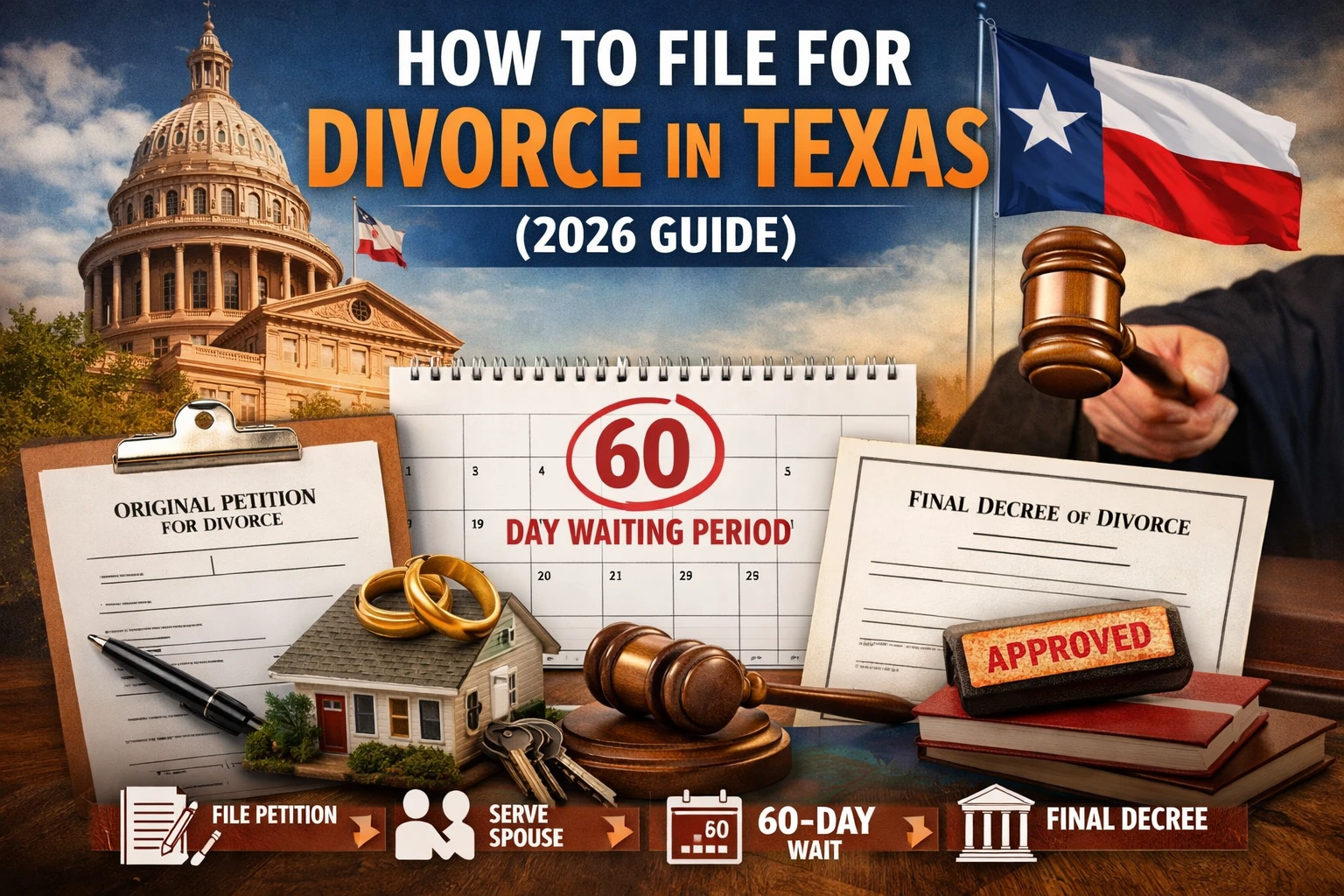
Texas has procedural rules that apply even when the divorce is agreed. One spouse files the Original Petition for Divorce in the proper county. After filing, there is generally a mandatory 60-day waiting period before the divorce can be finalized, with limited exceptions.
The other spouse must usually sign a Waiver of Service or file an Answer, depending on the situation. Then the parties prepare the remaining divorce paperwork, including the Final Decree of Divorce and any child-related forms or county-required documents.
Once the waiting period has passed and all paperwork is ready, the case can move to finalization. In many Texas counties, that means a short prove-up hearing, where one spouse appears before the court and confirms basic facts under oath. Procedures can vary by county, so details may look different in places like Tarrant, Dallas, Collin, Denton, Harris, or Bexar County.
Even in a simple case, small mistakes can cause delays. Incorrect forms, missing signatures, incomplete property language, or county-specific filing issues can all slow things down. That is one reason many people look for guided document preparation and procedural support instead of trying to piece everything together on their own.
What is an uncontested divorce not?
It is not a shortcut around legal requirements. The court still has to have jurisdiction, the filing still has to be done correctly, and the final paperwork still has to be acceptable to the judge.
It is also not the same as a divorce where one spouse simply does not fight back. If there is no real agreement and one party is just unresponsive, the case may move as a default divorce instead of an uncontested one. Those are different paths, with different procedural requirements.
And it is not always the fastest option in real life just because the spouses agree in principle. If they are vague about assets, keep changing terms, or wait too long to sign documents, the process can still drag on.
Benefits of an uncontested divorce
The biggest benefit is usually cost. When spouses agree, they can often avoid many of the expenses tied to contested hearings, discovery, and prolonged attorney involvement.
The second benefit is reduced conflict. That matters not only emotionally, but practically. Less fighting often means less delay, fewer missed workdays, and a better chance of preserving a workable relationship after divorce, especially when children are involved.
There is also a clarity benefit. A structured uncontested process helps people focus on decisions, documents, and deadlines instead of reacting to legal conflict. For many Texans, that sense of order brings real relief during a difficult transition.
Common issues that can complicate an agreed divorce
Most uncontested cases are simple, not effortless. A few issues tend to create problems even when the spouses want to cooperate.
Property division is one of the biggest. People often think splitting things is easy until they start listing retirement accounts, credit cards, vehicles, tax refunds, personal property, and debts in both names. If the decree does not clearly assign these items, future disputes can follow.
Children add another layer. Parents may agree generally, but still need to define schedules, support terms, and decision-making authority in a way that fits Texas requirements. Vague parenting language is one of the fastest ways to create confusion later.
Timing can also be a challenge. One spouse may be ready to move quickly while the other delays signing or gathering information. That does not always mean conflict. Sometimes it means the process needs more structure and guidance.
When support can make the process easier
An uncontested divorce is often manageable, but that does not mean everyone wants to handle every form, filing step, and county requirement alone. Many people want a lower-cost option than full litigation while still getting help with documents, procedure, and staying on track.
That kind of support can be especially useful if you are unsure which forms apply, how to prepare a proper decree, or what your county expects at finalization. A Texas-focused service like Ready Divorce Service can help simplify the process for agreed cases by keeping the paperwork organized and the next steps clear.
The goal is not to create more complexity. It is to reduce mistakes, lower stress, and help you move forward with confidence.
If you are asking what is an uncontested divorce, the real answer is this: it is a practical option for couples who are in agreement and want to end the marriage with less conflict, lower cost, and a more predictable process. If that sounds like your situation, the next best step is getting clear on the terms, the paperwork, and what Texas requires so you can finish the case correctly and move on with your life.
📞 Get Started Today – Your Peaceful Divorce Is Just a Click Away
When you’re ready to move on, we’re ready to help.
📲 Call us now at (800) 432-0018
🖥️ Start your divorce online today