Most people asking how long uncontested divorce takes are really asking something more personal: When can this be over? In Texas, the short answer is that an uncontested divorce cannot be finalized before the state’s required 60-day waiting period in most cases. But the real timeline depends on how prepared you are, how complete your paperwork is, and whether anything causes delays with filing, service, or final court approval.
If both spouses agree on the major terms, uncontested divorce is usually the fastest path. It is also often the least expensive and least stressful. Still, “fast” in divorce does not always mean immediate, and knowing what controls the timeline can help you avoid setbacks.
How long uncontested divorce takes in Texas
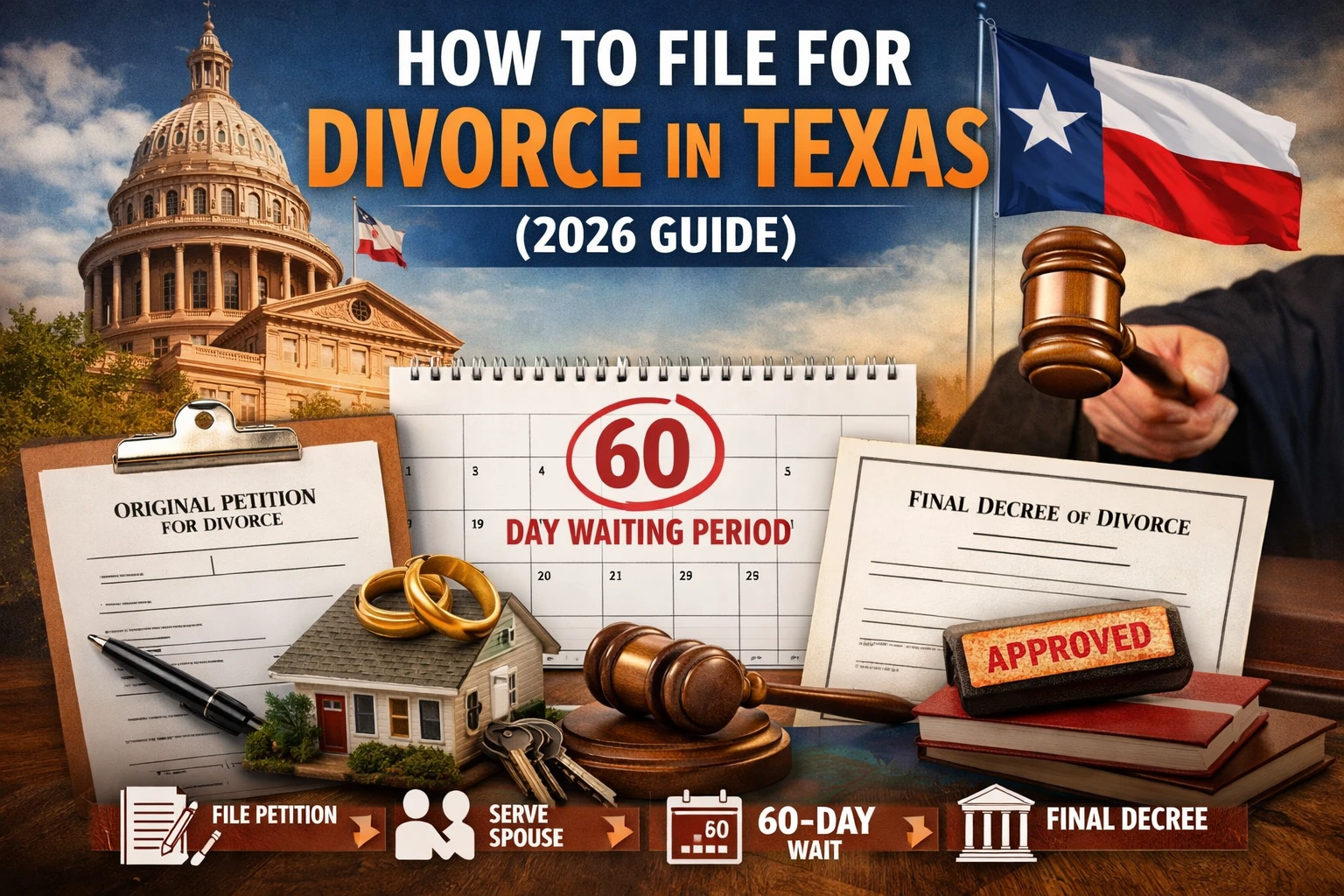
In Texas, the earliest most uncontested divorces can be finished is a little over 60 days from the date the Original Petition for Divorce is filed. That waiting period is set by law. Even when both spouses are fully cooperative, the court generally cannot finalize the case before that period ends.
For many couples, a realistic timeframe is about 61 to 90 days. Some cases move right after the waiting period. Others take longer because documents are incomplete, signatures are delayed, or the court’s schedule is backed up. If children are involved or the property division needs more attention, the process may take longer even if the divorce remains uncontested.
So the answer is two-part. The legal minimum is usually 60 days. The practical answer is often two to three months, sometimes longer if avoidable issues get in the way.
The one timeline rule that matters most
Texas has a mandatory waiting period in divorce cases. In most situations, the court must wait at least 60 days after the case is filed before granting the divorce. Day one is the day after filing, not the same day the petition is submitted.
There are limited exceptions in certain family violence situations, but most agreed divorces will still follow the 60-day rule. That means no matter how cooperative both spouses are, you generally cannot finish in a week or two.
This waiting period often surprises people because they assume “uncontested” means instant. It does not. What uncontested really means is that you are removing conflict from the equation, which helps the case move as efficiently as Texas law allows.
What has to happen before the divorce is final
An uncontested divorce still has several steps, even when both spouses agree. The case usually starts when one spouse files the petition. After that, the other spouse must be formally served or sign a waiver if appropriate. Then the spouses need to complete and sign the final divorce paperwork, including the Final Decree of Divorce.
If there are children, additional forms may be required. If there is a house, retirement account, or debts to divide, the decree needs to address those clearly. Once everything is ready and the waiting period has passed, the case can be presented to the court for final approval.
That is why preparation matters so much. The court’s 60-day clock may be running, but if your documents are not accurate and complete by the time that period ends, your case may still sit unfinished.
What can make an uncontested divorce go faster
The fastest uncontested divorces usually have three things in common. First, both spouses truly agree on everything that matters, including property, debts, and parenting terms if children are involved. Second, the paperwork is prepared correctly the first time. Third, both sides sign and return documents without long delays.
A simple case with no children, limited property, and a cooperative spouse often moves the quickest. If the final documents are ready well before the 60-day waiting period ends, you are in a much better position to finalize as soon as the court allows.
Process support can also make a real difference. Many delays happen not because the divorce is disputed, but because people are trying to figure out forms, filing steps, county procedures, and signature requirements on their own.
What slows the process down
The biggest delays in uncontested divorce are usually administrative, not dramatic. A spouse may agree in principle but take weeks to review or sign paperwork. Forms may be missing required information. A decree may not match what was stated in the petition. A waiver may be signed too early or not completed properly.
Court scheduling can also affect the timeline. Some counties move faster than others, and some courts have specific prove-up procedures for agreed divorces. In busier counties like Dallas, Tarrant, Harris, Bexar, Collin, Denton, or Ellis, timing can vary depending on the court’s docket and local filing practices.
Another common slowdown is last-minute disagreement. A couple may think they agree until they start putting terms in writing. Questions about who keeps the car, how to handle credit card debt, or what the parenting schedule will look like can quickly extend the timeline if they are not resolved early.
How long uncontested divorce takes with children involved
If children are part of the case, uncontested divorce can still move efficiently, but it usually requires more detail. The paperwork must address conservatorship, possession and access, child support, and medical support. Courts tend to look closely at these terms because the final orders affect the children directly.
That does not mean the case becomes contested. It simply means there is more to prepare and get right. If both parents already agree on a workable parenting plan and support terms, the timeline may still be close to the 60- to 90-day range. If those issues are unsettled, the process can slow down.
Parents should also keep in mind that unclear language creates future problems. Rushing through child-related terms to save a few days can lead to confusion after the divorce is final. In these cases, a little more care upfront is usually worth it.
Does property change how long uncontested divorce takes?
Yes, sometimes. A short marriage with little shared property is usually easier to finish quickly than a marriage involving a home, retirement accounts, multiple debts, or a family business. Even if both spouses agree that the divorce is uncontested, the decree still needs to say exactly who gets what and who is responsible for which debts.
This is where timing and accuracy meet. The more detailed the marital estate, the more important it is to prepare documents carefully. Fixing unclear or incomplete property language after filing can delay finalization and create problems after the divorce is granted.
If there is real agreement, property does not have to turn a simple case into a long one. But it does mean the paperwork needs more attention.
A realistic timeline for most Texas agreed divorces
For many Texans, the process looks something like this. The petition is filed, the spouse signs the necessary response or waiver, the final decree is prepared during the waiting period, and the case is presented to the court shortly after day 60. When everything goes smoothly, the divorce may be finalized within about two months.
A more typical range is two to three months. If paperwork corrections, court availability, or slow signatures come into play, it may stretch further. That does not necessarily mean the case is complicated. It often means the process was not fully organized from the start.
That is why people often benefit from clear, Texas-specific guidance. Knowing which forms are needed, when they should be signed, and how your county handles finalization can save time and stress.
How to avoid unnecessary delays
If your goal is to finish as soon as legally possible, focus on the parts you can control. Make sure both spouses are truly in agreement before filing. Gather the information needed for property, debts, and children early. Review documents carefully so names, dates, and terms are consistent throughout the case.
It also helps to respond quickly. Waiting a week here and another week there for signatures, revisions, or filing decisions can quietly add a month to the process. An uncontested divorce moves best when it is treated like a step-by-step project, not something to revisit only when there is free time.
For many people, support with document preparation and procedure is what keeps the case on track. Ready Divorce Service helps Texans move through agreed divorce paperwork with more clarity and fewer mistakes, which can make a meaningful difference in timing.
If you are wondering how long this chapter will last, the honest answer is that Texas sets the minimum, but preparation often decides the rest. The smoother your agreement and paperwork are, the sooner you can put the process behind you and start moving forward.
📞 Get Started Today – Your Peaceful Divorce Is Just a Click Away
When you’re ready to move on, we’re ready to help.
📲 Call us now at (800) 432-0018
🖥️ Start your divorce online today