Most people do not start a divorce asking for a fight. They want the process to be over, the paperwork done correctly, and the cost kept under control. That is why understanding agreed divorce vs contested divorce matters so much in Texas. The difference affects how long your case may take, how much stress you deal with, and whether your divorce stays mostly administrative or turns into a legal dispute.
An agreed divorce is usually the simpler path. A contested divorce is what happens when spouses cannot fully agree on one or more major issues. That sounds straightforward, but the real question is what those labels mean for your money, your time, and your next steps.
Agreed divorce vs contested divorce: the core difference
In Texas, an agreed divorce means both spouses are willing to move forward with the divorce and agree on the key terms. That usually includes property and debt division, whether either spouse will pay spousal maintenance, and if children are involved, conservatorship, possession, support, and related responsibilities. When the terms are settled, the case can move through the court process without a drawn-out courtroom battle.
A contested divorce means there is a disagreement that has not been resolved. Sometimes the dispute is about whether to divorce at all. More often, the disagreement is about terms like child custody, child support, retirement accounts, the house, or who will be responsible for certain debts. Even one unresolved issue can make the divorce contested.
That distinction matters because an agreed case is built around completion. A contested case is built around conflict resolution.
Why agreed divorces are usually faster and less expensive
For many Texas couples, the biggest advantage of an agreed divorce is efficiency. Texas still has a mandatory waiting period in most cases, but when both parties are cooperating, the process often moves with fewer delays. You are not waiting on repeated hearings, discovery disputes, or prolonged negotiations through attorneys.
Cost is another major factor. A contested divorce often means more attorney time, more filings, more preparation, and more court involvement. Those costs add up quickly. By contrast, when spouses already agree on the terms, they can usually avoid much of that expense because the work is focused on preparing, filing, and finalizing the correct documents.
There is also an emotional cost. An agreed divorce does not mean the situation is easy, but it often reduces the pressure that comes from constant back-and-forth conflict. That can be especially valuable when children are involved and the parents need to preserve a workable relationship after the divorce is final.
What makes a divorce contested in real life
Many people assume a contested divorce means a dramatic courtroom fight. Sometimes it does. Often, it is more ordinary than that.
A divorce may be contested because one spouse disagrees about selling the home. It may be contested because one person wants primary custody and the other does not agree. It may be contested because there are questions about hidden assets, reimbursement claims, separate property, or uneven debt burdens. In some cases, communication breaks down so badly that even simple procedural decisions become difficult.
This is why people should be careful about assuming their case is uncontested just because both spouses say they want a divorce. Wanting the divorce is only part of the equation. The terms have to be settled too.
When an agreed divorce is a good fit
An agreed divorce is often a strong fit when both spouses are reasonably cooperative and have already worked out the major terms. They may not be happy about every detail, but they are able to make decisions and move forward. In many cases, they want to avoid high legal fees and keep the process focused on closure instead of conflict.
This path often works well for couples who have limited assets, no major disputes, or a clear understanding of how they want to handle parenting issues. It can also work for couples with children, as long as they truly agree on conservatorship, possession schedules, support, and healthcare responsibilities.
The key is not having a perfect relationship. The key is having enough agreement to complete the legal process without asking the court to decide disputed terms.
When a contested divorce may be unavoidable
Sometimes a contested divorce is necessary. If there are safety concerns, coercion, hidden finances, or serious disagreements about children, a simple paperwork-driven process may not be appropriate. The same is true when one spouse refuses to cooperate or is clearly using delay as a tactic.
A contested case may also be unavoidable when the marital estate is complex. Business ownership, substantial retirement accounts, separate property claims, and contested real estate issues can create disputes that are not easy to solve informally. In those situations, legal representation may be necessary to protect your interests.
So while an agreed divorce is often the lower-stress and lower-cost option, it is not the right fit for every case. The better question is whether your situation is actually ready for agreement.
Agreed divorce vs contested divorce with children
When children are involved, the difference between agreed and contested cases becomes even more important. Texas courts focus on the best interests of the child, and parenting disputes can quickly become the most sensitive part of the divorce.
In an agreed divorce, parents have already worked out the basic parenting terms. That usually includes where the children will live, when each parent will have possession, who will make certain decisions, and how support will be handled. If those points are clearly settled, the case can often move much more smoothly.
In a contested divorce, disagreements about children can lead to hearings, temporary orders, and extended negotiations. Even if parents eventually settle, the process may take longer and feel much harder. For many families, the practical value of reaching agreement early is not just financial. It can reduce instability for the children and make co-parenting easier after the divorce.
How the Texas process changes depending on the type of divorce
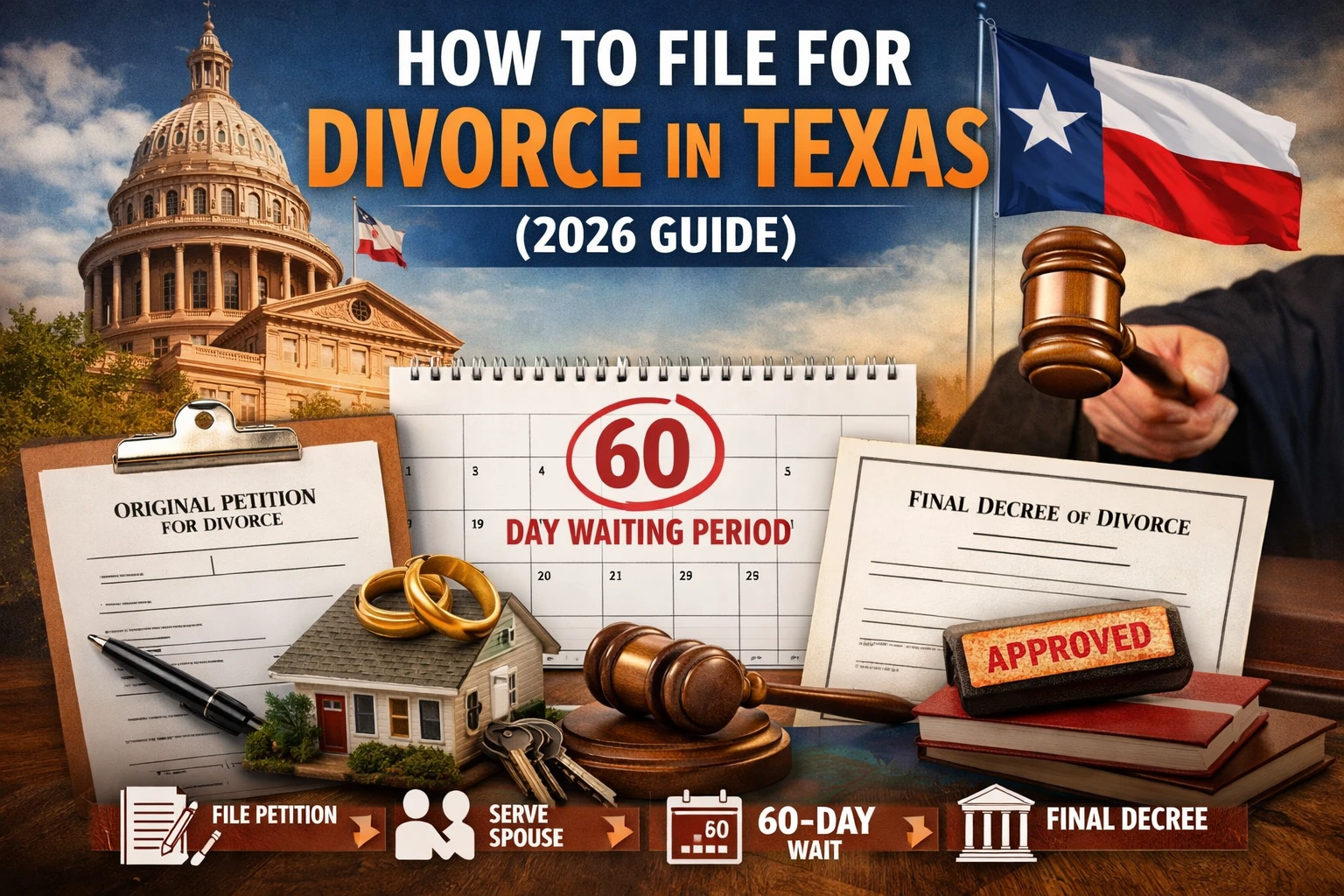
Both agreed and contested divorces start with filing an Original Petition for Divorce. After that, the paths begin to separate.
In an agreed case, the focus is on proper document preparation, filing, service or waiver as allowed, waiting period compliance, and a final decree that reflects the parties’ agreement. If the paperwork is accurate and complete, the case may move toward finalization with less court involvement.
In a contested case, the process can become more layered. There may be an answer and counterpetition, temporary orders, discovery, mediation, multiple settings, and possibly trial preparation. Every disputed issue increases the amount of work, time, and expense.
That is one reason many Texans try to resolve disagreements early if possible. Once a case becomes fully litigated, the process often gets more demanding than people expected at the start.
One common mistake: forcing an agreed divorce that is not really agreed
Some people try to push an uncontested process because they want to save money. That makes sense, but it can backfire if the agreement is not real, complete, or informed.
If one spouse is still arguing over debt, retirement, parenting time, or support, the divorce is not truly agreed. Filing the wrong way can lead to rejected paperwork, delays, or a final decree that does not reflect what the parties actually intended. In some cases, trying to stay informal for too long simply postpones the fact that there is a real dispute.
A better approach is to be honest about where things stand. If you and your spouse agree, a streamlined process can make a lot of sense. If you do not, you need to know that early so you can choose the right kind of help.
How to tell which path fits your case
If you are trying to decide between agreed divorce vs contested divorce, start with a practical test. Can both spouses clearly say yes to the divorce and yes to all major terms? Can those terms be put into written orders without ongoing argument? If the answer is yes, an agreed divorce may be the right path.
If the answer is no, even on one major issue, you are likely looking at a contested case unless the disagreement can be resolved soon. That does not mean your case will stay contested forever. Some contested divorces settle later through negotiation or mediation. But until the issues are resolved, you should treat the case accordingly.
For Texans who want a simpler path, the real value is not just speed. It is having a process that matches the facts. When a divorce is truly agreed, careful document preparation and step-by-step procedural support can save time, reduce costs, and take some of the weight off your shoulders. Ready Divorce Service helps Texans with that kind of straightforward uncontested divorce process every day.
If you are not sure where your case falls, pause before filing blindly. A little clarity at the beginning can spare you a great deal of expense and frustration later, and that is often the first solid step toward moving on.
Get Started Today – Your Divorce Is Just a Click Away
If you’re in Texas and want your divorce handled quickly, correctly, and without unnecessary stress, we can help you from start to finish.
👉 Start here: Complete the Divorce Questionnaire
📞 Call now: (469) 913-4000