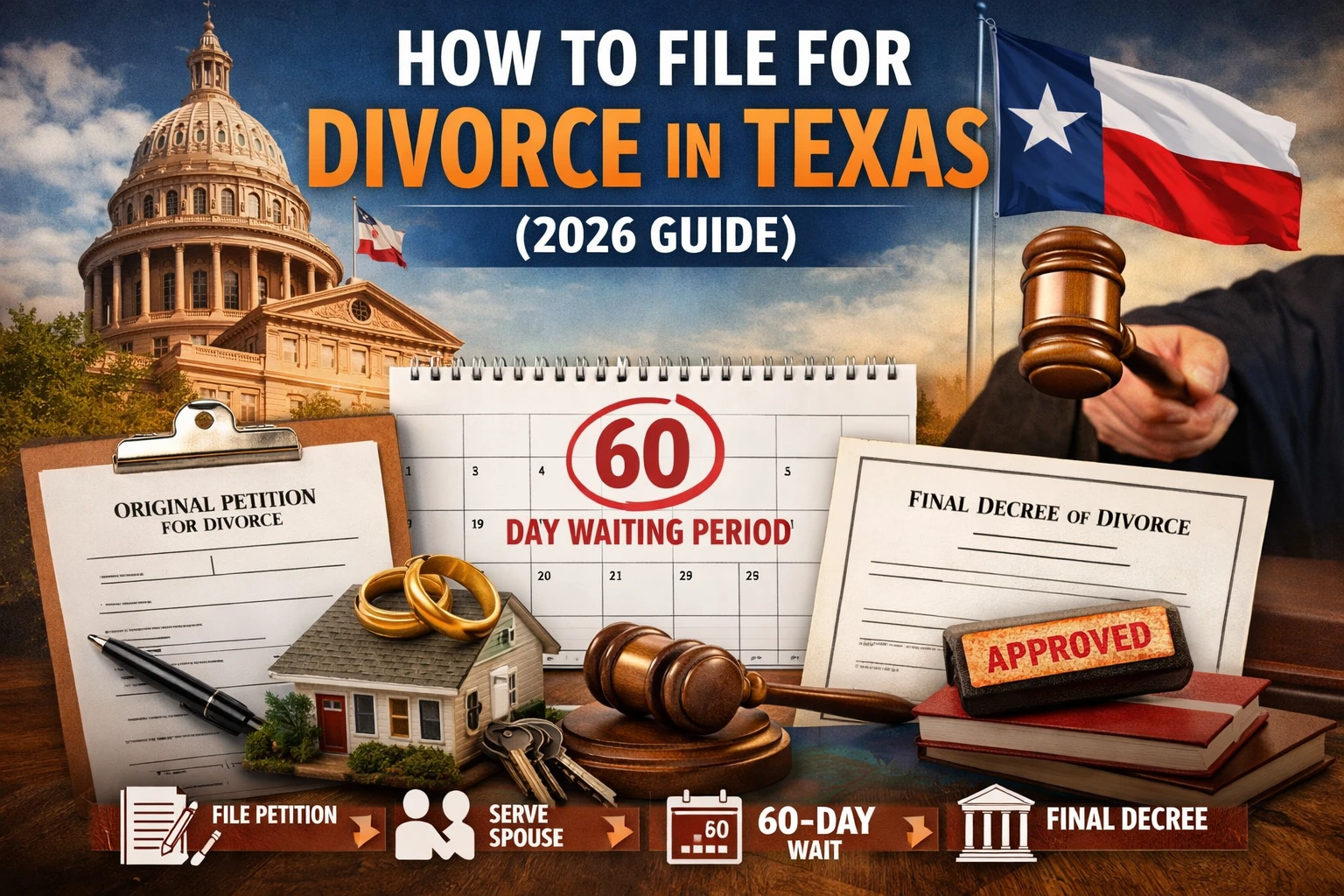
When people ask how to draft marital settlement agreement terms, they are usually not asking for legal theory. They want to know what goes in the document, how detailed it needs to be, and how to avoid writing something that creates problems later. In a Texas uncontested divorce, that agreement can shape everything from who keeps the house to how parenting time will work, so clarity matters as much as fairness.
A marital settlement agreement is the written record of what both spouses have agreed to resolve. In Texas, the exact paperwork and language used in a divorce can vary, and the final decree is the document the court signs. Still, the settlement terms you work out are the backbone of an agreed case. If those terms are vague, incomplete, or unrealistic, the divorce process can slow down fast.
What a marital settlement agreement needs to accomplish
At its core, this document should answer a simple question: when the divorce is finished, who is responsible for what? That includes property, debts, child-related issues if you have children, and any support obligations. It should be specific enough that a third person reading it could understand what each spouse is expected to do without guessing.
That last point is where many do-it-yourself agreements go off track. Couples often write what they mean in everyday language, but divorce documents need more precision than a text message or verbal promise. Saying you will split bills fairly is not enough. Saying one spouse will pay the Chase Visa ending in 1234 and indemnify the other spouse from any future liability is much closer to what a workable agreement looks like.
How to draft marital settlement agreement terms step by step
Start by listing every issue that must be resolved in your divorce. For most Texas couples, that means real estate, vehicles, bank accounts, retirement accounts, credit cards, personal property, taxes, and final household bills. If children are involved, you also need to address conservatorship, possession and access, child support, medical support, and decision-making responsibilities.
Before you write a single paragraph, gather documents. That usually includes mortgage statements, car loan balances, bank statements, retirement account balances, credit card bills, and recent pay stubs. If you are making child support decisions, you also need accurate income information. Good drafting starts with good numbers. If the numbers are wrong, the agreement may look complete on paper and still fail in practice.
Next, decide whether each issue has truly been agreed. In an uncontested divorce, both spouses need to be on the same page. If one person assumes the other will refinance the home within three months and the other person thinks there is no deadline, you do not have an agreement yet. Slow down and resolve those details first.
Then write each section in plain, direct language. Keep one topic per paragraph when possible. Identify accounts, property, and obligations with enough detail to avoid confusion. Include deadlines where needed. If one spouse must transfer a title, sign a deed, remove the other spouse from an account, or make an equalization payment, say when that must happen.
Property division: be specific, not broad
Texas is a community property state, but that does not mean every asset is automatically split down the middle in the same way. In an agreed divorce, spouses can often resolve division by agreement as long as the final terms are acceptable to the court. What matters most is that the agreement clearly states who gets what.
For a house, identify the property address and explain whether it will be sold or awarded to one spouse. If one spouse keeps it, address who will pay the mortgage, taxes, insurance, and maintenance. If refinancing is expected, include a deadline. If the house will be sold later, explain how sale proceeds and costs will be handled.
For vehicles, include the make, model, year, and who takes possession. If there is a loan, say who will pay it and whether that spouse must refinance if possible. For bank accounts and retirement accounts, identify the institution and the division terms. Do not assume both spouses will remember which account is which six months from now.
Personal property can be handled in a separate section, but it still needs care. Household items, furniture, electronics, tools, and sentimental property often create more conflict than people expect. If there are specific items that matter, list them.
Debt division matters just as much as asset division
Many people focus on who keeps the property and forget that debt is part of the settlement too. A workable agreement should identify every significant debt and assign responsibility for each one. Mortgages, auto loans, personal loans, tax debt, and credit cards should all be addressed.
There is an important practical point here. Just because your divorce says your spouse will pay a joint debt does not automatically remove your name from the creditor’s account. That is why clear responsibility language matters, but so does understanding the real-world limit of the divorce order. If a debt is joint, the creditor may still pursue either borrower unless the account is paid off, closed, or refinanced.
This is one reason vague drafting causes headaches. If the agreement simply says each party will pay debts in their own name, what happens with a joint card both used during the marriage? Better to identify it directly and state who pays it, whether the balance will be transferred, and whether one spouse must hold the other harmless.
Child-related terms require extra care
If your divorce involves children, the agreement must do more than say you will co-parent peacefully. Texas courts expect clear, child-focused terms. That usually includes conservatorship, a possession schedule, holiday provisions, child support, and medical support.
For many agreed Texas divorces, parents use a standard possession schedule or a customized schedule that fits their work and school routines. Either can work, but vague promises such as reasonable visitation often create conflict later. It is better to spell out exchanges, weekends, holidays, summer periods, and transportation responsibilities.
Child support should reflect accurate income and a realistic payment structure. Medical support and responsibility for uninsured expenses should also be stated clearly. If parents plan to communicate through text, email, or a parenting app, that can help in practice, but the court order still needs enforceable terms.
Common mistakes when drafting the agreement
The biggest drafting mistake is being too general. Courts and clerks are not there to fill in missing details, and neither are future versions of you. If a term matters, write it down.
Another common problem is leaving out deadlines. An agreement may say a spouse will transfer funds or sign over title, but if there is no timeframe, enforcement gets harder. Include dates or time periods whenever performance is required.
People also run into trouble by mixing informal promises with legal obligations. For example, one spouse might agree to help with a child’s extracurricular activities beyond guideline support, but the wording is so casual that it is not clear whether that promise is meant to be enforceable. If it belongs in the agreement, say exactly what is expected.
The final issue is drafting terms that sound fair but do not work financially. Awarding a house to one spouse may seem simple, but if that spouse cannot realistically pay the mortgage alone or refinance the loan, the agreement may create a new problem instead of solving one.
When a simple agreement is not actually simple
Some cases look uncontested at first and still need more careful drafting. That is especially true when spouses own a home together, have retirement accounts, share business interests, or disagree on parenting details even if they both want to avoid court. The case may still be amicable, but the paperwork has to reflect the real complexity.
This is also true when one spouse is worried about making a costly mistake just to get the case over with. Speed matters, but so does getting the terms right. A fast divorce that leaves major questions unanswered is not really efficient.
Texas-specific practical considerations
Texas divorce paperwork has to line up with Texas legal requirements, not just the couple’s private agreement. That means your settlement terms should fit within the larger structure of the case, including the final decree and any child-related orders. Local filing practices can also vary somewhat by county, which is one reason many people in counties such as Tarrant, Dallas, Denton, Collin, Harris, and Bexar want procedural help even when the divorce is agreed.
If you are preparing documents for an uncontested Texas divorce, think of the marital settlement agreement as part of a larger filing package, not a standalone promise. Consistency across documents matters. Names, dates, property descriptions, and support terms should match everywhere.
For couples who want a lower-conflict path, structured document preparation can make a real difference. Services like Ready Divorce Service help people organize terms, prepare paperwork, and move through the agreed divorce process with fewer mistakes and less stress.
A practical way to know your draft is ready
Read the agreement as if neither spouse will ever have another conversation about these issues again. Would the document still tell each person what to do, when to do it, and what property or obligation is being discussed? If the answer is no, it needs more work.
A good draft is not the one that sounds formal. It is the one that is clear, complete, and realistic for both sides. When you build it that way, you give your uncontested divorce a much better chance of staying uncontested all the way to the finish.
📞 Get Started Today – Your Peaceful Divorce Is Just a Click Away
When you’re ready to move on, we’re ready to help.
📲 Call us now at (800) 432-0018
🖥️ Start your divorce online today