If you are trying to end a marriage without a fight, the paperwork usually feels like the hardest part. This Ellis County divorce paperwork guide is designed for people who want a clear path through an uncontested Texas divorce, not more confusion, delay, or expensive back-and-forth.
When both spouses agree on the major terms, divorce in Texas can be much more manageable than many people expect. But manageable does not mean automatic. Courts still require the right forms, filed in the right order, with the right information. A small mistake can slow your case down, especially if you are already counting on a fresh start.
Who this Ellis County divorce paperwork guide is for
This guide is most useful if you and your spouse agree on the divorce itself and have already worked out the main issues. That usually means you are not planning to contest property division, debt division, child custody, child support, or other core terms.
If there is a serious disagreement, the process is different. The same is true if there are complex assets, safety concerns, or a missing spouse. In those cases, paperwork is only one part of the problem, and extra legal help may be needed.
For a straightforward agreed case, though, the paperwork process is where most people either gain momentum or lose time.
The basic divorce paperwork you may need in Ellis County
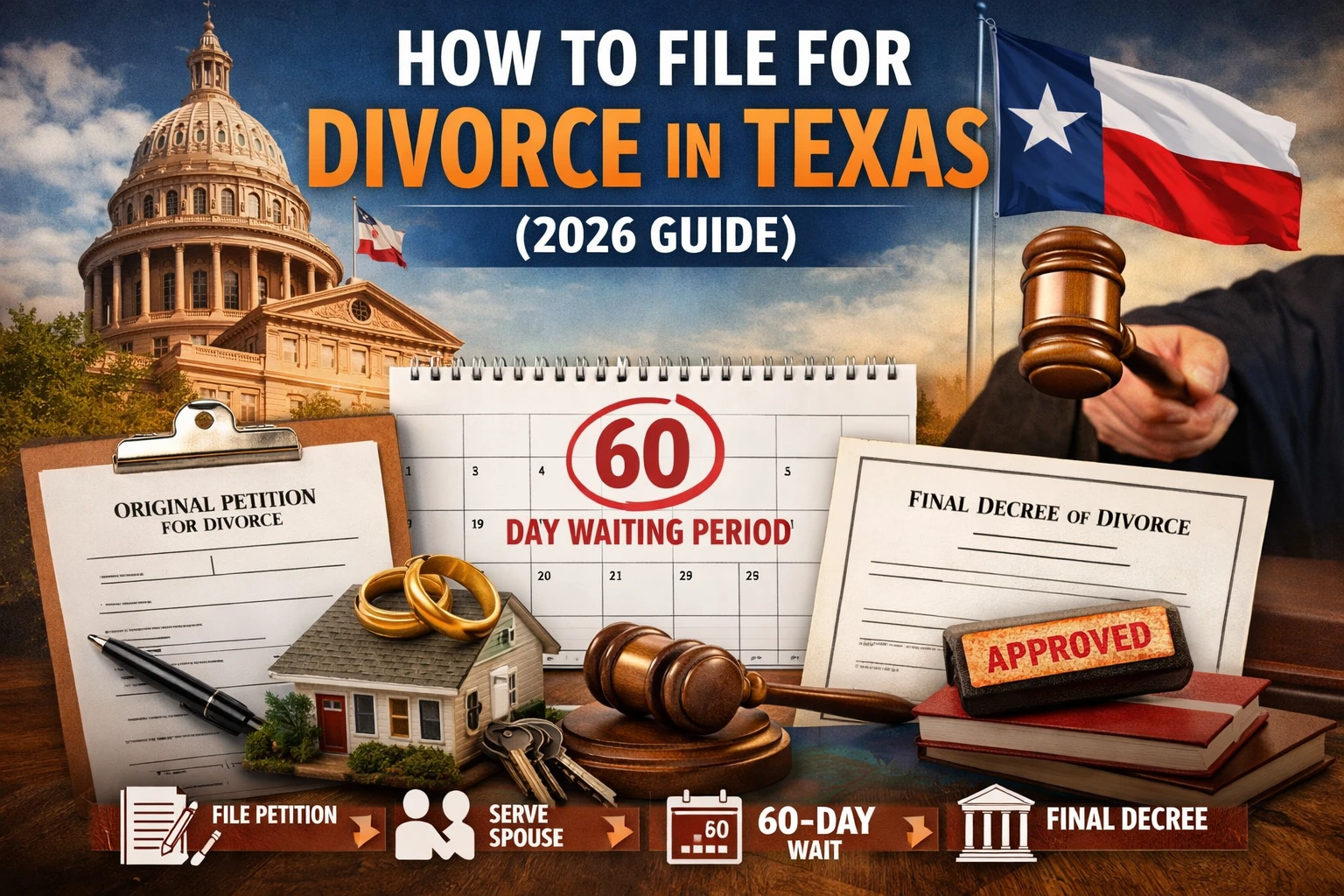
Every divorce is a little different, but uncontested Texas cases usually involve a core set of documents. The first is the Original Petition for Divorce. This is the form that starts the case and tells the court what you are asking for.
After that, many couples also need a Waiver of Service or another method of formally addressing notice to the other spouse. If children are involved, there may be additional required forms tied to conservatorship, support, possession schedules, or health insurance. If one spouse plans to return to a prior name, that request should be included in the proper paperwork as well.
The Final Decree of Divorce is the document that matters most at the end. It sets out the terms of the divorce and becomes the court order once signed by the judge. If retirement accounts, real estate, or child-related provisions are involved, supporting documents may also be needed depending on the facts of the case.
That is where many people get tripped up. They assume the court will fill in gaps or correct an incomplete agreement. Usually, it will not. Courts expect the paperwork to be complete, consistent, and ready for review.
Filing requirements before you start
Before filing anything, make sure you meet the residency rules. In Texas, one spouse must have lived in the state for at least six months and in the county of filing for at least 90 days. If you plan to file in Ellis County, those county residency rules need to be satisfied.
You also need to know whether your case truly qualifies as uncontested. That means more than being mostly in agreement. If one spouse may refuse to sign, delay the process, or challenge terms later, the paperwork strategy may need to change.
It is also smart to gather practical information early. That includes full legal names, addresses, date of marriage, date of separation if relevant, information about children, and a clear list of assets and debts. Paperwork moves faster when you are not guessing.
How the Ellis County divorce paperwork process usually works
In a typical agreed divorce, the process begins when the Original Petition for Divorce is filed with the district clerk. Once filed, the case is officially opened. The filing spouse is the petitioner, and the other spouse is the respondent.
Next comes notice. In many uncontested cases, the respondent signs a Waiver of Service instead of being formally served by a process server. This can save time and money, but it has to be done correctly. Signing too early or using the wrong form can create problems.
After the case is filed, Texas requires a 60-day waiting period in most divorces. That waiting period begins on the filing date, not on the date you started discussing divorce or completed your forms. Even when everything is agreed, the court generally cannot finalize the divorce before that waiting period ends.
During that time, the final paperwork is prepared and reviewed. This is where accuracy matters. The terms in the Final Decree of Divorce should match what both spouses agreed to. Property descriptions, debt assignments, child support terms, and possession schedules need to be specific enough for the court to approve and for both parties to follow later.
At the end of the waiting period, one spouse usually appears for the prove-up, which is a short court hearing to finalize the divorce. Some courts handle uncontested prove-ups with more formality than others. Either way, the court expects the documents to be complete and ready.
Common paperwork mistakes that delay uncontested divorces
Most delays do not happen because the case is legally complicated. They happen because the paperwork is inconsistent, incomplete, or filed without understanding the county process.
One common problem is using the wrong forms for the family situation. A divorce with children should not be handled the same way as a divorce without children. Another issue is leaving out details about property or debts. If the decree says a car goes to one spouse but does not identify it clearly, that can create questions.
People also run into trouble when names do not match across documents, required signatures are missing, or notary requirements are overlooked. Another frequent issue is assuming that because both spouses agree, the court will accept vague language. Courts usually want the decree to say exactly what will happen, not what the parties generally intend.
Deadlines and local procedures matter too. Even when Texas law is statewide, counties can differ in how hearings are scheduled, what supporting paperwork is expected, and how final documents are presented to the court.
Divorce paperwork when children are involved
If you and your spouse have children under 18, the paperwork becomes more detailed. The court will want to see clear terms covering conservatorship, possession and access, child support, and medical support.
This does not always make the case difficult, but it does mean less room for shortcuts. Parents often agree in principle and still struggle to put that agreement into court-ready language. For example, saying you will “share custody” may feel clear between the two of you, but the court needs more precise terms.
Texas courts focus heavily on whether the final orders protect the child’s best interests. If the paperwork is unclear, unrealistic, or incomplete, that can delay finalization. The same is true if support calculations are missing or if parenting terms do not fit standard court expectations.
What to expect on costs and timing
For many people, paperwork help is about saving money without creating new problems. That is a practical goal. An uncontested divorce is usually far less expensive than a contested one, but filing fees, notary costs, and document preparation expenses still need to be factored in.
Timing depends on more than the 60-day waiting period. A case can move quickly when both spouses are responsive, information is organized, and the decree is prepared correctly the first time. It can slow down when signatures are delayed, revisions keep changing, or the filing spouse is trying to figure out each step alone.
That trade-off matters. Doing everything yourself may seem cheaper up front, but mistakes can cost time, added filing expenses, and a lot of stress. For many Texas families, structured paperwork support is what keeps an agreed divorce from turning into a drawn-out one.
When professional document help makes sense
You do not always need full attorney representation for an agreed divorce. But many people still want help preparing forms, organizing the process, and making sure the case is ready for filing and finalization.
That is especially true when you want a balance between affordability and accuracy. If your goal is a low-conflict divorce with clean paperwork and clear next steps, process-focused support can make the experience much less overwhelming. Ready Divorce Service works with Texans who want that kind of practical help in uncontested cases, including those filing in Ellis County.
The key is knowing what kind of help you need. If your case is truly agreed and your main obstacle is procedure, paperwork support may be enough. If the facts are disputed or legally sensitive, more direct legal advice may be the better fit.
A practical way to move forward
The best time to get organized is before the court points out a problem. If you are preparing for an agreed divorce in Ellis County, start by confirming eligibility, gathering your information, and making sure the paperwork matches your actual family and financial situation.
A divorce does not feel easy just because it is uncontested. But when the documents are handled correctly, the process can feel far more stable, predictable, and affordable. And for many people, that steady progress is exactly what helps them move on.
👉 Contact us today for a free consultation and learn how clarity, communication, and cooperation can make all the difference in your divorce journey.
✅ Easy step-by-step guidance
✅ Flat-fee pricing — no surprises
📲 Call us now at (800) 432-0018