An agreed divorce can save time, money, and stress, but the top mistakes in agreed divorces usually happen when people assume simple means risk-free. In Texas, even when both spouses are on the same page, one missed form, one vague clause, or one procedural error can slow the case down or create problems after the divorce is final.
That is the frustrating part. Many uncontested divorces start with good intentions and full agreement, then run into avoidable issues because the paperwork was incomplete, the terms were too general, or the filing steps were not followed correctly. If you want a smoother process, it helps to know where agreed cases tend to go off track.
Top mistakes in agreed divorces
One of the biggest mistakes is filing before you are sure the case is truly uncontested. An agreed divorce only works when both spouses agree on all major issues, including property, debts, parenting arrangements, child support, and whether either spouse will change a name. If there is still an unresolved dispute hiding in the background, the case can stall fast.
Sometimes couples say they agree “for now,” but they have not actually settled the details. That is where trouble starts. A general understanding is not enough. Texas divorce documents need clear, specific terms that can be approved by the court and followed in real life.
Another common problem is using forms or language that do not fit the facts of the case. Texas divorces are state-specific, and details matter. A couple with children needs different paperwork and more detailed provisions than a couple without children. A case involving retirement accounts, real estate, or uneven debt loads also requires more care than a very simple divorce. Using a one-size-fits-all approach often creates mistakes that show up at filing or, worse, after the decree is signed.
Vague settlement terms cause real problems
A divorce decree is not supposed to be a rough draft. It is the court order that controls what happens next. When the language is vague, both spouses may walk away thinking they agreed to the same thing when they actually did not.
Property division is a frequent example. Saying each spouse keeps “their own personal property” may sound fine, but what happens to furniture bought together, a vehicle with a remaining loan, or a joint bank account that one person plans to empty before closing it? The more specific the decree is, the less room there is for conflict later.
Debt allocation creates similar problems. If the decree says one spouse will pay a credit card, that does not remove the other spouse’s name from the account with the creditor. People often confuse divorce terms with lender obligations. The court can assign responsibility between spouses, but that does not always protect either party from collection activity if the account remains joint.
Child-related terms need extra care
When children are involved, precision matters even more. Parenting plans, possession schedules, child support, health insurance, and medical expense sharing all need to be addressed clearly. Texas courts take child-related issues seriously, and sloppy language can delay approval.
Parents sometimes think they can keep things informal because they get along well. That may be true today, but the order still needs to work months from now during holidays, school breaks, schedule changes, or disagreements about expenses. A decree should not depend on perfect cooperation forever.
Procedural mistakes that delay agreed divorces
Some of the top mistakes in agreed divorces have nothing to do with conflict. They happen because the process was not followed correctly.
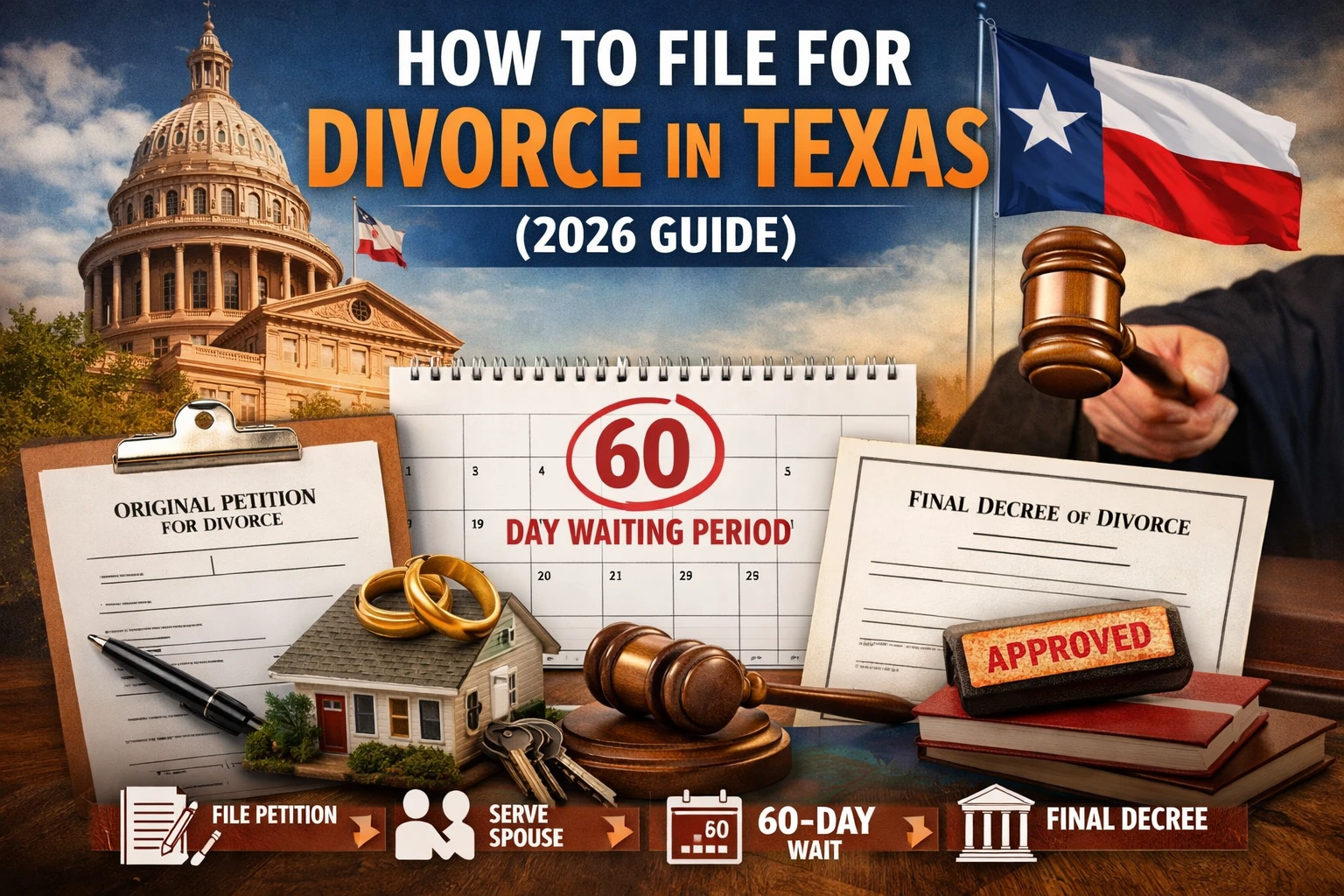
Texas has basic filing requirements, residency rules, and a mandatory waiting period in most cases. If those rules are overlooked, the case may be rejected or delayed. People also run into issues when they file in the wrong county, fail to use the right cause number on later documents, or submit forms with inconsistent names, dates, or case details.
Signing mistakes are also common. Some documents need signatures in the right place, on the right version, and sometimes in front of a notary. If a decree is signed too early, signed inconsistently, or missing required sections, the court may not accept it. These may sound like small details, but they matter because family courts expect accuracy.
Another issue is assuming the court will fix unclear or incomplete paperwork. In an agreed case, the court is not there to rewrite your documents for you. Judges can reject orders that are incomplete, unclear, or not compliant with Texas requirements.
Finalizing too early or too late
Timing can create problems in both directions. Some people try to finalize before the waiting period has passed. Others wait too long and lose momentum, especially if one spouse becomes harder to reach or less cooperative over time.
Agreed divorces usually move best when the paperwork is prepared carefully and the next steps are handled in order. A rushed filing can create avoidable errors, but unnecessary delay can turn a cooperative case into a contested one.
Financial details people overlook
Even in low-conflict divorces, financial oversights can come back later. One major mistake is failing to identify all assets and debts before drafting the final decree. That includes bank accounts, retirement accounts, tax refunds, credit cards, vehicle loans, and household bills.
People sometimes focus only on who gets what and forget about how transfers will happen. If one spouse is keeping a car, who will refinance the loan if both names are on it? If one spouse is awarded a house, when will the deed be signed, and what is the plan if the mortgage remains joint for a period of time? If a retirement account is being divided, additional paperwork may be needed beyond the divorce decree.
Taxes are another area people underestimate. It may matter who claims a child, how refunds or liabilities are handled, and whether there are recent joint tax filings that still need to be addressed. Not every agreed divorce has complicated tax issues, but it is a mistake to ignore them completely.
Thinking agreement means no review is needed
A lot of people believe that because both spouses are cooperative, the documents do not need careful review. That is one of the costliest assumptions in the process.
Agreement reduces conflict. It does not eliminate the need for correct paperwork, proper legal language, and compliance with court procedure. An agreed divorce still creates binding court orders. If the decree leaves out a key term or contains contradictory provisions, fixing it later can be more expensive and more stressful than doing it right the first time.
This is especially true when children, real property, retirement accounts, or shared debts are involved. The case may still be uncontested, but it is no longer something you want to handle casually.
Why Texas-specific guidance matters
Divorce procedure is not the same in every state, and county-level practices can differ in practical ways. What works in one jurisdiction may not work smoothly in another. For Texas residents, especially in counties with busy family court dockets like Dallas, Tarrant, Denton, Collin, Harris, or Bexar, accuracy and preparation can make a real difference in how efficiently a case moves.
That does not mean every agreed divorce is complicated. Many are straightforward. But straightforward is not the same as automatic. A clean case still depends on having the right documents, the right details, and the right filing sequence.
How to avoid these mistakes from the start
The best way to avoid agreed divorce problems is to slow down enough to get clear before you file. Make sure the case is fully agreed. Identify all property and debts. Confirm whether children, support, insurance, or name change issues need to be included. Then make sure the documents match the facts exactly.
It also helps to think beyond the day the divorce is granted. A good final decree should answer practical questions, not create new ones. If a stranger read the order, they should be able to tell who keeps what, who pays what, and what happens next without guessing.
For many Texans, support with document preparation and procedural guidance is what keeps an agreed divorce affordable without making it careless. That middle ground matters. You do not want unnecessary litigation, but you also do not want preventable mistakes that cost time and money later.
If your goal is a simpler divorce, the smartest move is not to rush. It is to make sure the agreement is complete, the paperwork is accurate, and the process is handled with care so you can move forward with fewer loose ends.
👉 Contact us today for a free consultation and learn how clarity, communication, and cooperation can make all the difference in your divorce journey.
✅ Easy step-by-step guidance
✅ Flat-fee pricing — no surprises
📲 Call us now at (800) 432-0018