If you and your spouse are on the same page, one of the first questions you may ask is: can spouses file divorce together in Texas? The short answer is not exactly. Texas does not have a true joint divorce filing where both spouses start the case together as co-petitioners. But if you both agree on the terms, you can still complete an uncontested divorce in a way that feels cooperative, efficient, and far less stressful than a contested case.
That distinction matters. Many couples assume that because they agree, they should be able to walk into court and file one shared packet together. In Texas, the process is a little more formal than that. One spouse files first, and the other spouse responds or signs documents that show agreement. It is still a team effort in practical terms, even if the court paperwork is not called a joint filing.
Can spouses file divorce together in Texas?
Texas requires one spouse to take the role of Petitioner, which means that person files the Original Petition for Divorce to open the case. The other spouse is the Respondent. Those titles can sound adversarial, but in an agreed divorce, they usually are not. They are just procedural labels the court uses to organize the case.
So, can spouses file divorce together? Not as a single joint petition in most Texas divorces. However, both spouses can cooperate from the beginning, agree on the terms in advance, and sign the necessary documents so the case moves forward with minimal conflict. In real life, that often looks very close to filing together, even though the court still treats it as one spouse filing and the other spouse participating.
For couples who want a simple process, this is often good news. You do not need a courtroom fight just because Texas uses Petitioner and Respondent labels. If the marriage is truly uncontested, the process can still be straightforward.
What an agreed divorce looks like in practice
An agreed divorce works best when both spouses have already resolved the major issues. That usually includes division of property and debts, whether either spouse will pay spousal maintenance, and if children are involved, conservatorship, possession schedules, child support, and medical support.
When those issues are settled, one spouse files the petition. The other spouse can then sign a Waiver of Service or file an Answer, depending on the situation. After that, the couple prepares the remaining paperwork, including the Final Decree of Divorce, to reflect their agreement.
This is where many people get tripped up. Agreeing in conversation is not the same as having legally correct documents. A court will not finalize a divorce just because both people say they want one. The paperwork has to match Texas requirements, and the filing steps still matter.
That is why an uncontested divorce can be simple, but it should not be casual. A missed form, the wrong language in a decree, or an incorrect filing sequence can slow everything down.
Why Texas does not use a true joint filing model
Some states allow both spouses to file a divorce petition together. Texas generally does not structure divorce cases that way. Instead, Texas courts open the case with one filing spouse and one responding spouse.
This does not mean Texas expects conflict. It simply means the legal system uses a standard case format. Courts need a clear record of who initiated the case, when it was filed, whether the other spouse received notice or waived formal service, and when the case became ready for finalization.
For couples seeking closure, this is more of a technical issue than a practical barrier. You can still work together. You just do it within the Texas filing framework.
Who should file first?
In many agreed divorces, it does not matter much which spouse files first. The choice often comes down to logistics. One spouse may be more available to gather documents, more comfortable handling paperwork, or more motivated to move the case forward.
That said, there can be reasons to choose carefully. If one spouse plans to return to a former name, if there are child-related orders that need close attention, or if county filing convenience matters, it may help to think through the filing strategy before starting. Couples in places like Tarrant County, Dallas County, Denton County, or Collin County may also want to make sure they are following the right county procedures from the beginning.
If you are working cooperatively, the better question is usually not who wins by filing first. It is who can get the case opened accurately and keep it moving.
What both spouses need to agree on
If you are asking whether spouses can file divorce together, you are probably trying to avoid unnecessary conflict. For that to work, your agreement needs to be real and complete.
That means more than agreeing to get divorced. You should also have a workable agreement about the house, vehicles, bank accounts, retirement, credit cards, personal property, and any other debts or assets. If you have children, your parenting plan and support terms need to be clear enough to put into a final order.
The biggest trade-off in an uncontested divorce is this: it is faster and more affordable when both spouses agree, but the process stops being simple if important issues are still unresolved. If one person is unsure about finances or feels pressured to sign, that is a sign to slow down and get clarity before filing.
Children can make the paperwork more detailed
An agreed divorce with children can still be uncontested, but it is not usually a basic fill-in-the-blank situation. Texas courts pay close attention to orders involving children, and the final decree needs to cover specific legal points.
Parents often agree in broad terms but have not discussed the details the court expects. For example, saying you will “share custody” is not enough by itself. Texas uses different legal terms, and the order needs to address conservatorship, possession, support, and health insurance in a way the court can approve.
That does not mean the process has to become difficult. It just means careful drafting matters more.
How the timeline works
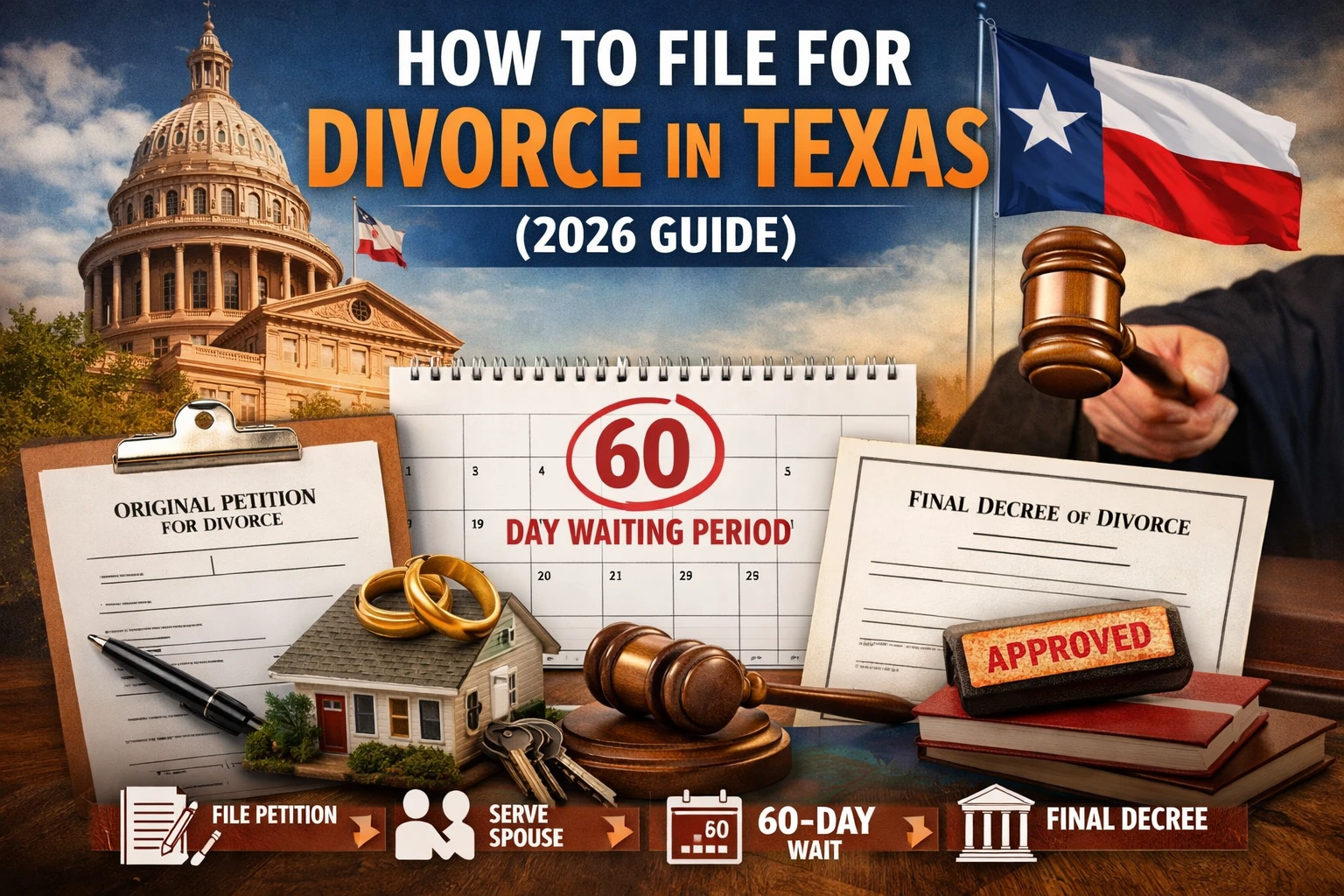
Even when both spouses agree from day one, Texas has a mandatory waiting period in most divorce cases. Generally, at least 60 days must pass from the date the petition is filed before the divorce can be finalized, unless a narrow exception applies.
That waiting period surprises some couples. They assume that if they both sign everything immediately, the court can finalize the divorce right away. Usually, it cannot. The waiting period is built into Texas law.
During that time, the couple can finish documents, correct any filing issues, and get ready for the final step. In many agreed divorces, one spouse attends a short prove-up hearing, although procedures can vary by county and court.
When filing “together” may not be the right approach
Sometimes couples start out believing they agree, but the details tell a different story. One spouse may not fully understand the debts. There may be retirement assets that have not been discussed. A parenting schedule may seem fine until holidays and summer break come up.
In those situations, trying to force an uncontested case can create more stress, not less. It is better to pause and get the agreement solid before signing final papers. A smooth divorce is not just about speed. It is about ending the case with documents that are accurate, enforceable, and realistic for your life after divorce.
For many Texas couples, the best path is still a cooperative one. They just need help turning that agreement into the right documents and filing steps. That is where process-focused support can make a real difference.
If you and your spouse are in agreement and want to keep the case affordable, Ready Divorce Service helps Texans prepare and complete uncontested divorce paperwork with more clarity and less confusion.
The goal is not to make divorce feel easy emotionally. It usually is not. The goal is to make the legal side manageable, so you can stop second-guessing forms, meet the court requirements, and move forward with confidence.
If you and your spouse are working together, that is already a strong starting point. In Texas, you may not file as true joint petitioners, but you can still take a cooperative path that saves time, reduces conflict, and helps both of you close this chapter with less friction.
📲 Call us now at (800) 432-0018