If you are trying to avoid missed work, courthouse lines, and another stressful face-to-face meeting, you may be asking: can you file divorce remotely in Texas? In many uncontested cases, the answer is yes – at least for much of the process. But remote divorce is not the same as automatic divorce, and it is not available in exactly the same way in every county or every case.
That distinction matters. Many Texans hear “online divorce” and assume everything can be done from a phone in one sitting. The reality is more practical. A divorce can often be prepared, reviewed, signed in part, and filed without many in-person steps, especially when both spouses agree. Still, some parts depend on the county, the court, whether children are involved, and whether the final hearing can be handled remotely.
Can you file divorce remotely in Texas?
Yes, many people can file divorce remotely in Texas, especially in an uncontested divorce where both spouses agree on property, debts, and any child-related terms. The paperwork can often be prepared electronically, shared by email, signed where allowed, and filed through the county’s electronic filing system.
That said, remote filing does not mean every divorce is a fit for a fully online process. If one spouse cannot be located, refuses to cooperate, or there is conflict over custody, support, property, or safety, the case usually becomes more complicated. In those situations, more formal procedures may be required, and the process may no longer feel truly remote.
For agreed divorces, the remote option is usually the most realistic path. It is faster, more affordable, and easier to manage because both people are already working toward the same result.
What “remote divorce” really means
In Texas, remote divorce usually means the administrative side of the case is handled without repeated courthouse visits. That can include completing intake information online, receiving prepared divorce documents electronically, reviewing drafts from home, signing certain forms, and e-filing with the court.
The key point is that divorce still follows Texas legal procedure. You are not skipping the legal steps. You are handling them in a more efficient way.
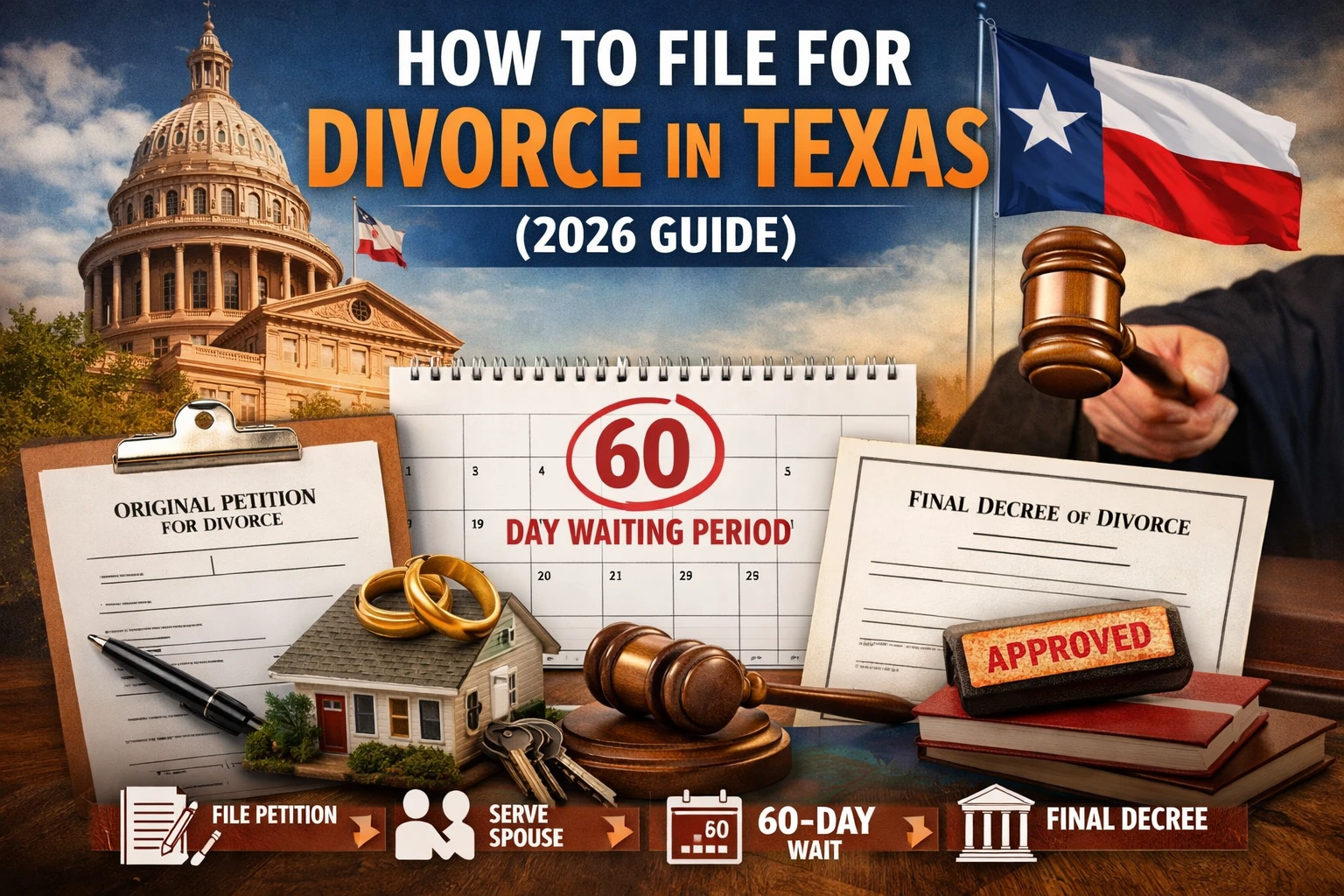
Most uncontested divorces still involve the same basic parts: drafting the Original Petition for Divorce, filing it with the correct court, completing any required waivers or service steps, waiting out the 60-day minimum waiting period, finalizing the Final Decree of Divorce, and presenting the case for completion. The difference is that many of those steps can now be managed without physically going from office to office.
When remote filing works best
Remote divorce tends to work best when the case is simple and cooperative. If you and your spouse agree that the marriage should end, and you already have a clear understanding of who keeps what, the process is much smoother.
It also helps when there are no unusual issues involving separate property, retirement accounts that need special division orders, or disputes over children. None of those issues automatically prevent remote filing, but they do increase the chance that your case needs more detailed legal review.
In a straightforward uncontested divorce, remote filing can remove a lot of the friction people worry about. Instead of trying to decode court forms on your own, you can focus on gathering information, reviewing documents carefully, and moving step by step.
What parts of a Texas divorce can often be done remotely
A surprising amount of the process can be handled from home. Document preparation is one of the biggest pieces. Financial details, names, dates, addresses, property information, and child-related details can usually be collected electronically.
Once documents are prepared, they can often be reviewed by email or secure digital delivery. Filing with the court is commonly done through e-filing rather than in person. In many counties, this is already standard.
Some signatures may also be handled remotely, depending on the form and the current court requirements. In some cases, notarization may be needed, and that can affect whether a document can be signed entirely from home. The final prove-up hearing may be remote in some courts, while others may require a brief in-person appearance.
So the honest answer is not that every step is always online. It is that many steps can be.
What may still require extra attention
This is where expectations should stay realistic. Even if you can file divorce remotely, you still need to meet Texas requirements. You must file in the proper county, use the right forms for your situation, and make sure the decree matches the terms of your agreement.
If children are involved, the court will pay close attention to conservatorship, possession, support, medical support, and required statutory language. Courts do not simply rubber-stamp child-related orders because both parents agree. The paperwork still needs to be complete and legally acceptable.
There is also the issue of service or waiver. If your spouse will sign a waiver, that can simplify things. If not, formal service may be necessary, which adds a layer of procedure. That does not always mean a trip to court, but it does mean the process is no longer quite as simple.
Finally, local court practices can differ. A county in North Texas may handle remote hearings differently from one in another region. For people filing in counties such as Tarrant, Dallas, Denton, Collin, Ellis, Bexar, or Harris, procedure can vary enough that county-specific guidance helps.
Why uncontested cases are the best fit for remote divorce
Uncontested divorce is where remote filing offers the most value. When both spouses are in agreement, the process becomes more about accuracy and completion than conflict management.
That matters for cost. Traditional attorney-led contested divorces often become expensive because the disagreement drives the work. In an uncontested case, the goal is different. You are trying to prepare the right documents, file them correctly, and finish the case without delays.
That also matters for stress. Many people do not need a courtroom battle. They need a clean process, clear paperwork, and confidence that they are following Texas rules. A remote uncontested divorce can provide exactly that, as long as the agreement is real and the paperwork is done carefully.
Common misunderstandings about filing divorce remotely
One common misunderstanding is that remote means instant. Texas still has a mandatory waiting period in most divorces. Even if your paperwork is prepared quickly and filed electronically, the case cannot usually be finalized until at least 60 days have passed from the filing date.
Another misunderstanding is that online forms alone solve everything. Forms are only part of the process. The wording has to fit your facts, especially when there are children, a house, debts, or retirement benefits involved. A mismatch between what you agreed to and what the decree says can create problems later.
People also sometimes assume that if a county accepts e-filing, the rest of the case will automatically be remote. Not always. The court may still have its own expectations for hearings, signatures, or local procedures.
How to know if your case is a good candidate
A good candidate for remote divorce in Texas is usually someone in an agreed divorce who knows where their spouse is, can communicate enough to exchange paperwork, and has settled the major terms already.
If you are unsure whether your agreement is complete, ask yourself a few practical questions. Have you decided how to divide debts as well as property? Have you addressed parenting time and support if you have children? Do both of you intend to sign the necessary documents? If the answer is yes, your case may be a strong fit for a remote uncontested process.
If the answer is no, that does not mean divorce is impossible. It just means the case may need more problem-solving before a streamlined filing approach makes sense.
The real benefit of remote divorce
The biggest benefit is not technology for its own sake. It is reducing unnecessary obstacles during an already difficult time. Remote divorce can save time, cut down on confusion, and help you keep the process moving when you are balancing work, parenting, and everyday life.
For many Texans, that practical relief is the whole point. You do not need a flashy system. You need a process that is affordable, organized, and grounded in Texas procedure. That is why services built around uncontested divorce support, including document preparation and step-by-step guidance, are often a better fit than trying to piece everything together alone.
If you are wondering whether your divorce can be handled mostly from home, the better question may be whether your case is agreed, straightforward, and ready for completion. When it is, remote filing can turn a confusing legal process into a manageable one – and that can make it much easier to move forward.
📞 Get Started Today – Your Peaceful Divorce Is Just a Click Away
When you’re ready to move on, we’re ready to help.
📲 Call us now at (800) 432-0018
🖥️ Start your divorce online today