If you and your spouse already agree on the big issues, the last thing you need is a divorce process that creates more conflict, delay, and expense. Harris County agreed divorce help is really about one thing: turning agreement into a completed Texas divorce without getting lost in paperwork, filing rules, or court procedure.
For many couples, an agreed divorce is the most practical path forward. You are not asking a judge to decide who gets what after a long fight. You are asking the court to approve terms you have already worked out. That can save time, lower costs, and reduce stress. But even when a case is uncontested, the process still has to be done correctly.
What Harris County agreed divorce help usually means
In plain terms, agreed divorce help means support with the documents, filing steps, and procedural requirements involved in an uncontested divorce. It does not magically make every case simple, and it does not erase Texas legal requirements. What it does is make the process easier to understand and easier to complete.
In Harris County, people often need help figuring out where to start, which forms apply to their situation, how to handle child-related paperwork, and what comes after filing. Those questions are normal. Divorce paperwork can feel straightforward at first, then suddenly become confusing when you are dealing with filing dates, waivers, final decrees, or court-specific expectations.
That is why process-focused support matters. When both spouses are cooperating, the main risk is often not conflict. It is delay caused by missing forms, avoidable errors, or uncertainty about the next step.
Is your case actually an agreed divorce?
Not every low-conflict divorce qualifies as an agreed divorce in a practical sense. The case usually works best when both spouses agree on the core terms before filing or early in the process. That includes property and debt division, and if children are involved, conservatorship, possession schedules, child support, and related parenting terms.
If one spouse is still undecided, refusing to sign, or likely to dispute major terms later, the case may stop being truly agreed. That does not always mean a full court battle is coming, but it does mean the paperwork and timeline may become less predictable.
A lot depends on the details. A couple with no house, no retirement issues, and no children usually has a more direct path than a couple dividing multiple assets or working through parenting arrangements. Both can still be uncontested, but one may require more careful document preparation than the other.
The basic Texas divorce framework still applies
Even with Harris County agreed divorce help, your case must meet Texas rules. One spouse must generally meet the residency requirements to file in Texas and in the county. There is also a mandatory waiting period in most divorces. People are often surprised by this because they think agreement means immediate finalization. It usually does not.
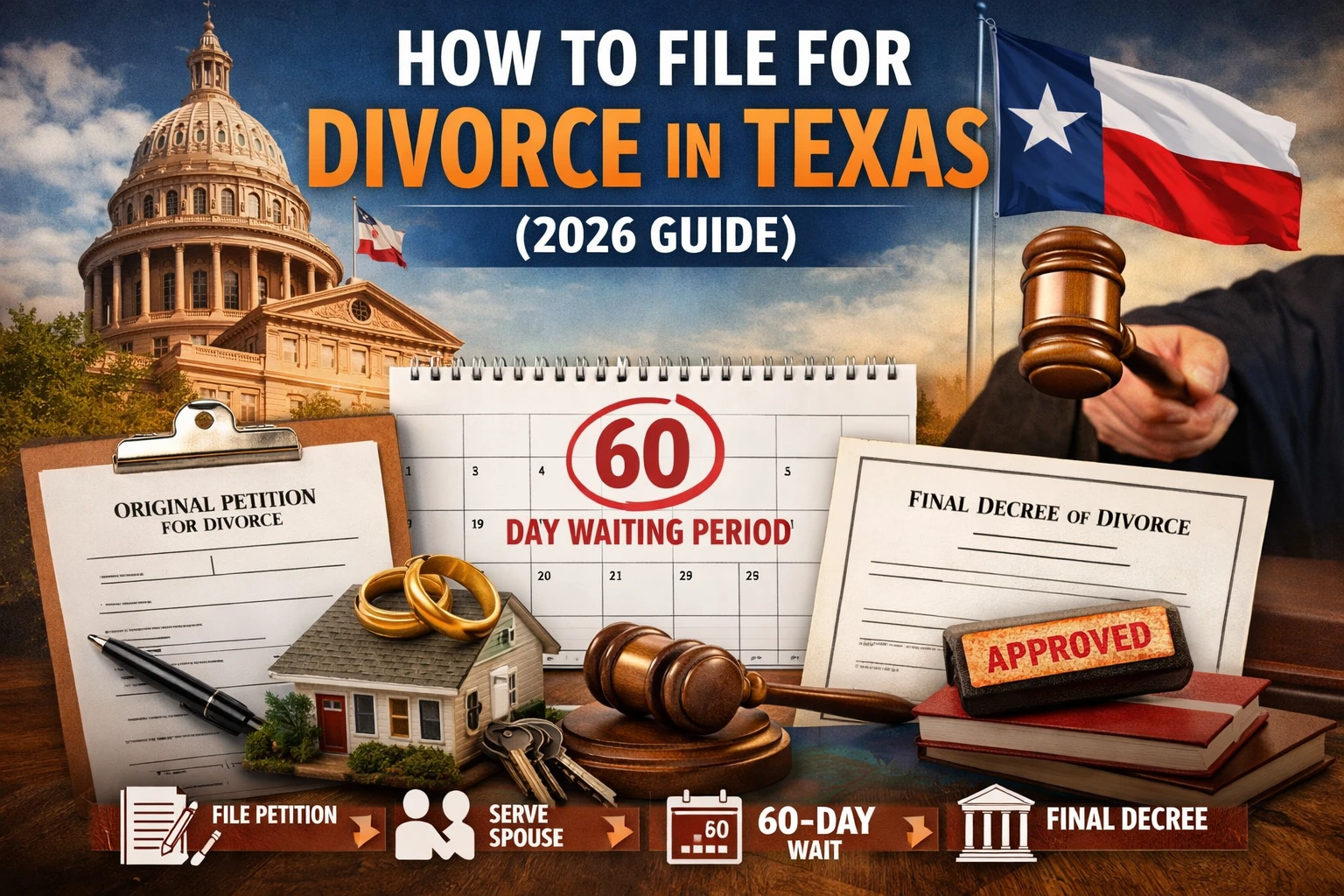
Texas courts also require a proper Original Petition for Divorce, and the case must move through the required procedural steps before a final decree can be signed. If children are involved, additional forms and more detailed terms are often necessary. The court is not just checking whether both spouses want the divorce. The court is also reviewing whether the final paperwork is complete and legally acceptable.
That is where many uncontested cases slow down. Agreement alone is not enough. The documents have to reflect that agreement clearly and accurately.
Harris County agreed divorce help with paperwork
Most people seeking Harris County agreed divorce help are trying to avoid two common problems: overpaying for a simple case or making mistakes that cost them time later. That is why document preparation and procedural guidance are so valuable in agreed cases.
The paperwork has to match your actual situation. A divorce with no children requires a different approach than one involving minor children. A case with separate property concerns may need extra attention. If retirement accounts, a family home, or shared debt are involved, the wording in the final decree matters.
This is also where people sometimes underestimate the process. They assume that because they are being civil, the forms can be treated casually. In reality, agreed divorces work best when the paperwork is handled carefully from the beginning. Clear documents can help prevent confusion, reduce back-and-forth, and support smoother case completion.
What the process often looks like in Harris County
Most agreed divorces follow a similar arc, even though the details vary. One spouse files the initial petition. The other spouse then signs the appropriate documents or participates in the case in the required way. During the waiting period, the couple finalizes the divorce terms and prepares the final decree and any supporting forms.
After that, the case moves toward finalization through the court’s required process. Depending on the facts, that may involve a prove-up or other county-specific procedures. The exact experience can vary, which is one reason county-level guidance is useful. What works in one Texas county is not always handled the same way in another.
For Harris County filers, practical help is often less about legal theory and more about keeping the case on track. Which form comes next? Does the decree match the petition? Are the child-related terms complete? Has the waiting period passed? Those are the kinds of questions that affect real timelines.
When an agreed divorce is faster and when it is not
An uncontested divorce is usually faster than a contested one, but faster does not mean instant. Texas has timing rules, and courts still have filing and review procedures. If your paperwork is complete and both spouses remain cooperative, the process can move much more efficiently than traditional litigation.
On the other hand, some agreed cases take longer than expected. Usually that happens because the parties agreed in principle but had not worked out enough detail, or because the filing documents and final decree did not line up. Delays can also happen when people wait too long to finish forms, miss a step, or misunderstand what the court requires for finalization.
That is why realistic expectations matter. Agreed divorce help should make the process clearer and more manageable, not promise a shortcut around Texas rules.
Cost matters, and so does the type of help you choose
For many families, the appeal of an agreed divorce is financial as much as emotional. If you do not need a courtroom fight, paying for full litigation often makes little sense. Affordable divorce support can be a better fit when the goal is accurate paperwork, procedural guidance, and an efficient path to completion.
Still, it helps to be honest about complexity. Some cases look simple until a property issue, retirement division, or parenting disagreement surfaces. If that happens, the kind of help you need may change. There is no shame in that. The smart move is choosing support that matches your case as it actually exists, not as you wish it existed.
For straightforward Texas uncontested divorces, many people want a middle path: more guidance than doing it entirely alone, but without the cost of a traditional contested case. That is where a service-focused approach can bring real relief.
How to know if you are ready to move forward
You are probably in a good position to start if you can answer a few practical questions clearly. Do both spouses want the divorce? Do you agree on property and debts? If children are involved, do you agree on custody-related terms and support? Are both of you willing to sign what is needed and cooperate through finalization?
If the answer is yes, your next step is usually not more debate. It is getting the case organized correctly. That means making sure the forms fit your situation, the county filing process is understood, and the final decree reflects the agreement you actually made.
Ready Divorce Service helps Texans who want that kind of clear, affordable support in uncontested cases. For people in Harris County, that often means less confusion, fewer delays, and a more manageable path through a difficult life change.
Divorce is never easy just because it is agreed. But when the conflict is low and the goal is closure, the right help can turn a stressful legal process into a series of workable steps you can actually finish.
📞 Get Started Today – Your Peaceful Divorce Is Just a Click Away
When you’re ready to move on, we’re ready to help.
📲 Call us now at (800) 432-0018
🖥️ Start your divorce online today