Table of Contents
- Why DIY Divorce in Texas Carries Real Financial and Legal Risks
- Uncontested Divorce Requirements in Texas You Cannot Afford to Miss
- Common Mistakes in Pro Se Divorce That Cost Thousands to Fix
- Texas Divorce Forms Online for Couples: Which Ones Are Court-Approved
- Contested vs. Uncontested Divorce: Why the Distinction Matters
- The Hidden Costs of DIY Mistakes: Post-Divorce Modification and Beyond
- Mediation as a Middle Ground Between DIY and Full Legal Representation
- Conclusion
Last Updated: August 20, 2026
Why DIY Divorce in Texas Carries Real Financial and Legal Risks
When you handle your own divorce without legal representation, you’re taking on responsibility for decisions that will affect your finances, custody arrangements, and legal standing for years to come. Texas family law operates under specific statutory requirements. Missing even one procedural step or filing an incomplete document can result in your petition being rejected by the court, forcing you to start over and pay filing fees again. Mistakes in property division, child custody language, or asset documentation can create legal disputes that cost far more to resolve later than hiring proper guidance upfront would have cost.
Many couples believe that if both parties agree on the terms, a DIY divorce is straightforward. That assumption overlooks the complexity of translating an agreement into legally binding court documents that comply with Texas Family Code requirements. Post-divorce modifications, enforcement actions, and disputes over unclear language in the original decree can drain resources and create ongoing conflict.
A single error in your property division language can create ambiguity that leads to years of post-divorce disputes. Courts cannot modify a final decree based on what you intended, only on what the document actually says.
Uncontested Divorce Requirements in Texas You Cannot Afford to Miss
An uncontested divorce in Texas requires that both spouses agree on all material terms: property division, custody, visitation, child support, and spousal support if applicable. But "uncontested" doesn’t mean "simple", the paperwork still has to be perfect.
Texas requires specific forms and documentation for uncontested divorces. The petition must include detailed information about community property, separate property, and how assets will be divided. If you have minor children, you need a detailed custody and visitation schedule that complies with Texas Family Code Section 153.003, which outlines the standard possession order. Omitting required information or using forms that don’t meet state requirements can result in court rejection.
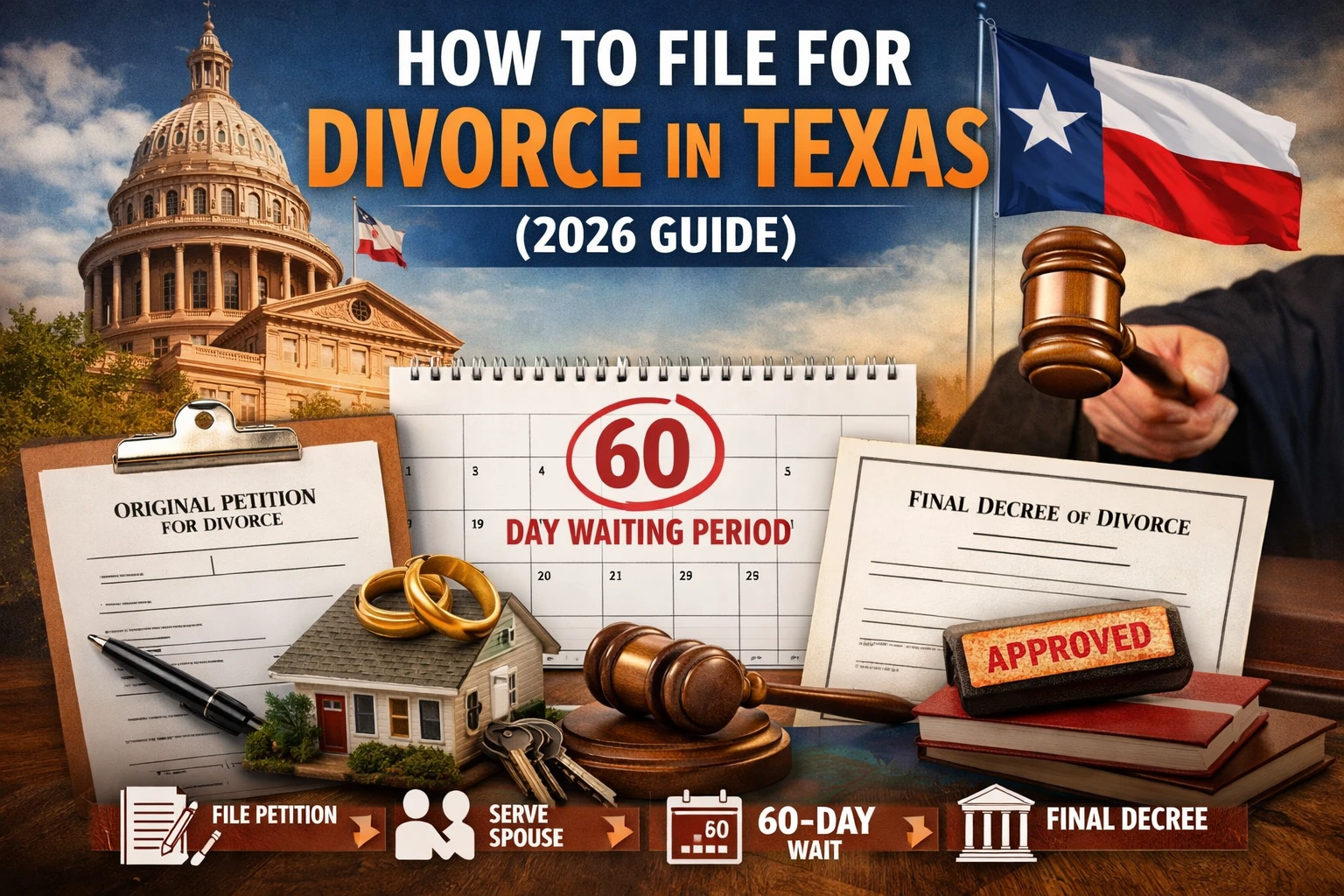
The 60-day waiting period is another requirement many DIY filers overlook. Texas law requires a minimum 60 days between filing and finalization, unless both parties waive this requirement in writing. Some couples have discovered their waiver was improperly executed, forcing them to wait the full 60 days despite believing they had already shortened the timeline.
Service of process is a procedural requirement that trips up many self-filers. Your spouse must be officially served with the divorce petition according to Texas Rules of Civil Procedure. If service is improper, the court may not have jurisdiction to finalize the divorce. Many DIY filers attempt to serve their spouse informally, thinking that if both parties agree, formal service doesn’t matter. It does.
Uncontested divorce requirements in Texas are not just about agreement, they’re about documentation, timing, and proper procedure. Missing any one of these elements can invalidate your entire filing or force costly corrections.
Common Mistakes in Pro Se Divorce That Cost Thousands to Fix
Pro se litigants, people representing themselves without an attorney, make predictable mistakes that recur across dozens of cases. These aren’t minor oversights; they’re errors that create legal problems lasting years after the divorce is finalized.
Errors in Legal Documentation
The most common documentation error is incomplete property division schedules. Texas requires a detailed inventory of community property and separate property, with clear language stating who receives what. Many DIY filers create vague descriptions like "the house goes to Wife" without addressing the mortgage, equity, or tax implications.
Retirement account division is another frequent problem area. If you have 401(k)s, pensions, or IRAs, dividing them requires a Qualified Domestic Relations Order (QDRO) that meets specific IRS requirements. Improper language can result in immediate tax penalties or the receiving spouse being unable to access their portion. The cost to correct a QDRO error after the divorce is final can exceed what you saved by doing the divorce yourself.
Bank accounts, investment accounts, and digital assets are frequently overlooked entirely in DIY divorces. When these assets aren’t explicitly addressed in the decree, post-divorce disputes over ownership become inevitable.

Missing or Incomplete Property Division
Community property in Texas includes all property acquired during the marriage, regardless of whose name is on the title. Separate property includes assets owned before marriage or acquired by gift or inheritance. If your DIY divorce doesn’t clearly identify and document separate property claims, you may lose rights to assets you believed were yours.
Many self-filers also fail to address debts. A common misconception is that if you keep the house, you keep the mortgage. If your spouse’s name is on the mortgage and you’re responsible for the debt in the divorce decree, your spouse’s credit is still affected by late payments. Without clear language addressing debt responsibility and refinancing obligations, you can end up liable for debts you thought your spouse was handling.
Child Custody and Visitation Rights Oversights
If you have minor children, custody and visitation language must be specific enough to eliminate ambiguity. Vague language like "reasonable visitation" creates disputes. Texas courts prefer detailed possession schedules. If your DIY decree uses vague language, either parent can later claim the schedule was unclear and file a modification, forcing you back to court.
Another common mistake is failing to address decision-making authority. Who decides on medical treatment, education, religious upbringing? If the decree doesn’t specify, you may find yourself in conflict over major parenting decisions. Summer visitation, holiday schedules, and school-year arrangements must all be explicitly addressed. managing custody disputes.
Texas Divorce Forms Online for Couples: Which Ones Are Court-Approved
Texas courts provide approved forms for uncontested divorces on the Texas Court Online (TCO) website and through the State Bar of Texas. Using court-approved forms increases the likelihood your documents will be accepted. However, using an approved form doesn’t guarantee your filing will be complete or correct.
The Texas Divorce Affidavit (Form 105.001) is the core document for uncontested divorces. This form requires detailed information about property, debt, children, and spousal support. Incompleteness in this affidavit is one of the most common reasons for court rejection. Many DIY filers skip sections they believe don’t apply, not realizing that the court requires every section to be addressed, even if the answer is "none" or "not applicable."
The Final Decree of Divorce (Form 105.001) is the document the judge signs at the end. This form must include all the terms of your agreement and comply with Texas Family Code requirements. If you use a form from an online service that isn’t court-approved, there’s a risk it won’t meet statutory requirements.
Ready Divorce Service assists couples in completing court-approved forms with accuracy and in full compliance with Texas law. The guidance provided ensures that every required field is completed correctly and that supporting documents are included, reducing the risk of court rejection or post-divorce disputes.
Court-approved forms are available for free on the Texas Court Online website, but completing them correctly requires understanding what information goes in each field and what supporting documents must be attached. Many DIY filers use approved forms but fill them out incompletely.
Contested vs. Uncontested Divorce: Why the Distinction Matters
An uncontested divorce is one where both spouses agree on all material terms. A contested divorce is one where disagreement exists on property division, custody, support, or other major issues. The distinction matters enormously because the process, cost, and risk profile are completely different.
In an uncontested divorce, you can potentially finalize the process in weeks (after the 60-day waiting period). In a contested divorce, the process can take months or years. The cost difference is equally stark: an uncontested divorce completed with proper guidance costs a fraction of what a contested divorce costs with full legal representation.
If your situation is truly uncontested, both parties genuinely agree on all terms and neither has concerns about hidden assets or unfair division, then document preparation services and guided DIY approaches can work. But many couples believe their divorce is uncontested when it actually isn’t. If your situation is contested, attempting a DIY approach is extremely risky. You need legal representation to protect your rights, ensure proper discovery of assets, and present your case effectively if the matter goes to trial.
The Hidden Costs of DIY Mistakes: Post-Divorce Modification and Beyond
The financial impact of DIY divorce mistakes doesn’t end when the judge signs the decree. In fact, that’s often when the real costs begin.

Post-divorce modification is the process of asking the court to change terms in your decree. Common reasons include changes in income, job loss, remarriage, or changes in a child’s needs. If your original decree has vague language or contains errors, modification becomes more complicated and expensive.
Enforcement actions arise when one spouse isn’t complying with the decree. If your ex isn’t paying child support or is violating the custody schedule, you need to file an enforcement action. If the decree language is unclear, the enforcement process becomes more difficult.
Post-divorce disputes over asset division are common when the original decree doesn’t clearly address how certain assets should be divided. Cryptocurrency, digital assets, and online business interests are increasingly part of divorce proceedings, but many DIY divorces don’t address these assets at all.
The cost of a single post-divorce modification or enforcement action can easily exceed what you saved by doing the original divorce yourself.
Many DIY divorces create post-divorce modification disputes within 2-3 years as circumstances change or as one spouse realizes the long-term financial implications of what they agreed to. The cost of these modifications often exceeds the savings from the original DIY divorce.
Mediation as a Middle Ground Between DIY and Full Legal Representation
If your situation is uncontested but you’re concerned about the accuracy of your paperwork, mediation offers a middle path. A mediator is a neutral third party who helps both spouses communicate and reach agreement on disputed or unclear issues. Mediation costs less than litigation but more than pure DIY, and it provides professional guidance without full legal representation.
Mediation is particularly useful if you and your spouse have reached general agreement but have concerns about specific issues. A mediator can help clarify what you both intend regarding property division, custody, or support, and can help ensure your agreement is documented clearly.
Another middle-ground option is limited-scope representation, where an attorney handles specific parts of your divorce, perhaps property valuation and division language, while you handle other aspects. The State Bar of Texas Lawyer Referral and Information Service can connect you with attorneys offering this type of limited engagement.
Navigating divorce is one of the most significant legal and financial decisions you’ll make. While DIY approaches can work for genuinely simple, uncontested situations, the risks of mistakes are real and the costs of correction are substantial. Ready Divorce Service specializes in helping Texas residents complete uncontested divorces with accuracy and in full compliance with state law, providing the guidance and document preparation you need without the cost of full legal representation. Get started with Ready Divorce Service and ensure your divorce is completed correctly the first time, protecting your financial interests and parental rights for years to come.
Frequently Asked Questions
Can you do a divorce yourself in Texas?
Yes, you can file for divorce yourself in Texas as a pro se litigant. However, the complexity of property division, child custody arrangements, and legal documentation requirements means mistakes are common. Many self-filers face court rejections, costly modifications, or unfavorable settlements because they missed critical Texas Family Code requirements or failed to properly value assets like retirement accounts and digital assets.
What are the most common mistakes in pro se divorce filings?
The most frequent errors include incomplete property division documentation, incorrect service of process, missing spousal support calculations, and inadequate child visitation schedules. Many self-filers also fail to properly account for community property, overlook digital assets or cryptocurrency, and make procedural errors that lead to court rejection. These mistakes often cost thousands more to fix through post-divorce modification than hiring help upfront.
What happens if divorce forms are filled out incorrectly in Texas?
Incorrectly completed divorce forms can be rejected by the court clerk, requiring you to refile with corrections. This delays your divorce decree, extends the financial burden, and may result in unfavorable default judgments if your spouse takes action first. Errors in asset valuation or custody terms can also lead to binding agreements you later regret, requiring expensive modification proceedings to change.
Is mediation a better alternative to DIY divorce in Texas?
Mediation offers a middle ground between DIY and full litigation. A neutral mediator helps both spouses reach agreement on property division, custody, and support without each party hiring separate attorneys. This approach is less expensive than traditional litigation, more thorough than DIY forms alone, and produces a binding agreement that reflects both parties' interests. Many couples find mediation reduces conflict while ensuring legally sound outcomes.
This article was written using GrandRanker