Table of Contents
- Why an Uncontested Divorce Is the Cheapest Route
- Understanding Divorce Filing Fees and How to Waive Them
- DIY Divorce vs. Hiring an Attorney: True Cost Comparison
- What You Need to Know About the Texas Divorce Waiting Period
- Getting Uncontested Divorce Forms Right the First Time
- Hidden Costs of ‘Cheap’ Online Services
- Final Checklist Before You File
- Conclusion
- Frequently Asked Questions
Last Updated: September 9, 2026
Why an Uncontested Divorce Is the Cheapest Route
The most direct answer to finding cheap ways to get a divorce in Texas is to pursue an uncontested divorce, where both spouses agree on all terms before filing. This eliminates lengthy negotiations, court appearances, and hourly attorney billing. When both parties agree on property division, debt, and parenting, the process becomes primarily a paperwork exercise.
At Ready Divorce Service, we guide Texas couples through this process daily. An uncontested divorce involves filing the petition, serving or obtaining a waiver of service, and attending a final hearing, with no discovery disputes in between. For couples who agree, this route reduces the total expense to a fraction of a contested divorce, making it one of the most practical cheap ways to get a divorce in Texas. If you’re unsure which level of support fits your situation, you can review the options on our Which Plan is Right for You? page.
The catch is that both spouses must agree. If either contests custody, property, or support, the case becomes contested and costs rise. Determine early whether your situation qualifies as uncontested.
Understanding Divorce Filing Fees and How to Waive Them
Every Texas divorce requires filing a petition with the district clerk, carrying a court cost that varies by county. These fees are separate from attorney costs and apply whether you hire a lawyer, use a document service, or file on your own.
The good news is that Texas provides a mechanism for low-income residents to avoid these upfront costs entirely.
If your household income falls below certain thresholds, you may qualify to file without paying the filing fee at all, which can make cheap ways to get a divorce in Texas even more accessible.

The Statement of Inability to Afford Payment
The Statement of Inability to Afford Payment of Court Costs is a court-approved form asking the judge to waive filing fees based on your finances. You must disclose income, assets, and expenses, and the court evaluates whether you qualify for indigent status.
Qualifying means you can file without the standard fee, removing a major barrier to affordable divorce. The form is available through the Texas court system, and county self-help resources can assist. If granted, you proceed without the upfront burden.
DIY Divorce vs. Hiring an Attorney: True Cost Comparison
When comparing cheap ways to get a divorce in Texas, the spectrum runs from do-it-yourself filings to full-service attorneys. Filing pro se costs only the court filing fee plus the cost of required documents if purchased separately.
The tradeoff is a higher risk of errors, which can result in court rejection, required corrections, or delayed hearings. Common mistakes include outdated forms, missing signatures, or omitting mandatory information.
Hiring an attorney for an uncontested divorce typically costs several thousand dollars, even when both agree. Many lawyers charge flat fees, but those remain higher than document services or DIY. The middle ground is a document preparation service that ensures compliance with the Texas Family Code.
The Missing Middle: Mediation as a Cost-Containment Tool
Most guides overlook mediation. Even in an uncontested divorce, disagreements can surface over property, debt, or parenting. The cheapest path is not two litigating attorneys, it is one neutral mediator.
A mediator does not take sides; they facilitate a structured conversation to help you reach a written agreement. In Texas, many counties require mediation before a contested case goes to trial. A few hours of mediation typically costs a fraction of one attorney’s preparation for a single hearing.
If mediation resolves your disputes, your case remains uncontested, avoiding hourly billing for discovery and trial prep. The mediated agreement becomes the basis for your decree, so you can still use a flat-fee document service or file pro se. Mediator fees plus filing fees often land well below attorney costs.
Mediation requires both spouses to negotiate in good faith. For couples who agree on the big picture but disagree on specifics, it is a powerful way to keep the divorce affordable without sacrificing a fair outcome.
If you and your spouse are stuck on one or two issues, ask a mediator for a flat fee for a single session. Many mediators offer a package for a few hours of work, which can resolve the dispute for less than the cost of one hour of an attorney’s time.
What You Need to Know About the Texas Divorce Waiting Period
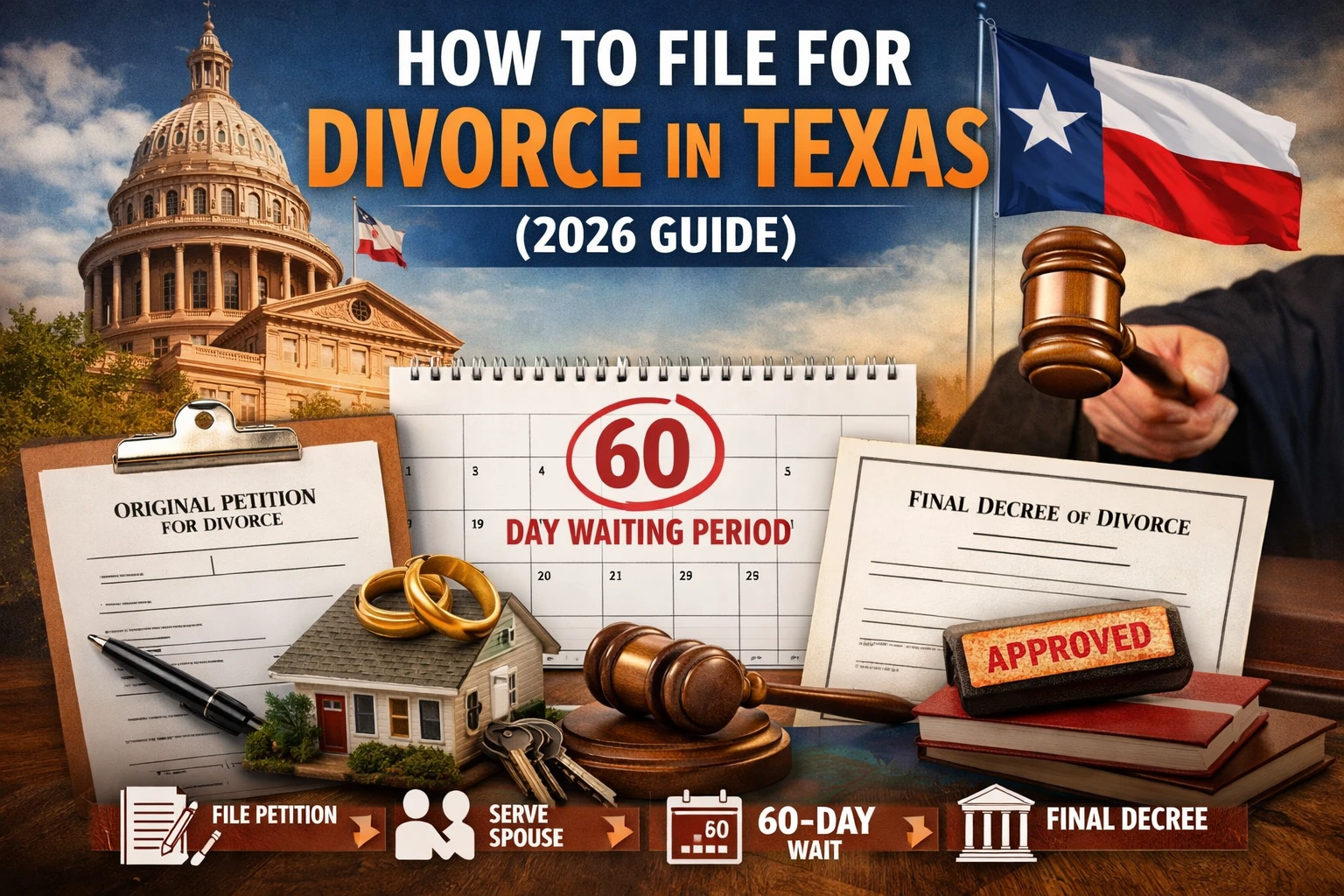
Texas law imposes a mandatory waiting period before a divorce can be finalized. It begins once the petition is filed and the respondent is served, running a set number of days before the court can grant the divorce.
This period applies whether the divorce is contested or uncontested and does not begin until the respondent is properly notified. A signed waiver of service can start the clock sooner than formal service. To understand how this timeline fits into the broader process, you can review the steps for Starting the Divorce Process.
Use the waiting period productively by gathering any remaining documents, confirming your settlement agreement is complete, and preparing for the final hearing. Many couples finalize well before the waiting period ends if their paperwork is ready.
The period is calculated in calendar days, including holidays and weekends. A typical uncontested divorce takes a minimum of the state-mandated waiting period from filing to final decree, assuming no complications.
Getting Uncontested Divorce Forms Right the First Time
The success of any low-cost divorce strategy depends on submitting accurate, court-approved forms the first time. Texas courts require specific forms, and each county may have additional requirements on top of state forms.
Errors are the most common reason courts reject filings, causing delays and resubmission fees. Pitfalls include incorrect names, missing notary signatures, improper formatting, and omitted information about children, property, or debts.
For couples seeking cheap ways to get a divorce in Texas, correcting mistakes erodes DIY savings. Professional document services ensure every form is compliant before submission, catching errors before they reach the court.
Hidden Costs of ‘Cheap’ Online Services
Many online services advertise rock-bottom prices that are often too good to be true. They typically provide generic forms that may not match Texas requirements, leaving you to navigate filing, court procedures, and legal requirements alone.
Hidden costs emerge when generic documents are rejected, when the service lacks guidance on the waiting period or hearing, or when children or property require forms the basics don’t address. Some services charge extra for every additional form, support, or expedited processing.
The cheapest option on paper can become the most expensive in practice. A service that charges slightly more but provides Texas-specific forms, guidance, and support often delivers better value. When evaluating cheap ways to get a divorce in Texas, consider the total cost to a final decree, not just the initial price.
The Upsell Trap and the Rejection Cycle
A common pattern is the “bait and switch” pricing model. The advertised price covers only a basic, generic petition. Once you enter your information, the service reveals you need additional forms, waiver of service, final decree, child support worksheet, or property division addendum, each at an extra fee, making the final bill two to three times the advertised price.
More concerning is the rejection cycle. Texas courts are strict about form compliance; wrong formatting, omitted signature blocks, or missing residency language can get a petition rejected. You have already paid the service, which will not help you fix the filing, leaving you to pay an attorney or start over.
What to Look For Instead
Before you pay any online service, ask these questions:
- Does the service generate forms specifically for Texas, or does it use a generic national template?
- Does the price include the final decree, or is that an upsell?
- Does the service provide guidance on the 60-day waiting period and the final hearing?
- Does it offer support if the court rejects your filing?
- Does it check for county-specific requirements, which vary across Texas?
A service that cannot answer these questions is likely selling generic forms, not a divorce solution. The cheapest upfront price is often the most expensive path to a final decree.
Final Checklist Before You File
Before submitting your divorce petition, verify that you have completed every requirement to avoid delays and additional costs. This checklist covers the essential elements of an uncontested divorce filing in Texas:
- Confirm you meet the residency requirement for filing in your county
- Complete the divorce petition with accurate information about both spouses
- Prepare the waiver of service or arrange for proper service of process
- Finalize your settlement agreement covering property division and debts
- If you have children, include a parenting plan addressing custody and visitation
- Review child support calculations against Texas guidelines
- Ensure all documents are signed and notarized where required
- Verify the filing fee amount or prepare your Statement of Inability to Afford Payment
- Confirm your final hearing date and understand what to expect
| Task | Common Mistake | Impact of Error |
|---|---|---|
| Residency verification | Filing in wrong county | Case dismissed, fees lost |
| Petition accuracy | Incorrect legal names | Court rejects filing |
| Waiver of service | Missing notary signature | Waiting period delayed |
| Parenting plan | Vague custody terms | Hearing postponed |
| Child support | Miscalculated amounts | Court requires amendments |
Working with a service that specializes in Texas uncontested divorces can help you navigate this checklist with confidence. Ready Divorce Service provides step-by-step guidance through the legal process and ensures your documents are prepared accurately, giving you peace of mind that your filing is complete and compliant.
Conclusion
Finding cheap ways to get a divorce in Texas comes down to three factors: pursuing an uncontested divorce, getting the paperwork right the first time, and avoiding services that cut corners. The cheapest route fails if your filing is rejected, if you miss the waiting period requirements, or if hidden fees inflate your final bill.
Ready Divorce Service specializes in making the uncontested divorce process accurate, efficient, and affordable. Our step-by-step guidance and document preparation services ensure full compliance with Texas law, helping you avoid costly mistakes while keeping the process stress-free. Get started with Ready Divorce Service and complete your divorce paperwork with confidence.
Frequently Asked Questions
How do I file for divorce in Texas with no money?
You can file a Statement of Inability to Afford Payment with the district clerk instead of paying the filing fee. This form asks the court to waive or postpone the costs because of your financial situation. You’ll need to provide details about your income, expenses, and assets. The clerk or a judge reviews your request. If approved, you avoid the upfront court costs, though other expenses like certified copies may still apply.
Can you do a DIY divorce in Texas?
Yes, Texas allows spouses to file for divorce without an attorney, which is called appearing pro se. This works best when both parties agree on all terms, making it an uncontested divorce. You must complete the court-approved forms, file them with the district clerk, and follow the Texas Family Code procedures. Errors in paperwork are the most common reason for delays, so using a document preparation service can help ensure accuracy the first time.
What is the difference between a contested and uncontested divorce regarding costs?
An uncontested divorce means you and your spouse agree on property division, debts, and parenting plans. Costs stay low because you avoid hourly attorney fees for negotiations and court hearings. You typically pay only the filing fee and service costs. A contested divorce involves disputes that require mediation or litigation, which drives up costs significantly through attorney billable hours and multiple court appearances. Reaching agreement before filing is the most direct way to keep a divorce cheap.
What documents are required to initiate an uncontested divorce?
You will need an Original Petition for Divorce, which starts the case, along with civil case information sheets. If you have children, you must include a Parenting Plan and child support guidelines worksheet. Your spouse must be served with the petition, or they can sign a Waiver of Service. A divorce decree, which the judge signs to finalize the divorce, is also required. Most courts provide these forms online or through the district clerk’s office.
This guide is for informational purposes only and does not constitute legal advice. Laws and procedures vary by county, and you should consult with a qualified attorney for advice specific to your situation.