Table of Contents
- What Is an Uncontested Divorce and What Is Legal Separation
- Does Your Marriage Legally End
- Property Division, Debts, and Financial Assets
- Child Custody, Parenting Time, and Child Support
- Understanding the Uncontested Divorce Process
- Can You Remarry After Legal Separation
- Uncontested Divorce Pros and Cons vs Legal Separation
- Creating a Legal Separation Agreement
- Frequently Asked Questions
Last Updated: October 6, 2026
What Is an Uncontested Divorce and What Is Legal Separation
Understanding the difference in uncontested divorce vs legal separation is critical when facing the end of your marriage. These processes feel similar but have fundamentally different outcomes for your marital status, property rights, and ability to remarry. Ready Divorce Service specializes in helping individuals navigate the uncontested divorce process in Texas with accuracy and efficiency.

Uncontested Divorce Defined
An uncontested divorce is a legal process in which both spouses agree on all major terms before filing, property division, debts, child custody, child support, and spousal support (if applicable). Once the court approves your settlement agreement, your marriage legally ends and you regain single status. Because there’s no litigation, it moves faster and typically costs significantly less than a contested case.
Legal Separation Defined
A legal separation is a court-approved agreement that settles financial and custody matters while keeping your marriage legally intact. You and your spouse agree on property division, debts, child custody, and support obligations, similar to an uncontested divorce, but a legal separation does not end your marriage. You remain legally married even though you’re living separate and apart. The agreement is a binding court document governing finances, property, and children going forward. Many couples choose it for religious reasons, to maintain health insurance benefits, or because they’re uncertain about divorce but need legal clarity.
Legal separation and uncontested divorce both require written agreements on the same major issues. The key difference isn’t the paperwork, it’s what happens to your marital status at the end.
Does Your Marriage Legally End
This is where the distinction in uncontested divorce vs legal separation becomes legally significant. With an uncontested divorce, your marriage terminates on the date the court issues the final decree, and your marital status changes to divorced. With a legal separation, your marriage does not end, the court recognizes your agreement on finances and custody, but you remain legally married, affecting tax filing status, inheritance rights, and your ability to remarry. If you later want to convert a legal separation into a divorce, you can file after the separation is in place.
An uncontested divorce ends your marriage legally. A legal separation settles your financial and custody matters but leaves you married in the eyes of the law.
Property Division, Debts, and Financial Assets
Both an uncontested divorce and a legal separation require you to divide marital property and debts. Texas is a community property state: property acquired during the marriage is generally divided equally unless you and your spouse agree otherwise. In an uncontested divorce, you agree on how to split all marital assets, real estate, vehicles, retirement accounts, bank accounts, and personal property, and who pays which debts; once the court approves, the division is final and enforceable.
Failing to properly account for all marital assets and debts in your agreement can lead to disputes later. Make sure both spouses fully disclose all financial accounts, property, and liabilities before finalizing any settlement.
Child Custody, Parenting Time, and Child Support
If you have minor children, both an uncontested divorce and a legal separation require a parenting plan covering child custody (conservatorship in Texas), parenting time (visitation), and child support. Texas courts prefer joint custody arrangements where both parents share decision-making authority. Your plan specifies which parent has the children on which days, how holidays and summers are divided, and how major decisions about education, healthcare, and religion are made.
Understanding the Uncontested Divorce Process
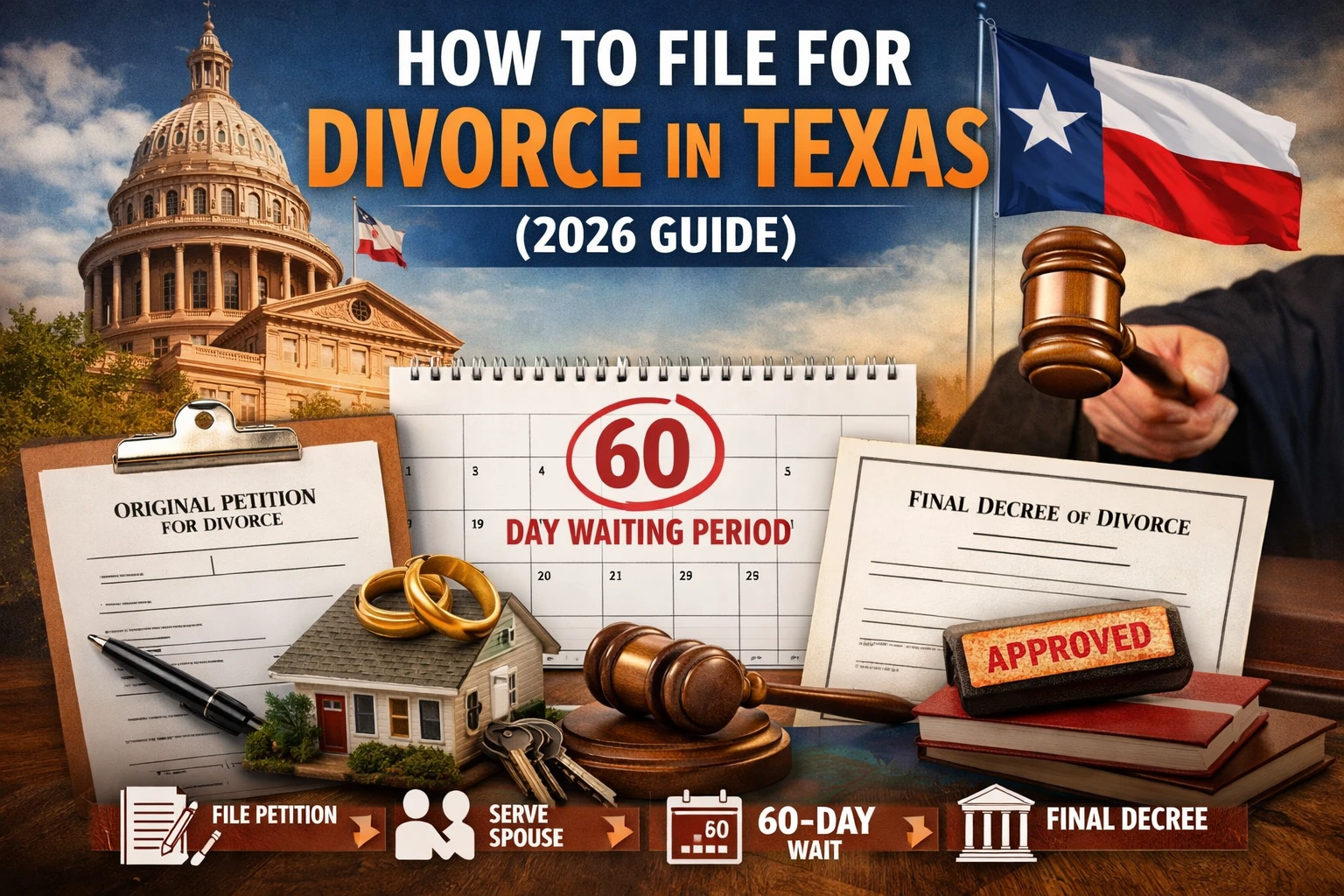
The uncontested divorce process in Texas involves clear steps. First, you and your spouse negotiate and agree on all terms, property division, debts, child custody, child support, and spousal support, then prepare a settlement agreement. Next, you file a petition for divorce along with the settlement agreement; Texas requires a minimum waiting period before finalization, and you’ll need to complete financial disclosures and file all required documents correctly. If you’re unsure which approach fits your situation, Which Plan is Right for You? can help you identify the right package and next steps.
Can You Remarry After Legal Separation
This is one of the most important practical differences between the two options. After an uncontested divorce is finalized, you can remarry immediately, your marital status is legally single.
After a legal separation, you cannot remarry because you are still legally married. To marry someone else, you must first convert the separation into a divorce or file separately, which requires additional court filings and processing time.
If you might want to remarry, an uncontested divorce is the clearer path.
If remarriage is a possibility in your future, an uncontested divorce gives you the freedom to do so without additional legal steps. A legal separation locks you into your married status until you take further action.
Uncontested Divorce Pros and Cons vs Legal Separation
Rather than a generic pros-and-cons list, match each option to the facts of your situation. The table below summarizes the structural differences; the framework that follows helps you choose.
| Factor | Uncontested Divorce | Legal Separation |
|---|---|---|
| Marriage legally ends | Yes | No |
| Can remarry | Yes, immediately after the decree | No, must convert to divorce first |
| Court approval required | Yes | Yes |
| Settles property, debts, custody | Yes | Yes |
| Timeline | Faster (statutory waiting period applies) | Similar timeline, but marriage remains intact |
| Cost | Lower (no litigation) | Similar to uncontested divorce |
| Finality | Complete | Temporary until converted to divorce |
A Decision Framework Based on Your Circumstances
Work through these questions in order. The first “yes” usually points toward your answer.
1. Do you want to remarry, or might you within the next few years?
If yes, legal separation is a dead end until you convert it.
**2.
**3.
4. Is there a realistic chance of reconciliation?
Legal separation functions as a structured trial period, with court-ordered boundaries on finances and parenting while leaving the door open.
**5.
6. Are you trying to avoid a waiting period or a court appearance?
Neither option skips court approval.
Write your answers to the six questions above before you talk to a spouse, mediator, or attorney. Knowing which benefit, belief, or deadline is driving your decision prevents you from defaulting to whichever option a friend or search result recommended.
Pros of Uncontested Divorce:
- Legally ends your marriage
- Allows immediate remarriage
- Faster and less expensive than contested divorce
- Provides closure and a fresh start
- Both spouses have input on all terms
Cons of Uncontested Divorce:
- Requires both spouses to agree on everything
- If agreement breaks down, you may need to renegotiate or litigate
- Court approval is required
Pros of Legal Separation:
- Settles all financial and custody matters
- Provides legal clarity without ending the marriage
- Useful if you need time before deciding on divorce
- Can preserve certain spousal benefits if the agreement says so
- Can be converted to divorce later
Cons of Legal Separation:
- Does not end your marriage
- Prevents remarriage without additional steps
- May complicate estate planning and inheritance
- Requires court approval like a divorce
- If circumstances change, you may still need to file for divorce
Creating a Legal Separation Agreement
If a legal separation is right for your situation, the agreement itself does the work. It covers the same categories as an uncontested divorce settlement, property division, debt allocation, child custody, child support, and spousal support, but operates against a different legal backdrop because you remain married.
What the Agreement Should Cover
A complete separation agreement typically addresses:
- Real property, who keeps the house, who pays the mortgage, how equity is split, and what happens if either spouse wants to sell.
- Bank and investment accounts, how balances are divided and whether accounts are frozen, split, or left in place.
- Retirement accounts, whether contributions stop, how the account is treated if the separation later becomes a divorce, and whether a separate order is needed to divide it.
- Debts, who pays each credit card, loan, and mortgage, and what happens if one spouse defaults.
- Personal property, vehicles, furniture, and anything of sentimental or significant value.
- Children, conservatorship, parenting time, holiday and summer schedules, and child support.
- Spousal support, amount, duration, and conditions for modification or termination.
- Benefits and estate items, health insurance, life insurance beneficiaries, retirement survivor benefits, and inheritance rights.
How the Agreement Becomes Enforceable
The agreement must be in writing, signed by both spouses, and filed with the court. Once a judge approves it, the terms become a binding court order either spouse can ask the court to enforce.
A separation agreement that leaves out an asset, a debt, or a benefit does not automatically get resolved later. Unaddressed items can become disputes, and in some cases, the omission can be read as leaving the default marital rules in place. Disclose everything before signing.
Converting a Legal Separation Into a Divorce
If you later decide to divorce, the separation does not automatically become a divorce, you still have to file. The good news is that the work you did usually carries forward.
A common pattern looks like this:
- File a petition for divorce in the same court that handled the separation, or in the county where you now meet the residency requirements.
- Reference the existing separation agreement in the petition and ask the court to incorporate its terms into the divorce decree.
- Update anything that has changed, income, custody schedules, assets acquired during the separation, or debts one spouse took on alone.
- Address items the separation did not cover, for example, the final division of a retirement account or a name change.
- Wait out the statutory waiting period that applies to divorce.
- Obtain a final decree that ends the marriage.
Whether the separation agreement is automatically binding in a later divorce, or merely persuasive, depends on state law and how it was drafted. Some states treat a properly executed separation agreement as an enforceable contract; others require the court to review it for fairness before adopting it. Understanding Starting the Divorce Process and its requirements can help you prepare for this transition if it becomes necessary.
Practical Effects on Benefits, Debt, and Estate Planning
Because you remain married during a legal separation, several default rules keep running unless the agreement changes them:
- New debt. In community property states, debt one spouse takes on during the marriage can still be treated as a marital obligation. A separation agreement can allocate responsibility between spouses, but generally does not bind a third-party creditor.
- Inheritance. Without a will or an agreement saying otherwise, a separated but still-married spouse may retain intestate inheritance rights.
- Medical decisions. A spouse may remain the default person authorized to make medical decisions in an emergency. If that is not what you want, you need separate documents.
- Retirement and pension benefits. Survivor benefits often stay with a spouse unless a specific waiver or court order changes them. Plan rules control, not the separation agreement alone.
- Taxes. Filing status is driven by marital status on December 31 of the tax year. A legal separation does not by itself make you single for tax purposes.
A legal separation agreement is not a divorce in waiting. It is a separate, enforceable contract that governs your finances and children while you stay married, and it only becomes part of a divorce if you file and the court adopts it.
Frequently Asked Questions
What is the main difference between an uncontested divorce and a legal separation?
The primary difference is marital status. An uncontested divorce ends your marriage completely, allowing you to remarry, while a legal separation preserves your married status even though you live apart and have a court order governing property, debts, and custody. Both require spouses to agree on the terms, but only divorce terminates the marriage legally.
Can you remarry after a legal separation?
No. A legal separation does not end your marriage, so you cannot legally remarry while separated. You must convert the legal separation into a divorce or file for divorce separately to marry again. This is one of the most important distinctions between the two options and affects your long-term plans.
What are the main pros and cons of an uncontested divorce versus legal separation?
An uncontested divorce offers finality, the ability to remarry, and clearer tax and estate planning. Legal separation leaves you married, complicates remarriage, and may require additional steps to convert to divorce later. Choose based on whether you want the marriage to end.
How is property and debt divided in an uncontested divorce compared to a legal separation?
In an uncontested divorce, property, debts, and marital assets are divided through a settlement agreement. The division is final and the marriage ends. In a legal separation, the division is governed by a court order, but the marriage remains intact, which may affect retirement benefits, inheritance rights, and estate planning.