Last Updated: November 5, 2026
Quick Summary
Uncontested divorce requirements in Texas center on residency, a 60-day waiting period, a petition, a waiver of service, a signed agreement, and a final decree that matches that agreement. The Texas Family Code sets the statewide rules, while county clerks may apply their own filing procedures. Confirm current requirements with your district clerk before filing.
- Texas requires six months of state residency and 90 days in the filing county before filing.
- The statutory waiting period is 60 days from the filing date, subject to listed exceptions.
- A waiver of service lets your spouse acknowledge the petition without a process server.
- The final decree must match the signed agreement exactly to avoid clerk delays.
- Child custody, support, and parenting terms require extra documentation when minor children are involved.
Table of Contents
- What Makes a Divorce Uncontested and Why Requirements Vary by State
- Texas Residency and Filing Requirements for Uncontested Divorce
- Uncontested Divorce With Children: Custody, Support and Parenting Plans
- Uncontested Divorce Forms by State and What Texas Requires You to File
- Start Your Texas Uncontested Divorce Paperwork With Ready Divorce Service
- Frequently Asked Questions
What Makes a Divorce Uncontested and Why Requirements Vary by State
An uncontested divorce is one where both spouses agree on every major issue, property division, debt, child custody, child support, and spousal support, before or during the case.
This guide focuses on Texas, where the Texas Family Code controls residency, grounds, waiting periods, and divorce procedures. Counties may handle filing and court practices differently, so treat the steps below as a general framework and confirm local district clerk requirements.
A few terms appear throughout this guide:
- Petition for divorce: The document that starts the case and states the grounds and relief you are requesting.
- Waiver of service: A signed statement in which your spouse acknowledges receiving the petition and agrees to skip formal delivery by a process server or sheriff.
- Final decree of divorce: The court order that ends the marriage and includes the terms of the divorce.
Texas is a no-fault state, so you do not have to prove your spouse caused the marriage to end. If you are still deciding how to approach the paperwork, Which Plan is Right for You? can help you compare your options before you begin.
Texas Residency and Filing Requirements for Uncontested Divorce
Before a Texas court will grant an uncontested divorce, the filing spouse must clear two residency thresholds. Texas has residency requirements for the state and for the county where the case is filed. Confirm the current requirements with the district clerk or official Texas court resources before filing. These requirements are measured from the filing date, not the date the marriage ended or the spouses separated.
Eligibility Tiers: Not Every Agreed Divorce Is the Same
A useful way to think about uncontested divorce requirements by state, and in Texas specifically, is to sort cases into tiers that determine which documents, waiting periods, and court steps apply.
- Tier 1, No minor children, limited property, both spouses sign. The petition, waiver of service, agreement, and final decree are usually the core documents. A waiting period applies, subject to the exceptions in the Texas Family Code.
- Tier 2, Minor children, but full agreement. Conservatorship, possession and access, child support, and medical support must be spelled out. Courts review child terms closely, and some counties require a parenting class certificate or additional child-related affidavits.
- Tier 3, Significant property, retirement accounts, or business interests. The agreement must describe how each asset and debt is divided. Retirement divisions may require separate orders, and business valuations can push a case out of the uncontested track.
Knowing your tier before you file helps you anticipate which forms and local requirements apply and whether a licensed Texas attorney should review your situation.
County-Level Filing Mechanics
Residency is statewide, but filing is local. Dallas County, Tarrant County, Denton County, Collin County, and Ellis County each maintain their own district clerk procedures, local rules, and document formats. Practical differences include:
- Whether the clerk accepts electronic filing for family cases and which e-filing provider is used
- Whether a proposed order must be submitted separately from the motion or decree
- Local formatting, page limit, or exhibit labeling requirements
Watch out: filing a form that is current in one county but outdated or locally modified in another is one of the most common reasons an agreed divorce stalls at the clerk’s window.
The Filing Sequence in Practice
- Confirm residency: six months in Texas and 90 days in the filing county, measured from the filing date.
- Prepare the petition and the agreement so both describe the same property, debts, and child terms.
- File the petition with the district clerk in the county where residency is met and pay the required filing fee, which varies by county.
- Arrange service. If your spouse will sign, use a waiver of service; if not, arrange service through a process server, sheriff, or another method allowed under the Texas Rules of Civil Procedure.
- Wait out the statutory 60-day waiting period from the filing date, subject to the exceptions discussed earlier.
- Submit the final decree and any required supporting documents for the judge’s review, following local submission or hearing procedures.
- Obtain a certified copy of the signed decree once the judge signs it.
What Happens When the Agreement Breaks Down
An uncontested case can become contested at several points. If your spouse refuses to sign the waiver, service becomes necessary.
Ready Divorce Service can help you organize and prepare these documents so they match what the court expects. We provide document preparation and procedural assistance. We are not a law firm, and we do not provide legal representation or legal advice.
Uncontested Divorce With Children: Custody, Support and Parenting Plans
An uncontested divorce becomes more involved when minor children are part of the case. In Texas, child custody is called conservatorship, and parents also need to address possession and access, the schedule for when each parent has the children.
When children are involved, the written agreement should address:
- Which parent has the right to make decisions about education, health care, and religion
- A parenting schedule covering holidays, school breaks, and regular weekday time
- Child support amount and payment method
Courts review these terms closely to make sure they serve the children’s best interests, so a vague or incomplete plan can cause delays. Our Texas child custody requirements page walks through these issues in more detail.
Uncontested Divorce Forms by State and What Texas Requires You to File
Every state publishes its own divorce forms, and the requirements behind those forms differ in ways that matter. A reader comparing uncontested divorce requirements by state quickly discovers that residency length, waiting periods, grounds, and whether children are involved all change which forms apply. Texas is no exception, and the checklist below reflects what Texas courts generally expect for an agreed divorce.

The Core Texas Forms for an Agreed Divorce
Most Texas uncontested divorces revolve around a small set of documents. The exact titles and any local add-ons vary by county, so confirm current versions with your district clerk or the Texas courts’ official website before filing.
- Original Petition for Divorce. Starts the case, identifies the spouses and any children, states the grounds (commonly insupportability), and lists the relief requested.
- Waiver of Service or acceptance of service. Signed by the spouse to confirm receipt of the petition and skip formal delivery by a process server or sheriff. If your spouse will not sign, service must be arranged another way.
- Agreement or settlement terms. A written document, sometimes titled a marital settlement agreement or agreed decree, that captures how property, debts, and any child-related issues will be handled.
A useful way to think about the forms is as a chain: the petition frames the case, the waiver or service proves the other spouse is on notice, the agreement records the deal, and the decree asks the judge to make the deal an order.
How County Practice Changes the Checklist
Texas family law is statewide, but filing mechanics are local. Dallas County, Tarrant County, Denton County, Collin County, and Ellis County each maintain their own district clerk procedures, local rules, and preferred document formats. Differences you may encounter include:
- Whether the clerk accepts electronic filing for family cases and which e-filing service provider is used
- Whether a proposed order must be submitted separately from the motion or decree
- Local requirements for formatting, page limits, or exhibit labeling
Watch out: filing a form that is current in one county but outdated or locally modified in another is one of the most common reasons an agreed divorce stalls at the clerk’s window.
Filing, Service, and Submission Steps in Order
A practical sequence for a Texas agreed divorce looks like this:
- Confirm residency: at least one spouse has lived in Texas for the six months before filing and in the filing county for the 90 days before filing.
- Prepare the petition and the agreement so the two documents describe the same property, debts, and child terms. Starting the Divorce Process outlines what to gather before this step.
- File the petition with the district clerk in the county where residency is met and pay the required filing fee, which varies by county.
- Arrange service. If your spouse will sign, use a waiver of service; if not, arrange service through a process server, sheriff, or another method allowed under the Texas Rules of Civil Procedure.
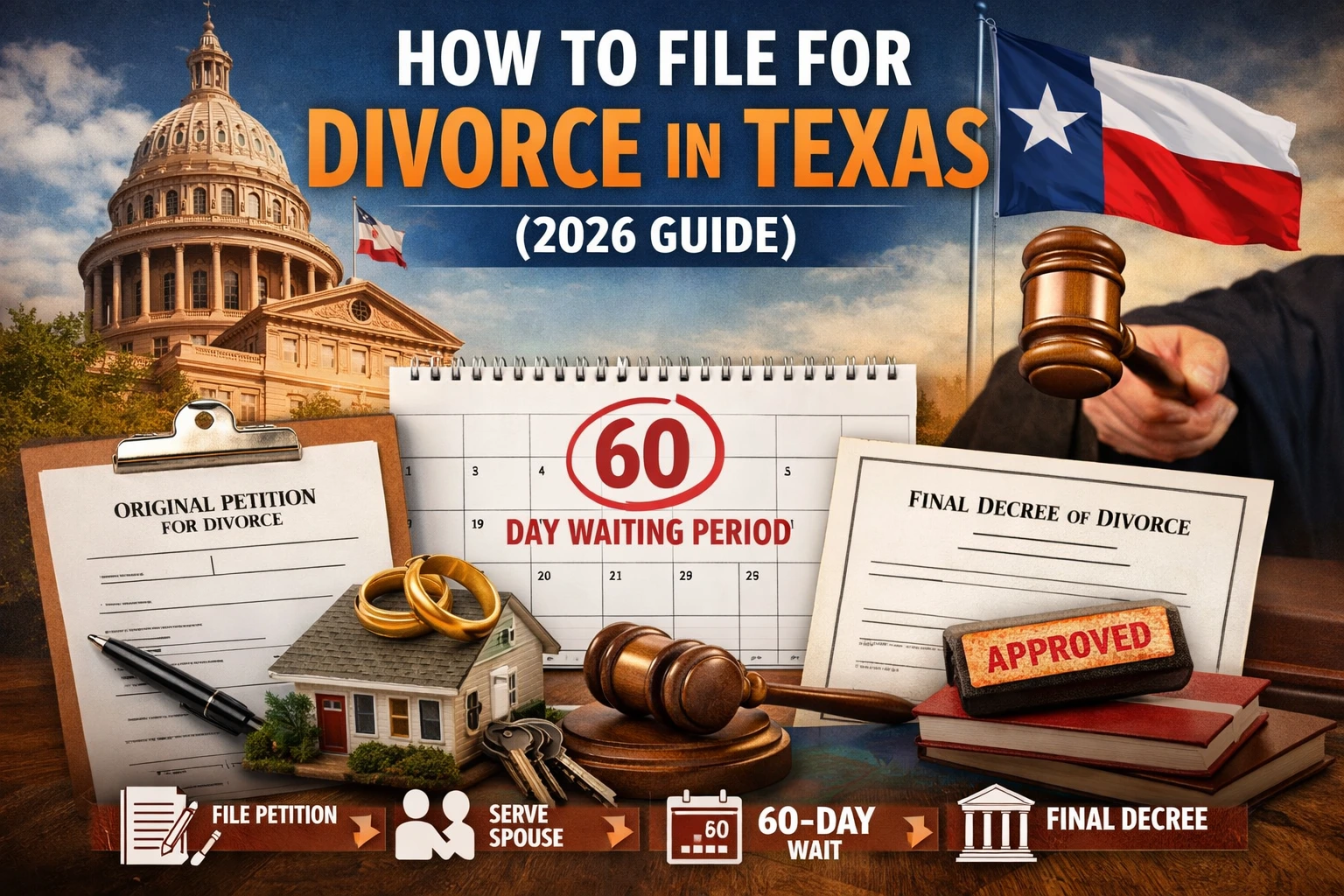
- Wait out the statutory 60-day waiting period from the filing date, subject to the exceptions discussed earlier.
- Submit the final decree and any required supporting documents for the judge’s review, following local submission or hearing procedures.
- Obtain a certified copy of the signed decree once the judge signs it.
When the Agreement Breaks Down
An uncontested case can become contested at several points, and readers should plan for that possibility. If your spouse refuses to sign the waiver, service becomes necessary. If your spouse files an answer disputing property, debt, or child terms, the case moves onto a contested track, and the court may set hearings, require discovery, or refer the parties to mediation.
Comparing Forms Across States Without Getting Lost
If you are researching uncontested divorce requirements by state, keep the comparison at the level of categories rather than form names. States differ on residency duration, waiting periods, whether a no-fault ground is available, whether separation is required, and whether simplified procedures exist for couples without children or with limited property.
The core Texas documents for an agreed divorce usually fit a short, predictable set of forms, as summarised below.
| Document | Purpose | Key note |
|---|---|---|
| Original Petition for Divorce | Starts the case and states grounds | Commonly insupportability |
| Waiver of Service | Confirms spouse received petition | Skips process server or sheriff |
| Agreement or settlement terms | Records how property, debts and child terms are handled | Must match the decree |
| Final Decree of Divorce | Court order ending the marriage | Must match the agreement exactly |
| Child-related documents | Parenting plan, support and schedules | Only when children are involved |
| Supporting filings | Cover sheets, scheduling orders, affidavits | Vary by county |
Start Your Texas Uncontested Divorce Paperwork With Ready Divorce Service
If you and your spouse have reached agreement and want the paperwork handled with care, Ready Divorce Service can help you prepare the documents for your Texas uncontested divorce.
Clients often choose us because they want a clear, affordable way to move through the process without unnecessary confusion, delays, or document errors.
Ready to begin? Complete our questionnaire to tell us about your situation and get started with your Texas uncontested divorce paperwork.
Frequently Asked Questions
Do both spouses have to agree to an uncontested divorce?
Yes, in practice an uncontested divorce depends on both spouses agreeing on the major terms, including property division, debt, and any arrangements for minor children. In Texas, a divorce is generally treated as uncontested when the spouses reach agreement and the respondent does not dispute the petition. If one spouse disagrees on key issues, the case may move toward a contested process with more court involvement. Because county practices and filing requirements can differ, it is wise to confirm current procedures with the court clerk in your county before you file.
How long does an uncontested divorce take in Texas?
Texas law generally requires a statutory waiting period from the date the petition is filed before a divorce can be finalized, with certain exceptions. Confirm the current period in the Texas Family Code. The waiting period is a minimum, not a guarantee that the divorce will be finished on any particular day. Filing, service, the court’s calendar, and the completeness of your paperwork all affect the total timeline. Reviewing your documents carefully before submitting them helps avoid delays caused by corrections or resubmissions.
Can you get an uncontested divorce if you have children?
Yes, couples with minor children can pursue an uncontested divorce when they agree on custody, possession and access, child support, and related terms. Texas courts will still review the parenting arrangements to confirm they serve the children’s best interests, and a parenting plan is typically required. Agreements involving children often involve more paperwork, so it is important to understand what the court will expect before filing.
Which forms do I need for an uncontested divorce in Texas?
The forms you need depend on your situation, including whether you have children, whether you own property or owe debts, and whether your spouse is cooperating. Common documents include the original petition, a waiver of service or proof of service, a final decree, and any agreed terms related to property and children. Forms and requirements can vary by county and change over time, so always verify the current versions with the court clerk or official Texas court resources. Ready Divorce Service can help you prepare and organize these documents, but the filing decisions remain yours.