Last Updated: November 4, 2026
Quick Summary
To prepare divorce papers in Texas yourself, start with the Original Petition for Divorce, confirm you meet Texas residency rules, and gather your marriage date, children’s information, and a list of property and debts. Then sign the petition, file it with the district clerk, and arrange service on your spouse.
- Confirm Texas residency requirements for both the state and the filing county before you begin.
- Gather your marriage date, your children’s information, and a clear list of property and debts.
- County clerks sometimes reject petitions that are missing residency details, so double-check that section.
- Texas generally requires a waiting period from the filing date before a divorce can be finalized.
- Have your spouse sign a waiver of service, or arrange formal service of the petition.
Table of Contents
- Texas Original Petition for Divorce Form: What You Need to Fill Out
- Serving Your Spouse and Filing: How the Uncontested Divorce Process Works in Texas
- Booking Your Document Preparation Help With Ready Divorce Service
- Frequently Asked Questions
Texas Original Petition for Divorce Form: What You Need to Fill Out
Preparing your own divorce papers in Texas starts with the Original Petition for Divorce, the form that asks the court to end your marriage. Ready Divorce Service helps Texans prepare this paperwork accurately.

First, confirm you meet Texas residency rules, which generally require a spouse to have lived in Texas for a set period and in the filing county for a set period. Check the current requirements in the Texas Family Code or with your county district clerk. Gather your marriage date, your children’s information, and a clear list of your property and debts.
County clerks sometimes reject petitions missing residency details, so double-check that section before filing. If you are unsure which plan fits your paperwork needs, Which Plan is Right for You? can help you compare options before you begin.
Serving Your Spouse and Filing: How the Uncontested Divorce Process Works in Texas
An uncontested divorce means you and your spouse agree on property, debts, and children. Texas law generally requires a waiting period from the filing date before finalization, with limited exceptions.
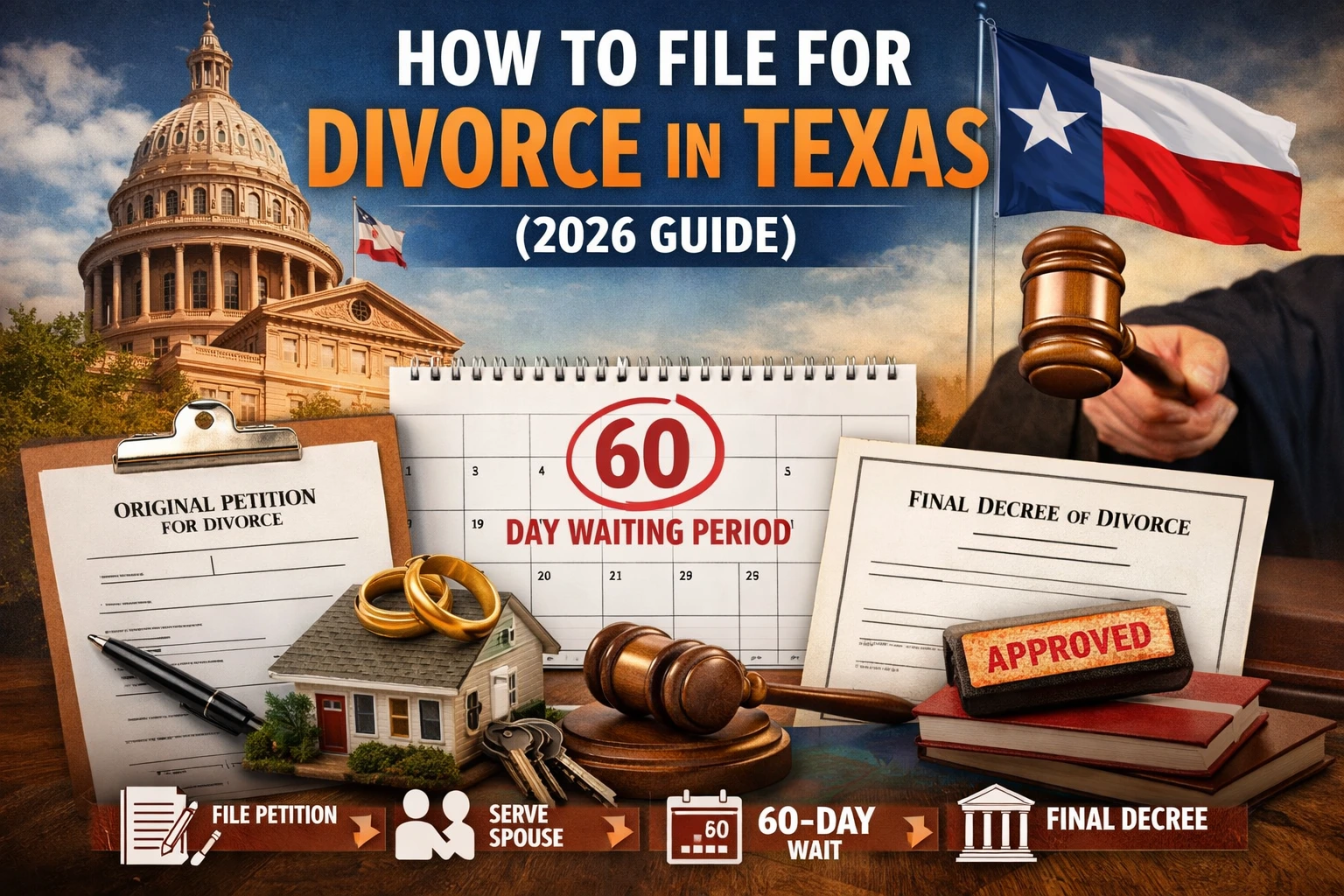
- Sign the petition and file it with the district clerk
- Have your spouse sign a waiver of service, or arrange formal service
- Submit your final decree and supporting documents for the judge
Final decrees are not automatic, and each county handles filings a little differently, so check local requirements before you submit. Learn more about finalizing an uncontested divorce without court in Texas.
The core filing steps for an uncontested Texas divorce are summarized below. For county-level filing steps, timelines, and common uncontested divorce errors, see county divorce filing procedures.
| Step | What to do | Note |
|---|---|---|
| Sign and file | Sign the petition and file it with the district clerk | Filed with the district clerk |
| Serve or waive | Have your spouse sign a waiver of service, or arrange formal service | Waiver or formal service |
| Submit decree | Submit your final decree and supporting documents for the judge | Final decrees are not automatic |
| Waiting period | Texas generally requires a waiting period from the filing date | Limited exceptions apply |
Booking Your Document Preparation Help With Ready Divorce Service
If you would rather have experienced help with the paperwork, Ready Divorce Service can help prepare your documents and guide you through filing, with clear communication and convenient electronic signatures.
Start by reviewing which uncontested divorce package fits your situation. Ready Divorce Service is a document preparation and procedural assistance business, not a law firm, and we cannot give individualized legal advice. Contact us to get started.
Frequently Asked Questions
Can I file divorce papers myself in Texas?
Yes. Texas allows people to represent themselves in a divorce, which is called filing pro se. You prepare the Original Petition for Divorce, file it with the district clerk in the county where you or your spouse meets the residency requirement, and follow the court’s procedures for serving your spouse. Because county procedures, filing requirements and court practices can differ, check your county district clerk’s website before you file. Ready Divorce Service provides document preparation and procedural assistance, which is not the same as legal representation by a licensed Texas attorney.
How long is the mandatory waiting period for a divorce in Texas?
Texas generally requires a waiting period between the date the petition is filed and the date a divorce can be finalized. Check the current Texas Family Code requirements for the exact timeframe. The court can grant a divorce sooner in certain circumstances covered by the Texas Family Code, but the 60-day period is not a guarantee that your case will finish in that time. An uncontested divorce that is properly prepared and served usually moves faster than a contested one, though the exact timeline depends on your county’s court schedule.
Do I need to have my divorce papers notarized in Texas?
Some divorce documents, such as sworn statements and certain affidavits, must be signed before a notary public or under oath, depending on the form. Many forms, including waivers of service, need your signature to be valid. Online notarization is available in Texas for some documents, but whether a specific form must be notarized depends on that form and your county’s requirements. Confirm the notarization requirement for each document before you sign it.