Last Updated: November 27, 2026
Quick Summary
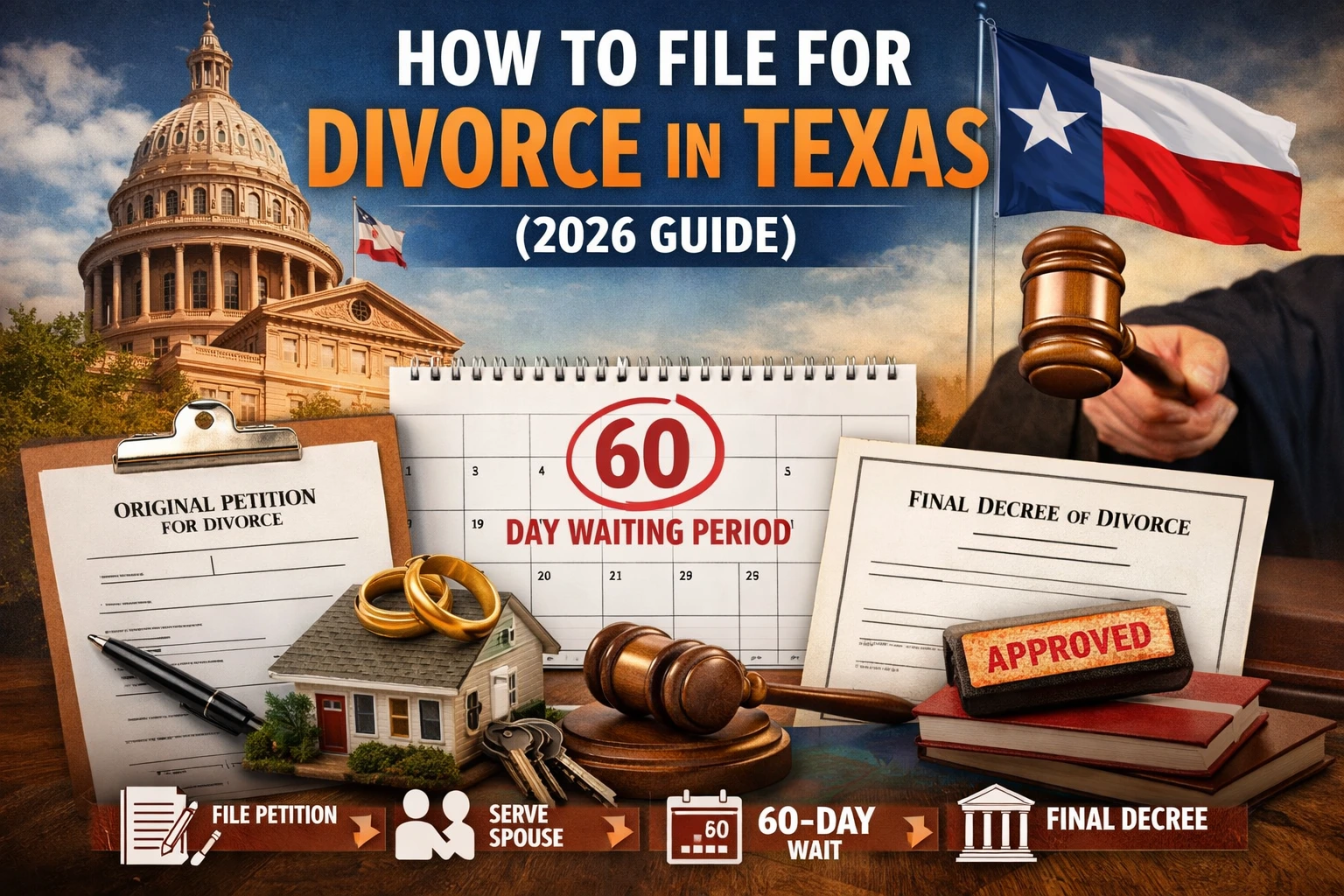
To get a default divorce judgment in Texas, you file an Original Petition for Divorce, serve your spouse properly, wait for the response deadline, request entry of default if no answer is filed, and then submit the final judgment packet to the court. Each county may handle these steps differently, so confirm local practices with the district clerk.
- Confirm you meet Texas residency rules before you file your petition.
- Proper service of process is essential, since a default judgment can be challenged if service was defective.
- The answer is generally due by 10:00 a.m. on the Monday following 20 days after service.
- File a request for entry of default only if your spouse does not file an answer.
- Keep copies of everything you file and every notice you receive throughout the process.
Table of Contents
- How Do You File for a Default Divorce Judgment in Texas?
- Texas Default Divorce Process and Filing Checklist
- Default Divorce vs Uncontested Divorce and Your Next Step
- Frequently Asked Questions
How Do You File for a Default Divorce Judgment in Texas?
A default divorce judgment happens when your spouse is properly served but does not file a response in time. To understand what a default judgment means for property and custody, see our dedicated explainer. You can then ask the court to grant the divorce without a contested hearing. Ready Divorce Service helps Texas clients prepare the paperwork for this process, though the court decides whether to grant it.
Here is the general sequence most people follow:
- Confirm you meet Texas residency rules. Check with the official Texas courts resources before you file.
- File your Original Petition for Divorce with the district clerk in your county.
- Serve your spouse with the petition and citation. Proper service of process is essential; a default judgment can be challenged if service was defective.
- Wait for the response deadline. Under Texas Rules of Civil Procedure, the answer is generally due by 10:00 a.m. on the Monday following 20 days after service. Confirm the exact date with the court.
- Request entry of default if no answer is filed.
- Prepare and file the final judgment packet. This typically includes the final decree and any property or custody provisions.
Each county may handle these steps differently, so verify local practices with the district clerk. For a full walkthrough of filing uncontested divorce paperwork in Texas, you can review each stage from eligibility through finalizing your decree.
Texas Default Divorce Process and Filing Checklist
Use this checklist to stay organized:
- Petition for divorce filed with the district clerk
- Citation issued and served on your spouse
- Proof of service filed with the court
- Response deadline calendared
- Request for entry of default prepared and filed
- Final decree and supporting documents prepared
- Final judgment packet submitted for court review
Keep copies of everything you file and every notice you receive. To see the steps that follow service, waiting periods, and final paperwork, review what to expect after you file.

The core filing steps are easier to follow when you see them side by side.
| Step | What to do | Time or frequency |
|---|---|---|
| Confirm residency | Check Texas residency rules with official courts resources | Before you file |
| File petition | File Original Petition for Divorce with the district clerk | At filing |
| Serve spouse | Serve petition and citation; proper service is essential | After filing |
| Response deadline | Answer generally due by 10:00 a.m. Monday after 20 days of service | Confirm exact date with court |
| Request default | File request for entry of default if no answer | If no answer is filed |
| Final judgment packet | Prepare and file final decree and related provisions | After default is entered |
Default Divorce vs Uncontested Divorce and Your Next Step
A default divorce happens when your spouse does not respond. An uncontested divorce happens when both spouses agree on the terms. For an overview of a fast, easy, and affordable uncontested divorce process, see what the uncontested route involves. If you are in Bexar County and want to see how an agreed divorce is handled locally, that page explains the process there. If you are unsure which applies to you, Ready Divorce Service can help you review your options, and you can start the process through Starting the Divorce Process.
Frequently Asked Questions
What is a default divorce?
A default divorce happens when the spouse who was served with divorce papers does not file a timely answer with the court. In Texas, the answer deadline is set by the Texas Rules of Civil Procedure, so confirm the exact date with the court clerk. When the other spouse does not respond, the filing spouse may ask the court to enter a default and proceed to a final judgment. Procedures and timing can vary by county, so confirm the current requirements with the court clerk where your case is filed. Ready Divorce Service provides document preparation and procedural assistance, not legal representation.
Do I need a hearing for a default divorce judgment?
Many Texas default divorces can be finalized without a contested hearing, but some courts require a short prove-up hearing or a judge’s review before signing the final decree. Whether a hearing is needed depends on the court and the facts of your case. Ask the court clerk in your county what the local practice is. Having your default judgment packet organized in advance can help the process move more smoothly. Ready Divorce Service can help you assemble the documents, but the court makes the final decision on any hearing requirements.
What if the other spouse was not properly served?
Proper service of process matters. If the other spouse was not properly served, or if the proof of service is incomplete, the court may decline to enter a default judgment. Texas allows certain methods of service and waivers of service, and the rules can be technical. Before you request a default, confirm that the proof of service is accurate and complete. If you are unsure whether service was valid, consider speaking with a licensed Texas attorney. Ready Divorce Service can help you understand the documents involved but does not provide legal advice.