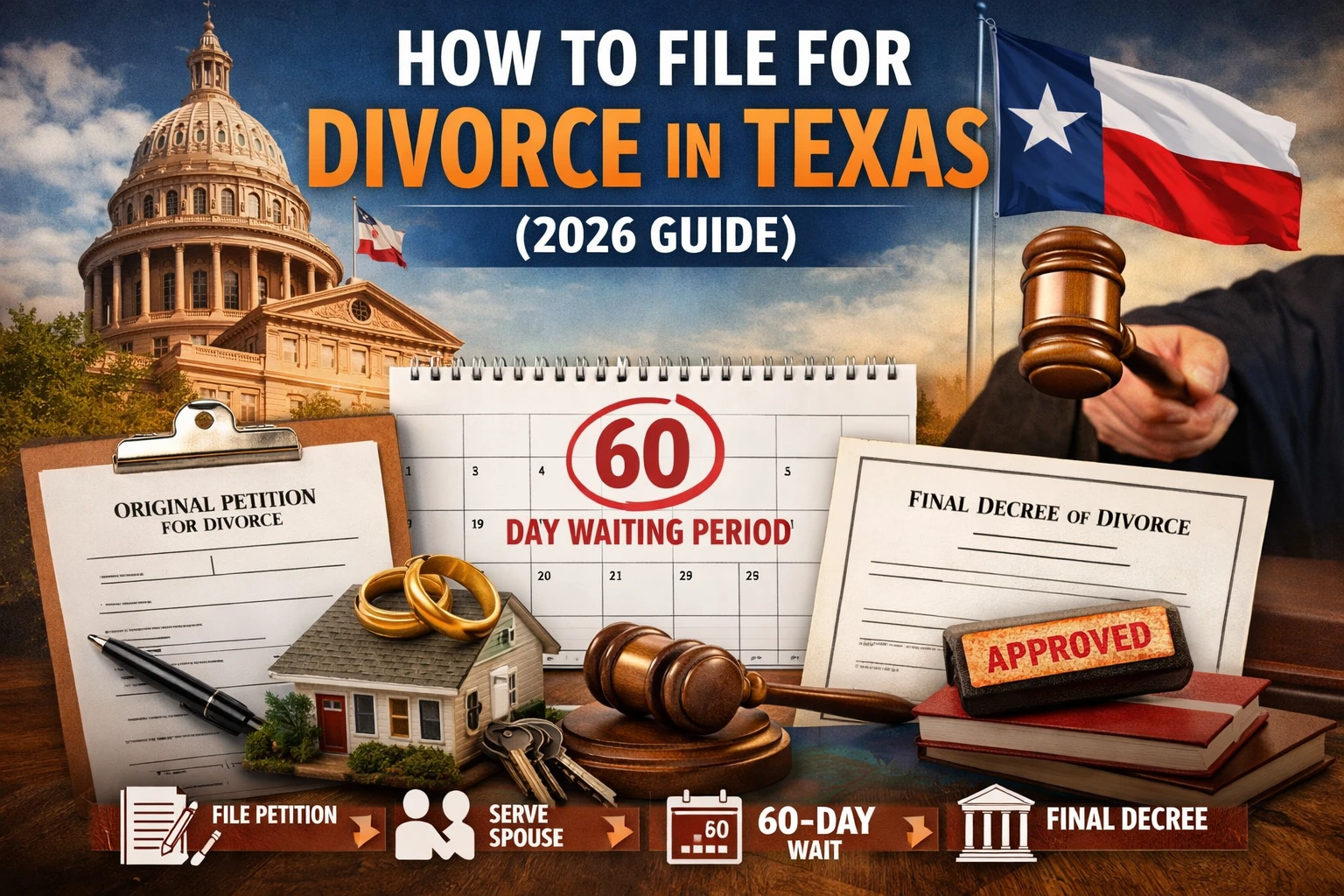
Filing the Original Petition for Divorce can feel like the biggest hurdle, but for most Texas divorces, it is really the start of the process. If you are trying to understand the steps after filing divorce Texas, the key is knowing what happens next, what deadlines matter, and where uncontested cases can stay simple.
The good news is that many divorces in Texas move forward in a predictable way, especially when both spouses agree on property division, debts, children, and support. The challenge is not always conflict. Often, it is paperwork, timing, and making sure each required step is handled correctly.
Steps After Filing Divorce Texas: What Usually Happens Next
Once your case is filed, the court assigns a cause number and court information. Keep those details in a safe place because they will appear on nearly every document moving forward. You will also need filed copies of your petition for service, waiver paperwork, and final documents later in the case.
After filing, the next issue is notice to the other spouse. Texas courts require your spouse to be formally notified of the divorce unless they sign a valid waiver. In an agreed divorce, many couples use a Waiver of Service to avoid formal service by constable, sheriff, or private process server. That can save time, reduce stress, and keep the process more cooperative. Still, a waiver has to be signed correctly and at the right time, so this is not a detail to guess on.
If your spouse will not sign a waiver, then formal service is usually the next step. Once served, your spouse has a deadline to file an Answer. Even in a case that is expected to stay uncontested, this deadline matters because it affects how the case proceeds and helps protect everyone involved.
Waiting period and temporary practical issues
Texas has a mandatory 60-day waiting period in most divorce cases. That waiting period usually starts the day after the petition is filed. Even when everything is agreed, the court generally cannot finalize the divorce until that period has passed.
For many people, this is the part that feels slow. In reality, the waiting period can be used productively. It gives you time to finish the Final Decree of Divorce, gather signatures, confirm parenting terms, and make sure property and debt language is complete.
If you and your spouse are living separately, sharing bills differently, or handling the children under a new routine, the waiting period may also reveal issues that need to be clarified in writing. For example, couples often realize they verbally agreed on who keeps a car or who pays a credit card, but the agreement is too vague for a court order. Texas divorce paperwork needs specifics.
Some cases need temporary orders, but many uncontested divorces do not. It depends on the situation. If one spouse needs temporary rules about possession of the house, parenting time, or payment of bills while the divorce is pending, the case can become more involved. If both spouses are cooperating and already following a workable arrangement, temporary hearings may not be necessary.
Service, waiver, and answer requirements
One of the most important steps after filing is making sure the respondent is legally brought into the case. Texas courts do not treat informal notice as enough. Saying, “My spouse knows I filed,” is not the same as proper service or waiver.
A Waiver of Service is common in uncontested divorce cases because it allows the respondent to acknowledge the case without being formally served at home or work. But Texas courts are particular about form and timing. If a waiver is signed too early or does not contain the correct information, it may not do the job you expected.
An Answer is also often filed by the respondent, even in agreed cases. This can help protect the respondent and confirm participation in the case. In practical terms, it keeps the process cleaner and reduces the risk of default-related complications.
If your spouse does not cooperate, the next steps may look very different. A case that starts as uncontested can become contested if there is disagreement over children, support, property, or signing final papers. That is why it helps to prepare the case correctly from the beginning instead of assuming agreement will carry the whole process.
Drafting the final decree
The Final Decree of Divorce is the document that tells the court exactly what orders you want. This is where many people underestimate the process. Filing starts the case, but the decree finishes it.
In a straightforward divorce with no children, the decree should clearly divide assets and debts, state name change terms if requested, and address any final responsibilities between spouses. If there are children, the decree becomes more detailed because it usually includes conservatorship, possession and access, child support, medical support, tax-related issues, and other parenting provisions required under Texas law.
This is not the place for vague wording. If the decree says one spouse keeps the vehicle, it should identify the vehicle clearly. If one spouse is responsible for a debt, it should be described accurately. If retirement accounts are involved, extra documents may be required beyond the decree itself.
That is one reason many Texas couples seek procedural help for uncontested divorce paperwork. The agreement may be simple, but the documents still need to be complete and court-ready.
Steps after filing divorce Texas when children are involved
When children are part of the case, the steps after filing divorce Texas include more than waiting and signing. Courts want to see that the proposed orders serve the child’s best interest and meet Texas requirements.
Parents usually need to settle who will make decisions for the child, where the child will primarily live, how the possession schedule will work, and how child support and medical support will be handled. Some counties may also require a parenting class in certain situations, so local procedure matters.
Even when parents get along, details matter. Holiday schedules, exchange times, school issues, and health insurance responsibilities can become future problems if they are not written clearly. The more specific the decree, the less likely there will be confusion later.
If you are filing in counties such as Dallas, Tarrant, Denton, Collin, Harris, Bexar, or Ellis, local court practices may affect forms, prove-up requirements, or scheduling. The underlying Texas law is statewide, but local procedure can still shape the final steps.
Getting the case ready for finalization
Once the waiting period has passed and all documents are completed, the case needs to be set up for finalization. In many uncontested divorces, this means preparing the signed decree, any supporting forms required by the county, and the final hearing or prove-up paperwork.
A prove-up is typically a short court appearance where the judge reviews the case and asks limited questions before signing the divorce. In some courts, procedures are straightforward. In others, there may be specific scheduling rules, submission requirements, or standing orders to follow. That is another area where people run into delays – not because the divorce is disputed, but because the final package is incomplete.
Before finalization, review every document carefully. Names should match exactly. Dates should be correct. Property descriptions should be clear. If one spouse is changing their name, the decree should reflect that properly. Small mistakes can lead to rejected paperwork or delays in getting signed orders.
After the judge signs the divorce
The divorce is not fully practical just because the judge signed the decree. After signing, you need file-stamped copies of the final order for your records. Those copies are often needed to change your name on identification, update bank accounts, refinance or transfer property, adjust insurance, or address school and medical records for children.
You may also need to follow through on items the decree requires, such as transferring a vehicle title, closing joint accounts, dividing certain balances, or updating beneficiaries where appropriate. If child support was ordered, wage withholding paperwork may also be part of the post-divorce process.
This is where organized follow-through matters. A divorce decree creates the legal framework, but the real-life cleanup still has to happen. The smoother the paperwork, the easier those final transitions usually are.
When getting help makes sense
Uncontested divorce is usually the most affordable and efficient path when both spouses agree, but simple does not mean automatic. The biggest problems often come from missed procedural steps, incomplete forms, and final decrees that do not say enough.
If you want a lower-conflict process without paying for full litigation, practical document support can make a real difference. Ready Divorce Service helps Texans move through agreed divorce paperwork with more clarity, less confusion, and a better chance of getting the case completed without avoidable setbacks.
If you have already filed, this is a good time to pause, get organized, and make sure the rest of the case is headed in the right direction. A calm, accurate next step now can save you weeks of frustration later.
📞 Get Started Today – Your Peaceful Divorce Is Just a Click Away
When you’re ready to move on, we’re ready to help.
📲 Call us now at (800) 432-0018
🖥️ Start your divorce online today