Table of Contents
- Divorce Mediation vs Litigation in Texas: What’s the Difference?
- The Divorce Mediation Process in Texas: Step by Step
- Texas Divorce Mediation Cost: What to Expect
- Do You Need a Lawyer for Divorce Mediation in Texas?
- Your Texas Divorce Mediation Agreement: What It Covers
- When Mediation Fails: What Happens Next
- Which Process Fits Your Situation? A Decision Framework
- Frequently Asked Questions
Last Updated: October 21, 2026
Divorce Mediation vs Litigation in Texas: What’s the Difference?
Divorce mediation vs litigation in Texas comes down to one question: who decides? In mediation, you and your spouse negotiate a settlement with a neutral third party and keep control of the outcome. In litigation, a judge makes the final call on property division, child custody, and support.
That distinction drives everything else: cost, speed, privacy, and stress. At Ready Divorce Service, we work with couples who have reached an agreement and want the filing handled correctly. Here is how to choose between them, and where each one breaks down.
Divorce mediation is a structured negotiation process in which a neutral third party helps both spouses reach a voluntary settlement without a trial. Litigation is the court process where a judge resolves disputes the couple cannot settle themselves.
Mediation only works if both spouses negotiate in good faith. If one refuses to disclose finances or compromise, litigation exists precisely for that situation.
How Divorce Mediation Works
Mediation is a series of sessions, not a courtroom event. A trained mediator, often a family law attorney or a licensed counselor, meets with both spouses and guides them through the disputed issues: property division, child custody, parenting plans, child support, and spousal support.
The mediator does not represent either side and cannot issue orders. Their job is to keep negotiation moving and help both parties find compromise. Sessions typically run a few hours each, and many couples settle in one to three sessions. Anything you agree to is written into a mediated agreement and signed.
The mediator’s neutral role is the feature, not a flaw. Nobody is advocating for you in the room, which is why many people bring their own attorney for advice outside sessions.
How Divorce Litigation Works
Litigation is the traditional court process, and it starts with a petition filed by one spouse. From there, the case moves through discovery, where both sides exchange financial disclosure, evidence, and documents under oath.
Your family law attorney handles negotiation and filings on your behalf. If the parties cannot settle, the case proceeds toward trial, where a judge reviews the evidence and issues a court order covering property division, custody, and support.
Litigation offers legal protection that mediation cannot: subpoenas, court-enforced deadlines, and a binding decision when the other side refuses to negotiate. The trade-off is time, expense, and a loss of control over the outcome.
The Divorce Mediation Process in Texas: Step by Step

The divorce mediation process in Texas follows a predictable arc, but the details matter because mediation is not a separate legal proceeding. It is a step inside a divorce case, and what you produce there has to be written and approved correctly to be enforceable.
- Choose a mediator. Look for someone with family law experience and familiarity with your county’s courts. Ask whether the mediator is a licensed attorney, a licensed counselor, or both, and whether they will draft the agreement or expect the parties to do it.
- Prepare your financial disclosure. Both spouses gather income records, account statements, debts, and property documentation. In a Texas divorce, this often overlaps with the required disclosure process, so organize it early.
- Attend the first session. The mediator explains ground rules, confirms confidentiality, and identifies the disputed issues. If attorneys attend, they advise their clients but do not negotiate directly with each other in the mediator’s presence.
- Negotiate issue by issue. Property division, custody, and support get worked through separately. The mediator may use joint sessions, separate caucuses, or a mix of both.
- Draft the mediated settlement agreement. In Texas, a mediated settlement agreement (MSA) is a written record of the terms you reached. It is signed by the parties and the mediator. Once signed, it is generally binding and enforceable, and a court will usually approve it unless it violates the law or public policy. That is why you should never sign an MSA without reading every term and, where appropriate, having an attorney review it first.
- File with the court. The MSA is presented to the court for approval and becomes part of the final divorce decree. A mediated settlement becomes enforceable once the court approves it.
Where mediation fits in the Texas timeline
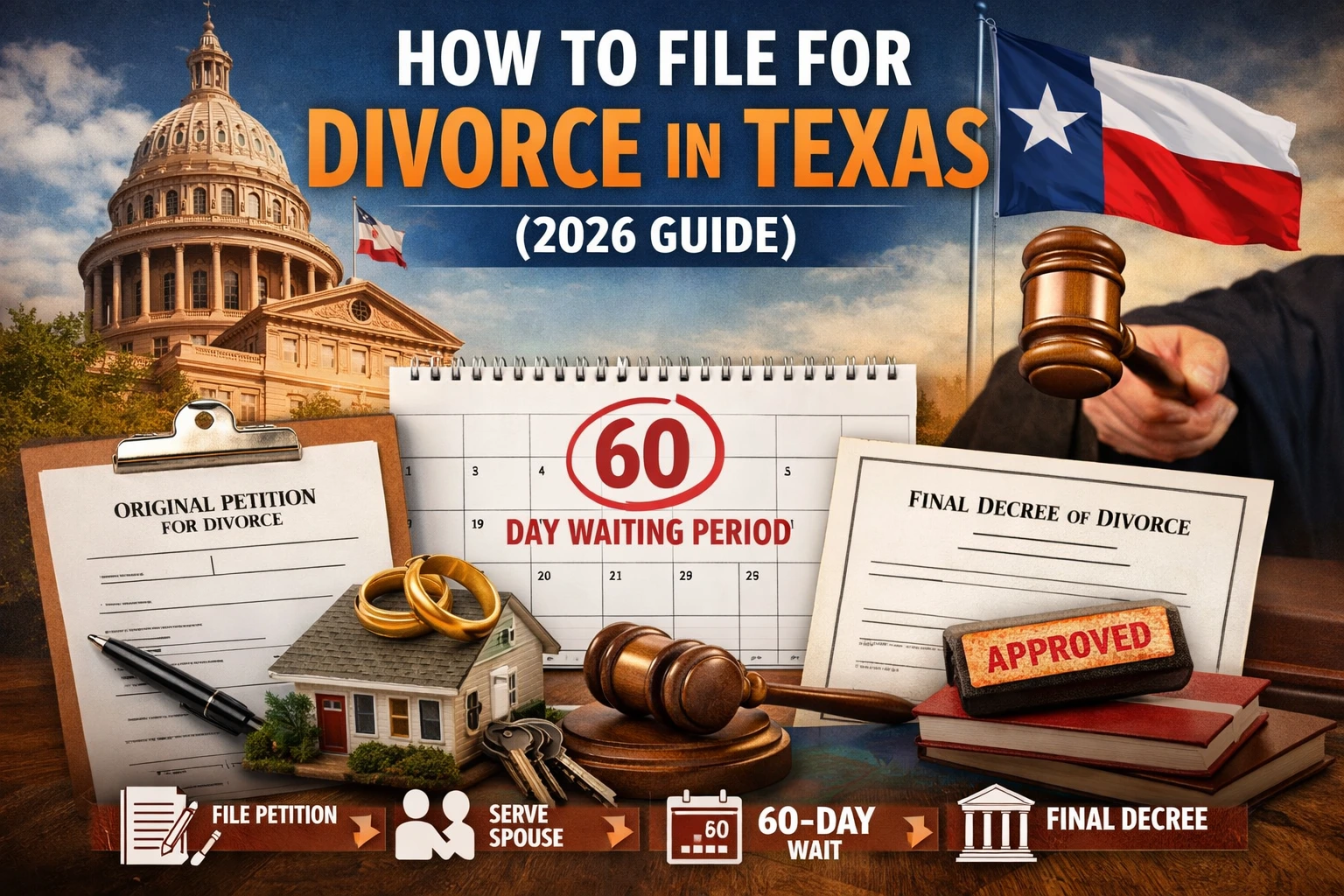
Texas requires a waiting period before a divorce can be finalized. Many couples mediate first and then file an uncontested case, while others file first and mediate while the case is pending. If you are unsure how filing and mediation fit together, our guide to starting the divorce process walks through the requirements.
What happens if mediation fails
If mediation fails, the case moves into the litigation track. Discovery compels financial disclosure, the court sets deadlines, and a judge eventually decides the unresolved issues.
A mediated settlement agreement signed under pressure or without full financial disclosure can lock in an unfair result. Get disclosure first, and do not sign an MSA you do not understand.
Texas Divorce Mediation Cost: What to Expect
Texas divorce mediation cost depends on three variables: the mediator’s hourly rate, the number of sessions, and whether attorneys attend. Mediators generally bill by the hour, and many charge a session minimum.
Because pricing varies by county and by mediator experience, treat any figure as an estimate and confirm it in writing before you book.
What drives mediation cost up or down
- Number of disputed issues. A couple who agrees on property division but not on a parenting schedule may need one session; a couple disputing a business valuation may need several.
- Attorney attendance. Having counsel in the room raises the total because you pay two professionals, but it can shorten the process and reduce the risk of a bad agreement.
- Financial complexity. Retirement accounts, business interests, and separate-property claims require more documentation and sometimes a financial expert.
- Emotional intensity. High-conflict cases take longer, and the mediator may recommend separate caucuses or shuttle negotiation.
How litigation costs compare
Litigation carries the same attorney time plus discovery, motions, expert fees, and trial preparation. Discovery alone can involve depositions, subpoenas, and document review, and each of those is billed by the hour. Trial adds preparation and court time.
The savings are not automatic. If mediation fails, you may pay for the mediator and then pay again for litigation, so the decision framework below matters as much as the price sheet.
Ask each mediator for a written estimate that separates the mediator’s fee from your attorney’s fee. The mediator’s rate is only part of your total cost.
We do not publish fixed prices for our document preparation services because cost depends on your situation. Request a quote through our questionnaire and you will get a clear number before you commit.
Do You Need a Lawyer for Divorce Mediation in Texas?
Do you need a lawyer for divorce mediation in Texas? Not legally, but the answer depends on complexity. Mediation itself does not require attorney representation, and many couples mediate without one.
Hire an attorney for mediation if you have significant assets, a business, retirement accounts, or a contested custody question. An attorney reviews the mediated agreement before you sign and flags terms that could hurt you later. That review is cheaper than litigating a bad agreement afterward.
For couples who have already settled everything and simply need compliant paperwork, full legal representation is often unnecessary. Ready Divorce Service prepares uncontested divorce documents in line with Texas requirements, which is a different service from legal advice.
Your Texas Divorce Mediation Agreement: What It Covers
A Texas divorce mediation agreement is the written record of everything you settled. A complete agreement typically addresses:
- Property division, including the community property split and separate property claims
- Child custody and parenting plans, covering conservatorship, possession schedules, and decision-making
- Child support, including amounts and payment terms
- Spousal support, if either spouse requests it
- Debt allocation, naming who pays which shared debts
Vague terms cause problems later. “We’ll split the house” is not an agreement; “Spouse A keeps the house and refinances within 90 days” is. Write every term so a stranger could enforce it without asking questions.
Once signed and approved by the court, the mediated agreement becomes enforceable. That is the whole point: a clear document you both understood before signing.
When Mediation Fails: What Happens Next
Mediation fails when one spouse refuses to negotiate, hides financial disclosure, or the power imbalance is too severe for fair bargaining. Safety concerns also end mediation: if there is a history of coercion or domestic violence, negotiation between the parties is not appropriate.
When mediation fails, the case moves into the litigation track. Discovery compels financial disclosure, the court sets deadlines, and a judge eventually decides the unresolved issues. That is slower and more expensive, but it exists to protect the party who was being stonewalled.
Do not enter mediation to appease a spouse who is hiding assets. A mediated agreement signed under pressure or without full financial disclosure can lock in an unfair result. Get disclosure first.
Which Process Fits Your Situation? A Decision Framework
Use this framework to sort your situation. The honest answer for most couples is a hybrid: mediate the terms, then file.
| Your Situation | Recommended Path | Why |
|---|---|---|
| Agreed on all terms, no disputes | Uncontested filing | Fastest, lowest cost, no mediator needed |
| A few disagreements, both willing to compromise | Mediation, then uncontested filing | Saves attorney fees and keeps control |
| Hidden assets or refused financial disclosure | Litigation | Discovery and court orders compel disclosure |
| Safety concerns or coercion | Litigation with attorney representation | Protects the weaker party |
| Complex finances: business, pensions, property | Mediation plus attorney review | Neutral guidance with legal protection |
Ask yourself two questions: can we both negotiate honestly, and is anyone unsafe? Two yes answers point to mediation. Any no points to litigation.
Even in an uncontested divorce, have the final agreement reviewed before signing. A short review costs far less than reopening a settlement later.
The hardest part of divorce is rarely the paperwork. It is deciding whether you can negotiate with your spouse at all. If you can, mediation and an uncontested filing will save you time, money, and stress. If you cannot, litigation protects you.
Ready Divorce Service helps Texas couples who have reached agreement complete the uncontested divorce process with accurate, compliant document preparation, step-by-step guidance, and support in English and Spanish. Start with our questionnaire to see which plan is right for you, and get a clear answer on cost before you commit.
Frequently Asked Questions
Is mediation required before a divorce trial in Texas?
Texas courts often order mediation before a contested divorce goes to trial, but it is not automatically required in every case. Many judges include mediation in their scheduling orders to encourage settlement. If you and your spouse have already reached an agreement on all issues, you may be able to proceed with an uncontested divorce without a court-ordered mediation session. Check with the court in your county or consult a family law attorney to confirm local requirements.
How much does divorce mediation cost in Texas?
Divorce mediation cost in Texas varies based on the mediator’s hourly rate, the complexity of your case, and how many sessions you need. Mediators typically charge by the hour, and some offer half-day or full-day packages. Compared with litigation, mediation usually costs less because it avoids multiple court appearances and extended attorney preparation. For an uncontested divorce, document preparation services can be an affordable alternative. Request a quote from a provider to get exact pricing for your situation.
What happens if divorce mediation does not result in an agreement?
If mediation does not produce a settlement, the mediator may issue a report stating that no agreement was reached. Your case then moves back to the court process, where a judge will ultimately decide the disputed issues. You may also try another mediation session later or negotiate through attorneys. In Texas, some courts require additional mediation before allowing a trial. Keep in mind that litigation costs and timelines can increase significantly after a failed mediation.
Do you need a lawyer for divorce mediation in Texas?
You are not legally required to have a lawyer for divorce mediation in Texas, but it can be wise to consult one for legal advice, especially if you have complex assets, debts, or custody issues. The mediator cannot give legal advice to either party. If you choose to mediate without attorneys, make sure you fully understand the proposed agreement before signing. For uncontested divorces, document preparation services can help ensure your paperwork meets Texas court requirements without the cost of full representation.