When children are involved, divorce paperwork stops feeling like paperwork. It starts feeling like decisions that affect school pickups, holidays, health insurance, and where your child sleeps on a Tuesday night. This guide to filing divorce with children is built for Texas parents who want a clear path forward, especially when both spouses are trying to keep the process cooperative and avoid unnecessary conflict.
If your divorce is uncontested, that usually means you and your spouse agree on the major issues, including property, parenting arrangements, and child support terms that meet Texas requirements. That agreement can save time, money, and stress. It does not mean the court will skip over the details. In cases involving children, Texas courts expect careful, complete paperwork and parenting terms that protect the child’s best interests.
What makes divorce with children different in Texas
A divorce without children is mostly about ending the marriage and dividing property and debts. A divorce with children adds another layer – the court must address conservatorship, possession and access, child support, medical support, and other parenting-related terms.
In Texas, custody language often looks different from what people expect. Instead of simply asking who gets custody, the court usually addresses conservatorship. This covers parental rights and duties. Possession and access refers to the parenting schedule. If you are filing an agreed divorce, you and your spouse still need to present terms the court can approve.
This is where many people get stuck. They may agree in general, but the court needs specifics. Saying you will “work it out” is rarely enough. Your paperwork needs to show how decisions will be made and how parenting time will work after the divorce is final.
Guide to filing divorce with children: start with eligibility
Before filing, make sure you meet Texas residency rules. Generally, one spouse must have lived in Texas for at least six months and in the county of filing for at least 90 days. If you live in counties such as Tarrant, Dallas, Denton, Collin, Ellis, Bexar, or Harris, local filing procedures may vary slightly, but the state residency rules still apply.
You also need to confirm that your case is appropriate for an uncontested process. That usually means both spouses are willing to sign, disclose information, and agree on the child-related terms. If one parent plans to fight over custody, support, or residence restrictions, the case may not stay uncontested.
There can be gray areas. Some couples agree on everything except one schedule detail or who will claim a child on taxes. Those issues may still be resolved by agreement, but they should be settled before final documents are prepared. Small disagreements tend to become expensive once the case turns contested.
The core documents you will need
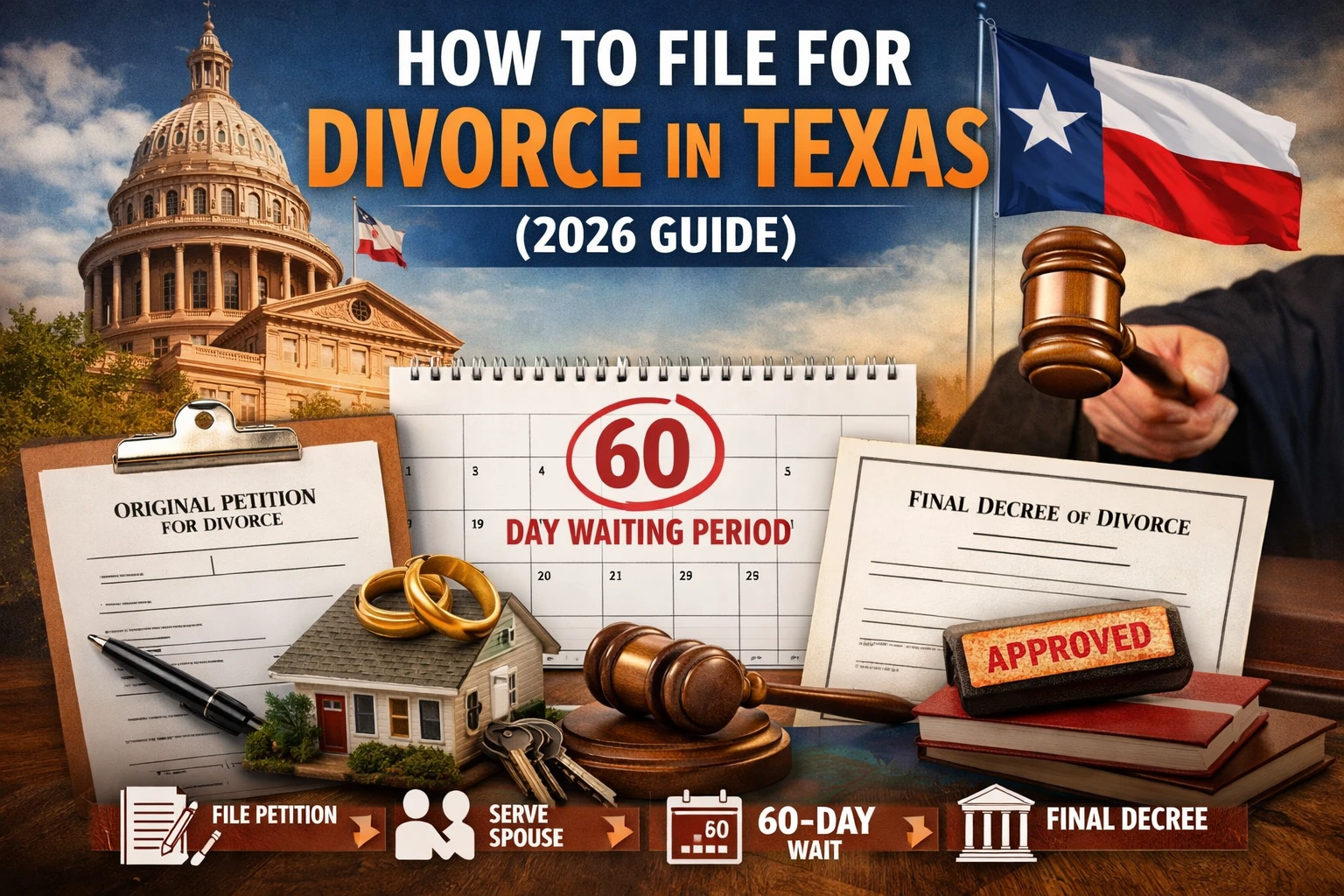
Every Texas divorce starts with an Original Petition for Divorce. When children are involved, the filing package usually includes additional forms and final orders that address the parent-child relationship.
The Final Decree of Divorce is especially important. This document does more than end the marriage. It lays out the parenting terms, support obligations, and any required notices or geographic restrictions. If child support is ordered, income withholding documents may also be required so support can be processed correctly.
Depending on your situation, you may also need forms related to a parenting class, a civil case information sheet, a record of support order, or county-specific filing requirements. This is one reason parents often want procedural help. The legal standard is the same statewide, but filing practices can differ enough to cause delays if forms are incomplete.
Parenting terms must be clear, not casual
One of the most common mistakes in a divorce with children is treating the parenting plan too informally. Even if you and your spouse are on good terms now, the court order should be specific enough to prevent confusion later.
Most Texas cases address whether parents will be joint managing conservators or whether one parent will have a different role based on the circumstances. The order should also cover who has the right to make certain decisions, such as educational or medical decisions, and whether those rights are shared, independent, or subject to agreement.
Then comes possession and access. Texas often uses a Standard Possession Order, but not every family uses the exact same schedule. A custom agreement may work better for younger children, unusual work hours, long-distance parenting, or parents who already have a routine that works. The trade-off is simple: custom terms can be more practical, but they must be drafted carefully. Vague flexibility sounds good until a holiday weekend arrives and both parents remember the agreement differently.
Child support and medical support cannot be skipped
Parents sometimes assume they can waive child support if they are both contributing informally. In Texas, that is not always realistic or acceptable. Courts expect support terms that reflect the child’s needs and comply with state rules unless there is a valid reason for a different arrangement.
Child support is usually based on the paying parent’s net resources and the number of children before the court. Medical support also matters. One parent may be ordered to provide health insurance, and the order may address uninsured medical expenses as well.
If your agreement differs from standard support guidelines, it needs to make sense on paper. Judges want to see that the child is still being provided for. An agreed divorce is simpler than litigation, but it still requires an order the court can approve.
Filing the case and waiting period
Once the initial petition is filed, Texas has a mandatory waiting period in most divorces. In general, a divorce cannot be finalized until at least 60 days have passed from the filing date. Parents who are eager to move quickly often find this frustrating, but it is part of the process.
During that waiting period, the goal is to complete the remaining paperwork, confirm signatures, and make sure the final order is accurate. If your case is uncontested, this period can be used productively. You can review schedules, confirm child support figures, and make sure names, dates, and legal terms are correct before the prove-up or final hearing.
Accuracy matters more than speed at this stage. A single mistake in the decree can lead to rejection, correction requests, or delays in finalizing the case.
What happens at the final hearing
In many uncontested Texas divorces, one spouse attends a short final hearing, sometimes called a prove-up. The judge asks a few basic questions to confirm that the marriage has become insupportable, residency requirements are met, and the proposed orders are in the best interests of the children.
This hearing is usually brief, but it is not something to treat casually. Your paperwork needs to match what the court expects. If the decree includes children, the judge may pay close attention to conservatorship, support, and possession terms.
Some counties have their own scheduling practices or document review procedures before a hearing is set. That is another place where process guidance can save time. A case can be agreed and still get delayed if the filing steps are handled in the wrong order.
When an uncontested divorce with children works well
An agreed case is often a good fit when both parents want stability, are willing to communicate, and understand that the court’s focus is the child, not who feels more frustrated or wronged. It tends to work especially well when there is already a practical routine in place and both spouses want a cost-conscious resolution.
It may not be the right fit if there are serious safety concerns, hidden income, active retaliation, or major disputes over where the children should live. In those situations, a more formal legal strategy may be necessary.
For many Texas families, though, the goal is not to win a fight. It is to finish the process correctly, protect the children, and move into the next stage of life with a workable order. That is exactly where structured document preparation and procedural support can make a real difference. Ready Divorce Service helps Texas clients handle uncontested divorce paperwork with clarity and efficiency, which matters even more when children are involved.
A practical mindset for parents filing now
The best approach is to think two steps ahead. Do not just ask whether the paperwork gets you divorced. Ask whether the final orders will still make sense six months from now when school starts, one child gets sick, or a holiday schedule changes your normal routine.
A good filing process is not only about getting to the finish line. It is about creating clear, legally sound terms that reduce stress after the case is over. If you keep the focus on accurate paperwork, realistic parenting terms, and the child’s day-to-day needs, the process becomes more manageable and a lot less overwhelming.
Get Started Today – Your Divorce Is Just a Click Away
If you’re in Texas and want your divorce handled quickly, correctly, and without unnecessary stress, we can help you from start to finish.
👉 Start here: Complete the Divorce Questionnaire
📞 Call now: (469) 913-4000