Last Updated: November 20, 2026
Quick Summary
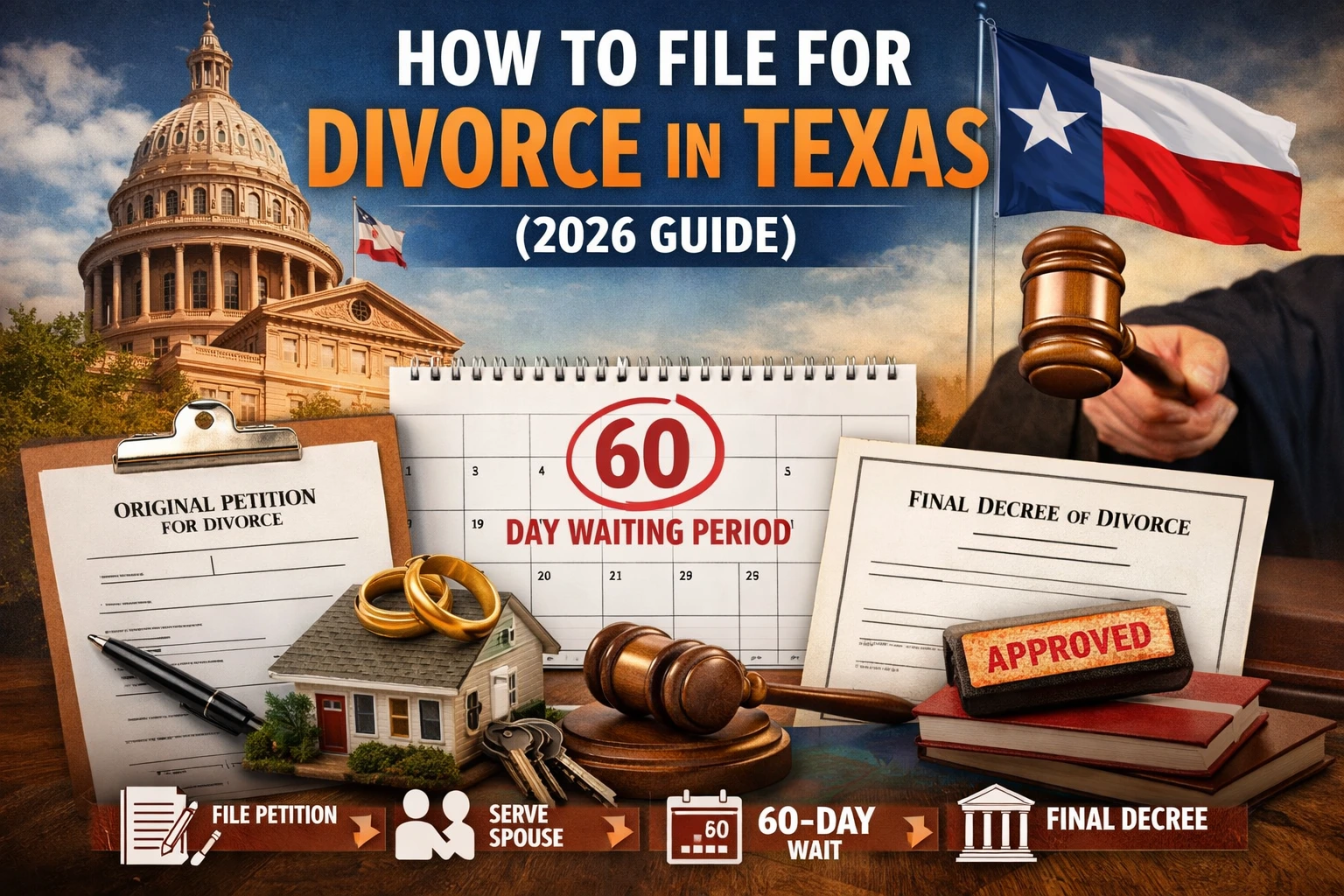
You cannot shorten the mandatory 60-day Texas divorce waiting period, which starts the day the original petition is filed and bars a final decree before day 61. To speed up Texas divorce proceedings legally, file complete and accurate forms, settle all terms before filing, and respond lawfully to a spouse who stalls service or refuses to sign.
- The 60-day clock is set by the Texas Family Code and a judge cannot shorten it for convenience.
- Most delays in an uncontested divorce trace back to paperwork errors, not the judge.
- Filing before you and your spouse settle every term can push your case to a hearing.
- An agreed divorce is generally the simplest path when you agree on all terms.
- Ask the district clerk’s office what local rules apply before you set a final hearing.
Table of Contents
- Step 1: Understand the Texas Divorce Waiting Period
- Step 2: File Complete, Accurate Texas Divorce Forms
- Step 3: Handle a Spouse Delaying Divorce in Texas
- Frequently Asked Questions
Step 1: Understand the Texas Divorce Waiting Period
The Texas divorce waiting period is a mandatory 60-day pause starting the day the court files the original petition. No final decree can be signed before day 61, no matter how quickly you and your spouse agree. This guide from Ready Divorce Service explains how to speed up Texas divorce proceedings legally by working with that rule.
The 60-day clock is set by the Texas Family Code, and a judge cannot shorten it for convenience. Exceptions are narrow and fact-specific, so check the statute and speak with a licensed Texas attorney if one may apply.
What you control is everything around it. Errors in the petition, missing forms, and slow service each add weeks on top of the 60 days. Read more about how the Texas divorce waiting period works and when it starts.
Texas Family Code, Title 1, Chapter 6
Step 2: File Complete, Accurate Texas Divorce Forms
Most delays in an uncontested divorce trace back to paperwork, not the judge. A petition with a missing signature, an incorrect county, or an incomplete property schedule gets rejected at filing or bounced back later.
A common mistake is filing before the two of you have settled every term. If your final decree of divorce does not match what the petition asked for, the judge may set the case for a hearing instead of approving it on the papers.

If you and your spouse agree on all terms, an agreed divorce is generally the simplest path because it avoids the contested steps that add time. Review Texas divorce forms online for couples before you file, and if you are unsure which package fits your situation, see Which Plan is Right for You? to compare the available options.
Read every page of any document before you sign it, including a waiver of service and the decree terms.
Step 3: Handle a Spouse Delaying Divorce in Texas
A spouse delaying divorce in Texas can stall a case in predictable ways: dodging service, refusing to sign a waiver, ignoring the decree, or failing to appear at the final hearing. Each tactic has a lawful answer that keeps your case moving.
If your spouse is actively contesting the filing, you may need a licensed Texas attorney for that stage. Document preparation and procedural assistance can carry you through the uncontested parts, but representation in a contested matter is a separate service. Our article on legal options when a spouse contests a divorce filing covers those paths.
Court practices and hearing schedules can differ from county to county, so ask the district clerk’s office what local rules apply before you set a final hearing.
Texas Rules of Civil Procedure
A divorce that drags on usually has a fixable cause, and most sit in the paperwork. Ready Divorce Service offers flexible, limited-scope and comprehensive divorce assistance, including document preparation and procedural guidance. If you are ready to begin, Starting the Divorce Process walks you through the requirements and first steps. Get started with Ready Divorce Service and move through the process with your paperwork in order.
Each stalling tactic has a lawful answer that keeps the case moving.
| Tactic | Lawful answer |
|---|---|
| Dodging service | Use lawful service methods to keep case moving |
| Refusing to sign a waiver | Proceed without the waiver |
| Ignoring the decree | Keep the case moving through lawful steps |
| Failing to appear at final hearing | Proceed through lawful procedural steps |
| Actively contesting the filing | May need a licensed Texas attorney for that stage |
Frequently Asked Questions
Can you speed up a divorce in Texas?
You can speed up the parts you control, but not the statutory 60-day waiting period. Texas law generally requires a waiting period of 60 days after the petition is filed before a divorce can be granted; confirm the current rule with the official Texas statute. What you can do is file complete, accurate paperwork the first time, use a waiver of service if your spouse will sign one, and reach an agreement on property division and conservatorship early so the case is ready for a final hearing as soon as the waiting period ends.
What is the waiting period for a divorce in Texas?
Texas has a 60-day statutory waiting period. The clock starts on the date the original petition for divorce is filed with the court, not the date you decided to divorce or the date your spouse was served. A judge cannot sign a final decree of divorce before that period ends. If safety is a concern, speak with a licensed Texas attorney about whether any exception to the waiting period may apply to your situation.
What can I do if my spouse is delaying the divorce process in Texas?
First, document what is happening. If your spouse will not sign a waiver of service, the case may need formal service, and a licensed Texas attorney can advise you on the available court procedures. If a spouse does not respond or meet deadlines, the court has procedures for those situations, and an attorney can explain your options. Check the official court rules for details.