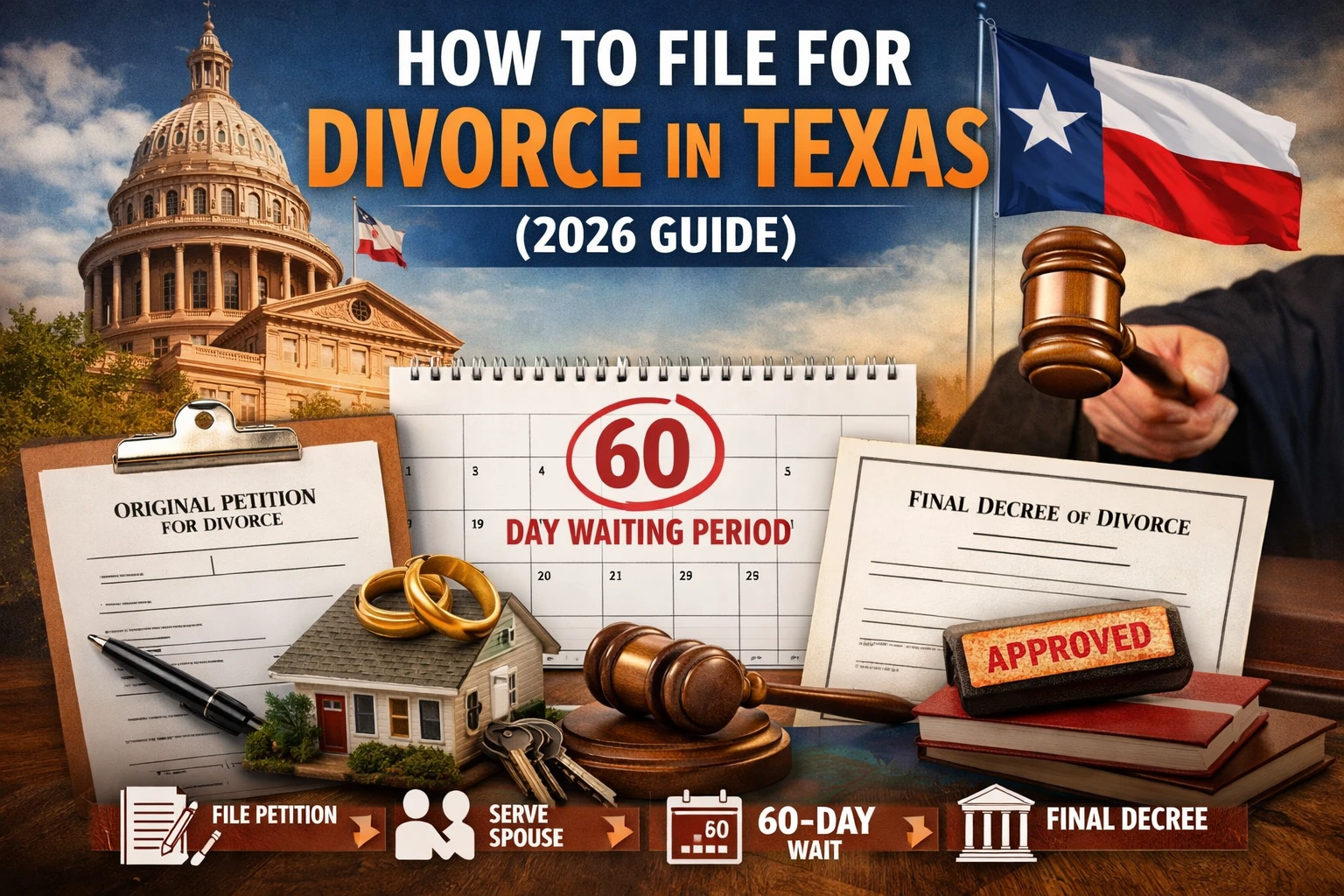
If you are trying to end a marriage without a courtroom fight, a Dallas County divorce filing guide can save you from the two problems that slow people down most: filing the wrong paperwork and missing a required step. In an uncontested divorce, both spouses may agree on the outcome, but the process still has rules. The good news is that when you know what Dallas County expects, the path is usually much more manageable.
For most people, the first question is not whether they want a divorce. It is whether they can get through the filing process without spending thousands on litigation. If your case is agreed, organized, and free of major disputes, that answer is often yes. But simple does not mean automatic. Texas divorce cases still require proper forms, timing, and filing procedures.
Who this Dallas County divorce filing guide is for
This guide is most useful for people pursuing an uncontested divorce in Dallas County. That usually means both spouses agree to divorce and have resolved the key terms, such as property division, debt, and if applicable, child-related issues like conservatorship, support, and possession.
It may not be the right fit if one spouse cannot be found, refuses to participate, or there is a serious dispute over children, support, or property. It also may not be the right do-it-yourself path if family violence, coercion, or safety concerns are involved. In those situations, the procedure can become more complicated very quickly.
Basic Texas requirements before you file
Before you file in Dallas County, you need to confirm that Texas residency rules are met. In general, one spouse must have lived in Texas for at least six months and in Dallas County for at least 90 days before filing.
That sounds straightforward, but people often get tripped up when they recently moved. If you live in one county and your spouse lives in another, venue can depend on where the filing spouse meets the county residency requirement. A small timing mistake can lead to delays or refiling.
You also need to decide whether your case is truly uncontested. That means you are not expecting a judge to decide unresolved issues for you. If there is no agreement yet, filing may still start the case, but it stops being the kind of streamlined process most people are hoping for.
How to start a divorce case in Dallas County
A divorce begins when the Original Petition for Divorce is filed with the district clerk. This is the document that officially opens the case. It identifies the parties, states that the marriage has become insupportable, and tells the court whether children are involved.
If you and your spouse are in agreement, the petition is only the beginning. You will still need the remaining case documents that fit your situation. Those can include a waiver, an answer, a final decree of divorce, and child-related forms if you have minor children.
This is where many filers lose time. They assume one form starts and finishes the process. It does not. The court needs a complete set of documents that match your family, property, and parenting situation.
Filing fees and fee waivers
Dallas County charges filing fees for divorce cases, and the amount can vary depending on the case type. If cost is a concern, some filers may qualify for a statement of inability to afford payment of court costs.
Whether a fee waiver is appropriate depends on your financial situation and the court’s review. It can be a practical option, but it is not automatic. If you are counting on it, make sure the paperwork is prepared carefully.
E-filing versus in-person filing
Texas courts use electronic filing in many civil matters, including divorce. For some people, e-filing is convenient and faster. For others, especially first-time filers, the process feels technical and stressful.
The trade-off is simple. E-filing saves a trip, but it also requires accurate document formatting, correct case information, and attention to filing acceptance notices. An in-person option may feel more tangible, but local procedures can still vary. Either way, accuracy matters more than the method you choose.
Serving your spouse or using a waiver
After filing, the other spouse usually must be formally served unless they sign a proper waiver after the case is filed. In an uncontested divorce, a waiver is often what keeps the process efficient and low-conflict.
That said, the waiver has to be done correctly. Timing matters, language matters, and it must fit the facts of the case. People sometimes download a generic form, sign it too early, or use language that does not match what the court requires. That can create avoidable problems near the finish line.
If your spouse is cooperative, a properly prepared waiver can make the process much smoother. If not, formal service may be necessary, and that adds time and cost.
The 60-day waiting period and what it really means
Texas has a mandatory waiting period in most divorce cases. In general, the court cannot finalize the divorce until at least 60 days have passed from the date the petition was filed.
Many people hear that and assume their divorce will be finished on day 61. Sometimes it can be finalized soon after the waiting period, but only if everything else is already in order. If documents are incomplete, signatures are missing, or a prove-up hearing is not scheduled properly, the case can take longer.
This is one of the biggest misconceptions in any Dallas County divorce filing guide. The waiting period is a minimum timeline, not a guarantee.
Child-related cases need extra care
If you have children under 18, your divorce will involve more than just ending the marriage. The court will expect documents and final orders that address conservatorship, possession and access, child support, medical support, and other parenting terms.
Even agreed cases require precision here. A decree that is vague or inconsistent can be rejected, or worse, approved in a form that causes conflict later. Parents often want something simple, but child-related orders need enough detail to be enforceable and practical.
This is especially true if your schedules are unusual, one parent is self-employed, or health insurance is changing. Those details do not always prevent an uncontested divorce, but they do require careful drafting.
Common mistakes people make in Dallas County filings
Most filing problems are not dramatic. They are small errors that stack up. A missing signature, an outdated form, a wrong cause number, or a decree that does not match the petition can lead to rejection or delay.
Another common issue is assuming that because spouses agree verbally, the court paperwork can stay general. It cannot. The final decree must clearly state what happens with property, debts, retirement issues if applicable, and parenting terms if children are involved.
People also underestimate procedural follow-through. Filing the petition is only one stage. You still have to monitor the case, complete the remaining documents, and present the final paperwork properly.
What happens at the finish line
To finalize an uncontested divorce, the court typically needs a signed Final Decree of Divorce and any other required documents. One spouse usually appears for a brief prove-up to confirm the case meets legal requirements, unless local procedures allow another method.
The hearing itself is usually short in an agreed case. The real work is making sure the paperwork is complete before you get there. If the decree has errors, the hearing may not give you the closure you expected that day.
That is why process support matters. People often do fine with the idea of an uncontested divorce, but they want help turning that agreement into filing-ready documents and a clean final package.
When outside help makes sense
A lot of couples do not need a fully litigated attorney case. They need organized, Texas-specific help with documents, filing steps, and timing. That is very different from trying to handle a contested court battle.
If your divorce is agreed but you are unsure about forms, county procedures, or child-related language, getting procedural guidance can save time and stress. Ready Divorce Service works with Texans who want an affordable, straightforward path through uncontested divorce without unnecessary complication.
The right level of help depends on your case. If both spouses are cooperative and the terms are settled, document preparation support can be a practical middle ground between doing everything alone and paying for full-scale litigation.
A divorce case does not have to become chaotic just because it feels unfamiliar. When you understand the Dallas County process, use the right documents, and take each step in order, you give yourself a much better chance at a smoother ending and a steadier start to what comes next.
📞 Get Started Today – Your Peaceful Divorce Is Just a Click Away
When you’re ready to move on, we’re ready to help.
📲 Call us now at (800) 432-0018
🖥️ Start your divorce online today