If you are staring at a stack of divorce forms and wondering, can you efile divorce papers Texas, the short answer is yes – in many cases, you can. But that does not mean every divorce is simple to file online, and it does not mean the court will accept paperwork that is incomplete, signed incorrectly, or filed in the wrong order. For many Texans pursuing an uncontested divorce, e-filing can save time and reduce stress, but only if the documents are prepared correctly from the start.
Texas courts widely use electronic filing, and for many divorce cases, that is now the normal path rather than the exception. Still, people often assume that if filing is online, the process itself is easy. That is where problems start. E-filing is a method of submission. It is not a guarantee that your case is ready, your forms are correct, or your divorce can move forward without delays.
Can you efile divorce papers in Texas for every divorce?
Not every divorce fits neatly into an online filing process, even though many do. In a straightforward uncontested divorce, where both spouses agree on property division, debts, and any child-related terms, e-filing is often a practical option. The court may allow the petition, waivers, final decree, and other required documents to be filed electronically through the approved system.
What changes the answer is not usually the technology. It is the case itself. If there is conflict, missing information, safety concerns, unusual property issues, or questions about children, your filing may require extra steps, more careful drafting, or court-specific procedures. Some documents may also need original signatures, notarization, or special handling depending on the county and the stage of the case.
That is why the better question is not only can you efile divorce papers in Texas, but also whether your case is ready to be filed electronically without creating avoidable problems.
How e-filing works in a Texas divorce
In Texas, divorce cases are typically filed with the district clerk in the county where the case belongs. E-filing sends your documents through the state-approved electronic system to the correct clerk for review. The clerk does not judge the fairness of your divorce terms, but the clerk can reject documents for formatting issues, missing information, filing errors, or incorrect fees.
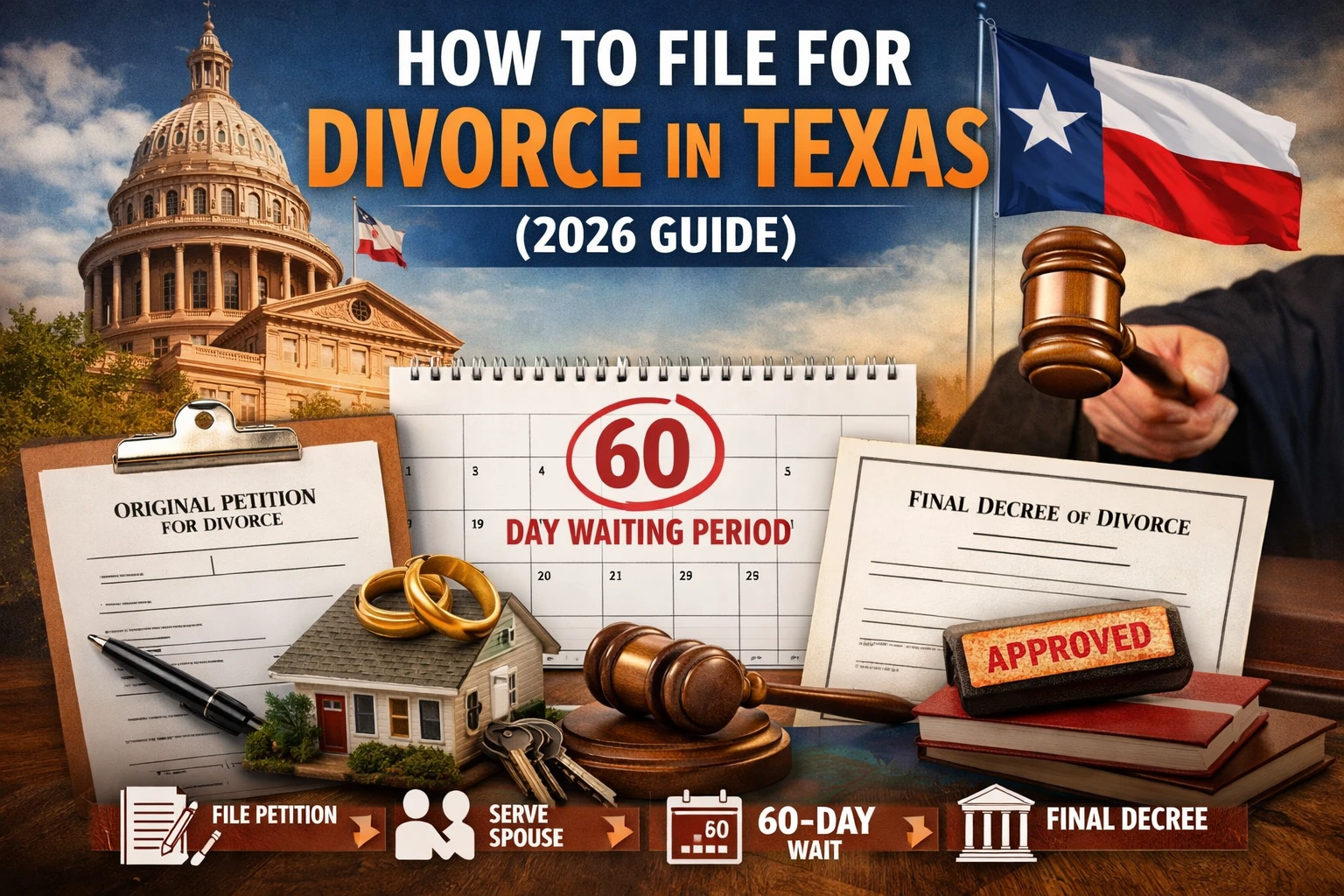
In a typical uncontested divorce, the case starts with the Original Petition for Divorce. After that, the rest of the process depends on whether your spouse will file an answer, sign a waiver, and cooperate with the agreed paperwork. Later, the court will usually need a Final Decree of Divorce and possibly additional forms tied to children, support, or county-specific requirements.
Filing online is convenient because you can usually submit documents without standing in line at the courthouse. You may also receive faster confirmation that your case was received. But convenience disappears quickly if the wrong document is uploaded, if names do not match from one form to another, or if the decree leaves out required terms.
What you need before you e-file
Before you file anything, you need to make sure Texas is the right state for the divorce and the county is the right place to file it. Texas has residency rules. In general, one spouse must have lived in Texas for at least six months and in the county of filing for at least 90 days. If those rules are not met, the court may not be able to move forward.
You also need to know whether your divorce is truly uncontested. That means both spouses agree on the major issues. If one person is likely to argue over property, debts, parenting time, child support, or spousal maintenance, calling it uncontested on day one may not hold up for long.
Then there is the paperwork itself. A divorce packet is not just one form. It is a sequence of documents that has to match your situation. Cases involving children need more detail than cases without children. Cases with real estate, retirement accounts, or a name change may also need more careful drafting.
E-filing works best when the documents are complete, internally consistent, and signed correctly before anything is submitted.
Common problems when people try to e-file on their own
The most common issue is not the filing system. It is the paperwork. People often download forms that do not match their case, leave out required language, or sign too early. Others assume the court clerk will explain what is wrong and how to fix it. Usually, that is not the clerk’s role.
Another common problem is timing. Texas has a mandatory 60-day waiting period in most divorce cases, starting when the petition is filed. Some people think that if they file online, the divorce can be finalized immediately after the other spouse signs. That is not how it works. Even in an agreed divorce, the waiting period still usually applies unless a narrow legal exception exists.
Counties can also vary in practice. A filing process that works smoothly in one county may require a different form, hearing procedure, or final prove-up process in another. That matters in places like Dallas County, Tarrant County, Denton County, Collin County, Harris County, or Bexar County, where filing volume is high and clerks expect documents to be in proper order.
When e-filing makes the most sense
E-filing is often a strong option when the divorce is low-conflict, both spouses are cooperative, and the terms are already worked out. If you want to keep costs down, avoid unnecessary courthouse visits, and move the process forward efficiently, online filing can help.
It is especially useful for people who are comfortable handling documents electronically but still want guidance on getting the forms right. That is the middle ground many Texans are looking for. They do not need full litigation. They do need accurate preparation, procedural support, and a clear path from filing to final decree.
For uncontested divorces, that balance often makes the biggest difference. The goal is not just to submit forms online. The goal is to finish the case without avoidable rejections, delays, or confusion.
When e-filing may not be enough by itself
Some divorces look simple at first and turn out not to be. If one spouse is hard to locate, refuses to cooperate, or changes position after the case starts, online filing alone will not solve that. The same is true if the case involves domestic violence concerns, contested custody issues, complicated property division, or uncertainty about what should go into the decree.
There are also practical issues. Some people do not have easy access to scanning, printing, notarization, or reliable digital tools. Others feel overwhelmed by legal wording and worry about making a mistake that could affect parenting terms or property rights. In those situations, support with preparation and procedure can be far more valuable than the filing method itself.
That is why affordable divorce help exists. A process can be lower cost than traditional attorney-led litigation while still giving you structure, accuracy, and peace of mind.
Can you efile divorce papers Texas without your spouse?
You can usually file the initial divorce petition without your spouse being present. Filing starts the case. It does not require both people to stand at the clerk’s counter or log in together. But after filing, your spouse still has to be handled correctly under Texas procedure.
In an uncontested divorce, that may mean your spouse signs a waiver or files an answer and later signs the final decree. If your spouse will not cooperate, service rules apply, and the process can become more complicated. So yes, one spouse can often begin the case through e-filing, but finishing the divorce still depends on following the proper legal steps.
A practical way to think about it
If your divorce is agreed, the question is not whether e-filing is possible. It usually is. The real issue is whether your documents are accurate enough to support a smooth case from start to finish.
That includes using the right forms, filing in the right county, respecting the waiting period, handling signatures properly, and preparing a final decree that reflects your agreement clearly. If any of those pieces are off, online filing can give a false sense of progress while the case stalls in the background.
For Texans who want a simpler path, support with document preparation and step-by-step guidance can make e-filing useful instead of frustrating. Ready Divorce Service helps people through that exact process in uncontested Texas divorces, with a focus on keeping things affordable, organized, and easier to complete.
If you are asking can you efile divorce papers Texas, you are already thinking about a more efficient way forward. That is a good start. Just make sure the filing method is backed by the right paperwork, the right timing, and a clear plan for getting to the finish line.
📞 Get Started Today – Your Peaceful Divorce Is Just a Click Away
When you’re ready to move on, we’re ready to help.
📲 Call us now at (800) 432-0018
🖥️ Start your divorce online today