Serving divorce papers is the step that makes many people nervous. Filing the divorce petition is one thing. Making sure your spouse is legally notified is where the process starts to feel real. If you are wondering how to serve divorce papers Texas courts will accept, the answer depends on whether your spouse is cooperative, where they can be found, and whether your case is truly uncontested.
In Texas, service has to be done correctly. If it is not, your case can be delayed, rejected, or forced to start over on certain steps. The good news is that for many agreed divorces, this part is more manageable than people expect once you understand the rules.
How to serve divorce papers Texas courts will recognize
Texas does not let the filing spouse serve the papers personally. Even if you and your spouse are getting along, you cannot hand them the citation and petition yourself and treat that as formal service. The court wants proof that service was completed in a legally approved way.
In most cases, your spouse must receive the Original Petition for Divorce along with the citation issued by the clerk. The citation is the official notice from the court telling the other spouse they have been sued for divorce and stating the deadline to respond.
There are a few common ways service happens in Texas. The best option depends on your situation.
Personal service by a constable, sheriff, or private process server
This is the most traditional method. After you file your divorce, the clerk issues the citation. Then a constable, sheriff, or certified private process server delivers the documents to your spouse.
Personal service is often the safest route when your spouse is not willing to sign anything voluntarily, or when you want a clear record that service was completed. The server will file a return of service with the court showing when, where, and how your spouse was served.
If your spouse is likely to avoid service, a professional process server is often more flexible than law enforcement. They may attempt service at different times of day, at home, or at work if permitted.
Waiver of service in an uncontested divorce
If your spouse agrees to the divorce and is willing to cooperate, they may sign a Waiver of Service instead of being formally served. For many uncontested cases, this is the simplest and least expensive option.
A waiver does not mean your spouse agrees with every part of the case automatically. It usually means they acknowledge receipt of the filed petition and give up formal service by a constable or process server. The waiver must meet Texas requirements to be valid, and timing matters. In many cases, it cannot be signed until after the petition has been filed.
This is one area where people make costly mistakes. They find a form online, have the spouse sign too early, or use the wrong language. If the waiver is defective, the court may not accept it.
Service by certified mail
Texas may allow service by certified mail, return receipt requested, but this method can be unpredictable. If your spouse personally signs the green card and everything is completed correctly, it can work. But if someone else signs for the mail, or delivery is missed, you may end up losing time and paying again for another service attempt.
For that reason, certified mail is usually not the first choice unless the facts of the case make it practical.
Substitute service and service by publication
If your spouse is avoiding service or cannot be located after diligent efforts, you may need court permission for an alternative method. This could include substitute service, such as leaving the papers with another person at the home or posting them in a way the court approves. In harder cases, service by publication may be requested.
These options are more complicated and usually require proof that you tried reasonable methods first. They can also affect what relief the court can grant, especially when property or children are involved. If your divorce is supposed to be simple, this is often the point where procedural guidance becomes especially valuable.
The basic steps after filing
Once you file the Original Petition for Divorce, the court clerk can issue the citation. After that, you choose the proper service method. If you are using formal service, the server delivers the papers and files proof of service. If your spouse is signing a waiver, that signed document gets filed with the court instead.
Then the clock starts running on your spouse’s deadline to answer, unless the case is moving forward by agreement and waiver. Texas response deadlines can be technical, and they do not operate on guesswork. Missing or miscalculating them can cause delays.
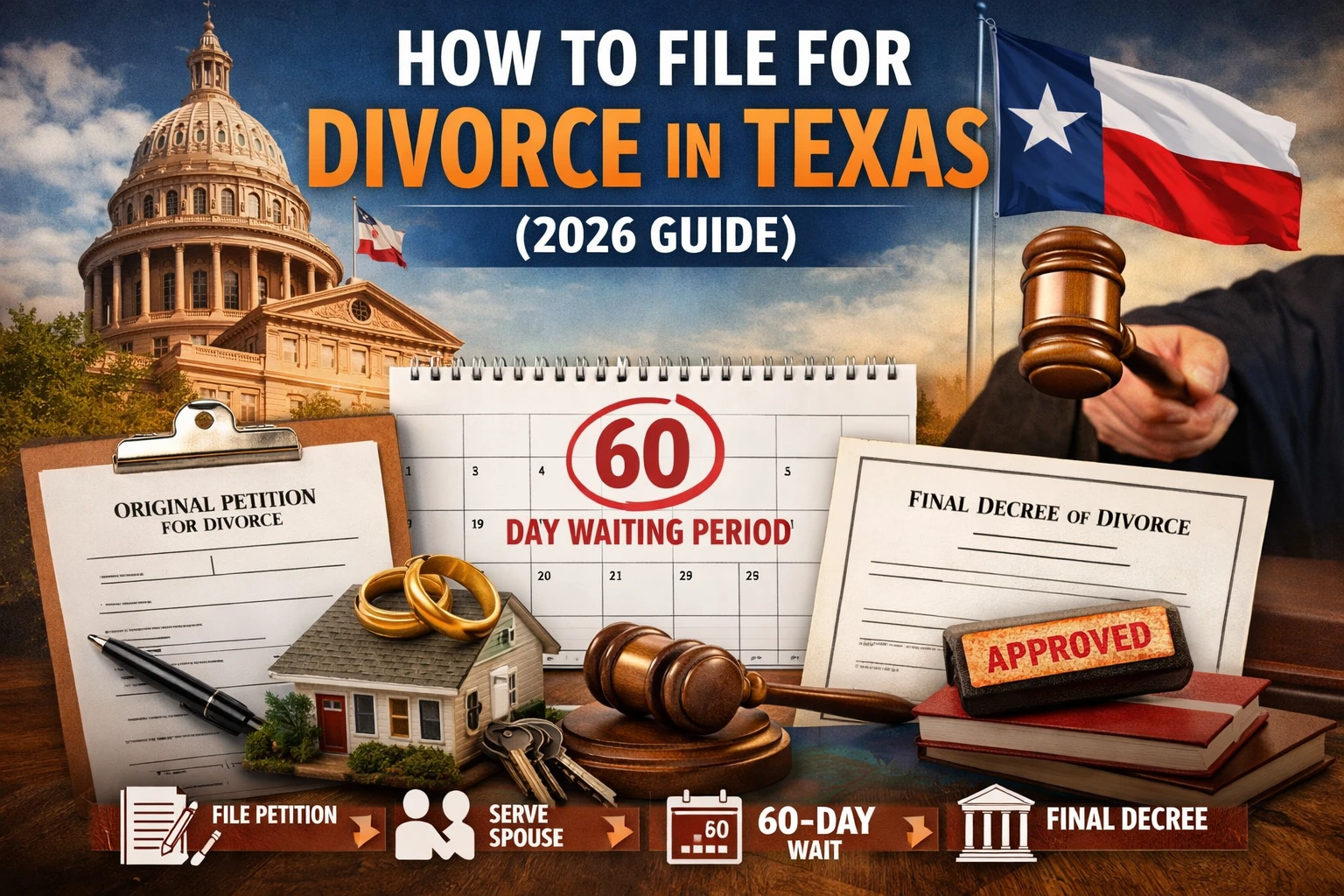
There is also the statewide 60-day waiting period in most divorce cases. Service does not eliminate that waiting period. Even in an uncontested divorce, you generally cannot finish the case immediately just because your spouse was served quickly.
What if your spouse is cooperative?
If both of you agree on property, debts, and any child-related terms, using a waiver may keep the process smoother and less stressful. That is often the goal in an uncontested divorce. Formal service can feel adversarial even when it is legally routine, so avoiding it when appropriate can lower tension.
Still, the paperwork has to be right. A friendly divorce can still get stuck over technical defects. The court cares about proper filing, proper notice, and proper final documents. Cooperation helps, but compliance matters more.
What if your spouse is avoiding service?
This happens more often than people think. Some spouses avoid opening the door. Others move, ignore calls, or refuse to say where they are staying. Avoidance does not stop the divorce forever, but it does usually make the process slower.
Start with accurate information. A process server has a better chance of success if you can provide a current address, work location, vehicle details, usual schedule, or recent contact information. If standard attempts fail, you may be able to ask the court for substitute service, but you will need to show real effort was made first.
The trade-off is simple. The more cooperative your spouse is, the faster and cheaper service tends to be. The less cooperative they are, the more documentation, court approval, and patience may be required.
How service works when children are involved
If your divorce includes children under 18, service becomes even more important because the court will be addressing conservatorship, possession, support, and other parenting issues. Judges tend to look closely at notice and procedural correctness in these cases.
If the case is agreed, service may still be straightforward through waiver or formal delivery. But if one parent is unresponsive, hard to locate, or likely to dispute terms, you should expect closer attention to the service record and final paperwork.
Common mistakes people make
The biggest mistake is assuming informal notice is enough. Telling your spouse about the divorce, texting them a copy, or handing them the petition yourself is not the same as legal service.
Another common problem is using a waiver incorrectly. Texas courts can be strict about when it was signed and whether the form includes the proper language. People also run into trouble by filing before they are ready, then waiting too long to complete service, or by using a service method that does not fit the facts.
County procedures can also vary in small but important ways. In larger counties such as Dallas, Tarrant, Collin, Denton, Harris, and Bexar, filing systems and local expectations may affect how quickly documents are processed and what clerks require for clean acceptance. The statewide law is the foundation, but local practice still matters.
Do you need a lawyer to serve divorce papers?
Not always. Many uncontested divorces can move forward without full attorney representation, especially when both spouses agree and the main challenge is handling documents correctly. But that does not mean the process is self-explanatory.
Service is one of those steps where practical guidance can save time and frustration. If your case is agreed, document preparation and step-by-step procedural support may be enough to keep things on track. If your spouse is missing, hostile, or likely to contest issues, the situation may require a different level of legal help.
The simplest path is usually the one with the fewest surprises
If your spouse is willing to cooperate, the cleanest path is often filing first, using a valid waiver when appropriate, and making sure every document is prepared and filed in the right order. If service has to be formal, use an approved process server and keep proof organized from the start.
Ready Divorce Service helps Texans handle agreed divorce paperwork with clarity and less stress, which can make steps like service feel far less overwhelming. When you understand what the court requires and avoid shortcuts that do not count, the process becomes much more manageable.
Getting divorced is hard enough. Service should be a procedural step, not the reason your case gets stuck.
📞 Get Started Today – Your Peaceful Divorce Is Just a Click Away
When you’re ready to move on, we’re ready to help.
📲 Call us now at (800) 432-0018
🖥️ Start your divorce online today