If you are trying to decide between a divorce document service vs attorney, the real question is usually simpler: do you need help completing an agreed Texas divorce, or do you need legal strategy for a dispute? That distinction matters because the right choice can save you time, money, and a great deal of stress.
For many Texans, divorce is not a courtroom battle. It is two people who have already agreed on property, debt, parenting terms, and support. In that kind of case, paying for full attorney representation may be more than you actually need. On the other hand, if there is conflict, pressure, or uncertainty about your rights, a document service is not a substitute for legal advice.
Divorce document service vs attorney: what is the difference?
A divorce attorney provides legal advice, legal strategy, and representation. That means an attorney can tell you what you should do, negotiate on your behalf, and appear in court for you when needed. If your spouse is being difficult, hiding assets, demanding unfair terms, or turning the process into a fight, that level of help can be necessary.
A divorce document service is different. It focuses on preparing the required paperwork, organizing the filing process, and helping you move through procedural steps in a more efficient way. In an uncontested divorce, that can be exactly what many people need. The service helps reduce confusion, but it does not step into the role of legal counsel.
This is why the comparison should not be framed as one option being universally better. It depends on the kind of divorce you have. If your case is agreed and straightforward, document preparation support can be a practical fit. If your case is disputed or legally complicated, an attorney may be the safer route.
When a document service makes sense
A document service is often a strong option when both spouses are on the same page. In Texas, an uncontested divorce generally means you both agree to get divorced and agree on the major terms. That usually includes how to divide property and debts, and if children are involved, how conservatorship, possession, and support will be handled.
In those situations, the biggest challenge is often not legal combat. It is paperwork, filing rules, signatures, waiting periods, and making sure the final documents match what the court expects. That is where a process-focused service can be valuable.
People often choose this route for practical reasons. Cost is a major one. Attorney-led divorce can become expensive quickly, even when the case starts out cooperative. A document service is usually far more affordable because you are paying for preparation and procedural help, not full representation.
Speed also matters. When a case is agreed, many people want closure without months of back-and-forth. A streamlined service can help keep the process moving by reducing filing mistakes and making the next steps clearer. That is especially helpful for people who are juggling work, children, and the emotional weight of a life change.
There is also a confidence factor. Many people are capable of handling an uncontested divorce, but they do not want to guess their way through Texas forms. Clear, step-by-step guidance can make the process feel manageable.
When an attorney is the better choice
There are times when hiring an attorney is not just helpful. It is wise.
If you and your spouse do not agree on the terms of the divorce, a document service is not designed to solve that problem. The same is true if you suspect dishonesty, coercion, abuse, or major financial imbalance. When one spouse controls the money, refuses to disclose information, or pressures the other into signing something unfair, legal advice matters.
An attorney is also worth serious consideration when the case involves unusual complexity. That might include a business, high-value assets, retirement issues that require special orders, separate property disputes, or difficult custody conflicts. Texas divorce law can be manageable in an agreed case, but it gets more complicated when the facts are contested or the financial picture is not simple.
Another sign you may need an attorney is when you are not sure whether the agreement is actually fair. Saving money on the front end does not help if the final decree creates long-term problems. If you have doubts about your rights or your spouse’s demands, legal advice can protect you from expensive mistakes later.
Cost is not the only difference
Most people start with price, and that makes sense. A divorce document service is usually much less expensive than retaining an attorney. For working families and middle-income households, that difference can be the reason the process feels possible at all.
But cost should be viewed alongside value. If your case truly is uncontested, paying for litigation-level support may not be necessary. If your case is contested, trying to save money with the wrong service can backfire.
Think of it this way: a document service helps with execution, while an attorney helps with judgment and advocacy. If you already have agreement and only need help getting from point A to point B, execution may be enough. If you still need someone to evaluate options, push back, or protect your interests, advocacy becomes more important.
Divorce document service vs attorney for Texas uncontested divorce
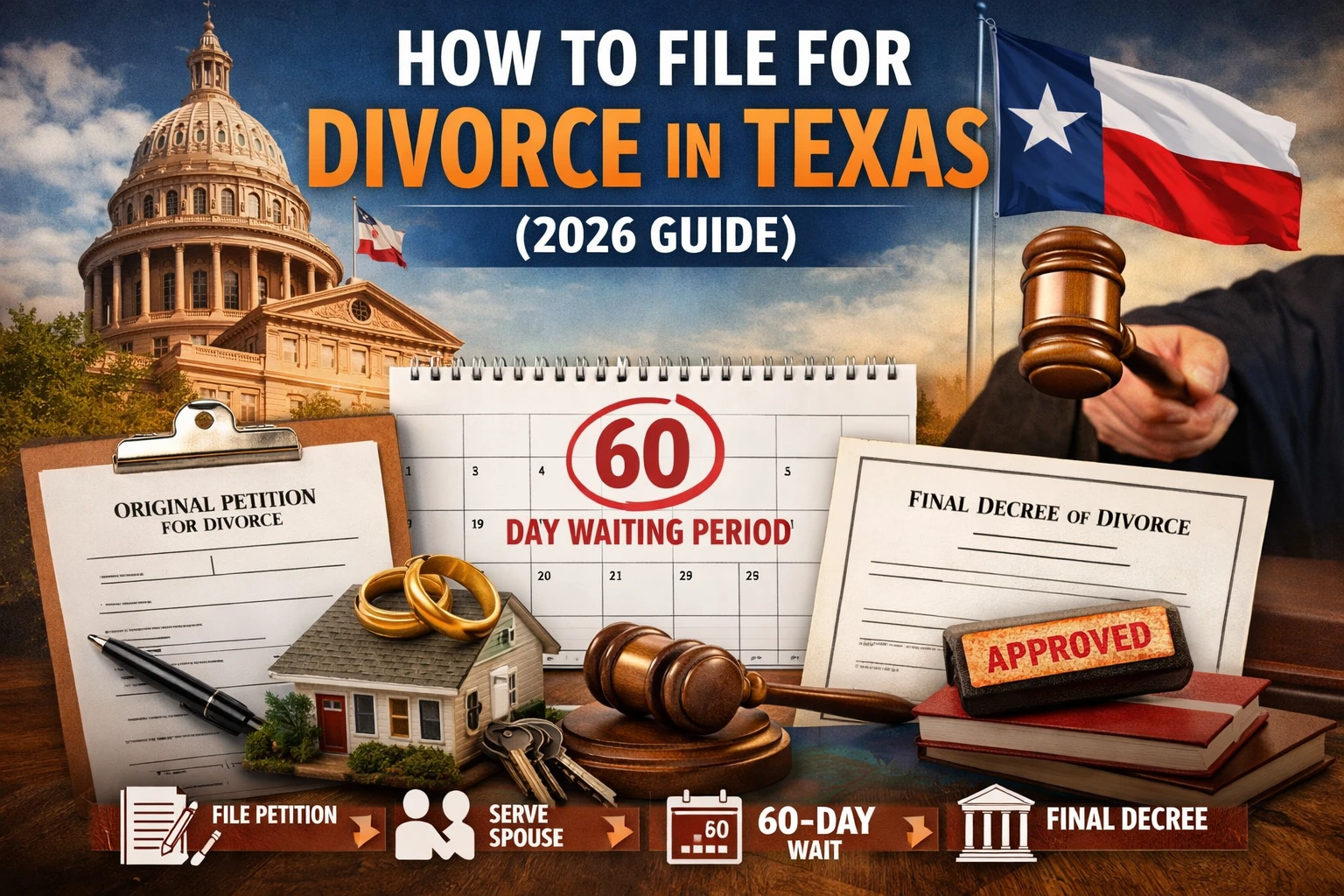
Texas adds a few practical details that affect this decision. There is a mandatory waiting period in most divorces. County filing procedures can vary. Cases involving children require careful attention to parenting and support terms. Even in a friendly divorce, the paperwork has to be completed correctly and filed in the proper court.
That is why Texas-specific support can matter. General online information often makes divorce sound simple until you hit a county requirement, a missing form, or a rejected filing. For people filing in counties such as Tarrant, Dallas, Denton, Collin, Ellis, Bexar, or Harris, having guidance built around Texas procedure can remove a lot of uncertainty.
If your divorce is agreed, a Texas-focused document service may offer the balance many people are looking for: lower cost than an attorney, more support than trying to do it completely alone, and a process built around uncontested cases rather than litigation.
Questions to ask before you choose
Before you decide, be honest about the kind of case you have. Are both spouses fully cooperative? Do you agree on every major issue? Is anyone feeling pressured? Are there child-related disagreements hiding under the surface? Does either spouse need legal advice about rights, property, or support?
If the answers point to cooperation and clarity, a document service may be a sensible next step. If the answers point to conflict, confusion, or imbalance, an attorney is likely the better fit.
It also helps to ask what kind of help will reduce stress for you personally. Some people do not need a lawyer. They need a clear process, accurate forms, and someone to explain what comes next. Others need legal protection because the other side is not acting fairly. Choosing the right lane early can prevent delays and frustration.
A service like Ready Divorce Service is built for the first group: Texans with agreed divorces who want affordable, organized help getting the paperwork and filing process done correctly. That is a very different need from contested representation, and it deserves a different solution.
The best choice is the one that matches your case
The phrase divorce document service vs attorney makes it sound like a competition, but for most people, it is really a sorting question. If your divorce is uncontested, low-conflict, and already agreed, a document service can be a practical, cost-conscious way to move forward. If your divorce involves disputes, uncertainty, or legal risk, an attorney may be the right investment.
What matters most is not choosing the most expensive option or the fastest option. It is choosing the kind of help that fits your situation honestly. The clearer you are about that, the easier it becomes to take the next step with confidence.
📞 Get Started Today – Your Peaceful Divorce Is Just a Click Away
When you’re ready to move on, we’re ready to help.
📲 Call us now at (800) 432-0018
🖥️ Start your divorce online today